Ever walked into a store and been drawn to a gleaming display of perfectly chilled products? That’s no accident. The right refrigerated display case doesn’t just preserve your products—it showcases them in a way that makes customers reach for their wallets.
Selecting the ideal refrigerated display for your store involves balancing technical requirements with marketing psychology. When products are presented at optimal temperatures, they maintain their appearance, taste, and safety—critical factors that directly impact your bottom line. The FDA reports that improper food storage contributes to approximately 48 million cases of foodborne illness annually in the United States, making proper refrigeration not just a sales tool but a public health necessity.
The freshness factor: More than meets the eye
Temperature control does more than prevent spoilage. It preserves color vibrancy in produce, maintains the glossy appearance of meats, and ensures dairy products retain their creamy texture. These sensory qualities trigger purchase decisions before customers even consciously evaluate the product.
Display cases as silent salespeople
Your choice of display case dramatically influences how customers interact with products:
- Vertical cases create impressive product walls that command attention
- Horizontal units allow customers to browse and select items with ease
- Island displays encourage 360° shopping experiences, increasing dwell time
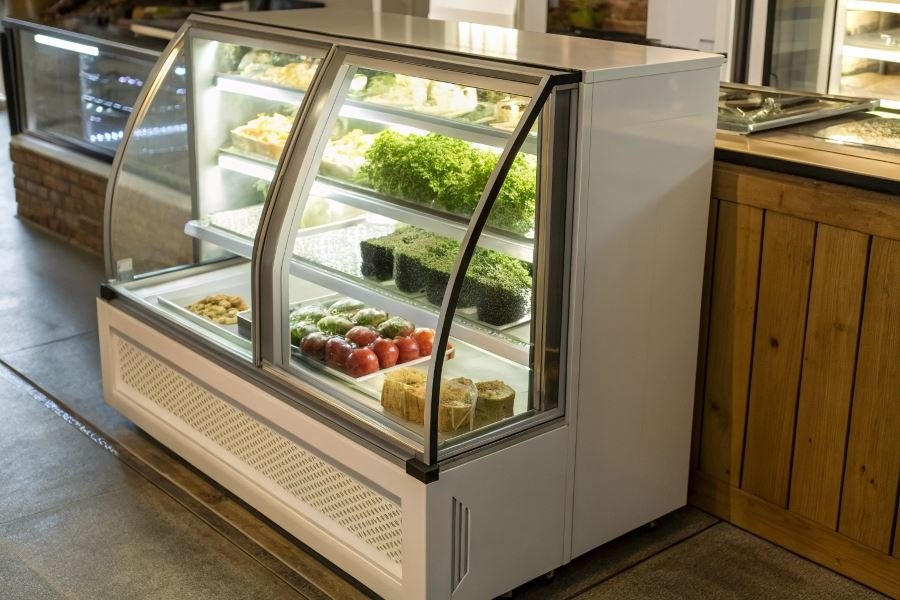
The market offers remarkable variety—from curved glass merchandisers that provide theatrical product presentation to specialized units for bakery, deli, seafood, or floral displays. Each type creates a distinct shopping experience that can transform casual browsers into committed buyers.
Remember: The perfect refrigerated display doesn’t just preserve your products—it presents your brand’s commitment to quality in three-dimensional, temperature-controlled glory.
Essential Factors for Refrigerated Display Case Selection
Selecting the perfect refrigerated display case transforms how customers interact with your perishable products. The right unit doesn’t just preserve inventory—it showcases it in a way that drives sales and enhances the shopping experience.
When evaluating how to choose a refrigerated display case for a store, three critical factors stand above all others: appropriate dimensions for your space and inventory, temperature control capabilities that match your product requirements, and energy efficiency that won’t devastate your operational budget. Let’s dive into what makes these considerations so crucial for your business success.
Size That Fits Your Space and Strategy
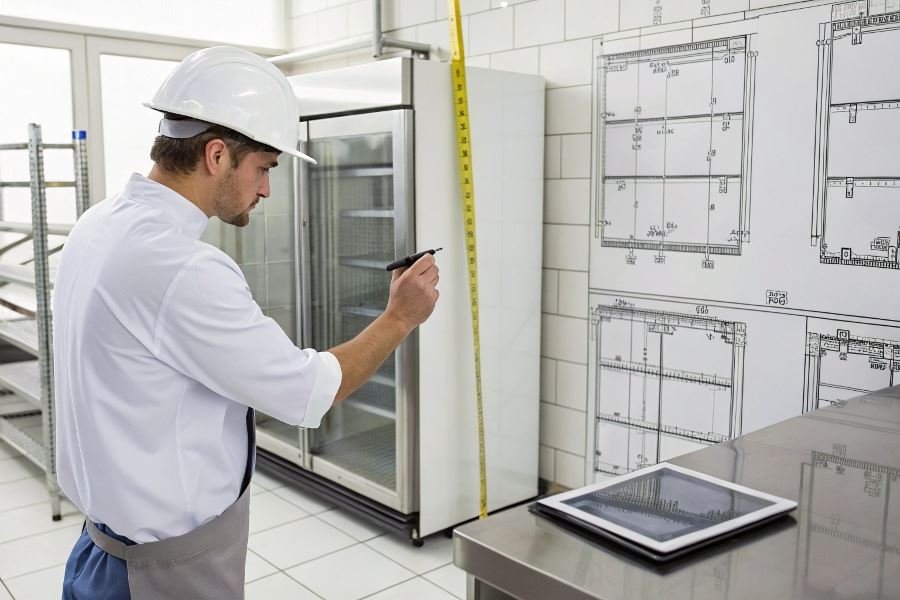
The dimensions of your refrigerated display case must align perfectly with both your available floor space and inventory volume. Consider these key measurements:
- Footprint dimensions: Allow for at least 36 inches of clearance for staff movement and maintenance access
- Linear footage: Calculate based on your peak inventory periods, not average stock levels
- Vertical display space: Taller units maximize floor space but may create accessibility issues
A medium-sized specialty food store typically requires between 8-12 linear feet of refrigerated display space per 1,000 square feet of total floor area. However, high-volume stores may need up to 50% more capacity.
“We initially underestimated our weekend rush needs by about 30%,” notes one specialty grocer. “Upgrading later cost us three times what proper sizing would have initially.”
| Store Type | Recommended Display Case Linear Footage |
|---|---|
| Small Deli | 6-10 feet per 1,000 sq ft floor space |
| Supermarket | 15-25 feet per 1,000 sq ft floor space |
| Specialty Food | 8-12 feet per 1,000 sq ft floor space |
Temperature Range and Cooling System Performance
Different perishables demand different temperature environments. The cooling system you select must maintain precise temperatures consistently:
- Dairy products: 33°F to 40°F (0.5°C to 4.4°C)
- Fresh meat: 28°F to 32°F (-2.2°C to 0°C)
- Prepared foods: 33°F to 40°F (0.5°C to 4.4°C)
- Beverages: 33°F to 45°F (0.5°C to 7.2°C)
Cooling system types matter significantly. Self-contained units offer plug-and-play convenience but generate more in-store heat. Remote systems place compressors elsewhere, reducing noise and heat but requiring professional installation.
Temperature recovery time—how quickly the unit returns to set temperature after door openings—can make or break product freshness during busy periods. Premium models from True Manufacturing and Hussmann typically recover within 3-5 minutes, while economy models might take 8-12 minutes.
Energy Efficiency and Operational Costs
The initial purchase price represents just 15-20% of a refrigerated display case’s lifetime cost. Energy consumption dominates the remaining 80-85%.
Energy-efficient features worth the investment include:
- LED lighting: Consumes 60% less energy than fluorescent alternatives while generating less heat
- Electronic expansion valves: Provide 15-20% better efficiency than mechanical valves
- EC motors: Offer 65-70% energy savings compared to standard motors
- Smart defrost systems: Activate only when needed rather than on fixed schedules
A typical 12-foot medium-temperature display case consumes approximately 35-45 kWh daily. At average commercial electricity rates, this translates to 1, 500−2,000 annually in energy costs alone.
Modern units with Copeland Scroll compressors can reduce energy consumption by up to 30% compared to units manufactured just a decade ago, potentially saving thousands in operational costs over the equipment’s lifespan.
Sealing the Deal: The Final Decision Framework for Your Display Case Investment
Beyond the Price Tag: Support Systems That Matter
The warranty package accompanying your refrigerated display case isn’t just paperwork—it’s your business insurance policy. Leading manufacturers like Hussmann typically offer 2-5 year warranties on compressors and 1-3 years on other components. What separates exceptional warranties from basic ones is parts availability and response time guarantees.
Maintenance requirements vary dramatically between models. Self-contained units from True Manufacturing often require simple quarterly condenser cleanings, while remote systems need professional service contracts costing $800-2,000 annually. The accessibility of service technicians in your area should influence your decision—a beautiful Italian-made case loses its charm when it sits broken for three weeks awaiting proprietary parts.
The most expensive display case isn’t the one with the highest price tag—it’s the one that sits non-operational during your busiest sales period.
After-sales support quality varies wildly. Investigate whether manufacturers offer:
- 24/7 technical hotlines
- Digital troubleshooting resources
- Preventative maintenance programs
- Emergency service guarantees
The Investment Equation: Calculating True Value
Initial sticker shock often leads store owners to compromise on quality—a decision that frequently proves costly. A premium display case from Federal Industries might command a 30-40% price premium but deliver energy savings of $600-1,200 annually while extending product shelf life by 1-3 days.
When calculating ROI, factor these critical elements:
| Cost Factor | Budget Models | Premium Models |
|---|---|---|
| Energy consumption | $1,200-2,400/yr | $600-1,200/yr |
| Average repair frequency | Every 8-14 months | Every 24-36 months |
| Product shrinkage | 4-7% | 1-3% |
| Expected lifespan | 5-7 years | 10-15 years |
The true cost of ownership extends far beyond the purchase price. A $7,000 economy model might actually cost $22,000 over seven years, while a $12,000 premium unit might total just $19,000 over the same period—while providing superior product presentation and reliability.
Top Performers: Display Cases That Deliver
Different store types demand specialized solutions. Based on performance metrics, customer satisfaction, and long-term value, these manufacturers stand out:
For Specialty Food Retailers and Boutique Grocers:
Structural Concepts excels with their Oasis series, offering exceptional product visibility, customizable exterior finishes, and energy consumption 22% below industry averages. Their curved glass models increase impulse purchases by creating “jewelry box” presentation effects.
For High-Volume Supermarkets:
Hillphoenix dominates with their Insight lineup featuring advanced defrost systems that maintain consistent temperatures even during peak shopping hours. Their remote refrigeration options reduce in-store heat generation and noise while cutting energy costs by up to 35%.
For Convenience Stores and Quick-Service Settings:
Turbo Air provides outstanding value with their TOM series, designed for 24/7 operation in high-traffic environments. Their simplified maintenance design and readily available parts make them ideal for operations without dedicated maintenance staff.
The perfect refrigerated display case doesn’t just preserve your products—it actively sells them while minimizing operational headaches and maximizing your bottom line.
Discover how to choose the perfect refrigerated display case for your store. Learn about essential factors including size requirements, temperature capabilities, energy efficiency, and top brands to maximize product freshness and boost sales.
Discover how to choose the perfect refrigerated display case for your store. Learn about essential factors including size requirements, temperature capabilities, energy efficiency, and top brands to maximize product freshness and boost sales.