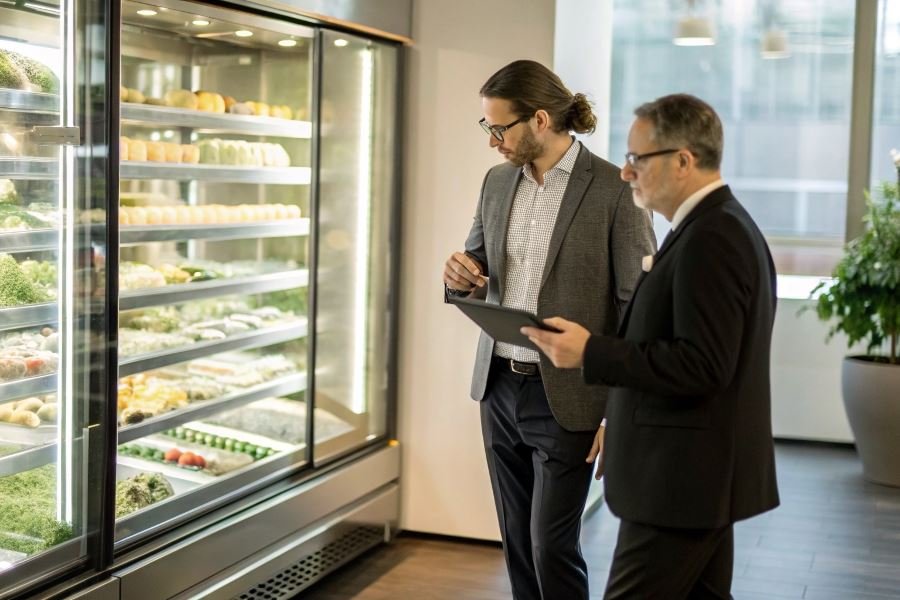
The $8.5 billion commercial refrigeration market stands at a crossroads. With food retail businesses facing unprecedented competition, the humble refrigerated display case has transformed from mere utility to strategic advantage. But which configuration—built-in or standalone—truly delivers the competitive edge?
Restaurant owner Marcus Chen discovered this firsthand when his poorly chosen display cases led to a 15% increase in food waste during his first year of operation. “I chose based on aesthetics alone,” he admits. “That mistake cost me nearly $30,000.”
The choice between built-in and standalone refrigerated display cases represents one of the most consequential decisions food retailers make. Built-in units offer seamless integration with existing décor, creating an uninterrupted visual flow that can elevate customer perception. Standalone cases, meanwhile, provide flexibility that proves invaluable during seasonal rushes or floor plan adjustments.
Market trends reveal fascinating shifts. While built-in cases dominated high-end establishments for decades, standalone units have gained significant traction since 2020, with sales increasing 23% as businesses prioritize adaptability. This evolution reflects broader changes in retail strategy, where the ability to quickly reconfigure spaces has become paramount.
Three critical factors should guide your decision:
- Space utilization requirements
- Visual merchandising strategy
- Long-term business growth projections
The right choice aligns perfectly with your operational reality—not just today’s needs, but tomorrow’s ambitions.
Built-in vs Standalone Display Cases: The Ultimate Showdown
When selecting refrigerated display cases for your business, the choice between built-in and standalone units represents a critical decision that impacts everything from your store layout to your bottom line. The right display case doesn’t just preserve your products—it showcases them in a way that drives sales and enhances customer experience.
For retail business owners weighing their options between built-in vs standalone refrigerated display cases, the decision extends far beyond simple aesthetics. Each option presents distinct advantages in operational efficiency, visual merchandising potential, and long-term value that must be carefully evaluated against your specific business needs.
Space Utilization and Installation Complexity
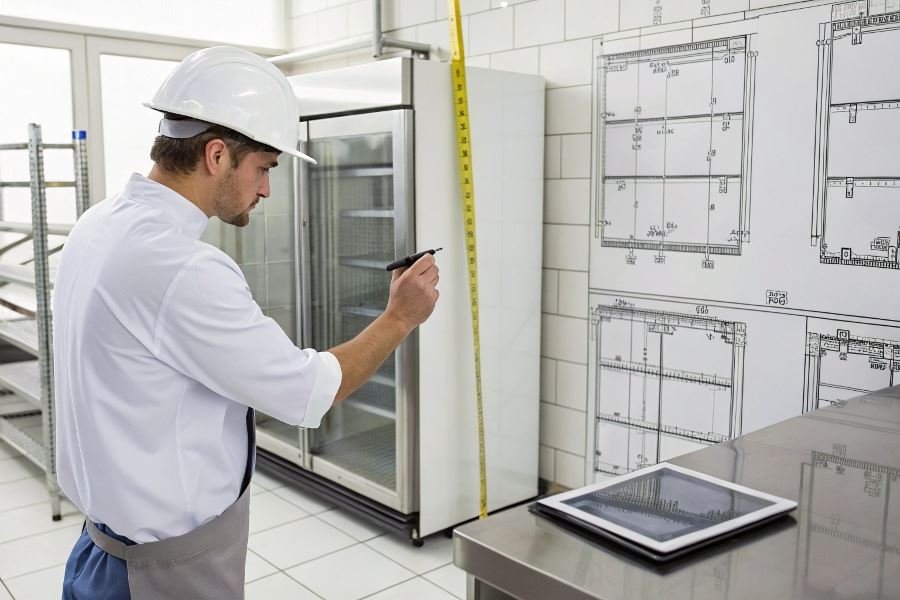
Built-in display cases offer superior space efficiency for businesses with limited floor area. These units integrate seamlessly into existing counters, walls, or custom cabinetry, preserving valuable square footage for customer traffic flow. However, this space-saving benefit comes with more complex installation requirements:
- Built-in units typically require professional installation
- May necessitate structural modifications to accommodate ventilation needs
- Often demand precise measurements and custom fitting
Standalone units, by contrast, offer plug-and-play simplicity. These self-contained systems can be positioned anywhere with appropriate electrical access, allowing for flexible store layouts and easier reconfiguration as merchandising needs evolve.
Temperature Performance and Climate Control
The cooling efficiency between these options shows meaningful differences:
| Feature | Built-in Units | Standalone Units |
|---|---|---|
| Temperature Range | Typically 35-41°F | Often wider range (28-45°F) |
| Cooling Recovery | Slower after door openings | Faster recovery times |
| Climate Adaptability | May struggle in extreme environments | Better suited for varied conditions |
| Energy Efficiency | Generally more efficient when properly installed | Varies by model and manufacturer |
Standalone units from manufacturers like True Manufacturing often feature more robust cooling systems with faster temperature recovery after frequent door openings—a crucial consideration for high-traffic retail environments.
Visual Merchandising and Aesthetic Integration
The aesthetic impact of your display case choice cannot be overstated.
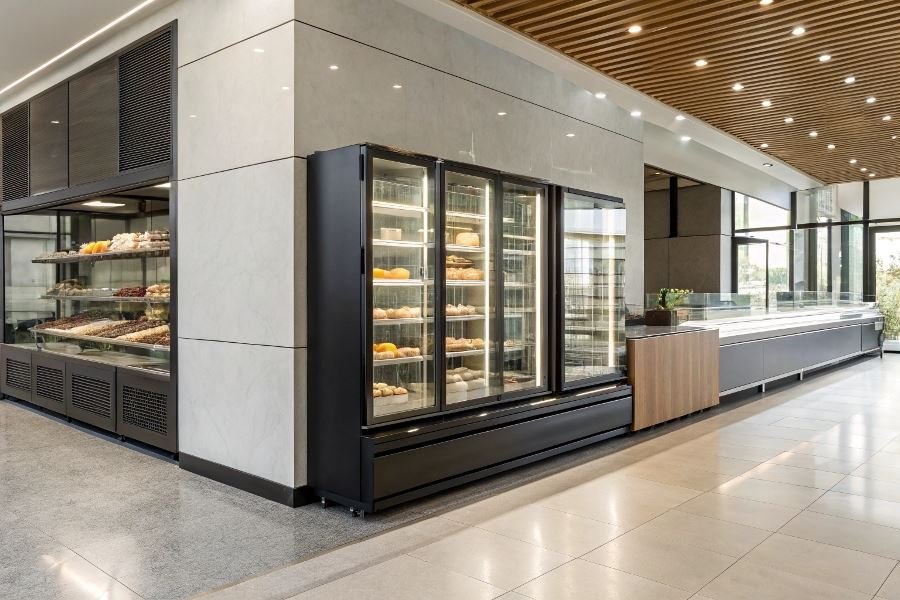
Built-in units create a cohesive, custom appearance that elevates the overall store design. Their seamless integration with surrounding cabinetry and countertops creates a premium, intentional look that can enhance customer perception of product quality.
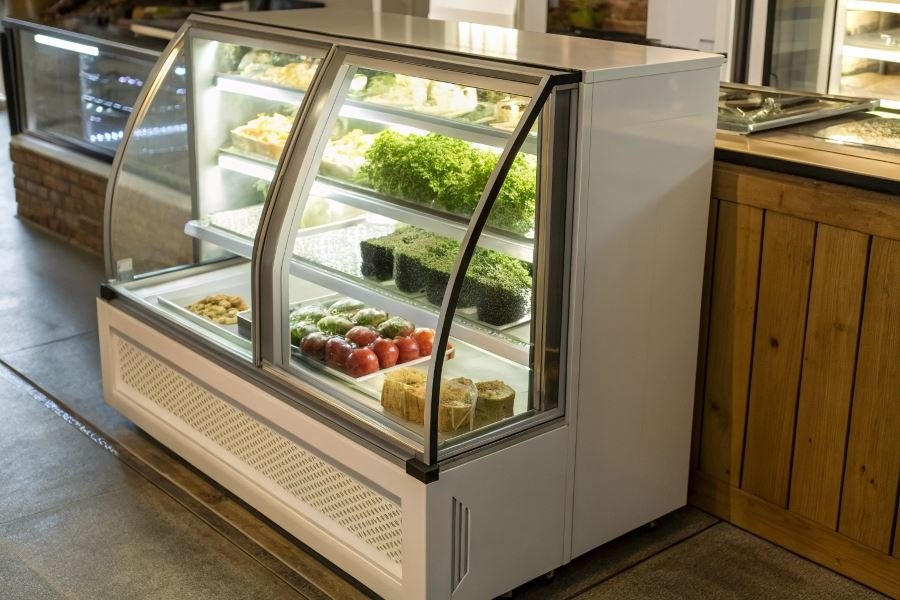
Standalone cases offer greater visibility and product exposure from multiple angles. Their island-style placement allows customers to approach from different directions, potentially increasing impulse purchases. Many retailers find that Hussmann standalone units with 360° glass visibility dramatically improve product showcase capabilities.
Investment Analysis and Operating Economics
The financial equation extends beyond initial purchase price:
- Upfront Investment: Built-in units typically cost 15-30% more than comparable standalone models
- Installation Expenses: Built-ins require additional installation costs (averaging $1,200-3,500)
- Energy Consumption: Properly installed built-ins may offer 10-15% energy savings over time
- Space Value: Built-ins free up floor space that can generate additional revenue
Long-term operating costs favor built-in units in stable, permanent locations, while standalone units offer better value for businesses that may relocate or reconfigure frequently.
Maintenance Accessibility and Service Longevity
Maintenance accessibility represents perhaps the most significant practical difference between these options. Standalone units provide straightforward access to all components, simplifying routine cleaning and professional service. Technicians can easily reach condensers, evaporators, and electrical systems without disrupting store operations.
Built-in units present more challenging service scenarios, often requiring partial disassembly of surrounding structures to access key components. This can increase service costs by 20-40% and potentially extend downtime during repairs.
The choice ultimately depends on your specific business priorities—whether space efficiency, visual integration, maintenance simplicity, or initial investment concerns carry more weight in your decision-making process.
Making the Right Display Case Decision for Your Business
Assessing Your Business Type and Space Constraints
The refrigerated display case decision starts with an honest evaluation of your operation. Specialty bakeries, boutique delis, and high-end butcher shops often benefit from custom built-in units that seamlessly integrate with their carefully crafted aesthetic. Meanwhile, convenience stores and supermarkets typically need the flexibility that standalone units provide.
Space is the ultimate dictator in this decision. Built-in cases require permanent installation and dedicated floor plans, making them ideal for businesses with stable, long-term locations. A gourmet chocolate shop in Manhattan might invest in a built-in display that maximizes every precious square inch while complementing their luxury branding.
Space efficiency tip: Built-in units can save up to 15-20% of floor space compared to standalone alternatives when properly integrated into wall cavities or counter spaces.
Budget Realities and ROI Analysis
The financial equation isn’t simply about upfront costs—it’s about long-term value. Built-in refrigerated displays typically demand a 30-40% higher initial investment but can deliver superior ROI through energy efficiency and longer operational lifespans.
| Display Type | Average Initial Cost | Typical Lifespan | Energy Efficiency | Installation Complexity |
|---|---|---|---|---|
| Built-in | 5, 000−15,000+ | 10-15 years | Higher | Complex (requires professionals) |
| Standalone | 2, 000−8,000 | 7-10 years | Moderate | Simple (plug-and-play) |
The true cost calculation must include installation, maintenance, energy consumption, and potential renovation expenses if your business layout changes.
Standalone units from manufacturers like True Manufacturing offer lower barriers to entry, making them attractive for startups and businesses with tight capital constraints. However, built-in systems from companies like Structural Concepts often deliver superior energy performance that compounds savings over time.
When Built-in Cases Shine Brightest
Built-in refrigerated displays excel in these specific scenarios:
-
Premium food service establishments where aesthetics directly impact customer perception and pricing power. High-end patisseries and specialty food shops leverage custom built-ins to elevate their brand image.
-
Permanent locations with stable business models benefit from the investment in fixed infrastructure. Think established restaurants or gourmet markets with long-term leases or owned properties.
-
Businesses with unique spatial requirements where standard dimensions won’t suffice. Custom built-ins can be designed for awkward corners, unusual wall spaces, or specific product display needs.
When Standalone Cases Deliver Superior Value
Standalone refrigerated displays prove their worth in these scenarios:
-
Businesses in growth or transition phases need the flexibility to reconfigure their space as they evolve. A growing catering business might start with standalone units they can reposition as their operation expands.
-
Seasonal or pop-up operations require equipment that can be relocated or stored. Farmers market vendors and seasonal businesses benefit from portable standalone units from Beverage-Air.
-
Multi-location businesses with standardization needs find value in consistent, replicable standalone units. Bakery chains and franchise operations can maintain brand consistency while simplifying maintenance protocols across locations.
The ultimate display case decision balances immediate needs against long-term vision. The right choice creates a refrigeration solution that enhances your products, delights your customers, and supports your bottom line for years to come.
Discover the key differences between built-in and standalone refrigerated display cases to make the optimal choice for your business. Compare space efficiency, cooling performance, aesthetics, costs, and maintenance to find your perfect merchandising solution.
Discover the key differences between built-in and standalone refrigerated display cases to make the optimal choice for your business. Compare space efficiency, cooling performance, aesthetics, costs, and maintenance to find your perfect merchandising solution.