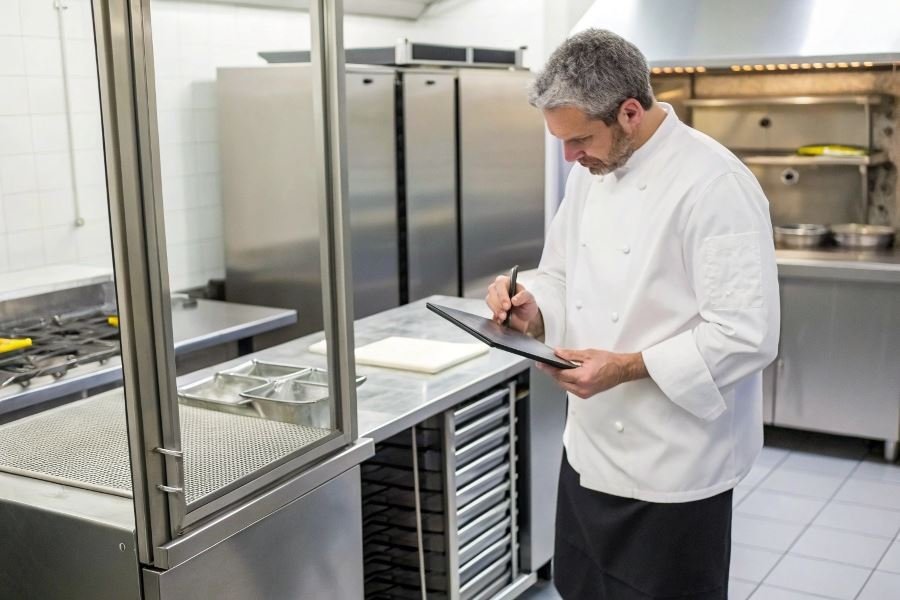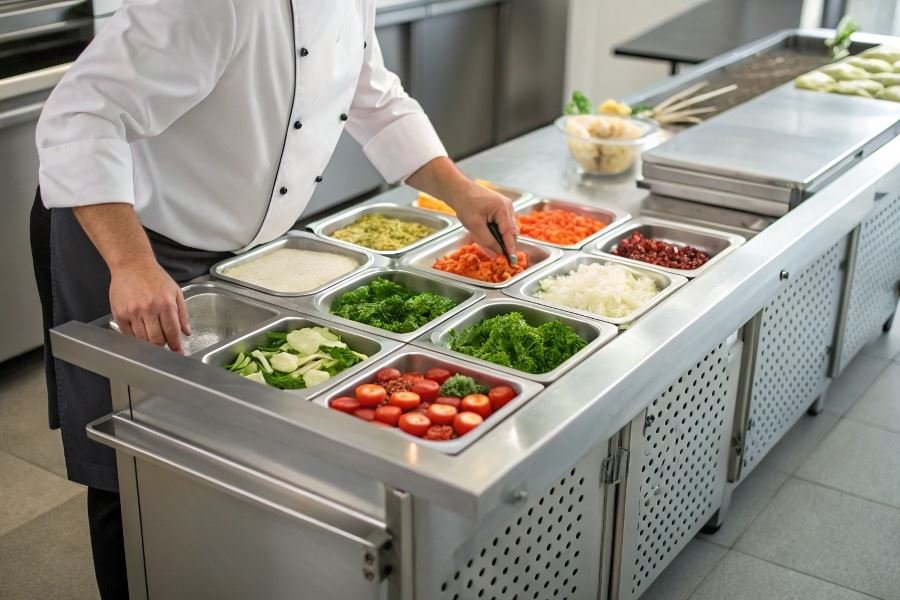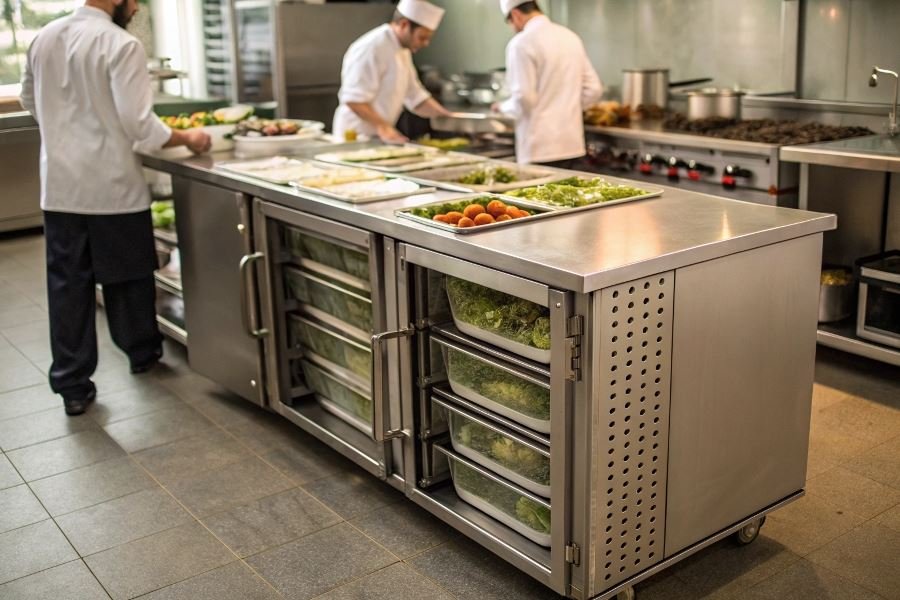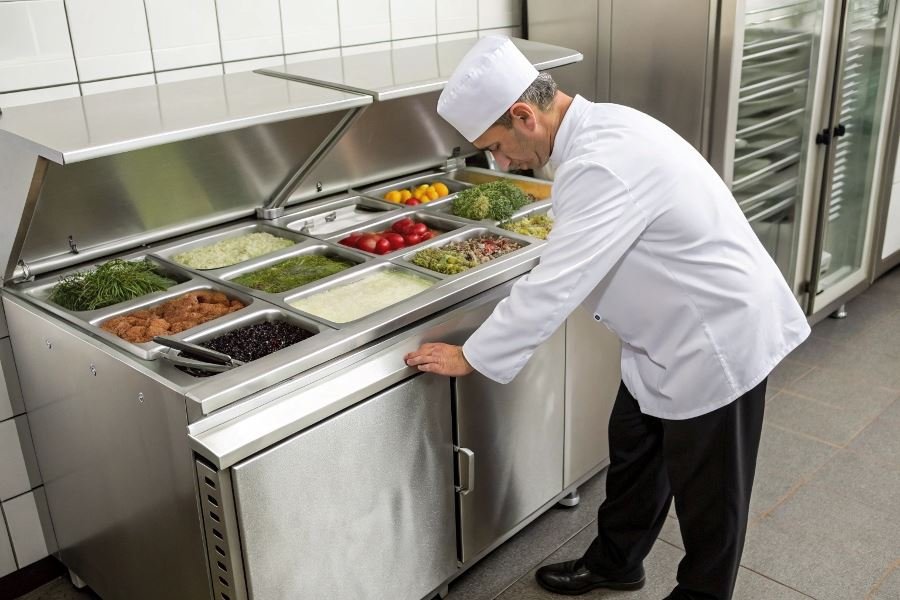
Ever watched a chef seamlessly plate a perfect dish during the dinner rush? Behind that culinary magic stands an unassuming workhorse – the refrigerated table. This essential equipment bridges the gap between storage and preparation, turning chaotic service into a well-orchestrated performance.
Restaurant kitchens operate in a delicate balance between food safety and operational efficiency. Choosing the right refrigerated table isn’t just about buying equipment—it’s about investing in your restaurant’s workflow, food quality, and ultimately, your reputation. The perfect unit keeps ingredients at precise temperatures while providing the workspace chefs need to execute their craft.
The refrigerated landscape has evolved dramatically since the first commercial units appeared in the 1940s. Today’s market offers specialized solutions for every culinary need:
Types that transform your kitchen
- Prep tables: The frontline soldiers featuring cutting boards and ingredient wells
- Pizza tables: Specialized units with expanded topping areas and insulated lids
- Undercounter units: Space-saving solutions that maximize kitchen real estate
- Chef bases: Low-profile foundations that support cooking equipment above
When selecting your ideal refrigerated table, consider the critical trinity: kitchen layout, menu requirements, and volume demands. A sushi restaurant needs different configurations than a pizzeria or burger joint.
“The right refrigerated table doesn’t just store food—it becomes an extension of your chef’s hands during service.”
Temperature consistency, energy efficiency, and construction quality form the foundation of your decision. The best units maintain perfect temperatures even when opened frequently during a busy service, saving both your food and your utility bills.
Essential Considerations for Restaurant Refrigerated Tables
When equipping your commercial kitchen, refrigerated tables stand as critical workhorses that bridge food preparation and preservation. The right unit doesn’t just store ingredients—it transforms your workflow, impacts your bottom line, and ultimately influences food quality.
Selecting a refrigerated table for a restaurant kitchen requires balancing multiple factors that extend beyond simple temperature control. Professional kitchens demand equipment that can withstand constant use while maintaining precise temperatures in challenging environments. The decision-making process involves careful analysis of your specific operational needs, available space, and long-term cost considerations.
Size and Capacity: The Foundation of Functionality
Your kitchen’s layout dictates what’s possible. Before measuring tape meets floor, consider:
- Workflow integration: Position your refrigerated table where it serves prep stations without creating bottlenecks
- Height considerations: Standard 36″ working height pairs with most countertops, but custom heights may better serve specific tasks
- Depth options: Units range from 24″ to 36″ deep—narrower units preserve walkways while deeper models maximize storage
The capacity requirements stem directly from your menu complexity. A restaurant serving extensive made-to-order items needs more accessible ingredients than operations with limited offerings.
| Menu Type | Recommended Capacity |
|---|---|
| Limited menu (5-10 items) | 12-15 cubic feet |
| Standard menu (10-25 items) | 15-27 cubic feet |
| Extensive menu (25+ items) | 27+ cubic feet |
Temperature Performance: The Heart of Preservation
Temperature capabilities determine what ingredients you can safely store and for how long. Modern True Manufacturing and Turbo Air units offer:
- Temperature range: Standard units maintain 33°F-41°F, while specialty models reach 28°F for fish or 45°F for certain produce
- Recovery time: Premium units return to set temperature within 3-5 minutes after door openings—critical during service rushes
- Temperature uniformity: Look for ±2°F variance maximum throughout the cabinet
Cooling performance factors extend beyond the thermostat reading:
- Ambient temperature tolerance: Quality units maintain performance in kitchens reaching 100°F
- Humidity control: Advanced systems prevent excessive moisture that accelerates spoilage
- Airflow design: Strategic circulation prevents hot spots and ensures even cooling
Energy Efficiency: The Long-Term Investment
Initial purchase price represents just 15-20% of a refrigerated table’s lifetime cost. Energy consumption dominates the expense equation:
The difference between standard and ENERGY STAR certified models can exceed $2,000 in operational costs over a 10-year lifespan.
When evaluating efficiency:
- Compare EER ratings (Energy Efficiency Ratio)—higher numbers indicate better performance
- Examine compressor technology—variable speed compressors from Embraco adjust to demand rather than cycling on/off
- Assess insulation quality—polyurethane foam at 2″ thickness provides optimal thermal barrier
- Review door seal design—magnetic gaskets with replaceable sections reduce long-term maintenance costs
The most efficient units feature:
- Smart defrost cycles that activate only when needed
- LED lighting that generates minimal heat
- Self-closing doors that prevent temperature fluctuations
- Digital controls allowing precise temperature management
Selecting the right refrigerated table balances immediate operational needs with long-term performance considerations, creating a foundation for kitchen efficiency that pays dividends with every service.
The Hidden Workhorses: Engineering Excellence in Commercial Refrigeration
Materials that define durability
When investing in a refrigerated table for your restaurant, the construction materials aren’t just specifications on a brochure—they’re the foundation of your daily operations. Stainless steel dominates the premium segment for good reason: its corrosion resistance, durability, and ease of sanitization make it the gold standard in commercial kitchens. The difference between 304-grade and 430-grade stainless steel isn’t just technical jargon—it’s about longevity. The former contains more nickel, offering superior rust resistance in humid environments, while costing approximately $200-300 more on average.
Interior linings deserve equal scrutiny. ABS plastic provides excellent thermal properties but can crack under extreme conditions, while aluminum offers superior heat transfer but may corrode when exposed to acidic foods. The most forward-thinking manufacturers now offer antimicrobial coatings that inhibit bacterial growth—a feature worth the 15-20% premium for establishments prioritizing food safety.
The insulation quality determines not just energy efficiency but long-term performance. Polyurethane foam at 40-45 kg/m³ density provides optimal thermal barriers, while cyclopentane-blown insulation offers environmental benefits without ozone-depleting compounds.
Maintenance accessibility that saves time and money
The brilliance of a refrigerated table’s design reveals itself during maintenance. Removable condenser filters aren’t just convenient—they’re essential for preventing the 30% efficiency drop that accumulated dust can cause. Look for units with slide-out refrigeration systems that allow technicians to service components without disconnecting the entire unit, potentially saving $300-500 in service costs per incident.
Self-evaporating condensate systems eliminate the need for manual draining, while magnetic door gaskets that can be replaced without tools represent the kind of thoughtful engineering that reduces downtime. The most user-friendly models feature:
| Maintenance Feature | Benefit | Time Saved |
|---|---|---|
| Tool-free panel removal | Quick daily cleaning | 15-20 min/day |
| Front-breathing condensers | No clearance requirements | Installation flexibility |
| LED interior lighting | Better visibility, less heat | Energy savings + easier inspection |
| Removable drawer tracks | Thorough sanitization | 30 min/week |
Smart operators recognize that maintenance accessibility isn’t about convenience—it’s about protecting profit margins through operational efficiency.
Warranty protection that reflects manufacturer confidence
The warranty terms speak volumes about a manufacturer’s faith in their product. Standard coverage typically spans 1-3 years for parts and labor, but premium manufacturers like True Refrigeration and Hoshizaki often extend compressor warranties to 5 years—a testament to component quality.
Beyond duration, examine warranty scope. Does it cover:
- On-site service or depot-only repair?
- Parts only or labor included?
- Full replacement for catastrophic failures?
After-sales support infrastructure varies dramatically between manufacturers. Regional service networks matter—a 24-hour response guarantee means little if the nearest technician is 200 miles away. The most reliable manufacturers maintain parts inventories for at least 10 years after model discontinuation.
The true cost of ownership extends far beyond the purchase price. Preventative maintenance programs, while representing an additional investment of $300-600 annually, typically extend equipment life by 30-50% while reducing emergency service calls by up to 70%.
When evaluating warranty options, remember that the most valuable protection isn’t necessarily the longest—it’s the one backed by responsive service infrastructure and readily available parts. Your refrigerated table isn’t just equipment; it’s a critical business partner deserving thoughtful selection and proper care.
Discover how to select the perfect refrigerated table for your restaurant with our comprehensive guide covering size requirements, temperature capabilities, energy efficiency, and key durability factors for optimal kitchen performance.
Discover how to select the perfect refrigerated table for your restaurant with our comprehensive guide covering size requirements, temperature capabilities, energy efficiency, and key durability factors for optimal kitchen performance.