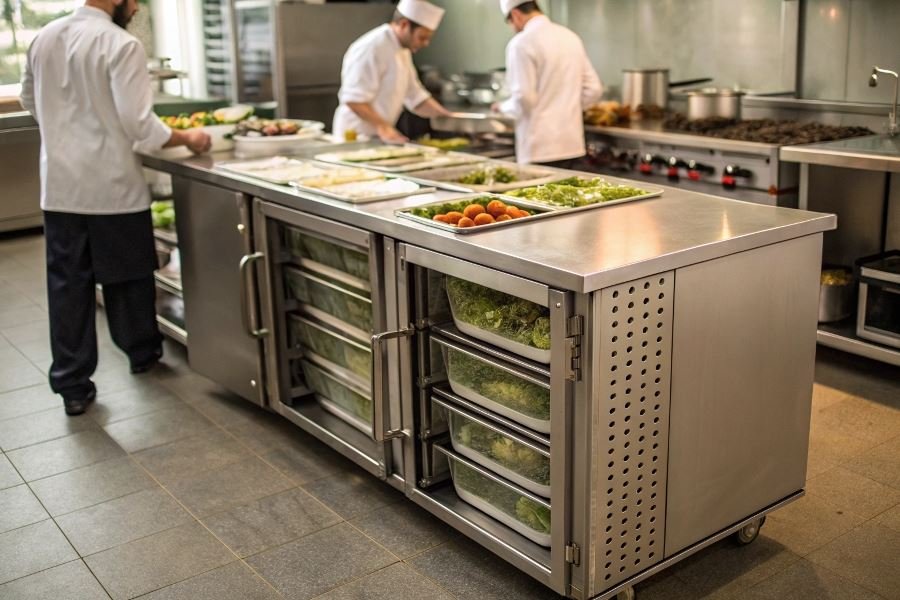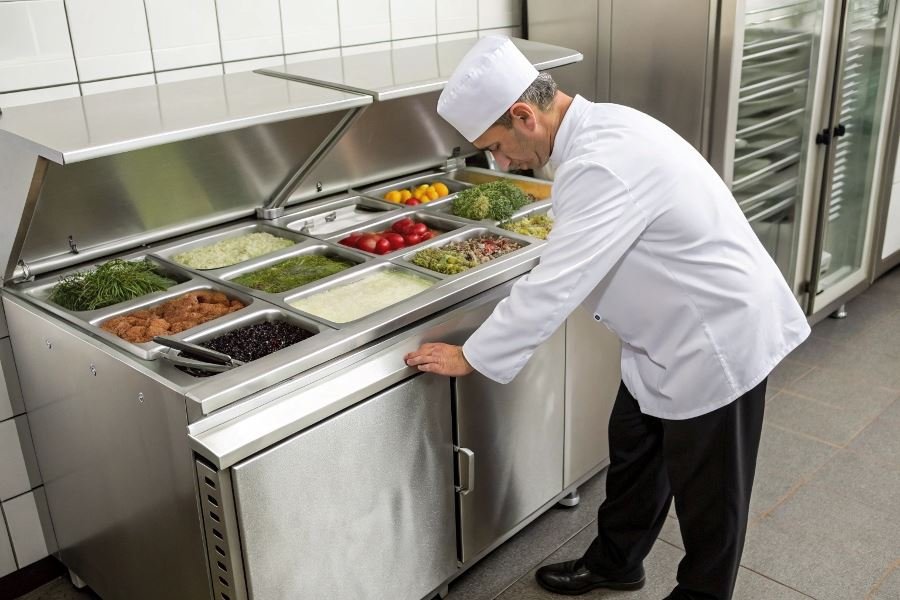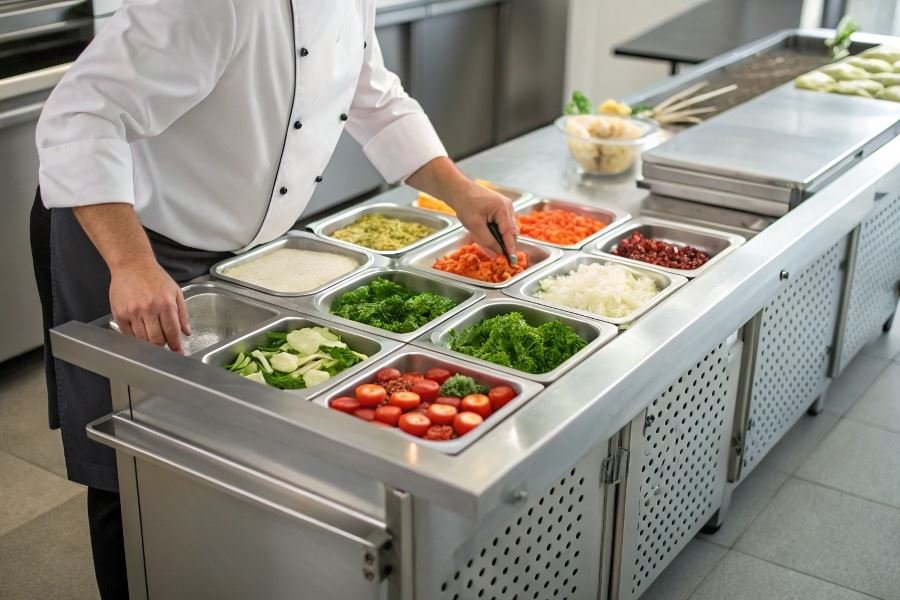
Ever watched a master pizzaiolo at work? Their hands dance between dough and toppings with mesmerizing precision. But behind that artistry lies a crucial ally that rarely gets the spotlight: the refrigeration table. It’s the unsung hero of every successful pizzeria, silently preserving ingredients at their peak while enabling the choreography that turns raw materials into culinary magic.
The perfect pizza begins long before it hits the oven. Fresh dough, vibrant vegetables, and quality cheeses all demand precise temperature control to maintain their integrity. A professional-grade refrigeration table doesn’t just store ingredients—it protects your reputation with every slice served.
Beyond food safety, these specialized workstations dramatically transform workflow efficiency. Imagine reaching down for perfectly chilled mozzarella while your hands remain in position at the prep station. This seamless movement can save up to 15 minutes per hour during rush periods, translating to significantly more orders fulfilled when it matters most.
When selecting the ideal refrigeration table for your pizzeria, three critical factors stand above all others: temperature consistency (fluctuations of even 2°F can affect dough performance), spatial configuration (matching your specific menu requirements), and energy efficiency (as these units typically run 24/7, operating costs add up quickly).
“The difference between good pizza and great pizza often comes down to ingredient integrity—and that’s impossible without proper refrigeration.” — James Beard Award-winning pizza chef
The right refrigeration table isn’t just equipment—it’s an investment in quality, efficiency, and ultimately, your pizzeria’s reputation.
Technical Essentials for Pizza Perfection
Let’s dive into the technical heart of pizza production – the refrigeration table. When evaluating refrigeration tables for your pizzeria operation, the technical specifications aren’t just numbers on a spec sheet; they’re the difference between consistent, high-quality pies and frustrated customers. Establishing clear criteria for choosing a refrigeration table for a pizzeria requires understanding both the science of food preservation and the practical realities of a busy kitchen environment.
Temperature precision that protects your profits
The cornerstone of any refrigeration system is temperature control. For pizza prep tables, you need equipment that maintains a consistent 33°F to 41°F (0.5°C to 5°C) throughout the entire unit. This isn’t just about food safety regulations – it’s about ingredient quality.
Temperature fluctuations are the enemy of fresh dough and toppings. The best units offer digital temperature controls with ±2°F accuracy and recovery times under 10 minutes after door openings. This precision becomes particularly crucial during rush periods when doors are constantly being opened.
“Temperature consistency is the unsung hero of pizza quality. When ingredients stay at optimal temperatures, flavors remain vibrant and textures perfect.”
Many premium models from manufacturers like True Refrigeration and Turbo Air now include multiple cooling zones, allowing you to store different ingredients at their ideal temperatures within the same unit.
Size matters: Matching capacity to production
The relationship between your production volume and refrigeration capacity is critical. A mismatch here leads to either wasted space or insufficient storage – both costly mistakes.
Consider these capacity guidelines:
| Production Volume | Recommended Size | Typical Pan Capacity |
|---|---|---|
| Small (30-50 pizzas/day) | 48″-60″ width | 6-9 1/6 size pans |
| Medium (50-100 pizzas/day) | 67″-93″ width | 9-12 1/6 size pans |
| High Volume (100+ pizzas/day) | 93″+ width | 12+ 1/6 size pans |
Beyond simple width measurements, evaluate the usable interior space. Some models sacrifice storage for compressor housing or have inefficient layouts. The depth of the refrigerated area (typically 16″-19″) should accommodate your standard prep containers while maintaining proper air circulation.
Pro tip: Allow for 20% more capacity than your current needs to accommodate business growth and seasonal rushes.
Built to survive the pizza battlefield
Commercial kitchens are punishing environments. Your refrigeration table needs to withstand constant use, temperature fluctuations, and the occasional collision with other equipment.
The gold standard for construction is 304-grade stainless steel for both interior and exterior surfaces. This material resists corrosion from acidic ingredients like tomato sauce and stands up to aggressive cleaning chemicals. Lesser units use 430-grade stainless or even painted steel exteriors that will deteriorate quickly.
Insulation quality directly impacts energy efficiency and temperature stability. Look for units with minimum 2″ polyurethane foam insulation with an R-value of at least 12.5.
The worktop deserves special attention – granite or 14-gauge stainless steel tops provide the ideal surface for pizza preparation. They resist knife marks, maintain cooler temperatures, and can handle the weight of heavy dough mixers or other equipment.
Don’t overlook the importance of self-closing doors with magnetic gaskets that create perfect seals. These features prevent temperature fluctuations and reduce energy consumption by up to 15% compared to manual-close systems.
By focusing on these technical criteria – precise temperature control, appropriate capacity, and commercial-grade construction – you’ll select a refrigeration table that becomes a reliable partner in your pizza operation rather than a source of daily frustration.
Operational Excellence: Powering Your Pizzeria’s Cold Storage
Energy efficiency that pays dividends
The refrigeration table silently running in your pizzeria kitchen might not seem like a major expense—until you see your utility bills. Modern refrigeration tables can vary dramatically in energy consumption, with high-efficiency models potentially saving 600−1,200 annually compared to standard units.
The Energy Star certification remains the gold standard for commercial refrigeration equipment. Energy Star certified units typically consume 20-40% less electricity than non-certified alternatives while maintaining optimal temperature stability. This translates to approximately 1,200 kWh saved annually—enough to power a small apartment for a month.
Temperature recovery rate deserves your attention too. During peak service hours, your staff might open refrigeration drawers dozens of times. Units with rapid recovery systems maintain consistent temperatures without overworking compressors, reducing both energy consumption and wear on critical components.
The most expensive refrigeration table is rarely the one with the highest price tag—it’s the one draining your profits through inefficient operation year after year.
Consider investing in models with variable speed compressors from manufacturers like True Refrigeration or Turbo Air. These systems adjust cooling power based on actual demand rather than cycling on and off at full capacity, reducing energy consumption by up to 30% during slower periods.
Maintenance that doesn’t disrupt service
The best refrigeration table becomes the worst investment when it requires frequent service calls or extended downtime. Smart maintenance design can dramatically reduce both operational interruptions and service costs.
Look for these maintenance-friendly features:
- Front-breathing condensers that don’t require clearance from walls
- Removable condenser filters accessible without tools
- Self-cleaning condenser systems that extend maintenance intervals
- Slide-out refrigeration systems for quick service access
Accessibility of components directly impacts maintenance costs. When refrigeration components are easily accessible, technician service time decreases substantially—often cutting labor costs by 30-50% per service call.
| Maintenance Feature | Benefit | Potential Savings |
|---|---|---|
| Front-breathing design | Allows zero-clearance installation | Up to 15% more usable kitchen space |
| Tool-free filter access | Enables daily cleaning by staff | Reduces energy costs by 5-10% |
| Self-cleaning condenser | Extends service intervals | Cuts maintenance visits by 30-40% |
| Slide-out system | Reduces technician time | Saves $75-150 per service call |
Workflow integration that boosts productivity
The most energy-efficient, maintenance-friendly refrigeration table still fails if it creates workflow bottlenecks. Proper integration with your existing kitchen layout can increase productivity by 15-25% during peak service periods.
Height compatibility with adjacent work surfaces creates a seamless prep line. The industry standard 36″ working height matches most prep tables, but verify measurements—even half-inch differences can cause ergonomic issues and product transfer problems.
Door and drawer configuration should align with your specific menu and production volume. For high-volume pizzerias, drawer configurations typically outperform door models by reducing cold air loss and improving ingredient accessibility. Beverage-Air offers customizable drawer layouts that can be tailored to your specific pan sizes.
Undercounter clearance matters more than you might think. Models with 6″ legs or casters provide essential clearance for floor cleaning, while ensuring compatibility with existing floor plans. Adjustable legs offer additional flexibility when dealing with uneven floors—a common challenge in older buildings.
Consider the compressor location relative to heat-generating equipment. Placing refrigeration tables next to ovens or fryers forces compressors to work harder, increasing energy consumption by up to 25% and shortening equipment lifespan. Continental Refrigerator offers models with strategic compressor placement designed specifically for pizzeria environments.
The right refrigeration table doesn’t just store ingredients—it becomes an integral part of your kitchen’s operational flow, silently supporting your team’s productivity while keeping costs under control.
Discover the 7 critical criteria for selecting the perfect pizzeria refrigeration table. Learn how temperature control, size, durability, and energy efficiency impact your pizza preparation workflow and bottom line. Essential guide for pizzeria owners.
Discover the 7 critical criteria for selecting the perfect pizzeria refrigeration table. Learn how temperature control, size, durability, and energy efficiency impact your pizza preparation workflow and bottom line. Essential guide for pizzeria owners.