Ever picked up a food item and checked its ingredients or expiration date? That small label represents the critical intersection of consumer safety, regulatory compliance, and brand identity. Behind every perfectly printed food label stands specialized technology designed to withstand the unique challenges of food production environments.
Food manufacturers face a labeling paradox: these tiny printed surfaces must simultaneously satisfy strict FDA regulations, withstand temperature fluctuations, resist moisture, and communicate vital information clearly. The wrong printer choice can lead to smudged barcodes, illegible allergen warnings, or labels that simply fall off—potentially triggering recalls costing millions.
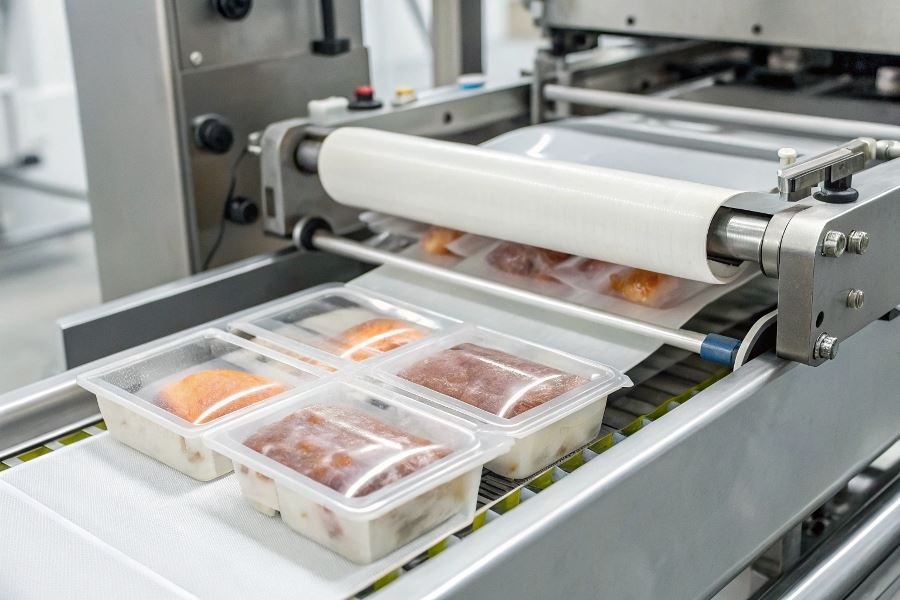
Modern food-grade label printers have evolved dramatically to meet these demands. Today’s systems offer specialized features like antimicrobial coatings for clean room environments, high-speed printing capabilities for production lines moving at 300+ units per minute, and specialized adhesives formulated for everything from frozen foods to hot-fill applications.
When selecting labeling solutions, food producers must navigate complex considerations beyond just print quality. Printers must integrate seamlessly with existing production lines, accommodate variable data printing for batch tracking, and produce labels that remain legible throughout the entire cold chain. Additionally, with regulations constantly evolving, systems must be flexible enough to adapt to new labeling requirements without major overhauls.
The right label printer doesn’t just print information—it protects consumers, preserves brand reputation, and prevents costly compliance issues.
Essential Features of Food Industry Label Printers
The food industry demands precision at every step—from ingredient sourcing to the final labeled product reaching consumers’ hands. When selecting label printers for food production environments, manufacturers face unique challenges that standard printing solutions simply can’t address. The specialized requirements for label printers in the food industry demand careful consideration of several critical factors that directly impact compliance, efficiency, and product presentation.
Print quality in food labeling isn’t merely about aesthetics—it’s about safety, compliance, and brand integrity. When evaluating label printers for the food industry, what to pay attention to goes beyond basic specifications to include durability under challenging conditions, regulatory compliance capabilities, and seamless integration with existing systems. These factors collectively determine whether a printer will be an asset or liability in your production environment.
Uncompromising print quality and durability
Food-grade labels must withstand a gauntlet of challenging conditions: refrigeration, moisture, handling, and potentially oils or other food substances. Print resolution of at least 300 dpi is now considered the minimum standard for food labels where barcodes, ingredient lists, and allergen warnings must remain perfectly legible throughout the product lifecycle.
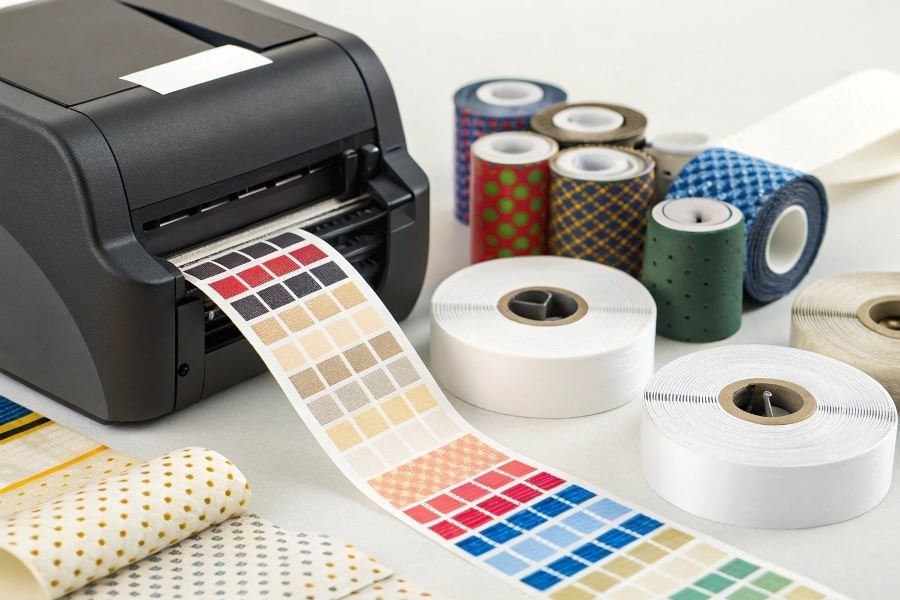
The most reliable food label printers utilize thermal transfer technology, which creates chemical and abrasion-resistant prints that won’t fade or smudge. Zebra Technologies and SATO printers consistently deliver exceptional durability with specialized food-grade ribbons that produce labels capable of withstanding temperatures from -40°F to 176°F—essential for products moving between freezers and ambient environments.
The difference between consumer-grade and industrial food label printers becomes apparent within weeks, not years, of implementation.
Regulatory compliance capabilities
Food label printers must support compliance with an ever-evolving regulatory landscape:
| Regulation | Printer Requirements |
|---|---|
| FDA Food Labeling | Support for allergen highlighting, nutrition facts formatting |
| EU Food Information Regulation | Multi-language support, ingredient emphasis capabilities |
| GS1 Standards | High-precision barcode printing with verification systems |
| Lot/Batch Tracking | Variable data printing with serialization features |
Modern food-grade printers from manufacturers like Epson ColorWorks include pre-configured templates for regulatory compliance and automatic updates when standards change. Integrated verification systems scan printed labels in real-time, rejecting any that don’t meet quality thresholds—preventing compliance issues before products leave the facility.
Seamless production integration
The most sophisticated label printers serve as nodes in a connected production ecosystem rather than standalone devices. Integration capabilities should include:
- API compatibility with inventory management systems
- Direct connection to weight scales and vision systems
- Support for industry-standard protocols like MQTT and OPC UA
- Automated calibration routines that maintain print quality without manual intervention
Datamax-O’Neil printers excel in production environments with their robust middleware that connects to virtually any ERP or MES system. Their printers can receive real-time product data, automatically generate appropriate labels, and report printing statistics back to central systems.
The true value of integration becomes evident when considering that manual label processes typically introduce error rates of 5-8%, while automated systems reduce this to less than 0.5%—a critical difference when allergen information or expiration dates are involved.
When selecting a label printer for food production, prioritize solutions that offer this trifecta of quality, compliance, and integration. The initial investment in superior printing technology typically pays dividends through reduced waste, fewer compliance issues, and streamlined operations.
Maximizing Your Label Printer Investment
Beyond the price tag
When evaluating label printers for your food operation, the sticker price is merely the tip of the iceberg. The Total Cost of Ownership (TCO) encompasses far more significant expenses that accumulate over the printer’s lifecycle. Premium models from manufacturers like Epson or Zebra might command higher upfront costs but deliver substantial long-term savings.
Consider these often-overlooked TCO factors:
- Consumables efficiency – Lower-quality printers typically consume 15-30% more ribbon and label material
- Energy consumption – Advanced models can reduce power usage by up to 40%
- Downtime costs – Production halts from printer failures can cost 500−2,000 per hour
One food processor I consulted with saved over $12,000 annually after upgrading from budget printers to industrial-grade SATO models—despite paying three times more upfront.
The cheapest printer you can buy is rarely the cheapest printer you can own.
Future-proofing for regulatory evolution
The food labeling landscape transforms constantly. The FDA has implemented significant labeling changes approximately every 5-7 years, with smaller updates occurring even more frequently. Your printing solution must adapt to these changes without requiring complete system replacement.
Key future-proofing considerations include:
Firmware upgradeability – Ensure your printer supports remote firmware updates to accommodate new label formats and compliance requirements.
Resolution flexibility – As ingredient disclosure requirements expand, higher resolution capabilities (300-600 dpi) become increasingly valuable.
Data integration capacity – Modern printers should connect seamlessly with your inventory, production, and compliance systems.
| Feature | Basic Models | Future-Proof Models |
|---|---|---|
| Resolution | 203 dpi fixed | 203-600 dpi adjustable |
| Memory | 8-16MB | 64MB+ expandable |
| Connectivity | USB/Ethernet | USB/Ethernet/Bluetooth/WiFi/Cloud |
| API Support | Limited | Comprehensive |
Implementation and maintenance mastery
Even the most sophisticated printer will underperform without proper implementation and maintenance protocols. Successful deployment requires:
Staff training investment – Allocate 4-8 hours of initial training per operator, with quarterly refreshers. Videojet and other manufacturers offer excellent training resources.
Preventative maintenance scheduling – Establish daily, weekly, and monthly maintenance routines. This simple practice typically extends printer lifespan by 30-50%.
Environmental controls – Food production environments present unique challenges. Maintain appropriate temperature (59-86°F) and humidity levels (20-85%) around printing equipment.
Spare parts inventory – Stock critical components like printheads and power supplies. The cost of maintaining this inventory is minimal compared to extended production downtime.
The most successful food manufacturers I’ve worked with treat their label printing infrastructure as a mission-critical system rather than peripheral equipment. This mindset shift transforms label printing from a necessary expense into a competitive advantage—enhancing compliance, reducing waste, and improving operational efficiency.
Discover the essential features of food industry label printers that ensure regulatory compliance, food safety, and production efficiency. Learn what factors matter most when selecting the right printing solution for your food manufacturing operation.
Discover the essential features of food industry label printers that ensure regulatory compliance, food safety, and production efficiency. Learn what factors matter most when selecting the right printing solution for your food manufacturing operation.