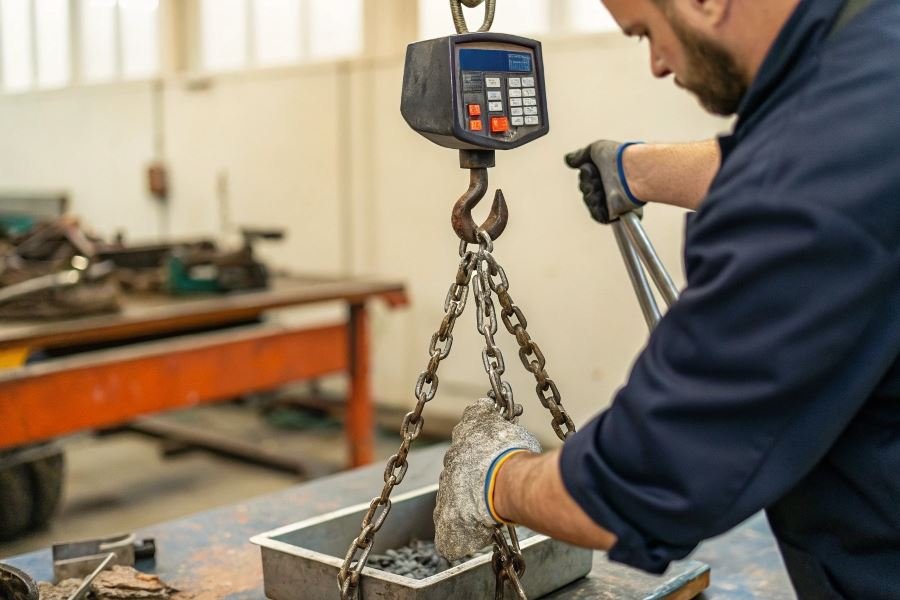
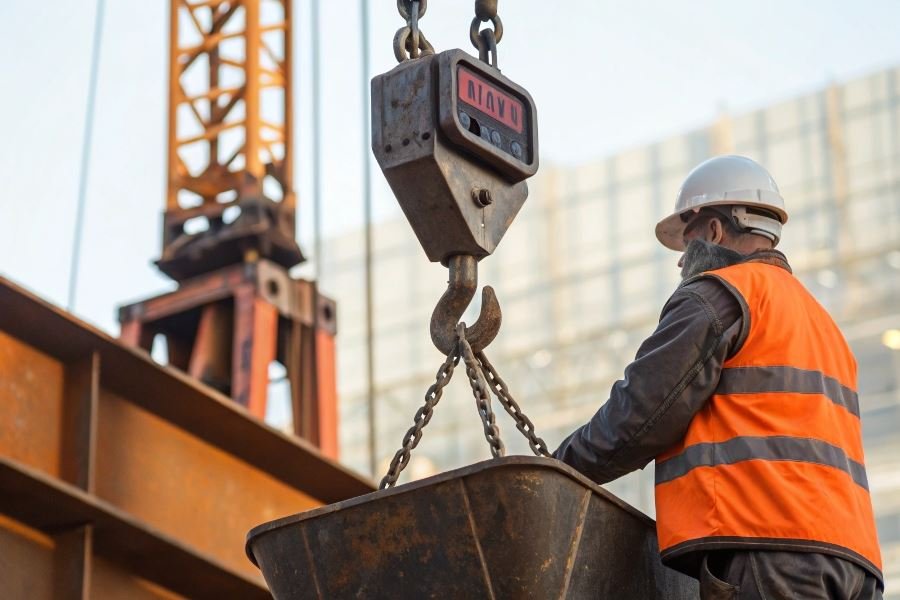
Ever watched a 2,000-pound steel beam being weighed mid-air with pinpoint accuracy? That’s the magic of crane scales with remote control capabilities—devices transforming how industries handle heavy-load weighing operations from construction sites to shipping yards.
Remote-controlled crane scales are specialized weighing instruments designed to measure heavy loads while suspended from cranes, hoists, or other lifting equipment. What sets them apart is their wireless control functionality, allowing operators to monitor weights, calibrate systems, and record measurements from safe distances—sometimes up to 100 meters away.
The evolution of this technology tells a fascinating story of industrial innovation. Traditional mechanical crane scales date back to the early 20th century, but the integration of remote control capabilities emerged in the 1980s with basic radio frequency technology. The real breakthrough came in the early 2000s when digital load cells, Bluetooth connectivity, and sophisticated software transformed these tools from simple weight indicators to comprehensive data management systems.
Today’s remote-controlled crane scales serve as critical operational assets across diverse industries:
- Manufacturing facilities use them to verify material weights during production
- Construction companies rely on them for precise load management and safety compliance
- Shipping and logistics operations depend on them for accurate freight measurement
- Recycling centers employ them to quantify material processing
The technology continues to advance with features like real-time data transmission, cloud integration, and smartphone compatibility—making these sophisticated weighing systems more accessible and valuable than ever before.
The Command Center in Your Hand
Imagine controlling a multi-ton lifting operation from 300 feet away with precision measured in ounces. That’s the reality of today’s advanced crane scales with remote control technology. These sophisticated weighing systems have transformed industrial operations from construction sites to shipping yards, offering unprecedented control and efficiency.
The functional capabilities of modern crane scales with remote control have evolved dramatically over the past decade, creating a seamless bridge between heavy-duty lifting operations and precise weight management systems. What once required multiple workers and manual recording now happens with the press of a button, often from a safe distance that protects operators from potential hazards.
Communication That Goes the Distance
The wireless communication range of premium crane scales now extends up to 300 feet in standard industrial environments, with high-end models from manufacturers like Dillon pushing boundaries to 500+ feet in open areas. This isn’t just about distance—it’s about reliability in challenging conditions.
Modern systems employ frequency-hopping spread spectrum technology that automatically navigates around interference sources. The best units maintain 99.9% transmission reliability even in electromagnetically noisy environments like steel mills and manufacturing plants.
Key advancement: Many new models feature mesh networking capabilities, allowing multiple scales to create their own communication web, extending effective range and redundancy.
Precision Under Pressure
| Capacity Range | Typical Accuracy | Applications |
|---|---|---|
| 500 lbs – 1 ton | ±0.1% | Precision manufacturing, valuable materials |
| 1-5 tons | ±0.2% | General industrial, construction |
| 5-50 tons | ±0.5% | Heavy construction, shipping |
| 50+ tons | ±1.0% | Specialized heavy lifting |
Today’s crane scales deliver remarkable accuracy across diverse capacity ranges. Entry-level models typically offer ±0.5% accuracy, while premium options from Rice Lake Weighing Systems achieve ±0.1% precision even under dynamic load conditions.
Calibration capabilities have similarly advanced, with many units featuring:
- Auto-zero tracking to compensate for environmental drift
- Temperature compensation algorithms for consistent readings in variable conditions
- Digital calibration that eliminates the need for test weights in many scenarios
- Self-diagnostic routines that alert operators to potential accuracy issues before they affect operations
Data Management That Drives Decisions
The true revolution lies in how crane scales now function as data collection nodes within broader enterprise systems. Modern units don’t just weigh—they communicate.
Advanced data management functions include:
- On-board storage capacity ranging from 1,000 to 50,000+ weight records with timestamps
- Transmission protocols including Bluetooth, Wi-Fi, and cellular options for real-time data sharing
- Integration capabilities with warehouse management systems, ERP platforms, and custom industrial software
The Eilon Engineering Ron Crane Scales exemplify this integration, offering API access that allows developers to pull weight data directly into custom applications. This creates opportunities for real-time inventory management, billing automation, and regulatory compliance documentation.
Smart analytics built into premium systems can identify loading patterns, predict maintenance needs, and even detect potential safety issues before they become critical—transforming what was once simple weight data into actionable business intelligence.
Mastering Remote-Controlled Crane Scales
When precision meets convenience in industrial weighing, remote-controlled crane scales emerge as the unsung heroes of modern material handling. These sophisticated devices don’t just weigh—they transform workflow efficiency while keeping operators safely distanced from suspended loads.
Safety First: Protection Systems That Save Lives
The most advanced remote-controlled crane scales incorporate multi-layered safety mechanisms that prevent catastrophic failures. Dini Argeo scales, for example, feature dynamic load limiters that automatically detect when a load approaches 90% of maximum capacity, triggering visual and audible warnings before reaching critical thresholds.
Overload protection isn’t optional—it’s essential. Today’s premium models employ:
- Automatic shutdown systems that engage at 110% of rated capacity
- Shear pin mechanisms that physically disconnect the weighing element from the load-bearing structure
- Digital load history tracking that records near-miss incidents for preventative maintenance
These safeguards aren’t just about protecting equipment—they’re about preventing the approximately 50 crane-related fatalities that occur annually in industrial settings according to OSHA data.
The difference between a good crane scale and a great one isn’t just accuracy—it’s how it responds when things go wrong.
Built to Endure: Power and Environmental Considerations
Battery performance determines whether your scale becomes an asset or liability in extended operations. The industry has evolved dramatically since the first portable electronic scales appeared in the 1970s.
Modern lithium-ion powered scales from manufacturers like Crosby offer impressive operational metrics:
| Battery Type | Operating Time | Charge Time | Temperature Range |
|---|---|---|---|
| Standard Li-ion | 40-60 hours | 4-6 hours | -10°F to 120°F |
| Extended Li-ion | 80-120 hours | 6-8 hours | -20°F to 140°F |
| Solar Hybrid | 100+ hours | Self-charging | -5°F to 110°F |
Environmental durability ratings matter tremendously in real-world applications. Look for IP67 or higher ratings for outdoor operations, ensuring protection against dust ingress and water immersion up to 1 meter.
Power management features worth their weight in gold include:
- Auto-sleep modes that activate after periods of inactivity
- Remote power status monitoring via Bluetooth or WiFi
- Emergency backup power systems that maintain readings during power transitions
The Decision Matrix: Top Selection Factors
When evaluating remote-controlled crane scales, three factors consistently determine long-term satisfaction:
1. Signal Range and Reliability
The best remote control isn’t helpful if it loses connection at critical moments. Premium scales from Rice Lake Weighing Systems offer interference-resistant radio frequencies with ranges exceeding 300 feet in industrial environments with physical obstacles.
2. Display Readability and Data Management
Information accessibility transforms operations. Evaluate:
- Screen size and backlight quality for varying light conditions
- Data logging capacity (minimum 1,000 weighments)
- Integration capabilities with inventory management systems
3. Accuracy-to-Price Ratio
While budget constraints are real, accuracy compromises can be costly. The sweet spot typically lies in scales offering ±0.1% accuracy or better, with NTEP certification for commercial applications where legal-for-trade status matters.
The difference between a $2,000 and $3,500 scale often isn’t just in the price tag—it’s in the calibration stability, which determines whether you’ll need recertification every 6 months versus every 2 years.
When these three factors align with your specific application requirements, you’ve found more than equipment—you’ve discovered a productivity multiplier that pays dividends through safer, faster, and more accurate material handling.
Discover how remote-controlled crane scales revolutionize industrial weighing with wireless precision, enhanced safety features, and seamless data integration. Learn key selection criteria for optimal performance in demanding environments.
Discover how remote-controlled crane scales revolutionize industrial weighing with wireless precision, enhanced safety features, and seamless data integration. Learn key selection criteria for optimal performance in demanding environments.