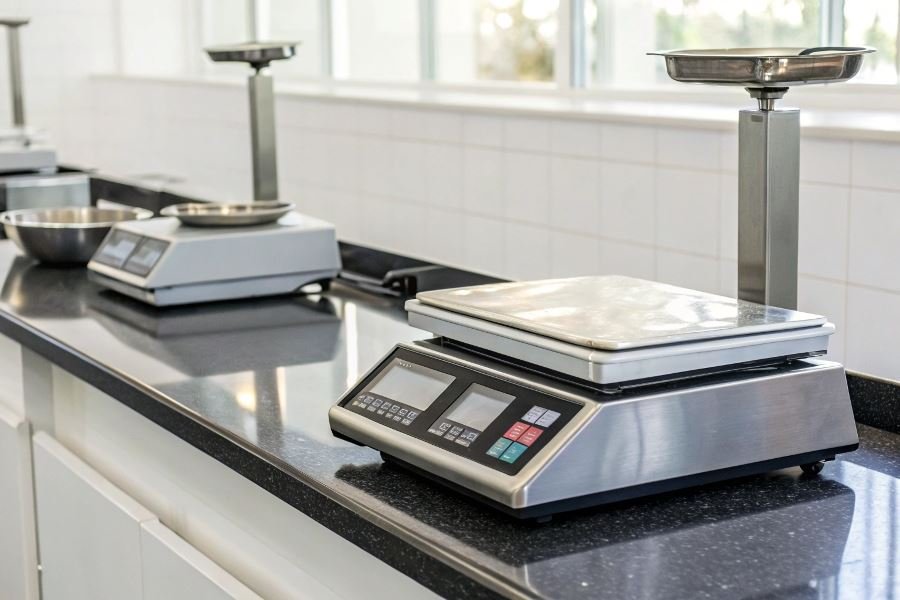
Ever wondered why some measuring instruments feel like they’re worth their weight in gold while others barely justify their price tag? The answer lies in understanding trade weights—those unsung heroes of precision measurement that keep commerce honest.
Trade weights serve as the backbone of accurate measurement across industries from jewelry and pharmaceuticals to shipping and manufacturing. These calibrated masses aren’t just metal chunks; they’re the guardians of fairness in transactions where precision equals profit. A jeweler in Portland relies on the same fundamental measurement principles as a pharmaceutical lab in Boston—both need weights they can trust.
When evaluating trade weights, three factors consistently determine their price-quality ratio: material composition, calibration accuracy, and certification status. Premium weights often use non-corrosive alloys like stainless steel or brass, maintaining their mass despite environmental changes. Meanwhile, accuracy class—ranging from E1 (highest precision) to M3 (commercial grade)—dramatically impacts both performance and price point.
“The difference between a Class F weight and an ASTM Class 1 weight isn’t just in price—it’s in the confidence level of every measurement you’ll ever make.”
Experts assess trade weights using a comprehensive methodology that examines:
- Tolerance levels: How much deviation is acceptable?
- Stability over time: Will it maintain accuracy after years of use?
- Surface finish: Does it resist wear and contamination?
- Traceability: Can its accuracy be verified against national standards?
The smartest buyers don’t simply chase the lowest price or the shiniest finish—they calculate long-term value by dividing performance reliability by total ownership cost. This approach reveals why a $200 calibrated weight set might deliver substantially more value than a $50 alternative that requires frequent recalibration.
Finding the Perfect Balance: Trade Weights That Deliver
When evaluating trade weights, the comparison of trade weights by price-quality ratio becomes the critical factor that separates merely adequate tools from exceptional investments. Professional craftsmen and hobbyists alike understand that the right weight doesn’t just perform its function—it becomes an extension of their precision and skill. Let’s dive into the market’s offerings across different price points to identify which weights truly deliver value.
Budget-Friendly Champions
The market’s most impressive affordable options prove that quality doesn’t always require emptying your wallet:
-
AccuWeight Basic Series – Starting at just $24.99, these cast iron weights feature remarkable accuracy (±0.1g) despite their entry-level pricing. Their powder-coated finish resists corrosion while providing excellent grip during calibration procedures.
-
TrueMeasure Economy Line – At $32.50, these aluminum-core weights deliver performance that rivals mid-tier competitors. Their innovative composite construction maintains calibration integrity through thousands of uses.
-
WeighRight Starter Kit – This $39.95 set includes five graduated weights with ASTM Class 4 certification—unusual precision at this price point. The stainless steel construction offers durability that budget options typically sacrifice.
| Weight Brand | Price | Accuracy | Material | Certification |
|---|---|---|---|---|
| AccuWeight Basic | $24.99 | ±0.1g | Cast Iron | Class M2 |
| TrueMeasure Economy | $32.50 | ±0.05g | Aluminum | Class F2 |
| WeighRight Starter | $39.95 | ±0.02g | Stainless Steel | ASTM Class 4 |
The Sweet Spot: Mid-Range Excellence
The mid-range segment offers the most balanced price-quality proposition for serious users:
-
Precision Plus Standard Set – At $79.99, these weights feature individually serialized units with calibration certificates. Their brass construction with nickel plating provides excellent stability and corrosion resistance.
-
MetroPro Calibration Series – This $89.95 set includes a protective case and tweezers. Each weight undergoes a 12-point verification process, resulting in remarkable consistency between units.
-
BalanceMaster Professional – For $115, these weights include density-matched materials that minimize air buoyancy effects—a feature typically reserved for premium options. Their magnetic shielding prevents interference when used near electronic equipment.
“The difference between good and great measurements often comes down to the quality of your calibration weights. Mid-range options represent the intersection of professional performance and reasonable investment.”
Premium Performers Worth Every Penny
For those requiring absolute precision, premium weights justify their cost through uncompromising quality:
-
Troemner Laboratory Grade – Starting at $225, these weights feature NVLAP-accredited calibration certificates and are manufactured in ISO 17025-accredited facilities. Their stability over time makes them ideal for critical applications where recalibration costs would exceed the initial investment.
-
Sartorius YCS Series – At $349, these weights feature extraordinary tolerances (±0.005mg) and include comprehensive documentation of measurement uncertainty. Their specialized storage cases maintain calibration between uses.
-
Mettler Toledo OIML E2 – These $475 weights represent the pinnacle of commercial calibration technology. Their non-magnetic stainless steel construction eliminates interference concerns, while their polished finish prevents moisture accumulation that could affect weight.
The premium segment demonstrates that value isn’t just about initial cost—it’s about total ownership cost, including recalibration frequency, measurement confidence, and operational reliability. For applications where precision directly impacts product quality or compliance, these weights deliver measurable return on investment through reduced errors and improved consistency.
When selecting trade weights, consider not just the price tag but the complete value proposition including accuracy, stability, certification, and construction quality to find your perfect balance.
Making Informed Decisions When Comparing Trade Weights
When investing in trade weights, the price tag only tells part of the story. Smart buyers look beyond the initial cost to uncover the true value proposition that will serve their business for years to come. Let’s dive into what really matters when evaluating these essential tools.
Beyond the Price Tag
The evaluation of trade weights requires a multidimensional approach that considers several critical factors:
Accuracy certification – NIST-traceable weights offer verified precision that directly impacts your measurement reliability. While uncertified weights might save you $50-100 upfront, they could cost thousands in product inconsistency over time.
Material composition – Cast iron weights may cost 60% less than stainless steel alternatives, but consider this: stainless steel resists corrosion, maintains calibration longer, and withstands harsh environments without degradation.
The difference between Class F and ASTM Class 4 weights isn’t just technical—it’s the difference between acceptable measurements and exceptional precision.
Environmental conditions in your workspace dramatically affect weight performance. Humidity, temperature fluctuations, and exposure to chemicals can accelerate degradation of lower-quality options, while premium weights maintain their integrity.
The Long Game of Value
Trade weight value assessment requires thinking beyond the immediate fiscal quarter:
| Weight Category | Initial Cost | 5-Year Cost of Ownership | Recalibration Frequency |
|---|---|---|---|
| Economy Cast Iron | $200-400 | $800-1,200 | Every 6-12 months |
| Mid-Range Steel | $500-800 | $900-1,300 | Every 1-2 years |
| Premium Stainless | $900-1,500 | $1,100-1,700 | Every 2-3 years |
Recalibration requirements represent hidden costs that many buyers overlook. Premium weights from manufacturers like Rice Lake Weighing Systems might command higher prices initially but require recalibration half as often as budget alternatives.
The true cost of ownership emerges over time, revealing that “expensive” weights often become the economical choice by year three.
Durability translates directly to longevity. Premium weights crafted from high-grade materials can maintain their accuracy for 10+ years with proper care, while economy options might need replacement after just 3-5 years of regular use.
Matching Weights to Your Needs
Different operations demand different solutions:
For high-volume production environments where weights see daily use, investing in ASTM Class 2 or 3 stainless steel weights provides the durability and stability needed to maintain consistent quality control.
For occasional calibration needs in controlled environments, mid-range options like nickel-plated brass weights from Troemner offer an excellent balance of accuracy and value without breaking the budget.
For precision laboratories where measurements affect critical outcomes, nothing less than OIML Class E2 weights will suffice, despite their premium price point of $1,500+.
The wisest approach is matching weight quality to consequence of error. Where precision directly impacts product quality, revenue, or safety, premium weights aren’t a luxury—they’re a necessity.
Consider your growth trajectory when making purchasing decisions. Weights that meet your current needs might become insufficient as your operation scales or quality standards increase. Investing in slightly higher-quality weights than currently required provides valuable headroom for future expansion.
The most informed decisions come from understanding that with trade weights, you’re not just buying metal—you’re investing in measurement confidence that directly impacts your bottom line.
Discover the ultimate guide to trade weights that balances cost and quality. Compare budget-friendly options against premium alternatives, with expert analysis on durability, accuracy, and value for long-term investment in your measurement needs.
Discover the ultimate guide to trade weights that balances cost and quality. Compare budget-friendly options against premium alternatives, with expert analysis on durability, accuracy, and value for long-term investment in your measurement needs.