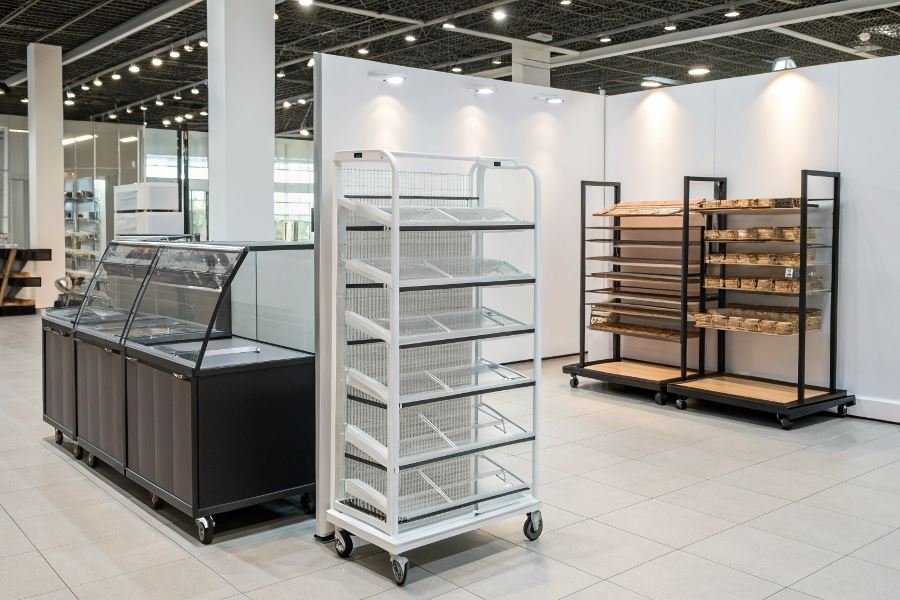
Ever wondered why some promotional products look pristine months after distribution while others quickly become embarrassing brand representatives? The difference often isn’t quality—it’s storage.
When companies invest thousands of dollars in branded merchandise, they’re creating tangible extensions of their identity. Yet surprisingly, many businesses meticulously select perfect promotional items only to undermine their effectiveness through improper storage practices. The consequences? Faded logos, warped materials, and products that fail to make the intended impression.
“Storage isn’t just about keeping products until they’re needed—it’s about preserving their power to represent your brand,” explains industry veteran Mark Thompson, who’s witnessed countless promotional campaigns diminished by poor storage decisions.
Proper storage solutions protect against three primary enemies of promotional products: environmental damage (humidity, temperature fluctuations, UV exposure), physical damage (crushing, scratching), and time-related deterioration. The right approach depends on several factors:
- Product material composition: Textiles, electronics, and paper products each require different environments
- Storage duration: Short-term tactical storage versus long-term strategic reserves
- Access frequency: How quickly and often items need to be retrieved
- Budget constraints: Balancing protection with practical financial considerations
The longevity equation
Research shows that well-stored promotional products maintain their impact up to 70% longer than improperly stored items. This translates directly to extended brand exposure and improved ROI. When recipients continue using your branded items months or years later, your marketing investment continues paying dividends long after the initial distribution.
Strategic Storage Solutions for Promotional Products
When managing promotional merchandise, the storage solution you choose can dramatically impact your operational efficiency, product quality, and bottom line. Businesses investing in branded items need to consider how these valuable marketing assets will be stored until deployment. The right storage approach for promotional products depends on volume, item sensitivity, distribution needs, and budget constraints.
Let’s examine the three primary types of storage for promotional products: advantages and disadvantages that marketing professionals should consider when developing their merchandise strategy. Each option offers distinct benefits and potential drawbacks that can significantly affect your promotional campaigns’ success.
Climate-Controlled Warehouse Storage
Climate-controlled warehousing represents the gold standard for promotional product storage, particularly for high-value or sensitive items.
Advantages:
- Consistent temperature (typically 65-75°F) and humidity control (40-50%)
- Protection from environmental damage including UV exposure, moisture, and dust
- Advanced security systems including 24/7 monitoring and restricted access
- Professional inventory management systems
One marketing director I spoke with saved over $20,000 in damaged inventory after switching to climate-controlled storage for their leather promotional portfolios, which had previously suffered from mildew in standard warehouse conditions.
Disadvantages:
- Premium pricing (typically $1-3 per square foot above standard storage)
- Minimum storage requirements often starting at 100 square feet
- Limited immediate access, usually requiring advance notice
- Higher energy consumption and environmental impact
On-Site Office Storage Solutions
Many businesses opt to keep promotional items in-house, utilizing existing office space for convenience and control.
Advantages:
- Immediate access to inventory for last-minute opportunities
- Direct visual inventory management
- No additional facility costs beyond existing overhead
- Simplified logistics for small-batch distribution
Disadvantages:
- Space limitations that can impact office functionality
- Inconsistent environmental conditions that may affect product quality
- Security vulnerabilities when storage areas aren’t properly secured
- Potential professional appearance issues with visible inventory
“The difference between professional storage and improvised solutions becomes painfully obvious when you’re rushing to prepare for a trade show and discover your branded USB drives have been damaged by heat exposure.” – Veteran Marketing Director
Third-Party Fulfillment Storage
Outsourcing to specialized fulfillment providers has become increasingly popular, especially for businesses with regular distribution needs.
Advantages:
- Professional handling by logistics experts
- Scalable capacity that grows with your promotional needs
- Integrated distribution capabilities including pick, pack, and ship
- Advanced inventory tracking and reporting
| Feature | Basic Service | Premium Service |
|---|---|---|
| Inventory Reports | Monthly | Real-time |
| Order Processing | 24-48 hours | Same day |
| Minimum Storage | 500 items | 100 items |
| Integration | Manual | API connection |
Disadvantages:
- Reduced direct oversight of inventory condition
- Additional fees for receiving, handling, and special requests
- Potential communication delays during urgent situations
- Contract commitments that may limit flexibility
The right storage solution ultimately depends on your specific promotional strategy, budget, and operational requirements. Many successful marketing departments implement a hybrid approach, using climate-controlled warehousing for valuable items, on-site storage for frequently accessed materials, and third-party fulfillment for large campaigns requiring complex distribution.
Optimizing Your Promotional Product Storage Strategy
The Perfect Match for Every Product Type
Selecting the right storage solution begins with understanding your promotional inventory. USB drives demand different handling than embroidered apparel or fragile glassware. Climate-controlled warehousing excels for temperature-sensitive items like chocolates or electronics, maintaining optimal conditions that prevent degradation. For apparel and soft promotional items, standard warehousing with proper shelving systems prevents wrinkles and compression damage.
Digital promotional assets require robust cloud storage solutions with appropriate security protocols. Services like Dropbox Business or Amazon S3 offer scalable options with redundancy that physical storage simply cannot match.
Product-specific considerations matter enormously. Seasonal promotional items benefit from flexible storage arrangements—perhaps utilizing third-party logistics (3PL) providers during peak periods while maintaining minimal in-house storage during off-seasons.
Storage Economics That Make Sense
The true cost of storage extends far beyond the monthly rental fee. When evaluating options, consider this comprehensive breakdown:
| Storage Type | Initial Investment | Monthly Costs | Hidden Expenses | Scalability Factor |
|---|---|---|---|---|
| In-house Warehouse | $15-50/sq ft | $2-8/sq ft | Staffing, insurance, maintenance | Limited by physical space |
| 3PL Solutions | $0-5,000 setup | $15-30/pallet | Receiving fees, minimum commitments | Highly flexible |
| Dropshipping | $0 | 15-30% markup | Brand control limitations | Unlimited |
| Digital Storage | $0-500 setup | $5-25/TB | Bandwidth costs, security | Virtually unlimited |
The most cost-effective approach often combines multiple storage types. The cheapest option rarely delivers the best value when considering the entire operational picture.
For high-volume, consistent promotional products, dedicated warehousing typically becomes cost-effective at around 5,000 square feet. Below that threshold, 3PL solutions often provide superior economics without sacrificing accessibility.
Implementation Excellence
Successful storage implementation requires methodical planning and execution. Begin with a comprehensive inventory audit—categorize items by size, fragility, turnover rate, and seasonal demand patterns.
When implementing your chosen solution:
- Develop clear labeling protocols that include SKUs, quantities, and expiration dates where applicable
- Implement inventory management software like Fishbowl or Zoho Inventory to maintain real-time visibility
- Establish handling procedures specific to each promotional product category
- Create contingency plans for storage overflow during peak promotional periods
The difference between chaotic storage and strategic warehousing isn’t space—it’s systems.
For hybrid approaches, clearly delineate which products belong in which storage solution. High-value, low-volume promotional items warrant premium storage with enhanced security, while bulky, durable items can utilize more economical options.
Regular audits remain essential regardless of your chosen solution. Quarterly physical counts reconciled against your inventory management system prevent the costly surprise of stockouts during critical promotional campaigns.
Discover the pros and cons of three essential promotional product storage options: climate-controlled warehouses, on-site office solutions, and third-party fulfillment services. Find the perfect storage strategy to maximize product quality and ROI.
Discover the pros and cons of three essential promotional product storage options: climate-controlled warehouses, on-site office solutions, and third-party fulfillment services. Find the perfect storage strategy to maximize product quality and ROI.