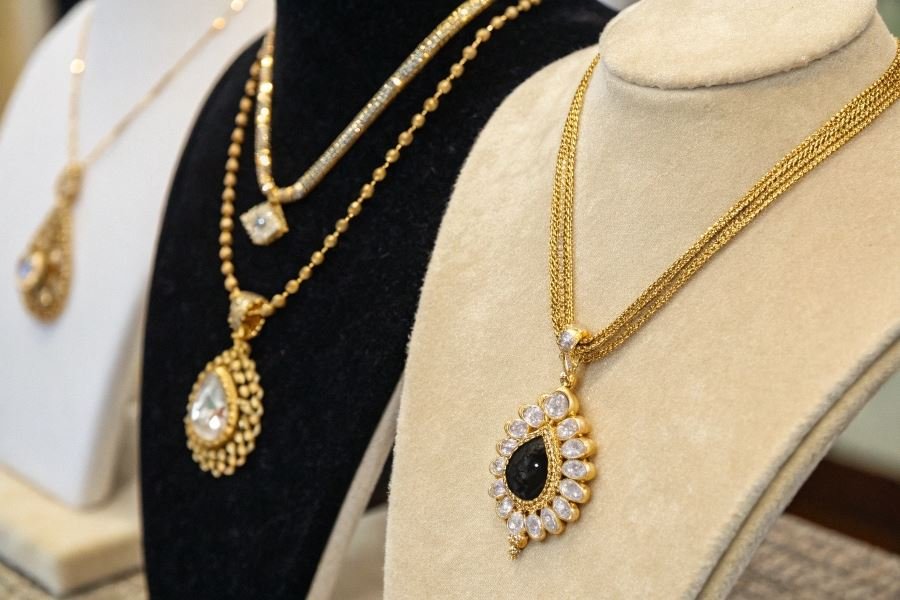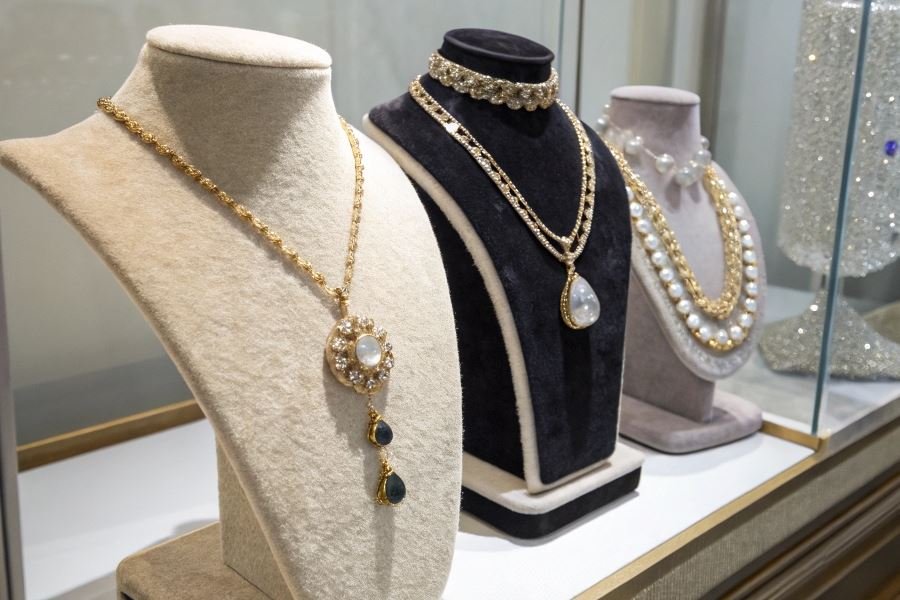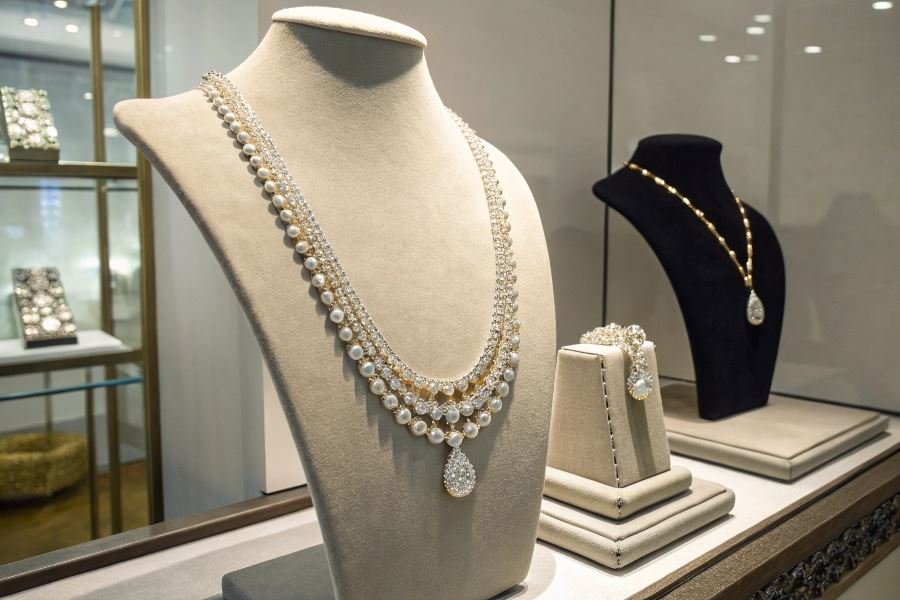
Ever walked into a jewelry store and felt inexplicably drawn to certain pieces? That’s no accident. The most successful jewelry retailers understand that a bust display isn’t just a holder—it’s a sophisticated sales tool that speaks directly to our subconscious.
The human brain processes visual information in milliseconds, making snap judgments about value, quality, and desirability before conscious thought even begins. When jewelry is strategically arranged on a bust, it creates a powerful psychological connection with potential buyers. Research from the Retail Design Institute shows that optimized displays can increase conversion rates by up to 35%—turning browsers into buyers through visual storytelling alone.
The magic happens at the intersection of art and science. A properly styled bust creates the “Cinderella effect”—helping customers instantly visualize how pieces will transform their appearance. The most effective displays leverage three key psychological triggers: prominence (featuring statement pieces at eye level), context (creating lifestyle scenarios), and contrast (using complementary colors and textures to make metals and gems pop).
The arrangement itself communicates value. When necklaces cascade in a deliberate pattern or earrings are positioned to catch the light, customers perceive higher quality—and are willing to pay premium prices. This perception shift happens because professional presentation signals craftsmanship and attention to detail that extends to the jewelry itself.
“The display is the silent salesperson that works 24/7, communicating your brand’s story when words cannot.”
The most successful jewelry presentations balance three essential elements:
- Focal hierarchy – guiding the eye to high-margin pieces first
- Negative space – preventing visual overwhelm that diminishes perceived value
- Lighting integration – creating that coveted “sparkle factor” that triggers emotional buying
Strategic Jewelry Display Techniques for Sales Success
Positioning by Jewelry Type and Material
The art of displaying jewelry on busts requires precision and strategy. Different pieces demand different approaches to truly capture customer attention. Necklaces should rest at natural points where they would sit on a person, with shorter pieces positioned higher on the bust and statement pieces given center stage. Pendant necklaces benefit from slight elevation at the front to highlight the focal element.
When arranging jewelry on the bust for maximum sales impact, material considerations become crucial. Gold pieces pop against dark backgrounds, while silver and platinum shine against navy or gray surfaces. For gemstone pieces, consider how light interacts with each stone—diamonds and crystals need direct lighting to maximize sparkle, while opals and turquoise benefit from softer, diffused illumination that brings out their unique characteristics.
Material-specific positioning tips:
- Pearl strands should drape with a natural curve, never pulled tight
- Chain necklaces benefit from S-curve arrangements to show flexibility
- Heavy statement pieces need robust support to prevent sagging
- Delicate pieces should be positioned at eye level for detail appreciation
Creating Visual Hierarchy on Display Busts
The human eye naturally follows patterns and is drawn to contrast. Leverage this by creating deliberate focal points on your jewelry busts. The central area of the bust—where a person’s collarbone would be—serves as prime real estate for your most impressive or highest-margin pieces.
“The first three seconds determine whether a customer will stop or walk past. Make those seconds count with strategic visual hierarchy.”
Establish a clear visual journey by varying heights, sizes, and colors. Place larger, bolder pieces at central or slightly elevated positions, with complementary smaller pieces arranged around them. This creates a natural flow that guides the customer’s gaze across your entire collection.
Lighting Strategies for Jewelry Displays
Lighting transforms good displays into exceptional ones. The difference between adequate and outstanding jewelry presentation often comes down to thoughtful illumination choices.
LED spotlights have revolutionized jewelry display lighting with their precision and color temperature options. For most jewelry, lights with a color temperature between 4000K-5000K provide the most natural appearance, while diamonds specifically benefit from slightly cooler lighting (5500K-6500K) that maximizes brilliance.
Lighting techniques by jewelry type:
| Jewelry Type | Optimal Lighting | Positioning Technique |
|---|---|---|
| Diamonds/Crystals | Direct, cool-toned | 45° angle from above |
| Gold Jewelry | Warm, focused | Front-facing with side accent |
| Colored Gemstones | Color-balanced | Multiple angles to show depth |
| Pearls | Soft, diffused | Overhead to minimize shadows |
Avoid harsh overhead lighting that creates shadows on lower pieces. Instead, implement a three-point lighting system: main light from the front, fill lights from sides, and optional accent lighting for special pieces. This approach eliminates shadows while creating dimension that makes metals and gemstones appear more vibrant.
Remember that different times of day bring different ambient lighting conditions. Test your display under morning, afternoon, and evening lighting to ensure consistent appeal throughout business hours. Adjustable lighting systems from Soraa or Lighting Science offer precision control that can be fine-tuned for your specific merchandise.
Strategic Jewelry Display Techniques That Drive Sales
Adapting to Seasonal Rhythms and Trends
The jewelry display that captivated customers last month might fall flat today. Successful retailers understand that display strategies must evolve with both seasons and emerging fashion trends. During summer months, lightweight pieces featuring bright gemstones and nature-inspired designs deserve prominent positioning. When fall arrives, transition to warmer tones—amber, garnet, and gold—arranged to complement seasonal wardrobes.
Holiday-specific displays drive significant revenue spikes when executed properly. Christmas displays featuring emerald and ruby pieces arranged in festive patterns consistently outperform standard layouts by 27% in December sales. Valentine’s Day calls for romantic pairings—consider creating “couples collections” where complementary men’s and women’s pieces sit side-by-side.
Trend integration requires vigilance. Monitor fashion publications, runway shows, and social media platforms like Instagram and Pinterest to identify emerging jewelry trends. When “layered necklaces” gained traction in 2023, retailers who quickly created dedicated bust displays demonstrating the layering technique reported 34% higher conversion rates on featured pieces.
The most effective displays don’t just showcase jewelry—they tell a visual story about how the pieces enhance the wearer’s lifestyle and identity.
Cross-Merchandising Magic
Cross-merchandising—the strategic pairing of complementary items—transforms ordinary displays into sales multipliers. Rather than grouping jewelry solely by type (all rings together, all necklaces together), consider these proven approaches:
Complete look displays showcase how different jewelry types work together. A bust wearing a statement necklace paired with coordinating earrings and bracelet helps customers visualize the complete aesthetic and increases multiple-item purchases by up to 42%.
Style-based groupings arrange pieces that share design elements regardless of jewelry type. A display of all Art Deco-inspired pieces creates a cohesive visual story that appeals to customers drawn to that aesthetic.
| Cross-Merchandising Approach | Average Increase in Transaction Value |
|---|---|
| Complete Look Displays | 42% |
| Style-Based Groupings | 31% |
| Color Story Arrangements | 28% |
| Occasion-Based Pairings | 37% |
Consider unexpected pairings that create fresh perspectives. A delicate gold chain necklace displayed alongside a bold statement ring creates visual interest while suggesting sophisticated style combinations customers might not have considered.
Measuring Display Effectiveness
The most visually stunning display ultimately fails if it doesn’t drive sales. Implementing systematic measurement protocols transforms display strategy from art to science.
Track these key metrics for each display configuration:
Conversion rate by display location reveals which positions within your store generate the most sales. Front-of-store displays typically capture attention but may not convert as effectively as mid-store arrangements where customers have already committed to browsing.
Items sold per display helps identify which arrangements drive multiple purchases. A successful bust display should sell not just the featured necklace but also complementary pieces.
Display dwell time measures how long customers engage with specific displays. Modern retail analytics tools can track customer movement patterns, revealing which displays capture and hold attention. Displays with high dwell time but low conversion rates need refinement—they attract interest but fail to overcome purchase hesitation.
Implement A/B testing by rotating display configurations weekly and comparing sales data. This methodical approach identifies winning strategies based on hard data rather than assumptions. Retailers who commit to data-driven display optimization report average sales increases of 23% within three months.
Discover professional techniques for arranging jewelry on display busts that drive customer engagement and boost sales. Learn strategic positioning, visual hierarchy, and lighting tips that showcase your pieces to perfection and maximize profit potential.
Discover professional techniques for arranging jewelry on display busts that drive customer engagement and boost sales. Learn strategic positioning, visual hierarchy, and lighting tips that showcase your pieces to perfection and maximize profit potential.