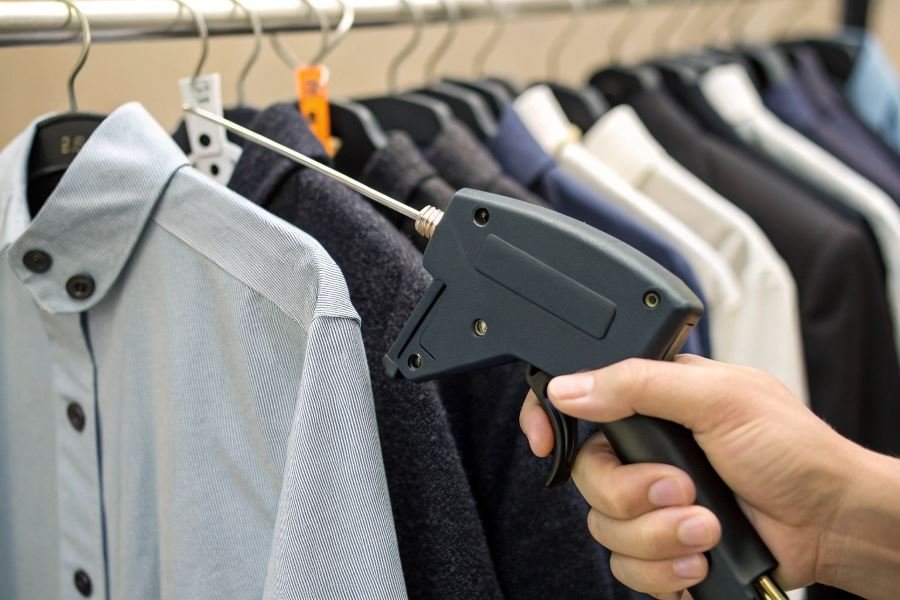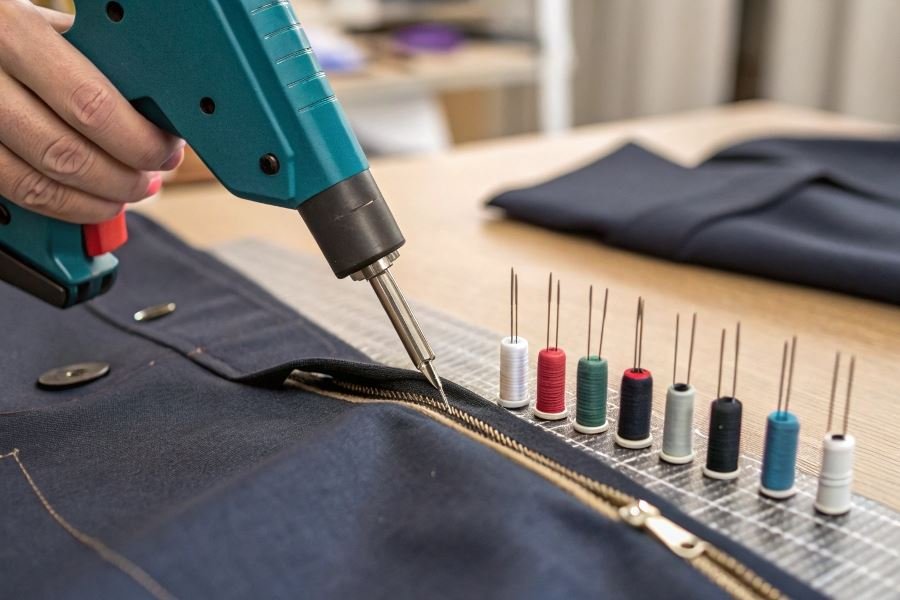
Ever wondered why that price tag on your favorite shirt stays firmly attached until the cashier removes it? Behind this seemingly simple retail experience lies a fascinating tool that’s revolutionized inventory management: the needle gun.
Needle guns for clothing marking represent the perfect intersection of simplicity and efficiency in retail operations. These handheld devices use a plastic fastener (often called a “tag pin”) to secure price tags, brand labels, and inventory markers to garments without damaging the fabric. What makes them remarkable isn’t their complexity—it’s quite the opposite. Their elegant design solves a problem that plagued retailers for decades: how to securely attach information to products without compromising their quality.
Before the widespread adoption of tagging guns in the 1960s, retailers relied on safety pins, staples, or even sewing tags directly onto garments—methods that were time-consuming and often damaged merchandise. The evolution from these rudimentary approaches to today’s sophisticated tagging systems mirrors the retail industry’s broader transformation toward efficiency and precision.
Proper tagging isn’t just about pricing—it’s the backbone of modern inventory control. When a clothing item receives its tag, it enters a trackable ecosystem that follows it from warehouse to display floor to checkout counter. This seemingly minor step enables everything from loss prevention to accurate sales forecasting, making the humble needle gun an unsung hero of retail profitability.
Essential Features That Define Quality Needle Guns
When selecting tools for inventory management and product identification, understanding the nuances of needle guns for clothing marking becomes crucial for operational efficiency. These precision instruments vary significantly in design, functionality, and application suitability, making informed selection a competitive advantage for businesses.
Standard, Fine, and Heavy-Duty Mechanisms
Needle guns come in three primary configurations, each engineered for specific marking scenarios:
Standard needle guns offer balanced performance for everyday tagging operations. With needle lengths typically ranging from 15-25mm and moderate spring tension, these workhorses handle most retail and warehouse marking tasks efficiently.
Fine needle mechanisms feature thinner gauge needles (often 0.5-0.7mm) designed for delicate fabrics like silk, chiffon, and lightweight synthetics. The reduced penetration force minimizes fabric damage while ensuring tag security.
Heavy-duty models incorporate reinforced components and higher spring tension, making them ideal for denim, canvas, and upholstery materials. These robust tools often feature needle diameters of 1.0-1.2mm and can penetrate multiple fabric layers with a single actuation.
| Needle Gun Type | Needle Diameter | Ideal Materials | Actuation Force |
|---|---|---|---|
| Standard | 0.8-0.9mm | Cotton, polyester, general textiles | Medium |
| Fine | 0.5-0.7mm | Silk, chiffon, lightweight fabrics | Low |
| Heavy-Duty | 1.0-1.2mm | Denim, canvas, upholstery | High |
Material Compatibility Considerations
The science behind effective needle guns for clothing marking features selection criteria that prioritize material interaction. Different fabrics respond uniquely to tagging processes, requiring thoughtful tool selection.
Synthetic fabrics benefit from fine-gauge needles that slip between fibers rather than piercing them, reducing visible holes after tag removal. Avery Dennison produces specialized synthetic-compatible guns with controlled penetration depth.
Natural fibers like cotton and wool demonstrate excellent recovery properties, allowing for standard needle configurations. However, loosely woven natural textiles may require specialized fasteners to prevent tag migration.
Composite and technical fabrics present unique challenges, often requiring specialized needle guns with adjustable penetration depth. The Monarch SG Series offers precision depth control for these applications.
Industry insight: Testing needle guns on fabric scraps before full implementation can reduce damage rates by up to 37% and improve overall tagging efficiency.
Ergonomic Design and Operator Comfort
The human factor remains paramount in selecting appropriate marking tools. Operators using needle guns for extended periods require designs that minimize fatigue and repetitive strain.
Handle configuration significantly impacts user comfort. Pistol-grip designs distribute force across the palm, while straight-handle models offer precision for detailed work. The Tach-It 2 features an ergonomic grip that reduces wrist strain during extended use.
Weight distribution affects operator endurance. Premium models balance components to center mass near the trigger point, reducing the effort needed to maintain accurate positioning. Lightweight aluminum alloy construction in tools like the Kimble FastTag reduces operator fatigue by up to 25% compared to standard steel models.
Trigger mechanisms vary in actuation force requirements. Progressive-resistance triggers provide tactile feedback, while pneumatic-assist systems minimize required finger strength—critical for high-volume tagging operations where operators may perform thousands of actions per shift.
Selecting the right needle gun requires balancing technical specifications with practical operational considerations, ensuring both efficiency and operator well-being in your marking processes.
The Smart Buyer’s Guide to Needle Guns
When it comes to efficient inventory management and retail operations, needle guns represent a critical investment for clothing businesses. These precision tools can dramatically streamline your tagging process, but choosing the right one requires careful consideration. Let’s dive into the three most crucial factors that separate exceptional needle guns from mediocre ones.
Built to Last or Built to Break
The durability of your needle gun directly impacts your operational efficiency. Premium models like the Avery Dennison Mark III feature aircraft-grade aluminum bodies that withstand years of daily use. These workhorses can process 10,000+ tags before showing signs of wear.
The difference between consumer and commercial-grade needle guns becomes apparent within the first month of heavy use.
What separates truly durable models from the rest:
- Metal internal mechanisms versus plastic components
- Reinforced needle shafts that resist bending
- Ergonomic designs that reduce mechanical stress points
Maintenance requirements vary significantly between models. Economy options might require cleaning and lubrication after every 1,000 uses, while industrial-grade guns often extend maintenance intervals to 5,000 uses or more.
The true cost of a needle gun isn’t just its purchase price—it’s the combined expense of the tool, maintenance time, and potential downtime.
Tag Versatility That Pays Dividends
The most overlooked aspect of needle gun selection is compatibility with various tag types. Superior models accommodate multiple tag styles without requiring adjustment or specialized attachments.
| Tag Type | Economy Gun Compatibility | Premium Gun Compatibility |
|---|---|---|
| Standard Barbs | Yes | Yes |
| Micro Tags | Limited | Yes |
| Fabric Loop Tags | No | Yes |
| Security Tags | No | Yes |
| RFID-Enabled Tags | No | Yes |
The Tach-It TI2S exemplifies versatility with its ability to handle seven different fastener types without modification. This adaptability becomes particularly valuable when your product line expands or tagging requirements change.
A truly versatile needle gun eliminates the need for multiple specialized tools, reducing training time and preventing application errors.
Material compatibility also matters significantly. Premium needle guns penetrate delicate fabrics like silk without damage while still having enough power to tag denim and leather goods effectively.
Investment Returns Beyond The Price Tag
Initial cost comparisons can be misleading. Economy models priced at $15-30 might seem attractive until you calculate their true operational expense:
- Throughput efficiency: Premium guns tag 20-30% faster than budget alternatives
- Error reduction: Higher-quality mechanisms reduce tag failures and product damage
- Operator comfort: Ergonomic designs prevent fatigue during high-volume tagging sessions
The Kimble Chase Standard demonstrates this principle perfectly. While priced 40% higher than entry-level alternatives, users report 60% longer service life and 25% faster tagging speeds.
For businesses processing more than 500 items weekly, the premium model typically recovers its additional cost within 4-6 months through labor savings alone.
The most expensive needle gun you can buy is the one you have to replace repeatedly.
When calculating ROI, factor in these often-overlooked considerations:
- Training time for new staff
- Downtime during replacement or repair
- Consistency of tag placement and customer perception
- Adaptability to future tagging requirements
The right needle gun transforms from a simple expense into a strategic asset that enhances operational efficiency across your entire inventory management process.
Discover how to select the perfect needle gun for apparel tagging with our comprehensive guide. Learn about essential features, material compatibility, and cost-effectiveness to optimize your clothing marking process and inventory management.
Discover how to select the perfect needle gun for apparel tagging with our comprehensive guide. Learn about essential features, material compatibility, and cost-effectiveness to optimize your clothing marking process and inventory management.