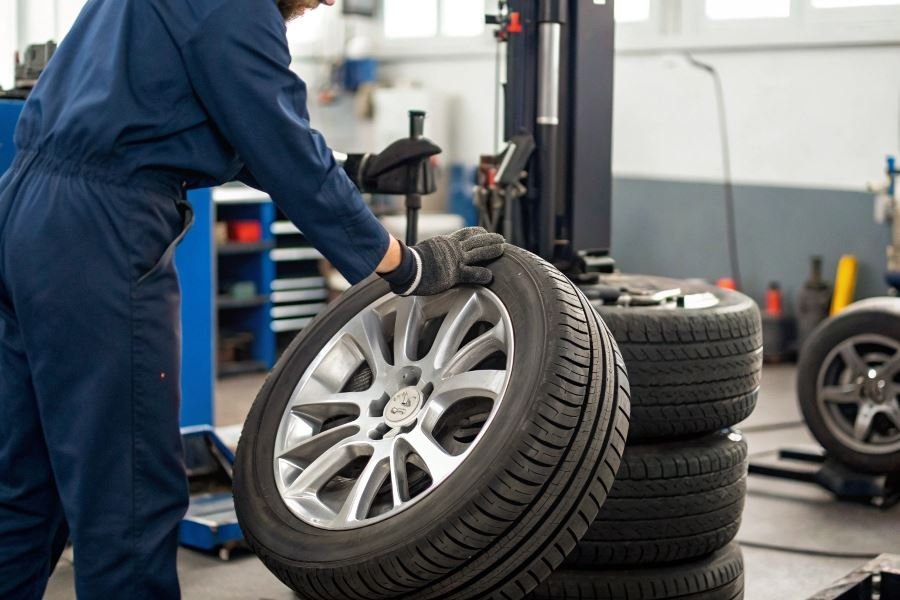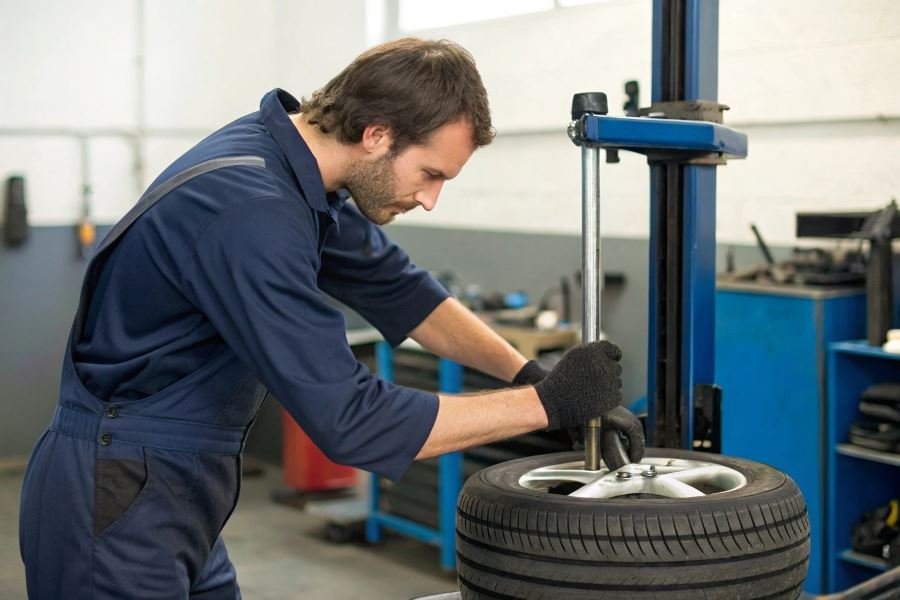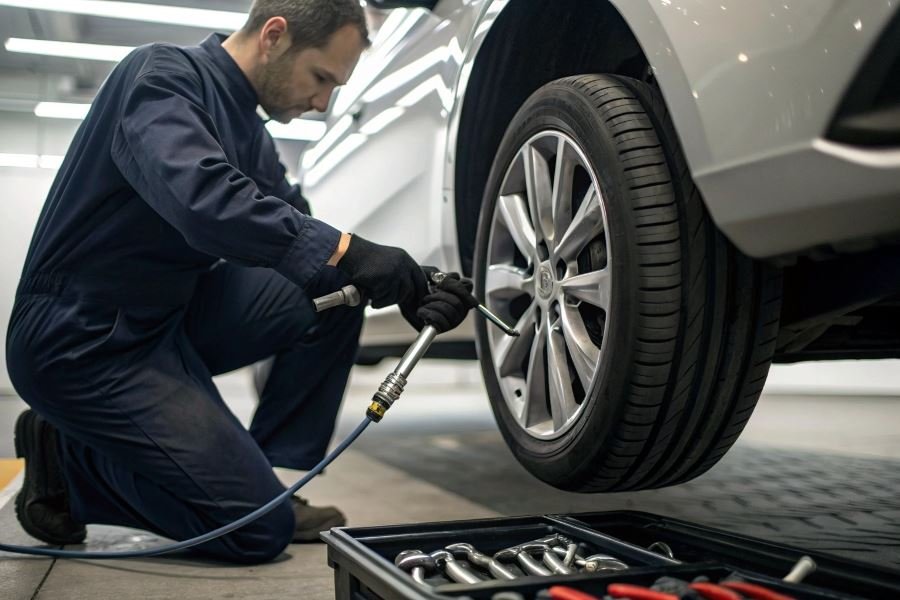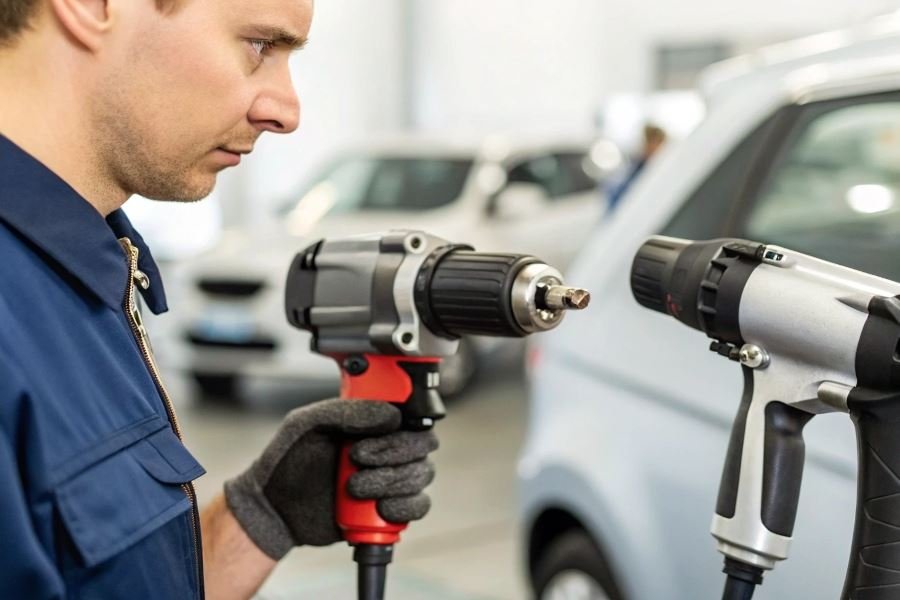
Ever watched a master technician mount a stubborn tire in seconds? Behind that wizardry lies a critical tool: the bead expander. This unsung hero of tire shops nationwide makes the difference between frustrating hours of manual labor and efficient, damage-free tire mounting.
Bead expanders serve one crucial purpose: they temporarily stretch the tire’s bead (that stiff inner edge) to help it slip over the wheel rim. Without this expansion, mounting certain tires—especially low-profile or run-flat varieties—becomes nearly impossible without damaging either the tire or the expensive wheel.
Two distinct technologies dominate the market: pneumatic and mechanical expanders. Pneumatic systems harness compressed air power, using inflatable bladders or air-driven mechanisms to create uniform expansion around the tire’s circumference. These systems typically operate at 90-120 PSI and provide rapid, consistent results with minimal physical effort.
Mechanical expanders, by contrast, rely on manual force applied through levers, screws, or ratcheting mechanisms. They transform the technician’s muscle power into mechanical advantage, gradually stretching the bead outward. While requiring more physical input, they offer precise control and operate independently of air compressors.
The fundamental differences between these technologies create distinct advantages:
| Feature | Pneumatic Expanders | Mechanical Expanders |
|---|---|---|
| Power source | Compressed air | Manual force |
| Speed | Rapid expansion | Gradual, controlled |
| Consistency | Uniform pressure | Varies with operator |
| Portability | Requires air supply | Fully portable |
| Maintenance | Seals and valves need care | Fewer moving parts |
Understanding these fundamentals helps determine which technology best suits your specific tire service needs.
The Ultimate Showdown: Pneumatic vs Mechanical Bead Expanders
When it comes to tire service equipment, the battle between pneumatic and mechanical bead expanders represents a critical decision point for shop owners. These essential tools dramatically impact workflow efficiency, operational costs, and service quality. Let’s dive into the performance factors that separate these two technologies and help you determine which solution aligns with your specific needs.
Power efficiency that impacts your bottom line
Pneumatic bead expanders harness compressed air to generate expansion force, typically operating at 90-120 PSI. This air-powered approach delivers consistent force across the entire bead surface, resulting in smoother, more uniform expansion. When comparing pneumatic vs mechanical bead expanders, the pneumatic variants generally consume less electrical energy directly, instead relying on your shop’s existing air compressor system.
Mechanical expanders, by contrast, utilize electric motors coupled with gears or hydraulic systems to generate force. They typically deliver higher peak force—some premium models reaching up to 3,500 pounds of expansion pressure—making them suitable for particularly stubborn or heavy-duty applications. However, this comes at the cost of higher direct electrical consumption, with most units drawing between 10-15 amps during operation.
Speed that keeps your bay moving
Time efficiency represents perhaps the most significant operational difference between these technologies. Pneumatic systems excel in rapid deployment, achieving full expansion in approximately 2-3 seconds. This quick-action capability translates to faster tire mounting and potentially higher daily throughput.
Mechanical systems typically require 5-7 seconds to reach full expansion, though premium models have narrowed this gap in recent years. The trade-off comes in precision control—mechanical systems often allow for more granular adjustment of expansion force and position.
| Feature | Pneumatic Expanders | Mechanical Expanders |
|---|---|---|
| Expansion Time | 2-3 seconds | 5-7 seconds |
| Force Control | Limited adjustment | Precise incremental control |
| Recovery Time | Immediate | 1-2 seconds (motor cooldown) |
| Continuous Operation | Excellent | Good (heat buildup concerns) |
Versatility across your inventory
The adaptability to different tire types represents another crucial consideration. Pneumatic expanders typically accommodate a wider range of tire sizes without adjustment, handling everything from passenger vehicles to light trucks with minimal reconfiguration. Their flexible expansion pattern conforms naturally to different bead geometries.
Mechanical systems often require more specific setup adjustments when switching between significantly different tire types. However, they excel with specialized applications like run-flat tires, where their higher force capacity and precise control provide advantages for these notoriously difficult beads.
Durability that stands the test of time
Long-term reliability considerations favor different technologies depending on usage patterns. Pneumatic systems feature fewer moving parts, resulting in reduced mechanical wear. Their primary maintenance requirements involve regular air filter changes and occasional seal replacements—typically a 15-minute job every 6-12 months.
Mechanical expanders incorporate more complex components including motors, gears, and sometimes hydraulic systems. While this increases potential failure points, it also allows for more straightforward component-level repairs rather than system replacements. Most quality mechanical units require scheduled maintenance every 3-4 months, focusing on lubrication and calibration checks.
Workspace integration factors
Your shop’s physical layout plays a significant role in this decision. Pneumatic systems require connection to an air compressor system capable of delivering consistent volume—typically 5+ CFM at 90 PSI. This necessitates appropriate air lines and may impact compressor sizing decisions.
Mechanical systems eliminate the need for air infrastructure but demand dedicated electrical circuits, typically 110V/15A or 220V/20A depending on the model. They also tend to have a larger physical footprint, requiring approximately 25-30% more floor space than comparable pneumatic units.
The choice between these technologies ultimately depends on your specific operational priorities, existing infrastructure, and the typical tire profiles you service. Both approaches offer viable solutions when properly matched to your shop’s unique requirements.
Making the Right Choice for Your Tire Business
Initial Investment vs Long-Term Value
The financial equation of pneumatic versus mechanical bead expanders goes beyond the price tag. Pneumatic models typically demand a higher initial investment—ranging from $1,200 to $3,500 for professional-grade equipment. Mechanical alternatives start around $400 for basic models, creating an appealing entry point for smaller operations.
But here’s where it gets interesting: operational costs tell a different story. Pneumatic expanders require compressed air infrastructure, adding 800−1,500 to your setup if you don’t already have it. Meanwhile, mechanical options need regular maintenance—replacement parts can cost 150−300 annually depending on usage volume.
The true cost of a tool isn’t what you pay at purchase, but what you pay over its lifetime.
When calculating long-term value, pneumatic systems typically outlast mechanical counterparts by 3-5 years under similar working conditions. This extended lifespan often justifies the higher initial investment for high-volume operations.
Where Pneumatic Expanders Shine
Pneumatic bead expanders excel in these specific scenarios:
-
High-volume tire shops processing 30+ tires daily benefit from the rapid operation cycle—pneumatic models complete expansions in 8-12 seconds versus 20-30 seconds for mechanical options.
-
Commercial truck and heavy equipment specialists handling large, stubborn tires find pneumatic systems deliver consistent power (typically 90-120 PSI) without operator fatigue.
-
Multi-technician environments where tools move between stations appreciate the plug-and-play nature of pneumatic systems, requiring minimal training and delivering consistent results regardless of operator strength.
When Mechanical Expanders Win
Mechanical bead expanders prove superior in these situations:
-
Mobile tire services without reliable access to compressed air find the self-contained nature of mechanical expanders invaluable—no external power source required.
-
Low-volume specialty shops handling fewer than 10 tires daily can’t justify the higher investment in pneumatic systems when mechanical alternatives perform adequately.
-
Extreme environment operations where temperature fluctuations affect pneumatic performance appreciate the consistent operation of quality mechanical expanders in temperatures ranging from -10°F to 120°F.
ROI for Professional Tire Businesses
The return on investment calculation varies dramatically based on business model:
| Business Type | Daily Tire Volume | Pneumatic ROI | Mechanical ROI |
|---|---|---|---|
| High-Volume Retail | 30+ | 6-8 months | 12-18 months |
| Commercial/Fleet | 15-25 | 8-12 months | 10-14 months |
| Specialty/Custom | 5-15 | 18-24 months | 6-10 months |
Labor efficiency becomes the critical factor—pneumatic systems save approximately 45 seconds per tire. For a shop handling 40 tires daily, that’s 30 hours saved monthly, translating to approximately $750 in labor costs at average technician wages.
Recommendations Based on Business Profile
For high-volume operations (25+ tires daily), pneumatic expanders from Coats or Hunter deliver the consistency and speed that justifies their premium price.
Mid-sized shops should consider hybrid solutions—perhaps one pneumatic system for common applications and a mechanical backup for specialty cases or mobile work.
Small operations and startups will find greater value in quality mechanical expanders from Ken-Tool or Esco, allowing capital allocation to other essential equipment while building volume.
The ultimate decision hinges on your specific business profile—there’s no universal “best” option, only the right tool for your particular needs, volume, and specialization.
Discover the key differences between pneumatic and mechanical bead expanders for tire service. Compare power, efficiency, and cost to make the best choice for your automotive business needs based on performance and long-term value.
Discover the key differences between pneumatic and mechanical bead expanders for tire service. Compare power, efficiency, and cost to make the best choice for your automotive business needs based on performance and long-term value.