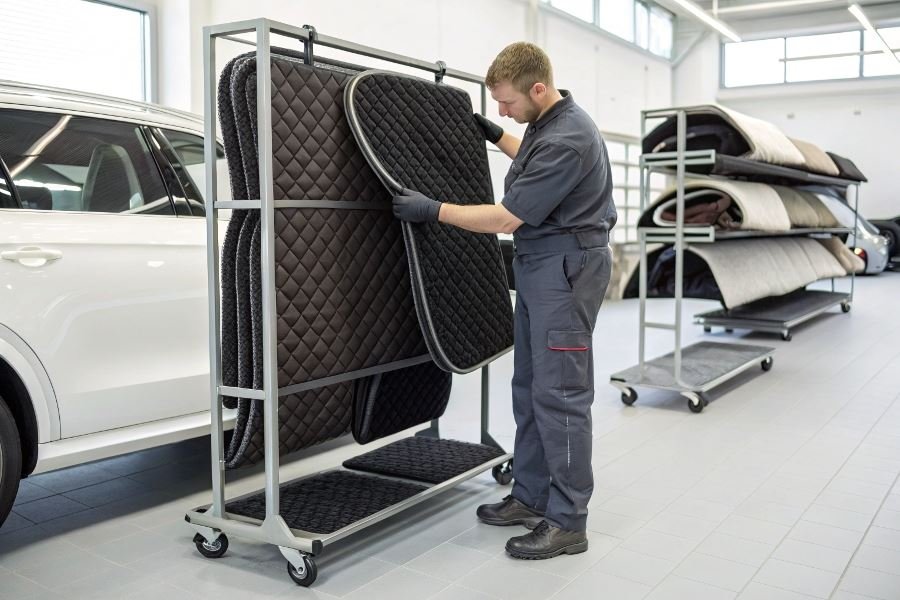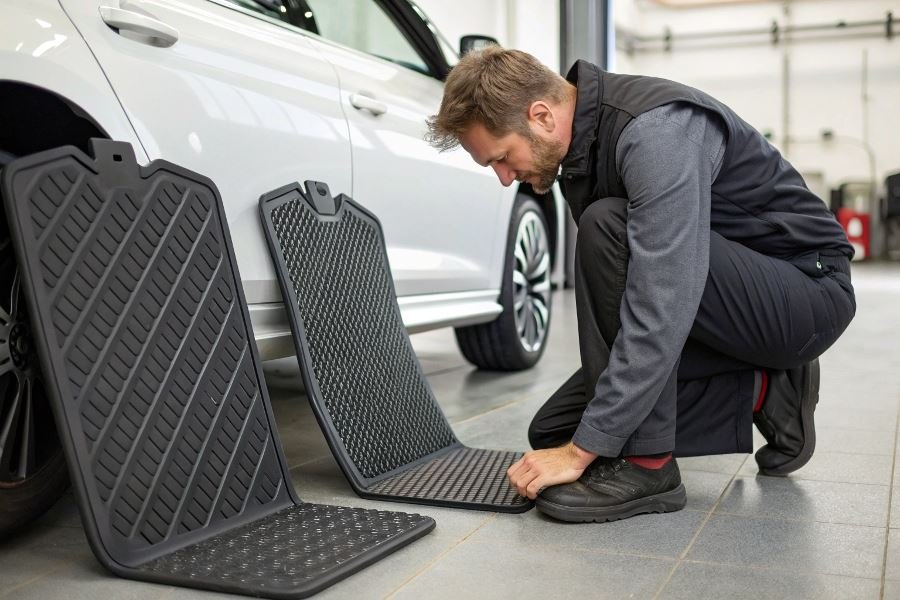
Ever walked into an auto service center and noticed how the floor mats seem to withstand everything from motor oil to transmission fluid without missing a beat? That’s no accident. Behind every durable mat holder is a carefully selected material that balances protection, longevity, and practicality.
Auto service professionals know that mat holders are the unsung heroes of their operation. These seemingly simple accessories prevent costly floor damage, reduce slip hazards, and maintain a professional appearance even during the messiest jobs. But choosing the right material for these workhorses requires understanding the unique demands of an automotive environment.
Performance under pressure is what separates exceptional mat holders from mediocre ones. The ideal material must resist chemicals, withstand heavy tool drops, and maintain integrity despite constant foot traffic. Rubber compounds, particularly nitrile-infused varieties, offer superior oil resistance, while PVC blends provide excellent durability-to-cost ratios. High-density polyethylene (HDPE) has emerged as a premium option, combining lightweight properties with remarkable chemical resistance.
When evaluating materials, consider these critical factors:
- Chemical resistance: Can it withstand prolonged exposure to automotive fluids?
- Weight capacity: Will it support heavy equipment without deformation?
- Temperature stability: Does it maintain properties in both summer heat and winter cold?
- Cleaning ease: How quickly can technicians restore it between services?
The material choice ultimately reflects your commitment to operational excellence. Premium materials might require higher initial investment but deliver exponential returns through extended service life and enhanced workplace safety.
The Material Masters of Mat Holder Manufacturing
When it comes to creating effective mat holders for auto service environments, the materials used make all the difference between a mediocre product and one that stands the test of time. The selection of materials for making mat holders in auto service settings requires careful consideration of durability, resistance to chemicals, and ability to withstand constant use. Let’s dive into the top three materials that dominate this specialized market.
Heavy-Duty Rubber: The Unbreakable Backbone
Heavy-duty rubber stands as the gold standard for mat holder construction in high-traffic auto service environments. What makes this material exceptional is its remarkable combination of properties:
- Chemical resistance that withstands exposure to motor oil, brake fluid, and cleaning solvents
- Exceptional durability with lifespans often exceeding 5-7 years of daily use
- Temperature stability from -40°F to 180°F without degradation
Goodyear Rubber and similar industrial-grade EPDM compounds offer the perfect balance of flexibility and strength. These materials don’t crack under pressure—literally. A properly manufactured heavy-duty rubber mat holder can support vehicles weighing up to 10,000 pounds without permanent deformation.
The true value of rubber mat holders lies in their silent reliability—they simply work, day after day, year after year, without complaint.
Industrial-Grade Polymers: Engineering Excellence
The evolution of industrial polymers has revolutionized mat holder design with materials that combine lightweight properties with impressive structural integrity. These advanced polymers offer:
- 40% weight reduction compared to traditional rubber
- Custom color options for brand-specific service bay designs
- Precision molding capabilities for complex holder geometries
DuPont’s Hytrel thermoplastic elastomers exemplify this category, providing exceptional resistance to repeated flexing while maintaining structural integrity. These materials allow for innovative designs that simply weren’t possible with conventional materials.
| Polymer Type | Weight (vs. Rubber) | Chemical Resistance | Customization Options |
|---|---|---|---|
| TPE | 60% of rubber | Excellent | High |
| Nylon 6,6 | 55% of rubber | Good | Medium |
| Polyurethane | 65% of rubber | Superior | Very High |
Reinforced Composites: The Future Has Arrived
The most exciting development in mat holder technology comes from reinforced composite materials that combine the best properties of multiple substances:
- Carbon fiber reinforced polymers offering unmatched strength-to-weight ratios
- Fiberglass-enhanced rubber compounds with superior tear resistance
- Hybrid materials engineered specifically for extreme service environments
These composites, like those developed by Hexcel Corporation, represent the cutting edge of material science applied to practical auto service applications. The integration of carbon fiber strands within a polymer matrix creates a material that resists deformation while maintaining the flexibility needed for daily use.
What makes these composites particularly valuable is their ability to be engineered for specific performance characteristics. Need extra chemical resistance? Adjust the resin formulation. Require additional flexibility? Modify the fiber orientation. This customization potential makes reinforced composites increasingly popular despite their higher initial cost.
The investment in quality materials for mat holders pays dividends through extended service life, reduced replacement costs, and enhanced workplace safety. When durability meets intelligent design, everyone wins—from service technicians to business owners watching their bottom line.
Making the Right Choice: Mat Holder Materials for Auto Service
The economics of mat holder materials
When evaluating materials for mat holders in auto service environments, the initial investment is just the beginning of the story. Premium materials like stainless steel typically command $75-150 per holder installation, while aluminum options range from $45-90. More budget-friendly alternatives like heavy-duty plastics might start at just $25.
But the true cost analysis extends far beyond purchase price. Stainless steel holders might cost three times more than plastic initially, but their 10+ year lifespan in high-traffic environments creates substantial long-term value. A busy auto service center processing 30+ vehicles daily will find that premium materials pay for themselves within 18-24 months through reduced replacement cycles.
The cheapest mat holder is rarely the most economical when measured across its service life.
Consider this breakdown of lifetime value:
| Material | Initial Cost | Lifespan | Replacements over 10 years | Total 10-year cost |
|---|---|---|---|---|
| Stainless Steel | $120 | 10+ years | 0-1 | $120-240 |
| Aluminum | $65 | 5-7 years | 1-2 | $130-195 |
| Reinforced Plastic | $35 | 2-3 years | 3-5 | $140-175 |
| Standard Plastic | $25 | 1-2 years | 5-10 | $150-250 |
Maintenance demands and durability factors
The maintenance equation varies dramatically across materials. Stainless steel holders require minimal attention—typically just occasional cleaning with standard detergents. Their resistance to corrosion, chemicals, and physical impact makes them virtually maintenance-free.
Aluminum alternatives need more vigilance. While lightweight and reasonably durable, they’re susceptible to certain cleaning chemicals and may develop oxidation over time. Most require cleaning with pH-neutral products to maintain appearance and structural integrity.
Plastic variants demand the most maintenance oversight:
- Regular inspection for cracks or stress points
- Careful cleaning to avoid chemical damage
- Protection from extreme temperatures that can cause warping
- Replacement at first signs of structural compromise
Longevity considerations extend beyond the material itself. Connection points, mounting hardware, and integration with existing shop infrastructure all influence durability. Premium materials paired with thoughtful installation engineering can extend functional life by 30-50% compared to standard implementations.
Application-specific recommendations
Different service environments demand different material solutions:
High-volume quick service centers benefit most from stainless steel or commercial-grade aluminum holders. The constant traffic and exposure to various fluids make durability paramount. The Snap-on industrial-grade holders, while premium-priced, deliver exceptional performance in these demanding settings.
Specialty or luxury auto services should prioritize aesthetics alongside functionality. Brushed aluminum or customized stainless steel options from Mac Tools offer the professional appearance that complements high-end service environments.
Multi-bay general service shops with varied work often find the sweet spot with mid-tier aluminum holders featuring reinforced mounting points. These balance durability with cost-effectiveness for operations with moderate but consistent traffic.
Mobile service providers benefit from lightweight yet durable solutions. Reinforced composite materials from Matco Tools offer the portability needed without sacrificing too much durability.
The optimal material choice ultimately depends on your specific operation’s volume, service type, and budget constraints. By carefully weighing initial costs against maintenance requirements and expected lifespan, auto service professionals can make investments that enhance both operational efficiency and customer experience for years to come.
Discover the top 3 materials for auto service mat holders that deliver superior durability and performance. Compare rubber, polymers, and composites to find the perfect balance of chemical resistance, strength, and longevity for your service center.
Discover the top 3 materials for auto service mat holders that deliver superior durability and performance. Compare rubber, polymers, and composites to find the perfect balance of chemical resistance, strength, and longevity for your service center.