Ever wondered why some auto shops consistently deliver safer vehicles while others leave customers with lingering doubts? The secret often lies in the tools they use—specifically, how they measure what stands between your vehicle and the road.
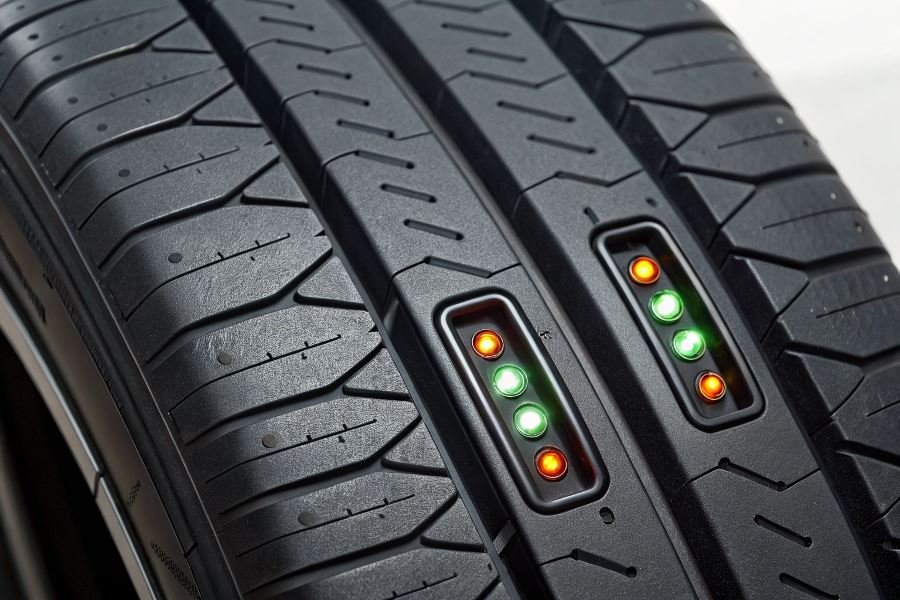
Tire wear indicators are precision instruments that auto service professionals use to accurately measure tread depth and wear patterns. Unlike the penny test your grandfather might have taught you, modern indicators provide exact measurements down to fractions of a millimeter, revealing crucial safety information invisible to the naked eye. When selecting the right tire wear indicator for your auto service operation, you’re not just buying a tool—you’re investing in customer trust and safety.
“The difference between a good auto service and a great one often comes down to measurement precision. Tire wear indicators are the foundation of that precision.”
These specialized tools transform subjective assessments into objective data. By implementing proper tire wear measurement systems, auto services gain three immediate benefits:
- Enhanced diagnostic capabilities – Identifying uneven wear patterns that signal alignment or suspension issues
- Improved customer communication – Showing rather than telling clients why tire replacement is necessary
- Reduced liability exposure – Documenting tire conditions before vehicles leave the shop
For auto service owners, the right tire wear indicator becomes more than equipment—it’s a business differentiator that elevates service quality while protecting both customers and the shop’s reputation. In an industry where millimeters matter, these tools provide the precision that professionals demand and customers deserve.
Essential Factors for Professional Tire Wear Indicators
When running an auto service business, the tools you select directly impact your reputation and bottom line. Tire wear indicators represent a critical investment that separates professional shops from amateur operations. The precision instruments used to measure tread depth don’t just provide numbers—they deliver confidence to your customers and protect them from potential safety hazards.
Selecting the right tire wear indicator for an auto service requires balancing several crucial factors including measurement accuracy, build quality, and versatility across different tire types. Professional technicians understand that these seemingly simple tools can make the difference between a customer who returns for regular service and one who questions your expertise.
Precision That Pays Dividends
Professional-grade tire wear indicators must deliver readings with accuracy to at least 1/32 of an inch (0.8 mm). This precision isn’t just about impressing customers—it’s about safety and regulatory compliance.
Digital vs. Analog Precision:
| Type | Typical Accuracy | Price Range | Best For |
|---|---|---|---|
| Digital | ±0.01mm | $50-200 | High-volume shops |
| Dial | ±0.02mm | $30-100 | General service |
| Gauge Card | ±0.5mm | $5-15 | Quick checks |
The Fowler X-Tender digital depth gauge offers exceptional accuracy to 0.001 inches, while maintaining calibration through thousands of measurements. For shops handling premium vehicles, this level of precision isn’t optional—it’s essential for detecting uneven wear patterns that might indicate alignment issues.
Remember that accuracy specifications matter most at the critical wear thresholds (2/32″ to 4/32″) where safety decisions are made.
Built to Survive Shop Life
Auto service environments are notoriously tough on equipment. Your tire wear indicators will be dropped, exposed to chemicals, and used countless times daily.
Construction considerations include:
- Material quality – Stainless steel indicators resist corrosion from brake dust and cleaning chemicals
- Impact resistance – Tools with rubberized grips and shock-absorbing features survive longer
- Calibration stability – Premium indicators maintain accuracy despite temperature fluctuations
The Mitutoyo depth gauges exemplify this durability with their hardened stainless steel construction and shock-resistant internal mechanisms. While costing more initially, these tools often deliver lower cost-per-use over their extended lifespan.
Pro tip: Look for indicators with replaceable measuring tips—this feature alone can double the functional lifespan of your investment.
Universal Compatibility Matters
Modern auto service shops handle everything from compact cars to commercial trucks, each with unique tire specifications.
Your tire wear indicator must accommodate:
- Varied tread patterns – From asymmetrical performance tires to aggressive off-road treads
- Different measurement points – Center, shoulder, and intermediate zones
- Specialized applications – Including motorcycle tires and commercial vehicles
The Snap-on TPGDL digital tread depth gauge excels here with its extended reach probe that accesses deep grooves in truck tires while maintaining accuracy on low-profile performance tires.
Compatibility checklist:
- Measurement range of at least 0-25mm
- Probe width under 2mm for narrow tread grooves
- Extended reach option for truck tires
- Clear markings for legal minimum thresholds
By investing in quality tire wear indicators that excel in these three critical areas, your auto service will deliver more accurate assessments, reduce equipment replacement costs, and handle a wider range of vehicles—ultimately building customer trust and boosting your reputation for professional excellence.
Top 3 Tire Wear Indicator Technologies That Transform Auto Service
Auto service professionals know that accurate tire wear measurement isn’t just about safety—it’s about building customer trust and maximizing service efficiency. The right tire wear indicator technology can dramatically improve your diagnostic capabilities while streamlining your workflow. Let’s explore the three most effective technologies that are revolutionizing how auto services evaluate tire condition.
Digital precision at your fingertips
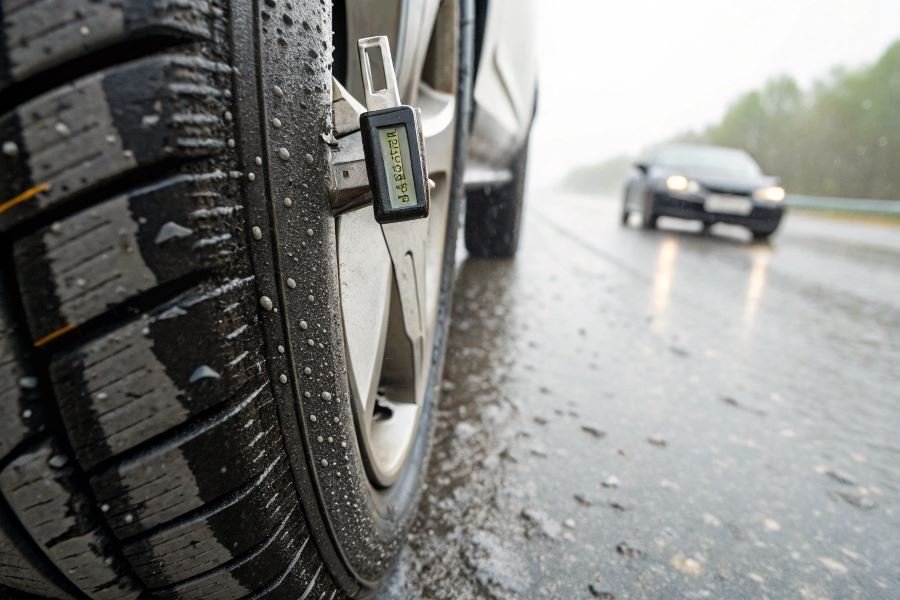
Digital tire tread depth gauges represent the sweet spot between affordability and technology. These handheld devices typically feature LCD displays showing measurements in both millimeters and inches (typically to 0.01mm precision), making them incredibly versatile for all service environments.
Key advantages include:
- Instant digital readouts eliminating interpretation errors
- Data storage capabilities for tracking wear patterns over time
- USB connectivity for transferring measurements to service management software
The Fowler 54-255-333 and Mitutoyo 547-217S models exemplify this category with their ergonomic designs and IP54 dust/water resistance ratings—critical for busy shop environments.
Their limitations shouldn’t be overlooked, however. Battery dependency means keeping spares on hand, and some models struggle with accuracy when measuring extremely worn tires approaching the 2/32″ legal minimum.
Laser systems for unmatched accuracy
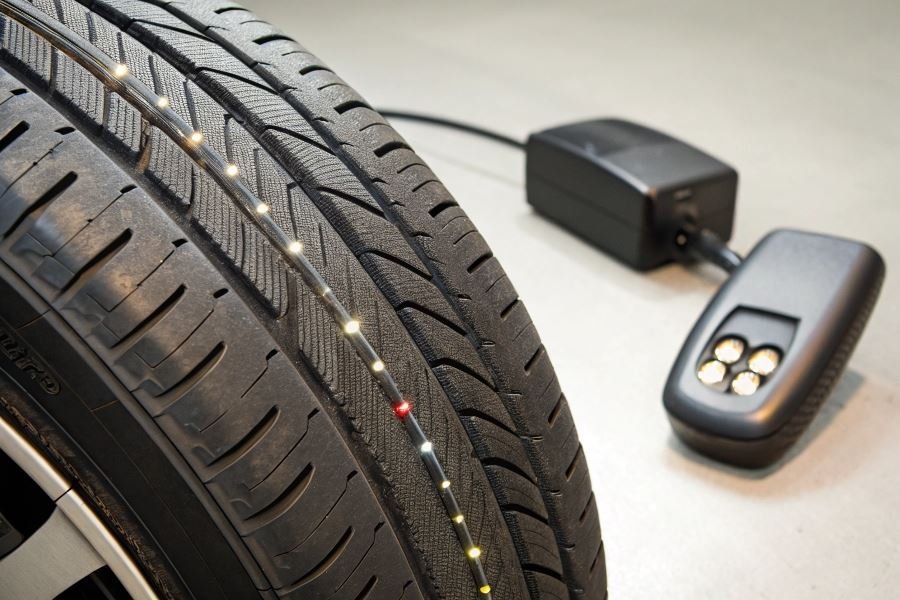
For high-volume shops prioritizing efficiency and precision, laser-based measurement systems represent the gold standard. These systems use laser triangulation technology to create detailed 3D maps of tire surfaces.
The precision advantage is substantial:
- Measurement accuracy to 0.001mm
- Complete tread pattern analysis across the entire tire surface
- Automated detection of irregular wear patterns
The Hunter QuickTread and Beissbarth Easy Tread systems can be integrated directly into service lanes, capturing measurements as vehicles drive over them. This “drive-over” capability means technicians can evaluate tires without manual intervention.
| System Feature | Typical Cost Range | ROI Timeline |
|---|---|---|
| Drive-through laser | 15, 000−25,000 | 12-18 months |
| Handheld laser | 2, 500−5,000 | 6-9 months |
| Fixed-point laser | 8, 000−12,000 | 9-12 months |
The investment consideration is significant but justified for operations servicing 30+ vehicles daily, with most shops reporting complete ROI within 12-18 months through increased alignment and tire sales.
Traditional gauges stand the test of time
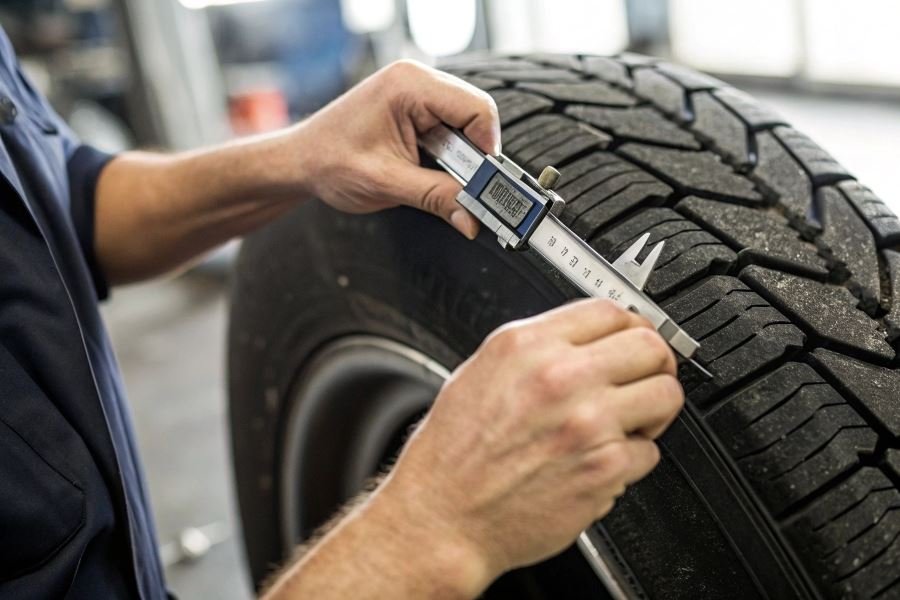
Despite technological advances, traditional manual tire depth gauges remain remarkably relevant. Their simplicity, reliability, and near-zero maintenance requirements make them indispensable backup tools even in shops with advanced systems.
The enduring benefits include:
- No batteries or calibration requirements
- Virtually indestructible construction
- Consistent accuracy when used properly
The Snap-on TPGDL1000 and OTC 6596 represent the premium tier of traditional gauges, featuring machined metal construction and clear, easy-to-read scales.
Proper usage technique remains crucial. Measurements should always be taken at multiple points across each tire—outer edge, center, and inner edge—with readings averaged to account for uneven wear patterns. This three-point measurement approach helps identify alignment issues that single-point readings might miss.
For shops servicing fewer than 15 vehicles daily, a set of quality traditional gauges (typically 25−75 each) provides the best cost-to-benefit ratio, especially when paired with comprehensive technician training on proper measurement techniques and wear pattern interpretation.
Discover the top professional tire wear indicators for your auto service. Learn how to select accurate, durable measurement tools that improve service quality, ensure customer safety, and work with all tire types.
Discover the top professional tire wear indicators for your auto service. Learn how to select accurate, durable measurement tools that improve service quality, ensure customer safety, and work with all tire types.