What if your shop’s equipment paid for itself faster than you thought possible? Auto service owners across the country are discovering the financial sweet spot with induction heating technology—a game-changer that’s revolutionizing repair efficiency while delivering impressive returns on investment.
When evaluating any major equipment purchase, understanding the payback period becomes critical—that crucial timeframe when your investment transitions from expense to profit generator. For induction heaters specifically, this calculation reveals when the time and labor savings offset the initial purchase cost, transforming your business’s bottom line.
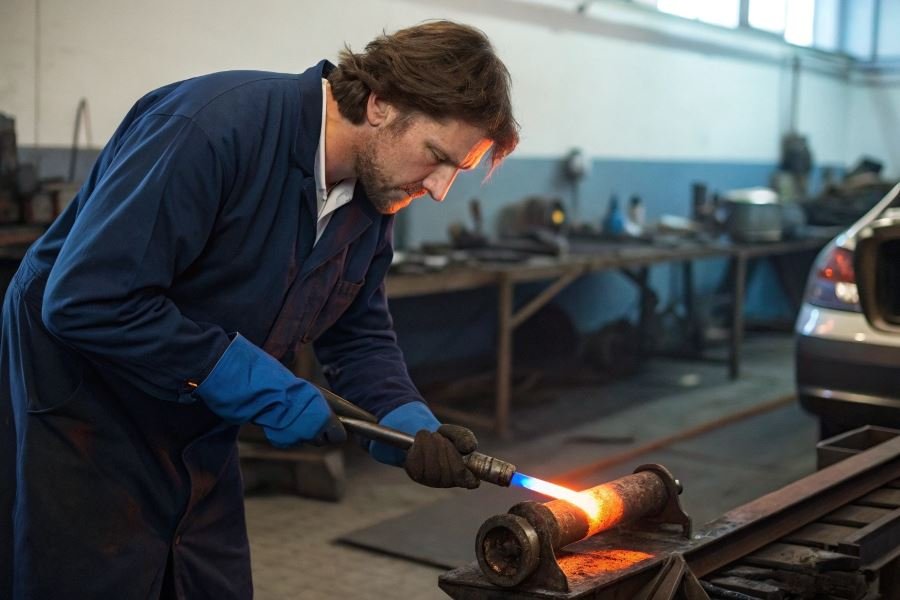
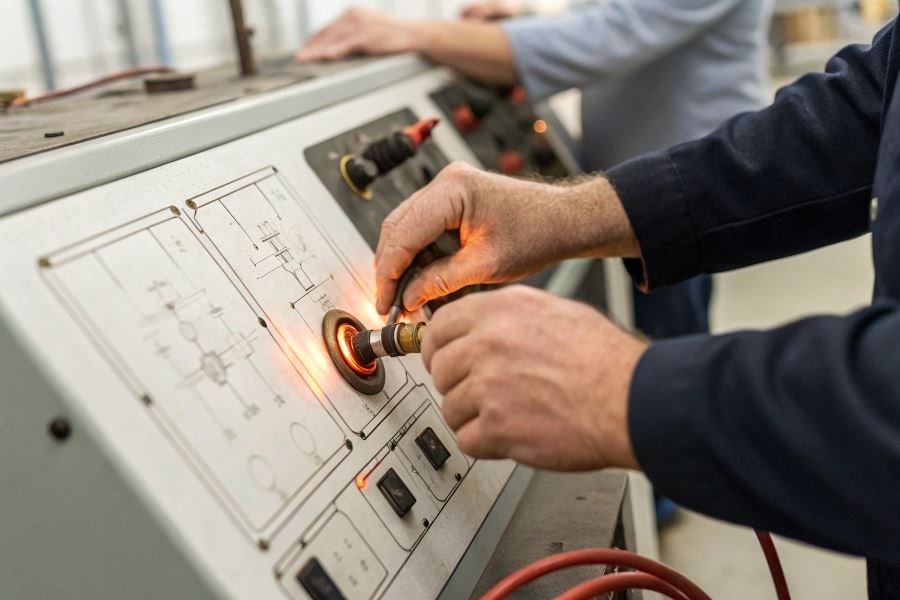
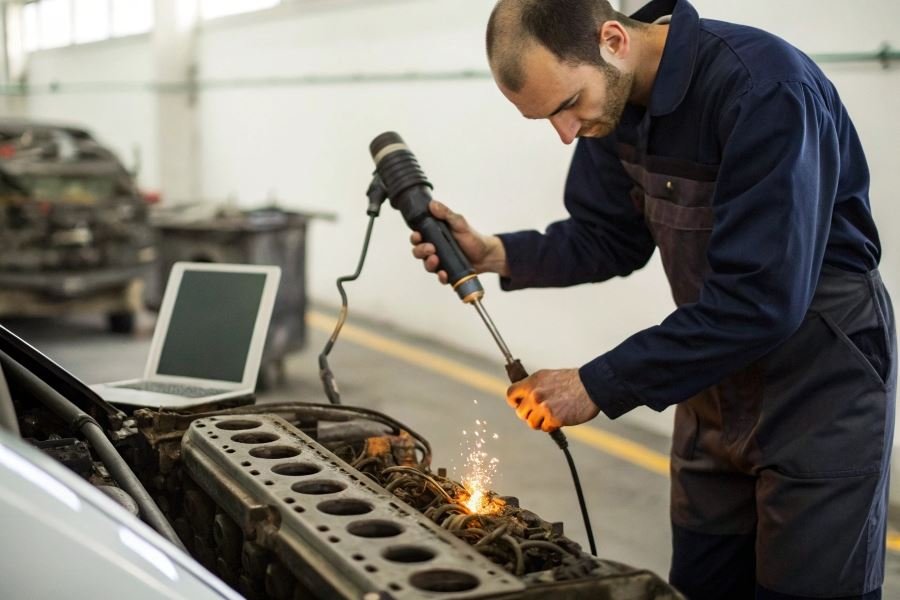
Induction heating technology harnesses electromagnetic fields to generate precise, flameless heat directly within metal components. Unlike traditional torches or heat guns, these systems deliver concentrated heat exactly where needed—making them invaluable for loosening seized fasteners, removing bearings, and performing delicate heat-straightening operations without collateral damage to surrounding parts.
“The right equipment doesn’t cost—it pays. But only if you understand exactly when and how that payment arrives.”
Several key factors dramatically influence your specific payback timeline:
- Labor efficiency gains (typically 30-50% reduction in time for heat-related tasks)
- Shop specialization (collision repair vs. general service vs. heavy equipment)
- Current volume of heat-requiring repairs
- Energy costs compared to gas-based heating methods
- Safety improvements that reduce insurance premiums
For precision-focused shops handling high-value vehicles, payback periods often compress to mere months rather than years, making induction heating technology one of the smartest investments in modern auto repair.
ROI Analysis: Induction Heater Payback Across Auto Service Segments
When auto service professionals invest in equipment, the bottom line matters. Induction heaters represent a significant upfront investment, but their efficiency transforms repair processes and dramatically impacts profitability. Let’s break down the numbers that matter.
Small Repair Shops: Maximum Impact
For independent shops with 1-3 service bays, every equipment purchase faces intense scrutiny. The payback period of an induction heater: calculations for different types of auto services reveal that smaller operations often see the fastest relative ROI despite their limited volume.
A typical 1.5kW portable induction heater priced at $2,500-3,500 delivers surprising returns:
| Metric | Before Induction | With Induction | Monthly Savings |
|---|---|---|---|
| Labor hours per seized bolt | 45-60 min | 10-15 min | 20-30 hours |
| Damaged components | $400-600 | $50-100 | $350-500 |
| Customer satisfaction | Variable | Consistent | Retention value |
Small shops typically achieve complete payback within 7-9 months when performing just 15-20 heat-related repairs monthly. The math becomes even more compelling when considering reduced collateral damage to surrounding components.
“Our single-bay operation recovered the investment in under six months. We’re saving approximately $700 monthly between labor efficiency and reduced parts replacement,” reports a Pennsylvania shop owner.
Medium Service Centers: Efficiency at Scale
Service centers with 4-10 bays experience different economics of scale. With multiple technicians potentially needing simultaneous access, investment in multiple units or more powerful systems becomes necessary.
Medium operations typically invest in:
- 1-2 portable units ($3,000-7,000 total)
- 1 stationary high-power system ($5,000-8,000)
The financial projections show these operations achieve payback within 5-7 months due to higher repair volume and specialized service offerings:
Efficiency gains translate directly to capacity:
- 25-40% faster completion on exhaust system repairs
- 30-50% reduction in labor time for suspension components
- Virtually eliminated risk of fire compared to traditional torch methods
Medium shops report adding 2-3 additional service appointments daily across their bays simply through time savings—representing approximately $10,000-15,000 in additional monthly revenue.
Large Dealership Operations: Volume Economics
Dealership service departments with 10+ bays approach induction heating as an infrastructure investment. Their volume-based calculations justify higher-end systems:
| Investment Category | Equipment | Approximate Cost |
|---|---|---|
| Basic Package | 2-3 portable units + 1 stationary | $12,000-18,000 |
| Comprehensive | Multiple stations + specialized attachments | $20,000-30,000 |
While the initial investment appears substantial, the long-term value proposition becomes undeniable when analyzing high-volume operations:
- Labor efficiency: 200-300 saved technician hours monthly
- Reduced comebacks: 35% fewer heat-related rework issues
- Training standardization: Consistent results across technician experience levels
Large operations typically achieve full payback within 10-12 months but continue generating substantial returns for 5-7 years with minimal maintenance costs.
The most compelling aspect for dealerships isn’t just the direct financial return but the competitive advantage in service department throughput—allowing them to process 15-20% more vehicles monthly without facility expansion.
When properly implemented across different service operation sizes, induction heating technology consistently delivers one of the most reliable equipment ROI profiles in the modern auto repair industry.
Maximizing ROI and Reducing Payback Period for Induction Heaters
Auto service owners know the truth: equipment that sits idle is money evaporating. Induction heaters represent significant investments that can transform your operation—but only when strategically deployed. Let’s dive into how to accelerate your return on investment and shrink that payback window from years to months.
Strategic utilization drives faster returns
The math is simple but powerful: an induction heater used 8 hours daily pays for itself dramatically faster than one used sporadically. Smart shop owners implement these proven utilization strategies:
- Cross-train multiple technicians on induction equipment to prevent bottlenecks when primary operators are unavailable
- Schedule high-margin induction-dependent services during traditionally slower periods
- Create service packages that bundle induction-based repairs with complementary maintenance
- Develop a marketing calendar highlighting specialized services only possible with induction technology
One performance auto shop in Denver increased their induction heater utilization from 3 to 7 hours daily by implementing a specialized “seized bolt solution” service marketed to restoration enthusiasts. Their payback period shortened from 18 months to just 7.
The most expensive induction heater is the one gathering dust in the corner. Utilization rate is the single biggest factor in payback calculations.
Maintenance practices that protect your investment
Induction heaters with proper maintenance routines deliver consistent performance for 8-10 years versus 3-5 years for neglected units. This maintenance differential can double your effective ROI.
| Maintenance Action | Frequency | Impact on Lifespan |
|---|---|---|
| Coil inspection | Weekly | Prevents catastrophic failure |
| Cooling system check | Monthly | Maintains operational efficiency |
| Electrical connection testing | Quarterly | Prevents power fluctuations |
| Professional calibration | Annually | Ensures precise heat delivery |
The preventive maintenance cost typically runs $350-500 annually but saves thousands in premature replacement costs. Additionally, well-maintained equipment delivers more consistent results, reducing rework and material waste that silently erode profitability.
Financial approaches that accelerate returns
Smart acquisition strategies dramatically impact your payback timeline:
Leasing advantages:
- Preserves working capital for other investments
- Lower monthly payments improve cash flow
- Maintenance often included in premium lease packages
- Easier upgrades to newer technology
Purchase advantages:
- Section 179 tax deductions allow writing off the full purchase price
- No long-term contractual obligations
- Build equity in business assets
- Lower total cost of ownership over 5+ years
Tax implications vary significantly based on business structure. S-corporation owners can potentially accelerate depreciation schedules, while sole proprietors might benefit more from leasing’s immediate expense deduction.
Many manufacturers like Miller Electric and Snap-on offer specialized financing programs for auto service businesses that include training packages—effectively reducing your payback period by eliminating the productivity dip during implementation.
Remember that utilization rate remains the dominant factor in your ROI equation. A leased machine used daily delivers better returns than a purchased machine used weekly, regardless of tax advantages. The winning approach combines strategic acquisition with relentless focus on keeping that equipment earning its keep every single day.
Discover how induction heaters deliver ROI across auto service businesses. Our comprehensive analysis breaks down payback periods for small shops, mid-sized centers, and large dealerships, with strategies to maximize your investment.
Discover how induction heaters deliver ROI across auto service businesses. Our comprehensive analysis breaks down payback periods for small shops, mid-sized centers, and large dealerships, with strategies to maximize your investment.