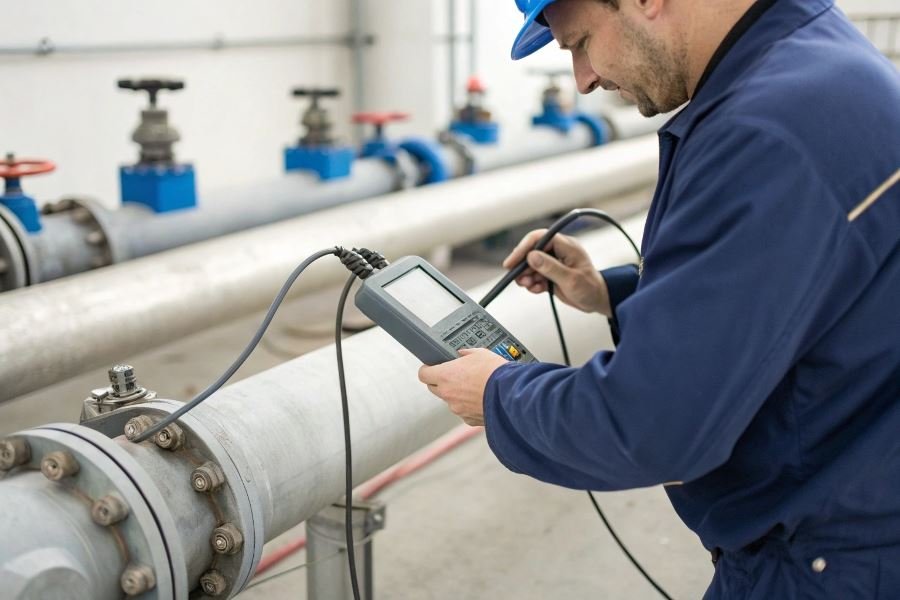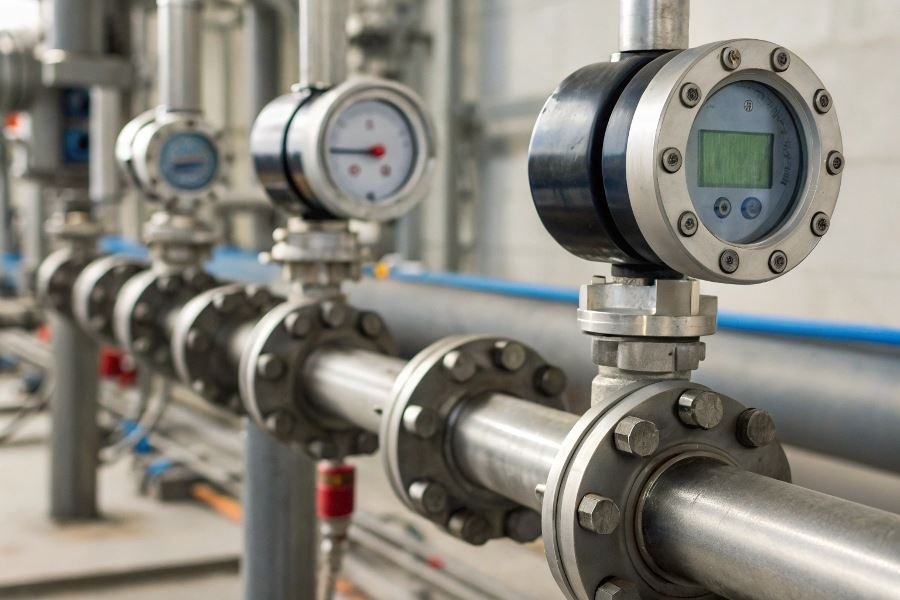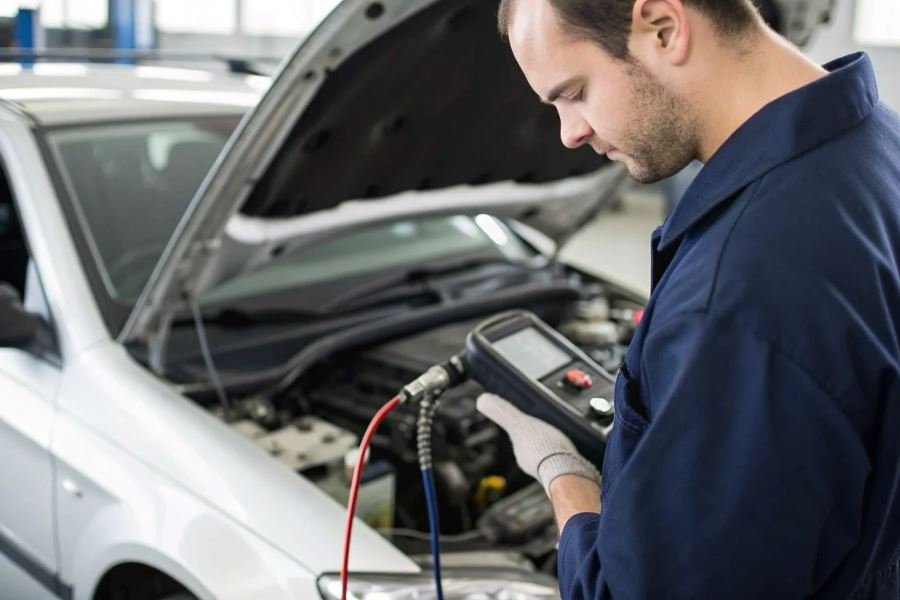
Ever wondered why one auto shop diagnoses problems in minutes while another takes hours? The secret often lies in their measurement tools—specifically, flow meters that track every drop of fluid with laser-like precision.
Behind every successful auto repair operation stands a foundation of accurate measurement. When technicians can precisely monitor the flow of coolants, oils, transmission fluids, and fuel, they transform guesswork into science. Choosing the right flow meter for your auto service isn’t just about buying equipment—it’s about investing in reputation, efficiency, and ultimately, customer satisfaction.
Flow meters serve as the silent sentinels of fluid integrity in automotive environments. In transmission service, they ensure exact fluid exchanges, preventing the costly “too much” or dangerous “too little” scenarios. For cooling system maintenance, they verify proper circulation rates, helping technicians spot restrictions before they cause catastrophic overheating. Even in something as routine as oil changes, precise measurement prevents waste while ensuring adequate lubrication.
“The difference between a good mechanic and a great one often comes down to measurement precision.”
The impact on service quality is profound. Shops equipped with quality flow meters consistently deliver:
- Faster diagnostics – identifying restrictions and blockages in minutes rather than hours
- More accurate repairs – ensuring fluid replacements match manufacturer specifications exactly
- Reduced waste – measuring precisely means using only what’s needed
- Enhanced troubleshooting – detecting subtle issues before they become major failures
From brake fluid pressure testing to fuel system diagnostics, these precision instruments have become as essential to modern auto service as wrenches and lifts—turning fluid management from an art into a science.
Critical Flow Meter Selection Criteria for Auto Service Excellence
When precision meets performance in automotive fluid management, the right flow meter becomes the unsung hero of your service bay. Selecting the appropriate flow meter isn’t just about measuring fluid—it’s about ensuring diagnostic accuracy, operational efficiency, and ultimately, customer satisfaction.
The process of how to choose a flow meter for an auto service: main criteria involves understanding the unique demands of automotive applications and matching them with the right technological solution. Let’s dive into the essential factors that separate adequate flow meters from exceptional ones.
Flow Rate Range and Accuracy Requirements
Automotive applications demand versatility in flow measurement. From the delicate trickle of fuel injector testing to the robust flow of transmission fluid exchanges, your meter must handle it all.
The sweet spot for most auto service applications falls between 0.5-100 GPM (gallons per minute), though specialty applications may require measurements outside this range.
For accuracy, consider these benchmarks:
| Application | Recommended Accuracy | Typical Flow Range |
|---|---|---|
| Fuel Systems | ±0.5% or better | 0.5-15 GPM |
| Oil Services | ±1.0% | 1-20 GPM |
| Coolant Systems | ±2.0% | 5-50 GPM |
| Transmission Fluid | ±1.0% | 2-30 GPM |
Remember that temperature compensation features are non-negotiable for professional applications. Fluid viscosity changes with temperature, and your measurements must account for this to deliver reliable diagnostics.
Fluid Compatibility Considerations
Not all fluids are created equal in the automotive world, and your flow meter must be ready for everything from corrosive brake fluid to particle-laden used oil.
Modern auto services handle a diverse array of fluids:
- Conventional and synthetic motor oils
- Automatic transmission fluids (ATF)
- Power steering fluids
- Brake fluids (DOT 3, 4, 5, and 5.1)
- Coolants and antifreeze solutions
- Diesel and gasoline fuels
Material compatibility is paramount. Look for meters with:
- Stainless steel components for corrosion resistance
- Viton or PTFE seals for chemical compatibility
- Non-reactive measurement chambers for fuel applications
Durability in Demanding Environments
The auto service environment is notoriously harsh. Your flow meter will face:
- Temperature extremes: From cold winter diagnostics to hot engine testing
- Chemical exposure: Solvents, cleaners, and various automotive chemicals
- Physical stress: Vibration, occasional impacts, and constant handling
The best flow meters for automotive applications feature:
“Industrial-grade construction isn’t a luxury in auto service—it’s a requirement for tools that need to perform day in and day out under challenging conditions.”
Look for IP65 or better protection ratings to ensure resistance against dust and moisture. Meters with shock-resistant housings and reinforced connection points will significantly outlast consumer-grade alternatives.
Maintenance requirements should also factor into your decision. Self-cleaning mechanisms in turbine or positive displacement meters can dramatically reduce downtime and ensure consistent accuracy over the meter’s lifespan.
By prioritizing these critical selection criteria—appropriate flow range and accuracy, fluid compatibility, and environmental durability—you’ll secure a flow meter that delivers reliable service and precise measurements for years to come, ultimately enhancing your auto service’s reputation for quality and precision.
Flow Meter Mastery for Auto Service Excellence
When precision fluid measurement becomes the difference between profit and performance, choosing the right flow meter transforms from a mundane decision into a strategic advantage. Let’s dive into the three flow meter technologies that dominate the auto service landscape, examining their strengths, limitations, and optimal applications.
Mechanical Flow Meters: Reliable Workhorses
Mechanical flow meters remain the backbone of many auto service operations, offering tangible benefits that have stood the test of time. These devices use physical components—typically turbines, pistons, or gears—to measure fluid movement.
Key advantages:
- Exceptional durability in harsh shop environments
- Operation without external power sources
- Straightforward visual readings without complex interfaces
- Lower initial investment compared to electronic alternatives
Their limitations become apparent in specific scenarios, however. Mechanical meters typically offer ±1-2% accuracy—sufficient for many applications but potentially problematic for precision diagnostics. They also introduce slight pressure drops and perform less reliably with highly viscous fluids or those containing particulates.
The ideal mechanical flow meter application? High-volume fluid dispensing where approximate measurements suffice and reliability trumps precision.
Graco mechanical meters exemplify this category’s strengths, providing dependable service even in challenging shop conditions.
Electronic Flow Meters: Precision Powerhouses
Electronic flow meters represent the technological evolution of fluid measurement, employing sensors and digital processing to achieve remarkable accuracy.
Precision advantages:
- Accuracy ratings of ±0.5% or better
- Real-time digital readouts with multiple measurement units
- Minimal pressure drop compared to mechanical alternatives
- Superior performance across varying fluid viscosities
The integration capabilities truly set electronic meters apart. Modern units connect seamlessly with:
- Shop management software
- Inventory control systems
- Automated billing platforms
- Preventive maintenance scheduling tools
Flomec electronic meters demonstrate how digital technology transforms fluid management from simple measurement to comprehensive data collection.
Implementation and Maintenance Considerations
Selecting the optimal flow meter requires evaluating several critical factors beyond the technology itself:
| Consideration | Mechanical Meters | Electronic Meters |
|---|---|---|
| Initial Cost | $200-600 | $500-1,500+ |
| Installation Complexity | Moderate | Moderate to Complex |
| Calibration Frequency | Every 6-12 months | Every 12-24 months |
| Power Requirements | None | Battery or AC |
| Environmental Sensitivity | Low | Moderate |
Maintenance requirements deserve special attention. Mechanical meters need regular inspection of moving parts, while electronic units require battery checks and occasional sensor cleaning. Both types benefit from scheduled calibration to maintain accuracy.
The implementation process should include:
- Proper sizing based on expected flow rates
- Appropriate placement to minimize turbulence
- Staff training on operation and troubleshooting
- Integration with existing systems where applicable
Installation location matters significantly. Place flow meters away from elbows, valves, or other fittings that create turbulent flow. Most manufacturers recommend straight pipe runs of 5-10 diameters upstream and 2-5 diameters downstream for optimal accuracy.
Whether you choose mechanical reliability or electronic precision, proper implementation and consistent maintenance will ensure your flow meter delivers accurate measurements and valuable operational insights for years to come.
Discover how to select the perfect flow meter for your auto service shop with our comprehensive guide. Learn essential criteria for accuracy, fluid compatibility, and durability to improve service quality and operational efficiency.
Discover how to select the perfect flow meter for your auto service shop with our comprehensive guide. Learn essential criteria for accuracy, fluid compatibility, and durability to improve service quality and operational efficiency.