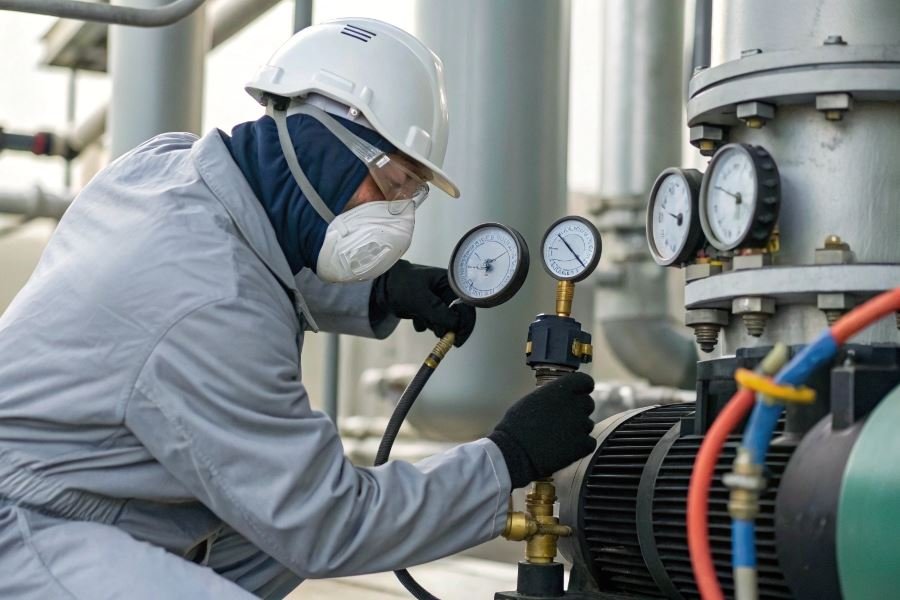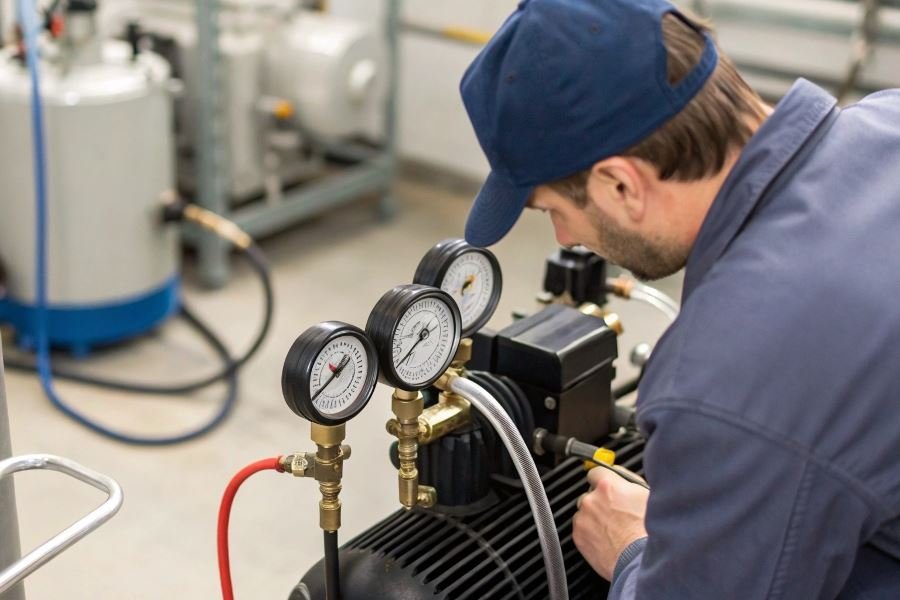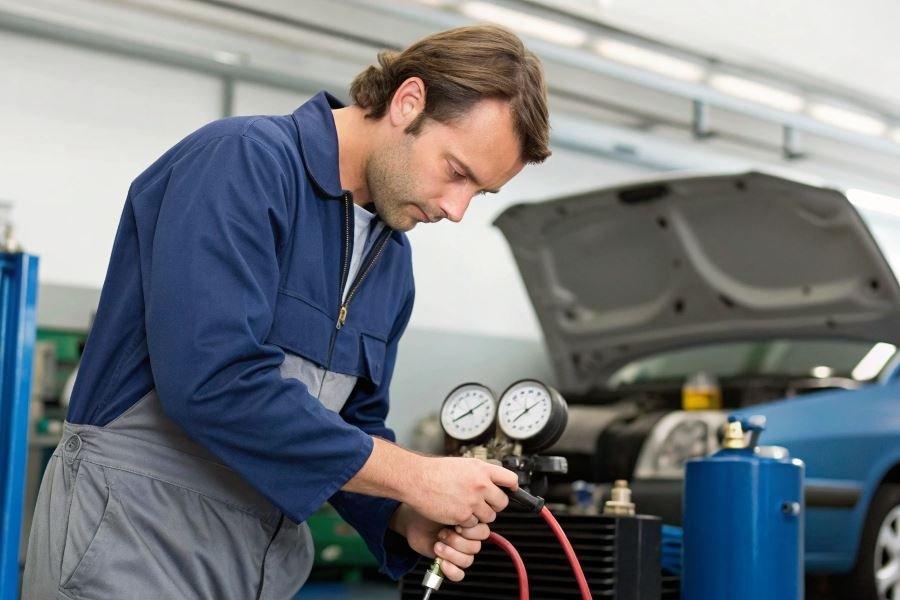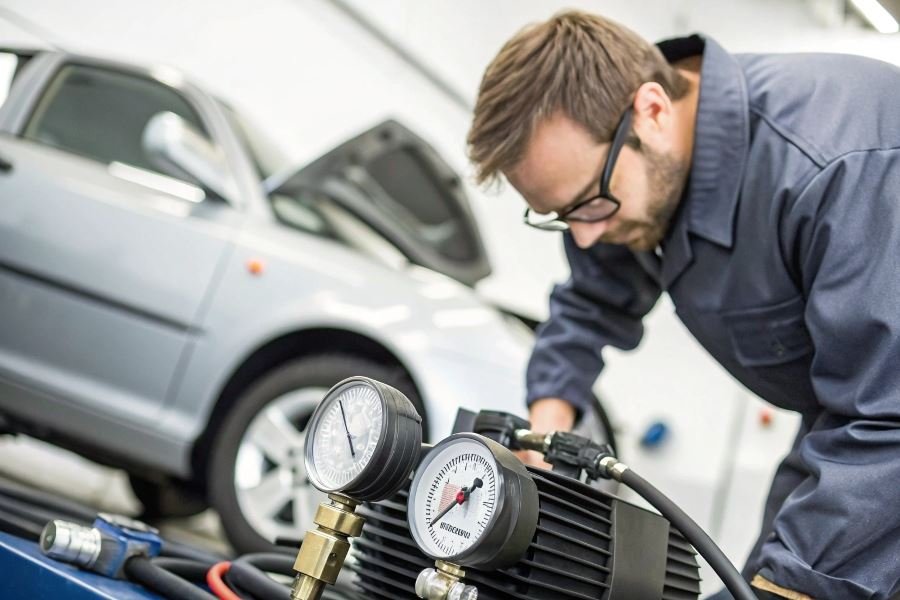
Ever walked into an auto repair shop and been hit by that unmistakable cocktail of fumes, dust, and chemicals? That’s not just an inconvenience—it’s a serious health hazard that smart shop owners are actively combating.
Auto service environments generate a dangerous mix of airborne contaminants: exhaust fumes loaded with carbon monoxide, solvent vapors from paints and degreasers, metal dust from grinding operations, and particulates from brake linings. Without proper extraction, these invisible threats silently compromise worker health and productivity while potentially violating strict OSHA regulations.
“The air quality in your shop isn’t just about comfort—it’s about protecting your most valuable assets: your technicians and your business license.”
Choosing the right air extraction system isn’t merely a regulatory checkbox; it’s a strategic investment in workplace safety, efficiency, and longevity. The market offers several distinct approaches to clearing the air:
Local extraction systems
These targeted solutions capture contaminants at the source—think flexible extraction arms positioned directly over exhaust pipes or painting operations. They’re highly efficient but require proper positioning for each task.
Centralized extraction networks
Comprehensive systems with fixed ductwork throughout the facility, connected to a central filtration unit. These provide consistent coverage but demand careful planning and significant upfront investment.
Mobile extraction units
Portable solutions offering flexibility for shops with changing layouts or multiple work areas. While convenient, they may lack the power of fixed installations for heavy-duty applications.
The right system for your shop depends on your specific operations, facility size, and budget—but one thing is certain: clean air is non-negotiable in today’s professional auto service environment.
Key Factors for Selecting the Perfect Air Extraction System
When investing in air extraction equipment for your auto service facility, the difference between an adequate system and an exceptional one comes down to understanding three critical factors. The process of how to choose a device for air extraction in an auto service requires careful analysis of your specific operational needs, contaminant types, and physical space constraints. Let’s dive into what truly matters when making this crucial decision for your business.
Matching Extraction Capacity to Your Facility
The extraction capacity of your system must align perfectly with your workspace dimensions. A mismatch here can lead to either insufficient air quality or unnecessary energy costs.
For small shops (under 2,500 sq ft), systems with 3,000-5,000 CFM (cubic feet per minute) typically provide adequate ventilation. Medium-sized facilities (2,500-7,500 sq ft) generally require 5,000-12,000 CFM, while large operations exceeding 7,500 sq ft may need systems delivering 12,000+ CFM.
Airflow calculation tip: For each vehicle bay, allocate approximately 1,500-2,000 CFM of extraction capacity. Multiple simultaneous operations require proportionally higher capacity.
| Facility Size | Recommended CFM Range | Typical System Type |
|---|---|---|
| Small (<2,500 sq ft) | 3,000-5,000 CFM | Wall-mounted or portable units |
| Medium (2,500-7,500 sq ft) | 5,000-12,000 CFM | Centralized systems with multiple extraction points |
| Large (>7,500 sq ft) | 12,000+ CFM | Industrial-grade centralized systems |
Remember that airflow requirements increase with ceiling height. For every foot above standard 10-foot ceilings, consider adding 5-7% to your calculated CFM requirements.
Identifying and Targeting Specific Contaminants
Different auto service operations generate distinct airborne hazards that require specialized extraction approaches.
Exhaust fumes from engine diagnostics contain carbon monoxide and nitrogen oxides, requiring direct-capture systems like Nederman ExhaustFlex hoses that connect directly to tailpipes.
Paint and solvent vapors from body shops contain volatile organic compounds (VOCs) that demand filtration systems with activated carbon components, such as those offered by SATA.
Metal dust and particulates from grinding, welding, and fabrication work require cyclonic separators and HEPA filtration like those found in Donaldson Torit systems.
Multi-contaminant environments benefit from modular systems that can be configured with different filtration media for various work zones. The extraction efficiency for specific contaminants varies dramatically:
| Contaminant Type | Recommended Filtration | Capture Method |
|---|---|---|
| Exhaust gases | Activated carbon | Direct capture at source |
| Paint/solvent vapors | Multi-stage with VOC filters | Booth enclosure |
| Metal particulates | Cyclonic + HEPA | Articulating arms |
| Brake dust | HEPA with pre-filters | Source capture hoods |
Installation Requirements and Spatial Planning
The physical integration of your extraction system demands careful consideration of your facility’s architecture and workflow patterns.
Ceiling height determines whether overhead rail systems are viable. Standard installations require minimum 12-foot clearings for optimal performance without impeding movement.
Ductwork routing significantly impacts system efficiency. Each 90-degree bend in ductwork reduces airflow by approximately 15%, while flexible ducts can decrease efficiency by up to 40% compared to smooth metal ducts.
Power requirements vary substantially between systems. Larger centralized units may require dedicated 480V three-phase power, while smaller portable units can operate on standard 220V circuits.
Future expansion considerations should influence initial installation. Oversizing main trunk lines by 20-25% allows for additional extraction points without complete system redesign when your business grows.
The most successful installations incorporate extraction points directly into workflow patterns, ensuring technicians can easily access and utilize the system without disrupting their work process.
By carefully evaluating these three critical factors—extraction capacity, contaminant specificity, and installation requirements—you’ll select an air extraction system that not only meets current regulatory standards but also enhances workplace efficiency and protects your most valuable asset: your team.
Making the Final Decision on Your Auto Service Air Extraction System
When you’ve narrowed down your options for air extraction systems, the real decision-making begins. This isn’t just about getting equipment—it’s about making a strategic business investment that will impact your auto service operations for years to come.
The true cost equation
The sticker price of an extraction system tells only part of the story. A $5,000 system might seem expensive compared to a $3,000 alternative, but the calculation changes dramatically when you factor in operational costs. High-efficiency motors in premium systems from manufacturers like Nederman can reduce energy consumption by up to 30% compared to budget options.
Consider this breakdown of a typical system’s lifetime costs:
| Cost Component | Percentage of Total Cost |
|---|---|
| Initial purchase | 25-30% |
| Energy consumption | 40-50% |
| Maintenance | 15-20% |
| Replacement parts | 10-15% |
The five-year perspective is essential here. A system that costs $2,000 more upfront but saves $1,200 annually in energy costs pays for itself in less than two years, then continues delivering savings for the remainder of its operational life.
Maintenance realities and system longevity
The best extraction system becomes a liability if it’s constantly breaking down. Modern systems from quality manufacturers like Eurovac typically offer 10-15 year lifespans with proper maintenance, while budget systems might need replacement in 5-7 years.
Maintenance requirements vary dramatically between systems:
- High-end filtration systems typically need filter replacements every 12-18 months
- Basic systems may require filter changes every 3-6 months
- Self-cleaning systems with pulse-jet technology can extend maintenance intervals by 300%
The accessibility of replacement parts becomes crucial as systems age. Proprietary components can lead to expensive service calls, while systems built with standardized parts allow for more cost-effective maintenance.
Installation considerations
Professional installation of an extraction system typically adds 1, 500−3,000 to your project cost, but this investment often pays dividends in system performance and longevity.
DIY installation might seem appealing for budget reasons, but consider these factors:
- Ducting efficiency – Professional installers minimize pressure drops through proper duct sizing and routing, maximizing system performance
- Code compliance – Professionals ensure your system meets local fire and safety regulations
- System balancing – Proper airflow balancing ensures all extraction points receive adequate suction
For smaller operations with simpler systems like those from JohnDow Industries, DIY installation with manufacturer guidance can be viable. However, for comprehensive shop-wide systems, professional installation typically delivers 15-25% better performance efficiency.
Decision framework: Calculate your total cost of ownership over 10 years, not just the purchase price. A system that costs twice as much but lasts three times longer with half the energy consumption is the true bargain.
The right extraction system becomes an invisible asset—quietly protecting your team’s health, improving productivity, and reducing maintenance costs on other equipment. By weighing these long-term factors against initial costs, you’ll make a decision that serves your business for years to come.
Discover how to select the ideal air extraction system for your auto service facility. Learn about extraction capacity, contaminant types, and cost considerations to ensure workplace safety and compliance with current regulations.
Discover how to select the ideal air extraction system for your auto service facility. Learn about extraction capacity, contaminant types, and cost considerations to ensure workplace safety and compliance with current regulations.