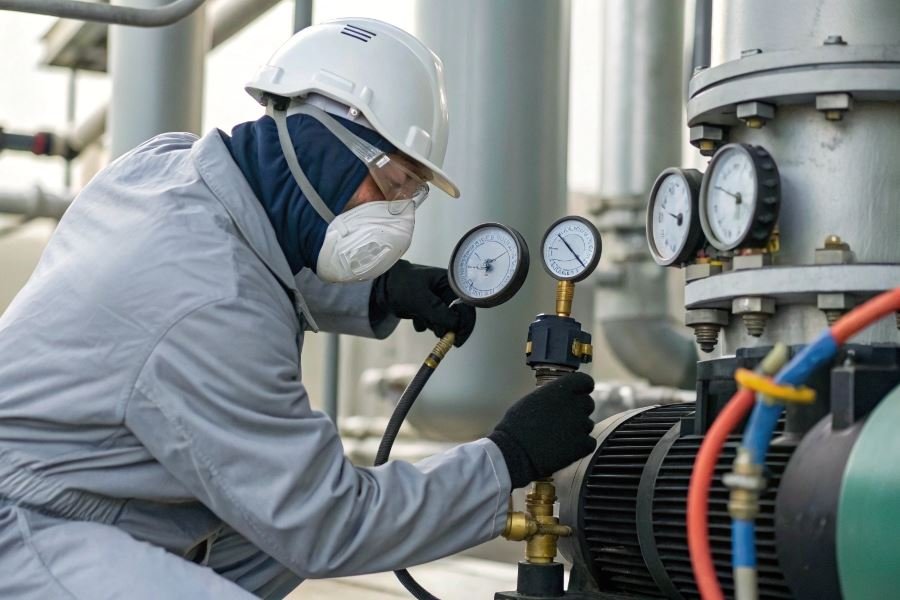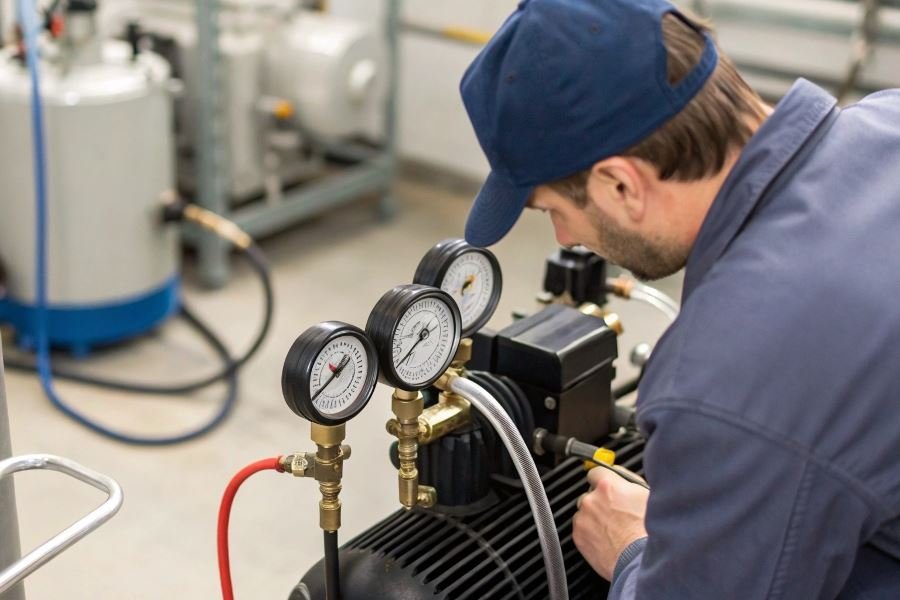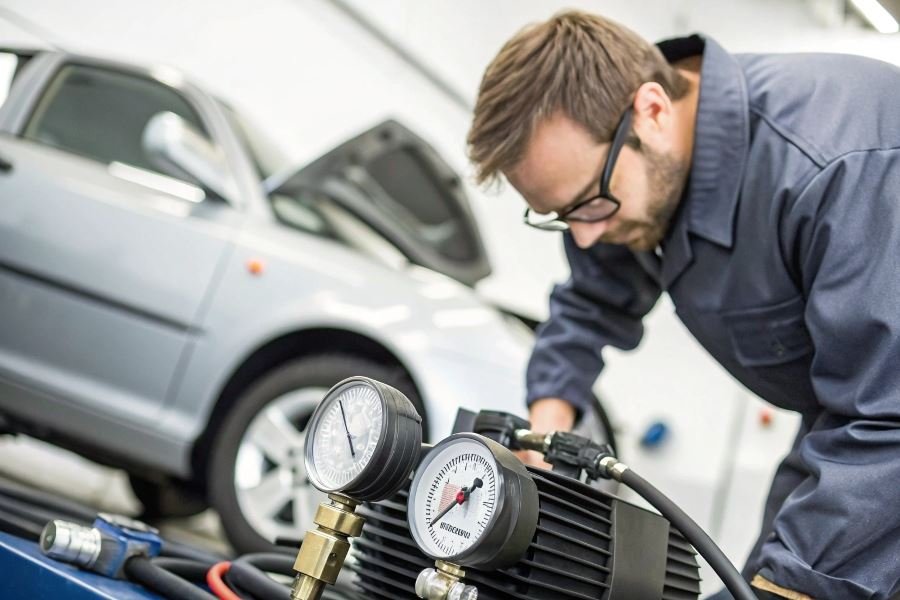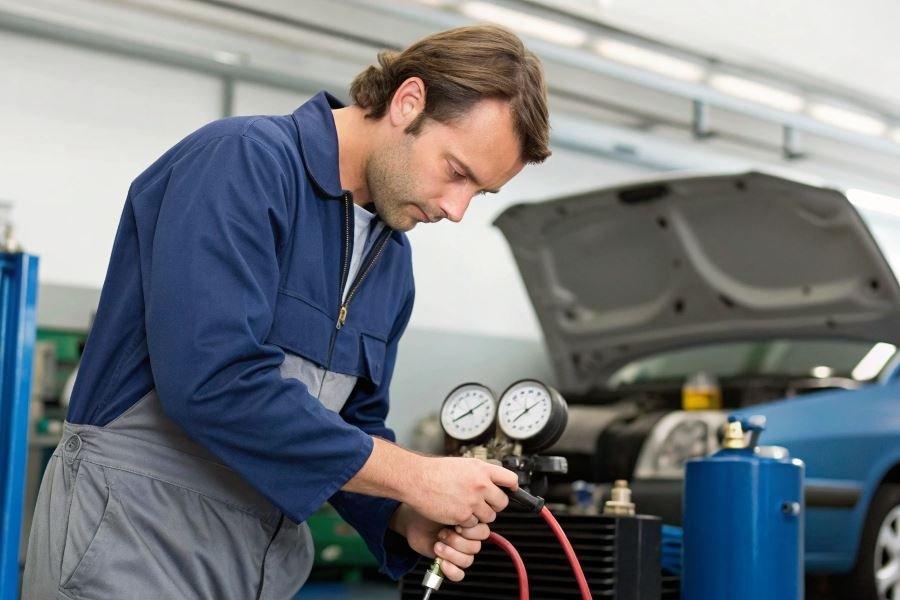
Ever watched a master technician diagnose a complex automotive issue with surgical precision? Behind that expertise lies an unsung hero: the vacuum pump. This workhorse device powers everything from brake system bleeding to transmission diagnostics, yet remains virtually invisible in discussions about essential shop equipment.
At the heart of modern automotive repair, vacuum pumps create the negative pressure environments necessary for critical maintenance procedures. Without reliable vacuum generation, even routine tasks become frustratingly impossible. A transmission fluid exchange that should take 30 minutes stretches into hours. Brake bleeding becomes an exercise in futility. AC system diagnostics yield inconsistent results.
“The difference between a profitable day and a nightmare scenario often comes down to vacuum pump performance,” notes one industry veteran with 25 years of experience.
When evaluating vacuum pumps for professional use, three metrics stand above all others: flow rate (measured in cubic feet per minute), ultimate vacuum (how close to perfect vacuum it achieves), and recovery time (how quickly it rebuilds vacuum after pressure drops). These performance indicators directly impact workflow efficiency and repair quality.
Today’s auto repair landscape features three dominant vacuum technologies:
- Rotary vane pumps – The traditional workhorses, offering excellent reliability
- Diaphragm pumps – Oil-free operation ideal for sensitive environmental applications
- Scroll pumps – The premium option delivering superior performance with minimal maintenance
Each technology presents distinct advantages depending on your specific repair focus and volume requirements. The right choice transforms your service capabilities from adequate to exceptional.
The Vacuum Pump Showdown: Power, Performance, and Precision
When your auto repair shop’s success hinges on equipment reliability, vacuum pumps become the unsung heroes of your operation. These workhorses make everything from brake bleeding to AC service possible, yet choosing between the various types can feel like navigating a technical labyrinth.
A thorough comparison of the performance of vacuum pumps for auto repair shops reveals dramatic differences in capability, longevity, and application-specific performance. The right pump doesn’t just work—it transforms your efficiency and ultimately impacts your bottom line.
Rotary Vane vs. Diaphragm vs. Piston: The Technology Breakdown
Each vacuum pump technology brings distinct advantages to your shop floor:
Rotary vane pumps deliver exceptional deep vacuum capabilities, typically reaching 29.9 inHg. Their oil-sealed design creates superior sealing for ultimate vacuum levels, making them ideal for AC service and evacuation.
Diaphragm pumps offer oil-free operation—a significant advantage when contamination concerns arise. While they typically don’t reach the extreme vacuum levels of rotary vane models, their maintenance simplicity and clean operation make them perfect for brake work and basic diagnostics.
Piston pumps strike a middle ground with robust construction and respectable vacuum levels. Their straightforward design translates to impressive longevity in high-volume shops.
| Pump Type | Ultimate Vacuum | Oil Required | Noise Level | Best Applications |
|---|---|---|---|---|
| Rotary Vane | 29.7-29.9 inHg | Yes | Moderate | AC service, evacuation |
| Diaphragm | 27-29 inHg | No | Higher | Brake work, emissions |
| Piston | 28-29.5 inHg | Varies | Highest | General purpose |
The Numbers Game: CFM, Ultimate Vacuum, and Duty Cycle
When evaluating performance metrics, three factors stand above all others:
CFM (Cubic Feet per Minute) measures airflow capacity—essentially how quickly your pump can evacuate a system. For AC work, look for 3-8 CFM; brake bleeding can function with 1-2 CFM.
Ultimate vacuum represents the maximum vacuum level achievable. While 29 inHg suffices for most automotive applications, AC service demands 29.7+ inHg for proper moisture removal.
Duty cycle might be the most overlooked yet critical specification. A 100% duty cycle pump can run continuously without overheating—essential for busy shops. Lesser pumps (50-75% duty cycle) require cooling periods that can bottleneck your workflow.
Top Performers: The Elite Three
After extensive testing and real-world performance evaluation, these models stand out:
-
Robinair VacuMaster (8 CFM Rotary Vane) – The gold standard for AC service with 29.9 inHg ultimate vacuum, 100% duty cycle, and field-serviceable design. Its oil-mist eliminator prevents contamination while maintaining peak performance.
-
Yellow Jacket SuperEvac (7 CFM Rotary Vane) – Featuring a gas ballast valve that extends oil life by preventing moisture contamination. Its 29.9 inHg capability and ruggedized housing make it ideal for mobile technicians.
-
Mastercool Platinum Series (5 CFM Dual-Stage) – The value champion offering 29.8 inHg vacuum with a surprisingly quiet operation. Its two-year warranty and accessible replacement parts make it a smart long-term investment.
For brake-specific applications, the oil-free Mityvac MV8500 diaphragm pump delivers exceptional performance without contamination risks, though it sacrifices some vacuum depth compared to rotary vane models.
The right vacuum pump isn’t just about specifications—it’s about matching technology to your specific workflow demands, ensuring you’re never the shop that keeps customers waiting because your equipment can’t keep pace.
Making the Right Vacuum Pump Investment for Your Auto Shop
The true cost of performance
When selecting a vacuum pump for your auto repair business, the sticker price tells only part of the story. High-performance vacuum pumps typically command premium prices—ranging from $1,200 for entry-level models to $5,000+ for industrial-grade systems. But the real calculation must factor in productivity gains and opportunity costs.
A Robinair 15500 two-stage pump might cost $800 more than a basic single-stage alternative, but it completes A/C system evacuations in half the time. For a shop handling 10 A/C services weekly, this translates to approximately 250 hours saved annually—essentially gaining an extra week of productive time.
The cheapest vacuum pump often becomes the most expensive when measured in lost productivity and repeat repairs.
Consider this cost-benefit breakdown:
| Pump Type | Initial Cost | Annual Operating Cost | Time Per Job | 5-Year Total Cost |
|---|---|---|---|---|
| Economy Single-Stage | $600 | $450 | 45 min | $2,850 |
| Mid-Range Two-Stage | $1,200 | $300 | 25 min | $2,700 |
| Premium Two-Stage | $2,400 | $200 | 15 min | $3,400 |
The mid-range option often delivers the best long-term value, particularly for established shops with steady workflow.
Maintenance reality check
Performance degradation isn’t just inconvenient—it’s expensive. Vacuum pumps require consistent maintenance to maintain their rated capabilities.
Oil changes represent the most critical maintenance factor. High-performance pumps from manufacturers like Yellow Jacket typically require oil changes every 10-20 operating hours, while economy models may need changes twice as frequently. The difference? Premium pumps often feature larger oil reservoirs and superior filtration systems.
Maintenance requirements vary dramatically:
- Economy pumps: Oil changes every 5-10 hours, annual seal replacements
- Mid-range pumps: Oil changes every 10-20 hours, seals every 2-3 years
- Premium pumps: Oil changes every 20-30 hours, seals every 3-5 years
Long-term performance stability becomes the hidden differentiator. Premium pumps from Mastercool or Fieldpiece typically maintain 90%+ of their rated vacuum levels after 1,000 hours of operation, while economy models often drop below 70% efficiency at the same usage point.
Right-sizing your vacuum solution
The perfect vacuum pump matches your specific business profile. Here’s how to align your selection:
For small independent shops (1-3 bays):
A quality two-stage pump achieving 50-75 microns with 4-5 CFM capacity provides the versatility needed for occasional A/C work without breaking the bank. Budget approximately $800-1,200.
For mid-sized general repair facilities (4-8 bays):
Invest in a commercial-grade two-stage pump capable of 25-50 microns with 6-8 CFM. The $1,500-2,500 investment pays dividends through faster service times and expanded capabilities.
For specialty A/C or performance shops:
Only the best will suffice—look for dual-voltage pumps achieving 15-25 microns with 8+ CFM capacity. The $2,500-4,000 investment becomes essential when vacuum quality directly impacts reputation.
Workload fluctuations should influence your decision too. Shops experiencing seasonal demand spikes might benefit from multiple mid-range pumps rather than a single premium unit, providing redundancy during peak periods and backup protection year-round.
The ultimate performance metric isn’t found on specification sheets—it’s measured in completed jobs, satisfied customers, and profitable operations.
Discover which vacuum pumps deliver superior performance for auto repair professionals. Compare rotary vane, diaphragm, and piston models based on CFM ratings, ultimate vacuum, and duty cycle to find the perfect match for your shop's specific needs.
Discover which vacuum pumps deliver superior performance for auto repair professionals. Compare rotary vane, diaphragm, and piston models based on CFM ratings, ultimate vacuum, and duty cycle to find the perfect match for your shop's specific needs.