Ever noticed how a perfect manicure can make you feel instantly polished, while a bad one leaves you hiding your hands in your pockets? The secret often lies not in expensive polishes or salon visits, but in something far more fundamental: your nail clippers.
The humble nail clipper—that small metal tool tucked away in medicine cabinets across America—plays a pivotal role in nail health and appearance. Yet many of us grab whatever discount pair catches our eye, never considering how this choice affects our nail care results. The right clipper doesn’t just cut; it shapes your nail future.
Nail clippers have come remarkably far since their inception. While ancient Egyptians used primitive metal tools for nail grooming as early as 3000 BCE, the modern clipper we recognize today emerged in the late 19th century. The lever-style clipper was patented in 1881 by inventors seeking to improve upon simple scissors and knives. Today’s market offers specialized options with ergonomic grips, precision blades, and even built-in catching systems for those annoying nail clippings.
Quality matters more than you might think. Premium clippers cut cleanly rather than crushing the nail, preventing splits and tears that can lead to painful hangnails and infections. They maintain their edge longer, ensuring consistent results whether you’re on your first clip or your fiftieth.
The difference between drugstore bargain clippers and professional-grade tools isn’t just marketing—it’s measurable in nail health, appearance, and the longevity of your manicure or pedicure. Investing in the right tool now means investing in healthier nails for years to come.
The Cutting Edge: Selecting Superior Nail Clippers
When it comes to personal grooming tools, few items see as much regular use as nail clippers. Yet many people overlook the importance of investing in quality implements that can make the difference between a frustrating experience and a precision cut. Understanding how to choose nail clippers for manicure and pedicure: main criteria involves examining several key factors that separate exceptional tools from mediocre ones.
Material Matters: Steel Quality Decoded
The foundation of any superior nail clipper begins with its material composition. Two primary contenders dominate the market: stainless steel and carbon steel.
Stainless steel clippers offer remarkable corrosion resistance—crucial for bathroom environments where moisture is constant. Premium stainless steel clippers (300-series or higher) maintain their edge longer and resist rusting even after years of use. They typically command prices between $15-30 for quality models, but their longevity makes them cost-effective investments.
Carbon steel alternatives provide exceptional sharpness and precision cutting. However, they require more maintenance to prevent oxidation. Many professional manicurists prefer carbon steel for its superior cutting performance, particularly for thicker nails.
The difference between mediocre and exceptional nail clippers often comes down to material grade, not just material type. Look for surgical-grade stainless steel (420 or 440C) for the optimal balance of durability and performance.
Ergonomic Excellence: The Handle on Comfort
The physical interface between tool and hand dramatically impacts both comfort and precision. Ergonomic considerations include:
Handle design – Leverage-optimized handles reduce the force needed to cut through even thick nails. The best designs distribute pressure evenly across the cutting motion.
Grip texture – Silicone or textured metal surfaces prevent slippage during use, especially critical for pedicure work where angles can be awkward.
Spring tension – Quality clippers feature calibrated springs that provide just enough resistance for control without requiring excessive hand strength.
| Ergonomic Feature | Benefit | Look For |
|---|---|---|
| Curved handles | Follows hand contour | Anatomical design |
| Wider grip surface | Reduces pressure points | At least 0.5″ width |
| Controlled spring | Prevents nail fragments from flying | Moderate tension |
Size and Specialization: Finding Your Perfect Fit
One size decidedly does not fit all when it comes to nail clippers. Different nail types and grooming goals require specialized tools:
Standard fingernail clippers (typically 3-3.5″ long) work well for routine maintenance of fingernails. Their slightly curved cutting edge mimics the natural shape of fingernails.
Precision straight-edge clippers offer more control for detailed nail shaping and are preferred by those who maintain square nail styles.
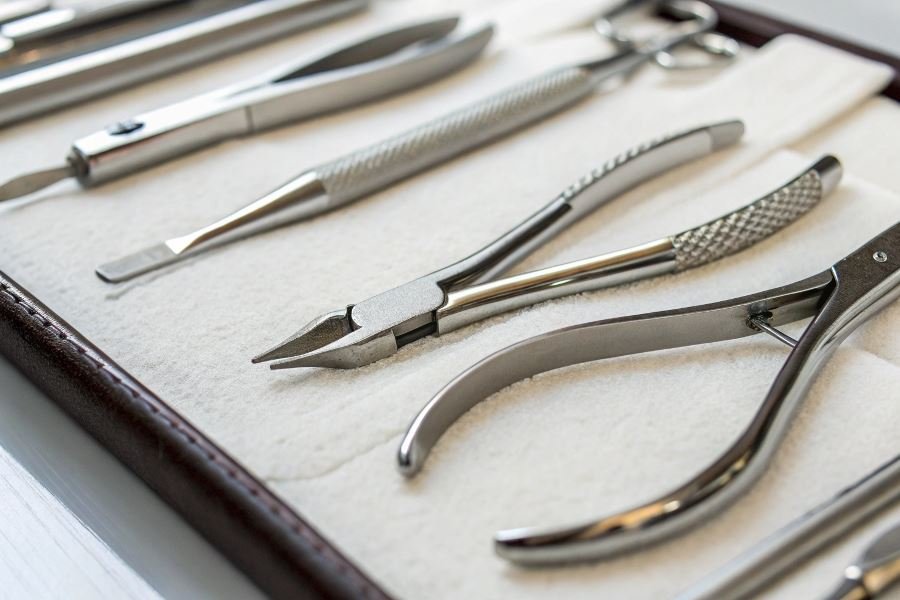
Pedicure clippers feature substantially larger, stronger blades—often with a straight cutting edge—designed specifically to handle thicker toenails. The best models from brands like Tweezerman or Zwilling J.A. Henckels incorporate extended handles for improved leverage.
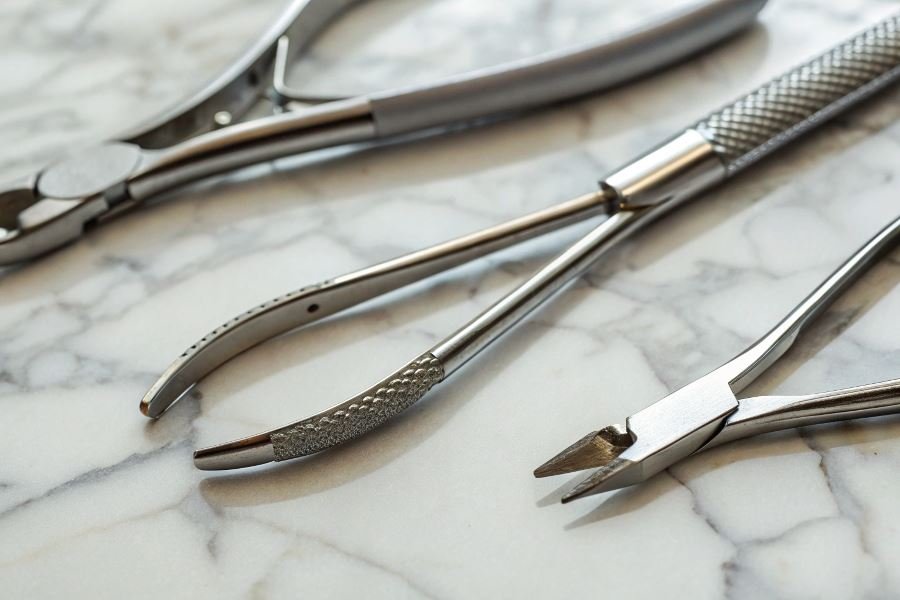
Wide-jaw designs accommodate larger nails while concave cutting edges help prevent ingrown nails by encouraging proper cutting technique.
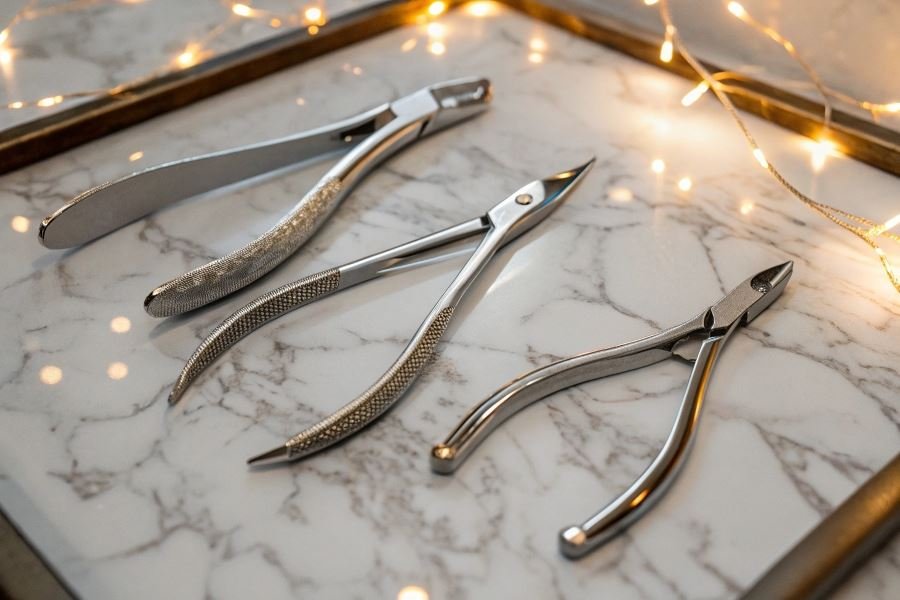
The most versatile approach is maintaining a small collection of specialized tools rather than relying on a single pair for all needs. A quality set might include fingernail clippers, toenail clippers, and precision nippers for hangnails—each designed for its specific purpose rather than compromising with a one-size-fits-all approach.
Maximizing Your Nail Clipper Investment
Extending the Life of Premium Clippers
Quality nail clippers deserve quality care. Proper maintenance not only preserves their cutting edge but significantly extends their functional lifespan. After each use, wipe your clippers with a soft cloth dampened with rubbing alcohol—this removes residual oils, skin cells, and potential corrosion agents. For deeper cleaning, use an old toothbrush to scrub the hinge mechanism where debris often accumulates.
Never store your clippers in the bathroom. The fluctuating humidity creates the perfect environment for rust development. Instead, keep them in a dry drawer or dedicated manicure case. For premium stainless steel models like those from Zwilling J.A. Henckels, applying a drop of mineral oil to the hinge quarterly prevents stiffness and maintains smooth operation.
The difference between a three-year and ten-year clipper lifespan often comes down to 30 seconds of maintenance after each use.
For those who’ve invested in high-carbon steel clippers, be particularly vigilant about moisture exposure. These precision instruments deliver exceptional performance but demand more attentive care than their stainless counterparts.
Value Proposition of Quality Clippers
The nail clipper market spans from $2 drugstore options to $150 professional-grade instruments. This price spectrum reflects genuine differences in materials, engineering precision, and long-term performance.
| Price Range | Expected Lifespan | Best For | Notable Features |
|---|---|---|---|
| 2−10 | 1-2 years | Occasional use | Basic functionality |
| 15−40 | 5-8 years | Regular home use | Ergonomic design, better steel |
| 50−150+ | 10+ years | Professional/enthusiast | Precision engineering, replaceable parts |
Mid-range clippers (15−40) typically represent the sweet spot for dedicated home users. Models like the Seki Edge SS-106 deliver professional-grade cutting performance with reasonable maintenance requirements. The marginal cost increase over budget options is quickly offset by their extended lifespan and superior cutting experience.
Consider this calculation: A $5 clipper replaced every 18 months costs $16.67 over five years. A $30 clipper that lasts the full five years costs less while delivering consistently better results and reducing waste.
Tailoring Your Selection to Usage Patterns
Your ideal clipper depends significantly on your specific needs and usage patterns. For professional nail technicians performing multiple services daily, investing in separate specialized tools for different nail types proves economically sound. The Tweezerman G.E.A.R. series offers task-specific instruments that maintain their edge through intensive professional use.
For home users, versatility becomes paramount. Look for clippers with:
- Leverage-optimized handles that reduce required force
- Curved blades that follow natural nail contours
- Integrated filing surfaces for finishing touches
If you maintain both fingernails and toenails at home, investing in two separate instruments—a smaller precision clipper for fingers and a more robust model for toes—provides optimal results. The Green Bell G-1008 for fingernails paired with their G-1013 for toenails creates a comprehensive system that addresses the biomechanical differences between these nail types.
Remember that even premium clippers eventually dull. When cutting becomes less precise or requires more force, it’s time for replacement—regardless of how much you initially invested. The best nail clipper is always the one that cuts cleanly, comfortably, and consistently.
Discover the essential criteria for selecting premium nail clippers that deliver perfect manicure and pedicure results. Learn about materials, ergonomics, and size considerations to make an informed investment in your nail care routine.
Discover the essential criteria for selecting premium nail clippers that deliver perfect manicure and pedicure results. Learn about materials, ergonomics, and size considerations to make an informed investment in your nail care routine.