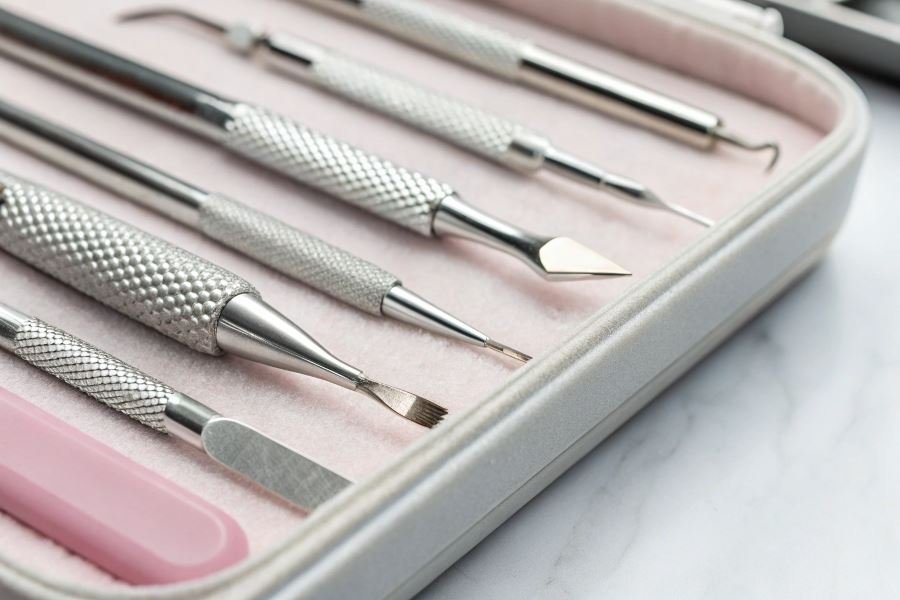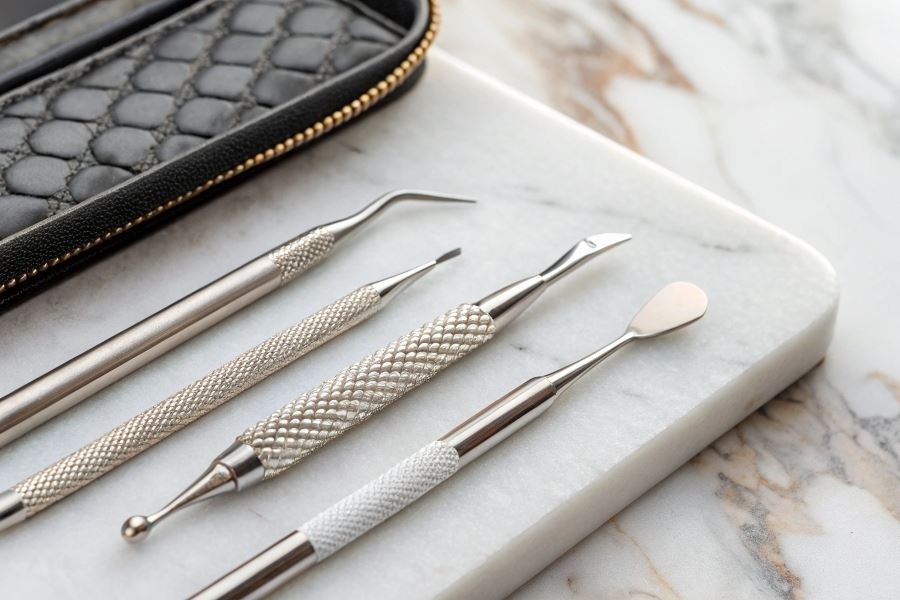
Ever wondered why some manicures look flawless while others fall short? The secret often lies not in the polish, but in the precision tools wielded by skilled technicians. Among these, the humble curette stands as perhaps the most misunderstood yet essential instrument in professional nail care.
Manicure curettes are specialized tools designed to gently remove cuticle tissue and clean nail grooves with surgical precision. These slender implements feature a spoon-shaped end (hence the name “curette,” from the French word for “little spoon”) that allows technicians to access difficult areas around the nail without causing damage to healthy tissue.
The evolution of these precision instruments tells a fascinating story of craftsmanship. Dating back to the early 1900s when basic metal implements were first introduced to salons, curettes have undergone remarkable transformation. The rudimentary steel tools of yesterday have given way to surgical-grade stainless steel, titanium alloys, and even ceramic options that dominate today’s professional market.
When selecting a curette, material composition becomes the defining factor in both performance and longevity. Stainless steel offers excellent durability and sterilization capabilities, while titanium provides lightweight handling with superior strength. Ceramic curettes, though more fragile, deliver exceptional precision for detail work and resist corrosion completely.
The material choice isn’t merely about preference—it fundamentally affects how the tool performs under pressure. Professional technicians understand that the right curette material can mean the difference between client comfort and discomfort, between precision work and potential damage.
The Material Science Behind Professional Manicure Curettes
When professionals reach for their manicure tools, the material composition of each instrument dramatically impacts performance, longevity, and client safety. The manufacturing materials of manicure curettes determine everything from their weight in hand to their ability to withstand rigorous sterilization. Understanding these material differences helps both professionals and enthusiasts make informed investments in their nail care arsenal.
The evolution of manicure curettes: materials of manufacture and their features has transformed what was once a simple grooming tool into precision instruments engineered for specific nail care applications. Today’s market offers specialized options crafted from various metals and innovative composites, each bringing distinct advantages to the manicure station.
Stainless Steel: The Industry Workhorse
Stainless steel remains the gold standard for professional manicure curettes, and with good reason. These tools undergo a sophisticated manufacturing process that begins with high-carbon steel alloys containing chromium (typically 10-15%) for corrosion resistance.
Key advantages of stainless steel curettes:
- Exceptional durability with proper care
- Complete autoclave compatibility (121-134°C)
- Maintains edge sharpness through hundreds of procedures
- Resistant to most disinfectants and cleaning solutions
The manufacturing process involves precision forging, followed by heat treatment to achieve the optimal balance of hardness and flexibility. Premium stainless steel curettes undergo additional passivation treatments to enhance their corrosion resistance.
Professional tip: Even stainless steel requires proper maintenance. Always dry completely after sterilization to prevent microscopic corrosion that can compromise the tool’s edge.
Titanium: Lightweight Luxury for Professionals
For professionals who perform multiple procedures daily, titanium curettes offer ergonomic advantages that justify their premium price point. Typically 40% lighter than their stainless steel counterparts, these instruments reduce hand fatigue during extended use.
Titanium curettes undergo an anodization process that creates a protective oxide layer, available in various colors for easy identification in a professional setting. This surface treatment also contributes to titanium’s remarkable properties:
| Property | Titanium Advantage | Practical Benefit |
|---|---|---|
| Weight | 40% lighter than steel | Reduced hand fatigue |
| Corrosion | Virtually impervious | No rusting or pitting |
| Thermal | Low conductivity | Comfortable handling |
| Strength | Exceptional durability | Long-term investment |
The manufacturing of titanium curettes involves sophisticated CNC machining from solid titanium alloy (typically Ti-6Al-4V), followed by precision grinding and finishing processes that ensure perfect balance and edge geometry.
Ceramic and Composite Innovations
The newest entrants in the curette market leverage advanced materials science to create specialized tools for specific applications. Ceramic components, typically zirconia-based, offer unique benefits:
Ceramic curette advantages:
- Biologically inert material ideal for clients with metal sensitivities
- Exceptional hardness maintains precise edges longer
- Non-conductive properties for comfort during extended procedures
- Naturally smooth surface resists bacterial adhesion
Composite curettes combine materials strategically—often featuring ceramic working edges with ergonomic metal or polymer handles. These hybrids are manufactured through sophisticated molding and bonding processes that optimize each component’s strengths.
The manufacturing precision required for ceramic and composite curettes typically involves computer-controlled grinding with diamond abrasives, followed by high-temperature sintering processes that create molecular bonds of exceptional strength.
While these innovative materials offer compelling advantages, they typically require specialized cleaning protocols and may not withstand the high-pressure steam sterilization methods used for metal instruments. Always follow manufacturer guidelines for proper maintenance of these advanced tools.
Choosing the Perfect Manicure Curette Material
Professional nail technicians and home users alike understand that the right tool transforms a manicure from good to exceptional. When it comes to curettes—those precision instruments that clean nail beds and cuticle areas—material selection dramatically impacts performance, durability, and client comfort.
Professional-grade materials for salon environments
In the high-volume salon environment, material selection becomes critical for both performance and longevity. Professional nail technicians typically choose between several premium options:
Surgical-grade stainless steel remains the gold standard in professional settings, offering exceptional durability and precision. The 316L medical-grade variant contains molybdenum, providing superior corrosion resistance against disinfectants and sterilization processes. Most high-end salons report their stainless steel curettes lasting 3-5 years with proper maintenance.
Titanium curettes have gained significant traction among luxury salons. While commanding a premium price point ($75-150 per tool), titanium offers unmatched benefits:
- 45% lighter than steel equivalents
- Exceptional strength-to-weight ratio
- Natural antibacterial properties
- Hypoallergenic for sensitive clients
The investment in titanium pays dividends through extended tool life and reduced hand fatigue during long salon shifts.
For specialized applications, ceramic-coated curettes provide exceptional hardness and edge retention. The ceramic coating creates an ultra-smooth surface that glides effortlessly along nail beds, reducing client discomfort during deep cleaning procedures.
| Material | Durability | Weight | Sterilization | Price Range |
|---|---|---|---|---|
| Surgical Steel | High | Medium | Autoclave safe | $30-65 |
| Titanium | Very High | Light | Autoclave safe | $75-150 |
| Ceramic-Coated | Medium-High | Medium | Chemical only | $45-80 |
Home-use material considerations
The home user’s needs differ significantly from professionals, with occasional use and simplified sterilization requirements changing the material equation.
Mid-grade stainless steel offers the best value proposition for home users. These curettes typically use 304-grade stainless steel—slightly less corrosion-resistant than professional-grade but perfectly adequate for home care routines. At $15-30, they represent an accessible entry point without sacrificing essential performance.
Disposable plastic curettes have emerged as a practical option for infrequent users. Made from medical-grade polymers, these single-use tools eliminate sterilization concerns entirely. While not environmentally ideal, they provide a hygienic solution for those uncomfortable with sterilization procedures.
For those with metal sensitivities, silicone-tipped curettes offer a gentle alternative. The flexible silicone edge provides sufficient rigidity for basic cuticle work while minimizing the risk of damage to delicate nail beds—ideal for beginners developing their technique.
Emerging material innovations
The manicure tool industry continues to evolve with exciting material developments on the horizon:
Antimicrobial copper alloys are gaining attention for their self-sanitizing properties. Research has demonstrated copper’s ability to kill 99.9% of bacteria within two hours of contact, potentially revolutionizing tool hygiene protocols.
Carbon fiber composites represent the cutting edge of lightweight, high-strength materials. These aerospace-derived composites offer exceptional rigidity while weighing 70% less than steel equivalents. Though currently expensive, manufacturing innovations are steadily bringing costs down.
Perhaps most promising are biodegradable bioplastic curettes developed from plant-based polymers. These environmentally conscious alternatives offer comparable performance to traditional plastics while decomposing naturally after disposal.
The perfect curette material ultimately depends on your specific needs—professionals require durability and precision under demanding conditions, while home users prioritize safety and ease of use. By understanding material properties and matching them to your requirements, you’ll select tools that deliver exceptional results for years to come.
Discover the essential differences between stainless steel, titanium, and ceramic manicure curettes. Learn how material choice affects durability, precision, and performance for professional nail care and home use.
Discover the essential differences between stainless steel, titanium, and ceramic manicure curettes. Learn how material choice affects durability, precision, and performance for professional nail care and home use.