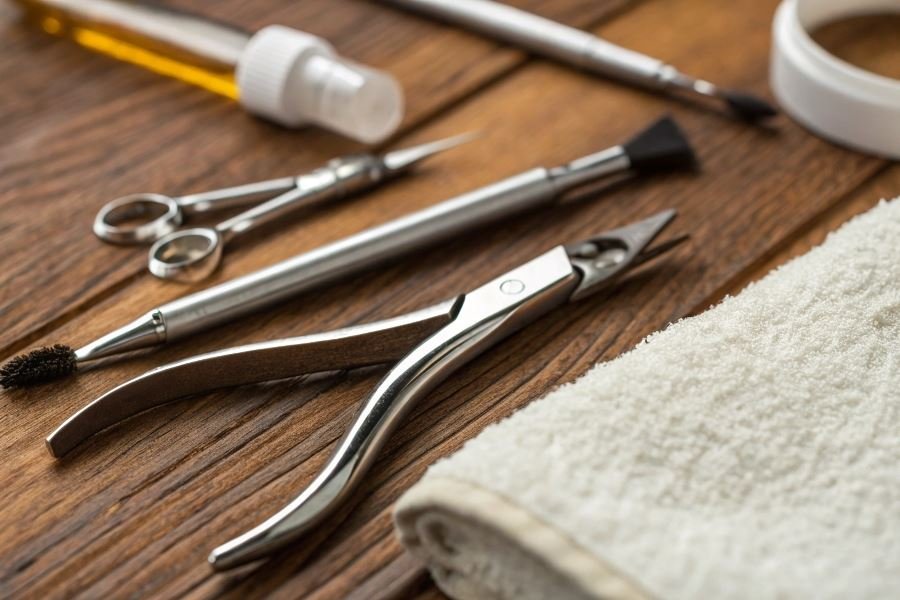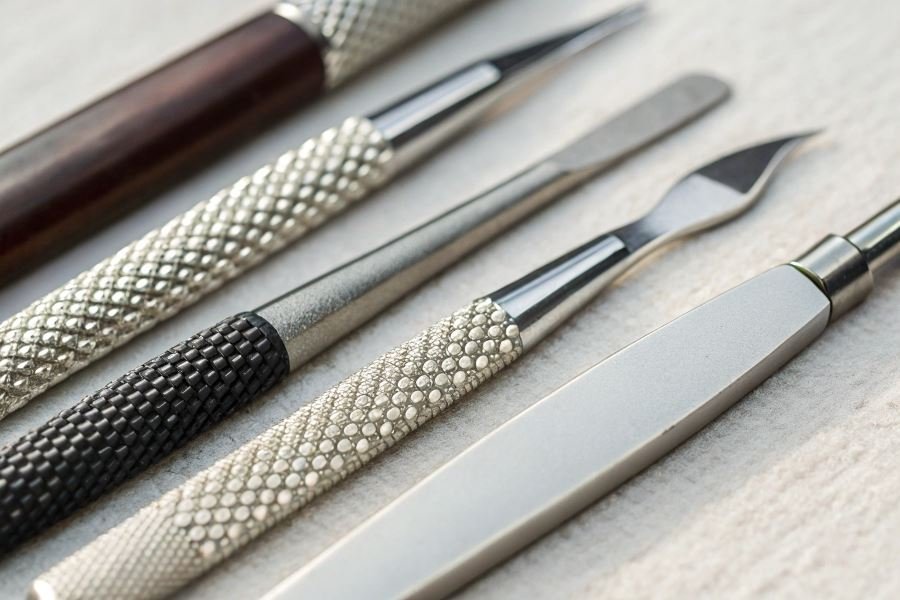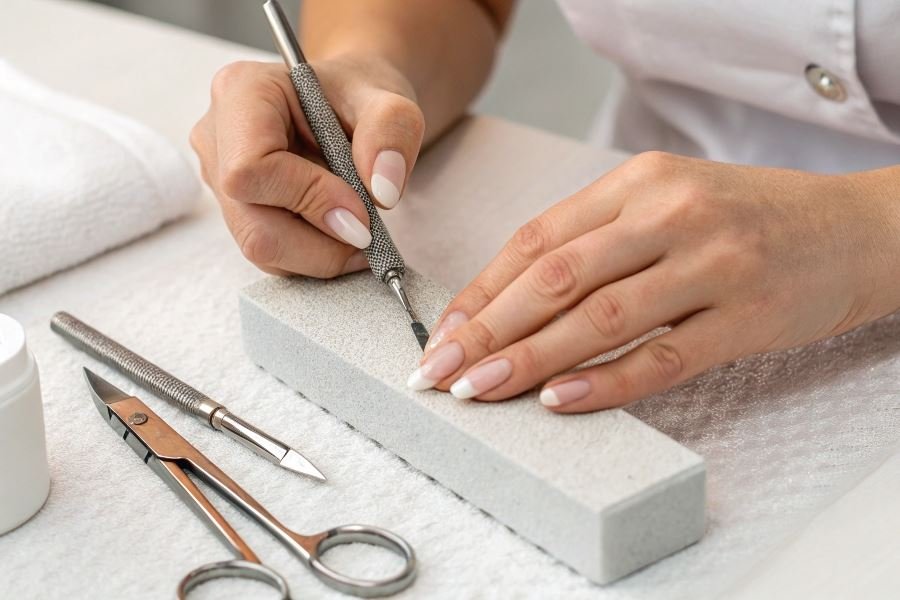
Ever noticed how a dull cuticle knife transforms a simple manicure into a frustrating battle against your own fingertips? The difference between professional-looking results and potential injury often comes down to one factor: sharpness.
A properly sharpened cuticle knife isn’t just a tool—it’s the cornerstone of precision nail care. When sharp, it glides effortlessly around cuticles, removing excess skin without tugging or tearing. When dull, it becomes potentially dangerous, requiring excess force that can lead to slips and cuts. The irony is unmistakable: a dull blade is actually more hazardous than a sharp one.
Essential sharpening tools
Creating that perfect edge requires surprisingly few implements:
- A fine-grit sharpening stone (1000 grit or higher)
- Honing oil or water
- A leather strop (optional but recommended)
- Microfiber cloth for cleaning
Think of these tools as your knife’s spa treatment—each playing a crucial role in restoring its performance. The stone reshapes the edge, while the strop refines it to surgical sharpness.
Recognizing the warning signs
Your cuticle knife is practically begging for attention when:
“If you’re pressing harder than you used to, your knife isn’t working—it’s struggling.”
Watch for these telltale indicators:
- Dragging sensation when cutting
- Cuticles tearing rather than cleanly separating
- Visible nicks or dullness along the blade edge
- Increased discomfort during your manicure routine
Don’t wait until your knife becomes completely ineffective. Regular maintenance keeps your tool in peak condition, ensuring both safety and professional results with every use.
Sharpening Techniques That Transform Your Cuticle Knife
When precision matters in manicure work, nothing beats a properly sharpened cuticle knife. The difference between a dull and sharp instrument isn’t just about efficiency—it’s about client comfort, clean results, and extending the life of your professional tools.
Mastering how to properly sharpen a cuticle knife requires understanding both the metallurgy of your tools and the mechanics of creating a perfect edge. This seemingly simple maintenance task separates amateur practitioners from true professionals who recognize that tool care directly impacts service quality.
Choosing the right sharpening stone
The foundation of effective sharpening begins with selecting the appropriate stone. Cuticle knives, with their delicate blades and specific angles, demand particular attention:
- Water stones (1000-3000 grit): Ideal for initial sharpening of moderately dull knives
- Ceramic stones (4000+ grit): Perfect for finishing and maintaining already sharp edges
- Diamond plates: Excellent for reshaping damaged edges or particularly hard steel
Never use standard kitchen sharpeners on precision manicure tools—they’re designed for entirely different edge geometries.
A quality Shapton Professional Stone or Naniwa Professional Stone provides the perfect balance of material removal and precision for professional-grade cuticle implements.
The critical angle and pressure equation
The most technically challenging aspect of sharpening these specialized tools lies in maintaining the correct angle consistently throughout the process.
| Knife Type | Recommended Angle | Pressure Level |
|---|---|---|
| Standard cuticle knife | 15-17° | Light to moderate |
| Pusher-cutter combo | 20° | Moderate |
| Precision pointer | 10-12° | Very light |
The proper technique involves holding the knife at the appropriate angle while applying consistent pressure across the entire edge. Most professionals use the “marker trick”—coloring the edge with a permanent marker before sharpening to visualize where metal is being removed.
Step-by-step sharpening process
Different cuticle knife designs require slightly modified approaches:
- Preparation phase
- Clean the knife thoroughly with alcohol
- Inspect the edge under good lighting for nicks or damage
- Select appropriate stone and lubrication (water or oil depending on stone type)
- For standard straight-edge cuticle knives
- Hold the knife at 15-17° against the stone
- Using light pressure, make 10-15 passes in one direction only
- Check edge progress and repeat until a burr forms along the entire edge
- Switch to finer grit stone and repeat with lighter pressure
- For curved or specialty cuticle knives
- Section the blade mentally into thirds
- Work each section individually, maintaining angle consistency
- Use small circular motions for curved sections
- Test sharpness on tissue paper between grits
The final polish on a 6000+ grit stone or leather strop creates that mirror-like finish that not only looks professional but also ensures the edge remains sharper longer by removing microscopic burrs that would otherwise lead to premature dulling.
Regular maintenance sharpening every 30-40 uses prevents the need for complete resharpening and maintains the structural integrity of these precision instruments that are essential for delivering exceptional manicure services.
Extending the Life of Your Cuticle Knife
A properly sharpened cuticle knife is a precision instrument that deserves proper care. The difference between professionals and amateurs often comes down to how they maintain their tools after that perfect edge has been achieved. Let’s dive into the essential practices that will keep your cuticle knife performing at its best for years to come.
Smart storage solutions that preserve sharpness
The moment you finish using your cuticle knife, how you store it determines how long that razor-sharp edge will last. Never toss your cuticle knife loosely into a drawer where it can bump against other metal objects—this is the fastest way to dull that perfect edge you’ve worked so hard to achieve.
Instead, consider these professional storage options:
- Dedicated knife blocks with individual slots prevent blades from touching
- Magnetic strips mounted in your workspace keep knives accessible yet protected
- Blade guards made of plastic or leather provide individual protection
- Roll-up canvas cases with individual pockets offer portable protection
The ideal storage environment should also be dry and temperature-stable. Moisture is the enemy of fine steel, potentially leading to rust that can permanently damage your cuticle knife’s edge.
Weekly maintenance routine for lasting performance
A sharp cuticle knife doesn’t stay that way without regular attention. Implement this simple maintenance schedule to extend periods between full sharpenings:
- After each use: Wipe the blade clean with a soft cloth
- Weekly honing: Use a ceramic honing rod to realign the edge
- Monthly inspection: Check for signs of corrosion or damage
- Quarterly light sharpening: Apply a touch-up sharpening before the edge degrades significantly
The most successful professionals don’t wait until their tools fail—they prevent failure through consistent maintenance.
For cuticle knives made of carbon steel, applying a thin layer of food-grade mineral oil every few weeks will create a protective barrier against oxidation and moisture.
Troubleshooting common sharpening issues
Even with perfect technique, you may encounter challenges with your cuticle knife’s edge. Here’s how to address the most common problems:
| Problem | Likely Cause | Solution |
|---|---|---|
| Edge chips easily | Over-sharpening or incorrect angle | Reshape edge at slightly wider angle (18-20°) |
| Knife dulls quickly | Poor quality steel or improper use | Invest in higher-grade steel; avoid lateral pressure |
| Uneven edge | Inconsistent sharpening pressure | Use guided sharpening system for consistency |
| Blade discoloration | Chemical exposure or oxidation | Clean with mild soap; apply protective oil |
If your cuticle knife develops a “wire edge”—a thin, weak burr that feels sharp initially but quickly folds over—you’ll need to complete your sharpening process with progressively finer stones and proper stropping.
Pro tip: Test your knife’s sharpness on a piece of paper rather than your skin. A truly sharp cuticle knife should slice through paper with minimal resistance, creating a clean cut without tearing.
By implementing these storage practices, maintenance routines, and troubleshooting techniques, your cuticle knife will remain a reliable tool in your manicure arsenal, delivering precise cuts and clean edges for much longer between sharpenings.
Learn professional techniques for sharpening your cuticle knife to ensure precision, safety, and longevity. Our expert guide covers essential tools, proper angles, step-by-step methods, and maintenance tips for salon-quality results.
Learn professional techniques for sharpening your cuticle knife to ensure precision, safety, and longevity. Our expert guide covers essential tools, proper angles, step-by-step methods, and maintenance tips for salon-quality results.