What if that bargain gel extension you just purchased is slowly damaging your nails? The beauty industry has witnessed an alarming 43% increase in counterfeit nail products over the past three years, putting both professionals and consumers at risk.
When it comes to nail extensions, the difference between quality and counterfeit products isn’t just about aesthetics—it’s about your health. Professional nail technicians know that distinguishing genuine extension gels from fakes requires more than just looking at the price tag. The molecular structure of premium extension gels creates a flexible, durable bond that moves with your natural nail, preventing breakage and allowing healthy growth underneath.
“The right extension gel should enhance your nail health, not compromise it.”
Counterfeit products pose serious risks beyond just poor-looking manicures. Many contain banned substances like methyl methacrylate (MMA), which was prohibited in nail products by the FDA in the 1970s due to its potential to cause severe allergic reactions and permanent nail damage. Some knockoffs even contain undisclosed chemicals that can trigger respiratory issues, skin irritations, and in extreme cases, nerve damage with prolonged exposure.
The market has become increasingly saturated with convincing imitations, often packaged in containers nearly identical to premium brands but sold at suspiciously low prices. These counterfeits typically lack the quality control, safety testing, and ingredient transparency that legitimate manufacturers provide.
Your nail health is worth the investment in authentic products—knowing how to spot the real deal is the first step toward beautiful, healthy extensions.
The Physical Truth Behind Quality Extension Gels
When it comes to spotting authentic extension gels, your eyes, fingers, and UV lamp are your best allies in the battle against counterfeits. Professional nail technicians develop an almost sixth sense for detecting inferior products, and with good practice, you can too. Let’s dive into the physical characteristics that separate premium formulations from dangerous knockoffs.
Packaging That Speaks Volumes
The journey of distinguishing a quality extension gel from a counterfeit begins with the packaging. Legitimate manufacturers invest significantly in their presentation because they understand it’s the first handshake with their customers.
Professional packaging hallmarks include:
- Tamper-evident seals that break upon first opening
- Batch numbers and manufacturing dates clearly printed (not stamped or easily smudged)
- Consistent font quality throughout all text elements
- Weight measurements that match product specifications
- Proper registration of trademark symbols (®, ™)
Low-quality counterfeits often feature misaligned labels, spelling errors, or inconsistent branding elements that betray their origins.
The Texture Tells All
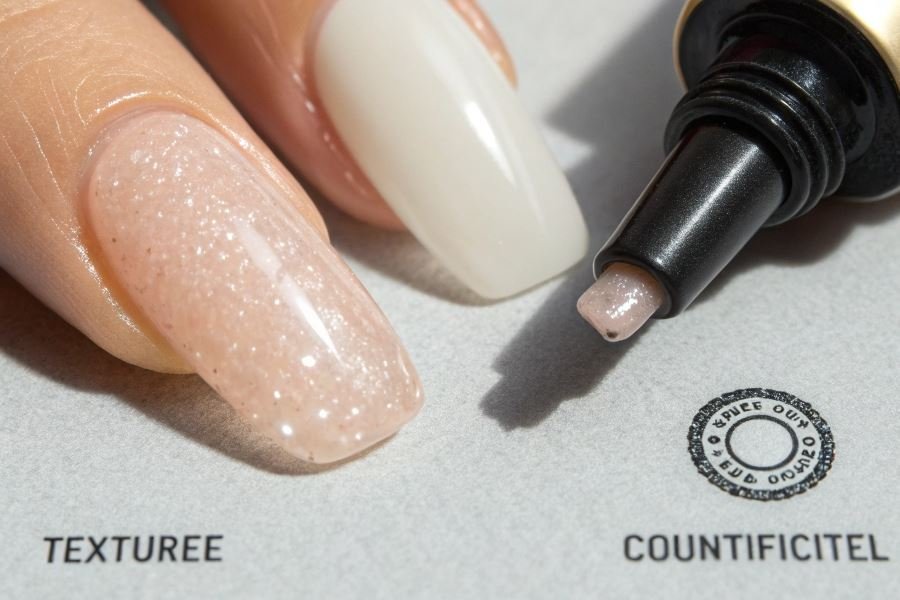
Nothing reveals the truth about extension gels quite like their physical consistency. Premium products maintain specific viscosity profiles engineered for optimal application and durability.
When examining gel consistency, authentic products typically demonstrate:
- Self-leveling properties without running or pooling excessively
- Smooth texture free from graininess or separation
- Controlled flow that responds predictably to brush manipulation
- Stable pigmentation that doesn’t streak or separate
A simple test involves placing a small amount on a mixing palette and observing how it behaves. Quality gels maintain their form without immediately spreading flat, while counterfeits often either run too thin or remain unnaturally stiff.
| Characteristic | Quality Gel | Counterfeit |
|---|---|---|
| Viscosity | Medium-thick, consistent | Too runny or too thick |
| Odor | Mild, controlled aroma | Strong chemical smell |
| Color | Uniform throughout | Inconsistent, may separate |
| Texture | Smooth, homogeneous | Grainy, lumpy, or watery |
The Light Never Lies
Perhaps the most definitive test comes during the curing process. When exposed to proper UV or LED light, quality extension gels undergo a precise polymerization process.
Watch for these curing indicators:
- Complete hardening within the manufacturer’s specified time frame
- Uniform curing throughout the product (no tacky spots)
- Minimal heat sensation during curing (excessive heat often indicates unstable formulations)
- Proper surface finish after curing (should not remain sticky unless it’s a specific “sticky layer” product)
Counterfeit gels frequently exhibit partial curing, leaving sections soft or tacky even after extended light exposure.
The heat generated during curing also provides valuable clues. While all gels produce some heat through exothermic reaction, counterfeits often cause uncomfortable or even painful heat spikes that can damage the natural nail beneath.
By methodically examining packaging integrity, analyzing physical consistency, and observing curing behavior, you’ll develop the expertise to confidently identify quality extension gels. These physical characteristics serve as your first line of defense against potentially harmful counterfeits that could compromise both your work quality and client safety.
Safeguarding Your Investment: Authentic Extension Gel Guide
Trusted Retailers Are Your First Defense
The battle against counterfeit extension gels begins with where you shop. Authorized retailers have direct relationships with manufacturers and undergo regular quality checks. When purchasing from OPI, CND, or Gelish, you’re not just buying a product—you’re buying peace of mind.
Verification tip: Most premium brands offer retailer locator tools on their websites. Take the extra minute to confirm your supplier is listed. Many legitimate manufacturers also implement authentication measures like QR codes or holographic stickers that can be verified through their official apps or websites.
The difference between authorized and unauthorized sellers isn’t just paperwork—it’s quality control standards that protect your clients and your reputation.
Price Signals That Shouldn’t Be Ignored
When that “amazing deal” appears in your feed, pause before clicking. Quality extension gels require premium ingredients and rigorous testing—processes that establish a certain price floor.
| Price Category | Typical Range | What It Likely Means |
|---|---|---|
| Suspiciously Low | $5-15 | Likely counterfeit or severely diluted |
| Budget-Friendly | $15-25 | May be authentic but older stock or basic formulation |
| Professional Standard | $25-45 | Typically genuine with full ingredient profile |
| Premium Professional | $45+ | Authentic with advanced formulations and technologies |
Reality check: When a professional-grade extension gel that typically retails for $35 suddenly appears for $12, something fundamental has been compromised—usually quality and safety.
The true cost of counterfeit extension gels isn’t measured in dollars saved today, but in client relationships and reputation damaged tomorrow.
Unmistakable Markers of Authentic Products
Genuine extension gels leave evidence of their quality that’s difficult to fake:
-
Consistency matters: Authentic gels maintain uniform viscosity throughout the bottle. Counterfeits often separate or show inconsistent texture when applied.
-
Curing behavior: Quality gels cure evenly under proper UV/LED exposure. Counterfeits may cure partially, leaving tacky spots or requiring excessive lamp time.
-
Packaging precision: Examine fonts, logo placement, and packaging materials. Premium brands invest heavily in consistent branding—counterfeits often show subtle irregularities in label alignment or print quality.
-
Batch codes: Legitimate products feature traceable batch codes that manufacturers can verify. These codes follow specific patterns unique to each brand.
-
Ingredient transparency: Authentic brands list complete ingredients that comply with FDA regulations. Counterfeits often abbreviate lists or include banned substances.
The professional nail industry thrives on reputation and consistency. Using verified products isn’t just ethical—it’s essential for business longevity.
When you choose authentic extension gels, you’re not just buying a product—you’re investing in predictable results, client safety, and your professional standing. The extra diligence in verification and willingness to pay appropriate prices ultimately protects what matters most: the trust your clients place in your expertise and the integrity of your work.
Learn to identify genuine extension gels from dangerous counterfeits. Discover key indicators in packaging, consistency, and curing behavior to protect your nail health and ensure salon-quality results with authentic products.
Learn to identify genuine extension gels from dangerous counterfeits. Discover key indicators in packaging, consistency, and curing behavior to protect your nail health and ensure salon-quality results with authentic products.