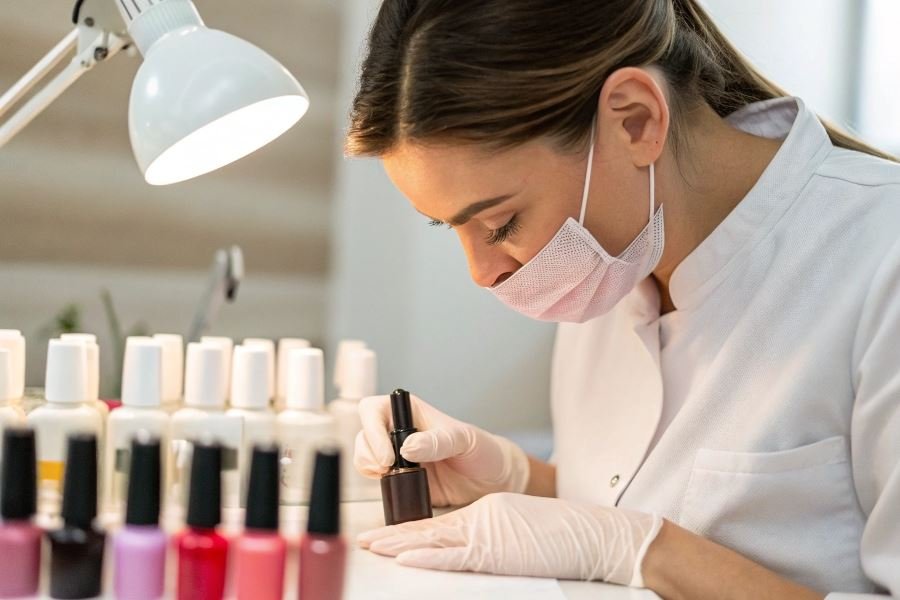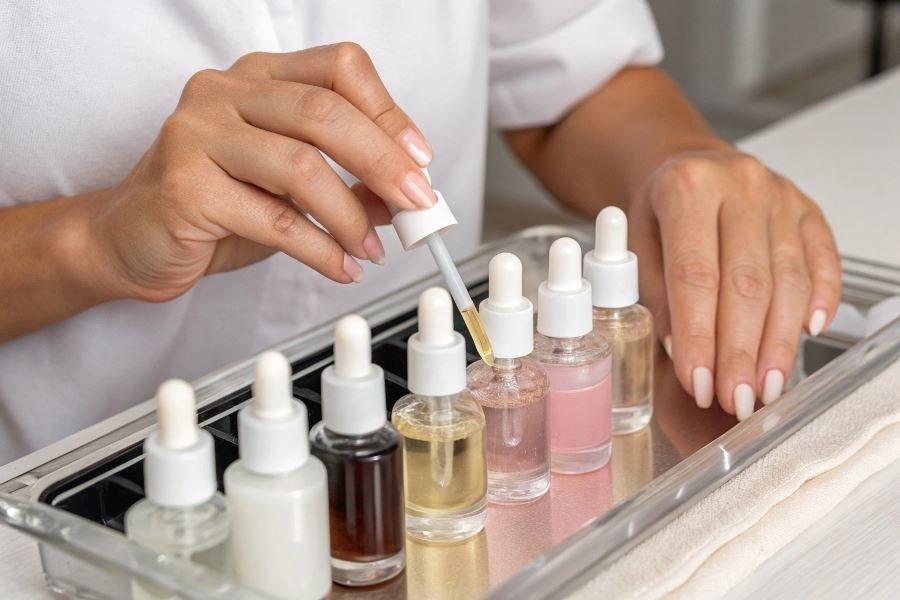
Ever watched a nail technician transform a simple nail into a stunning work of art and wondered what makes that magic happen? The secret lies not just in skill, but in chemistry—specifically, in the relationship between acrylic monomers and their viscosity.
At the heart of every acrylic nail system is a critical partnership between powder (polymer) and liquid (monomer). These monomers aren’t just simple liquids; they’re sophisticated chemical compounds that initiate and control the entire acrylic formation process. Think of monomers as the conductors of an orchestra, directing how quickly or slowly your acrylic sets, how it flows, and ultimately, how your finished nail enhancement performs.
Viscosity—essentially how thick or thin a liquid is—plays a pivotal role in determining your working experience. A high-viscosity monomer moves like honey, giving you extended working time and greater control, while a low-viscosity option flows more like water, setting quickly and requiring faster application techniques.
The viscosity you choose directly impacts three critical factors:
- Working time: Higher viscosity = more time to perfect your application
- Control: Thicker monomers resist running into cuticles and sidewalls
- Finish quality: Different viscosities create different structural integrity
What many professionals don’t realize is that monomer viscosity affects not just application but also durability. The molecular cross-linking that occurs during polymerization varies based on viscosity, creating different strength profiles in the finished enhancement.
Selecting the right monomer viscosity isn’t just a preference—it’s a strategic decision that should align with your specific technique, environmental conditions, and desired outcome.
The Monomer Matrix: Mastering Viscosity Choices
When diving into the world of acrylic applications, understanding the viscosity spectrum of monomers becomes your secret weapon for achieving professional results. Each viscosity level offers distinct advantages that can dramatically impact your final product. Selecting the right monomer viscosity isn’t just a technical decision—it’s the foundation of your creative expression.
The relationship between technique and material is fundamental to success in acrylic applications. Monomers for acrylic of different viscosities: which one is suitable for your technique depends entirely on your specific requirements, working conditions, and desired outcomes. Let’s explore the full spectrum of options to help you make informed choices for your next project.
Low-Viscosity Monomers: The Fluid Performers
Low-viscosity monomers flow like water, offering exceptional penetration and self-leveling properties. These thin, runny formulations typically measure between 5-30 centipoises (cP), making them ideal for techniques requiring maximum flow.
Key benefits include:
- Superior air release capabilities
- Rapid curing times (typically 30-60 seconds)
- Excellent for detailed work and thin applications
- Minimal brush marks and self-leveling properties
Low-viscosity monomers excel in nail art applications, particularly when creating delicate designs or working with fine brushes. They’re also the go-to choice for dip powder systems and when working in cooler environments where thicker formulations might become sluggish.
Pro tip: When working with low-viscosity monomers, use less product on your brush to prevent flooding and maintain control over your application.
Medium-Viscosity Monomers: The Versatile Workhorses
Medium-viscosity monomers strike the perfect balance between flow and control, typically measuring between 30-100 cP. These formulations have earned their reputation as the “Goldilocks” option—not too thin, not too thick, but just right for most standard applications.
Standout characteristics:
- Balanced working time (60-90 seconds before setting)
- Moderate self-leveling with maintained control
- Adaptable to varying environmental conditions
- Suitable for both beginners and professionals
Medium-viscosity monomers perform exceptionally well in traditional overlay applications, tip applications, and general sculpting. Their forgiving nature makes them perfect for technicians who work at a moderate pace or need versatility across different techniques.
| Application Type | Working Time | Recommended Temperature | Flow Characteristics |
|---|---|---|---|
| Overlays | 60-90 sec | 70-75°F (21-24°C) | Moderate flow |
| Sculpting | 75-90 sec | 68-72°F (20-22°C) | Controlled spread |
| Tip Application | 60-75 sec | 72-75°F (22-24°C) | Self-leveling |
High-Viscosity Monomers: The Structure Specialists
High-viscosity monomers offer maximum control with measurements typically exceeding 100 cP. These thicker formulations resist running and sagging, making them invaluable for structural work and specialized applications.
Primary advantages:
- Extended working time (90-120 seconds)
- Superior structural integrity
- Minimal shrinkage during curing
- Excellent for building apex strength
High-viscosity monomers shine in competitive sculpting, creating dramatic structures, and working in warmer environments where thinner formulations might set too quickly. They’re the preferred choice for technicians who need maximum control and working time to perfect their creations.
The thickness of these formulations also makes them ideal for corrective work, repairing stress areas, and creating durable extensions that can withstand significant daily wear and tear.
By understanding the distinct properties of each viscosity level, you can strategically select the perfect monomer for your specific technique, environment, and desired outcome—elevating your acrylic applications from merely acceptable to truly exceptional.
Mastering Monomer Selection: The Perfect Match for Your Technique
Viscosity and Skill Level: Finding Your Flow
The relationship between monomer viscosity and your nail artistry is more intimate than most professionals realize. Beginners often struggle with runny, low-viscosity monomers that flow unpredictably, while veterans might find thick formulations frustratingly slow to manipulate.
Medium viscosity monomers offer the sweet spot for most technicians. They provide approximately 45-60 seconds of working time before setting begins—enough flexibility without sacrificing control. Brands like CND and OPI have perfected this balance in their professional-grade products.
For those still developing their skills, consider this viscosity progression path:
| Skill Level | Recommended Viscosity | Working Time | Best For |
|---|---|---|---|
| Beginner | Medium-High | 60-90 seconds | Basic shapes, learning bead control |
| Intermediate | Medium | 45-60 seconds | French manicures, basic art |
| Advanced | Low-Medium | 30-45 seconds | Detailed nail art, competition work |
| Master | Variable (situation-dependent) | 30-90 seconds | All techniques, extreme environments |
Your working environment dramatically impacts performance too. Studios with higher humidity levels (above 60%) typically require slightly thicker formulations to maintain workability, while dry environments allow for thinner products.
Seasonal Shifts: Temperature’s Hidden Impact
Monomer behavior transforms with the thermometer. During winter months, when studio temperatures might drop below 70°F, monomers become noticeably thicker and polymerization slows significantly.
Summer brings its own challenges—accelerated setting times can catch even experienced technicians off-guard.
Temperature effects on standard acrylic systems:
- Below 68°F: Up to 30% longer setting time, increased viscosity
- 70-75°F: Optimal performance range for most formulations
- Above 80°F: Setting time reduced by 15-25%, decreased viscosity
Smart seasonal adjustments might include keeping two monomer formulations on hand—slightly thinner for winter months and slightly thicker for summer. Some technicians even use small warming devices to maintain consistent monomer temperature year-round.
Technique-Specific Recommendations
Different nail applications demand different monomer properties. Here’s what the experts recommend:
For 3D nail art and embellishments, higher viscosity monomers (often labeled as “sculpting liquid”) provide the structural integrity needed. These formulations from brands like Young Nails contain specialized polymers that resist sagging while maintaining workability.
For competition work where precision is paramount, medium-low viscosity products excel. The ability to create razor-sharp smile lines and perfect C-curves depends on monomer that flows precisely where directed but stays put afterward.
Odorless monomers have improved dramatically in recent years but still typically offer 10-15% less structural strength than traditional formulations. Reserve these for clients with sensitivities or when working in poorly ventilated spaces.
For extreme extension work, consider dual-system approaches. Many top technicians use higher viscosity products for structural layers near the stress points, then switch to medium viscosity for overlay and finishing layers.
The most versatile approach? Master monomer modification techniques. Adding tiny amounts of appropriate additives can customize your working properties without compromising the finished product’s integrity—though this requires significant experience and understanding of the chemistry involved.
Discover how monomer viscosity impacts your acrylic nail applications. Learn which type—low, medium, or high viscosity—best suits your technique, skill level, and working conditions for flawless, long-lasting nail enhancements.
Discover how monomer viscosity impacts your acrylic nail applications. Learn which type—low, medium, or high viscosity—best suits your technique, skill level, and working conditions for flawless, long-lasting nail enhancements.