Ever wondered why some blonde transformations look effortlessly radiant while others fall flat? The secret lies not just in the stylist’s hand, but in the chemistry of professional lightening products they choose.
Professional hair lighteners are specialized formulations designed to remove natural or artificial pigment from hair strands. Unlike regular hair dyes that deposit color, lighteners work by penetrating the hair shaft and dispersing melanin molecules—essentially deconstructing what gives your hair its natural color. This chemical process creates the canvas necessary for vibrant fashion colors or the perfect platinum blonde.
The evolution of these products tells a fascinating story of innovation. The earliest commercial lighteners, introduced in the 1930s, were harsh and unpredictable. By the 1950s, hydrogen peroxide-based formulas became standard, but still caused significant damage. Today’s professional lighteners incorporate bond-protecting technology that maintains hair integrity during the chemical process—a quantum leap from just a decade ago.
Types of professional lighteners
Modern colorists typically work with three main categories:
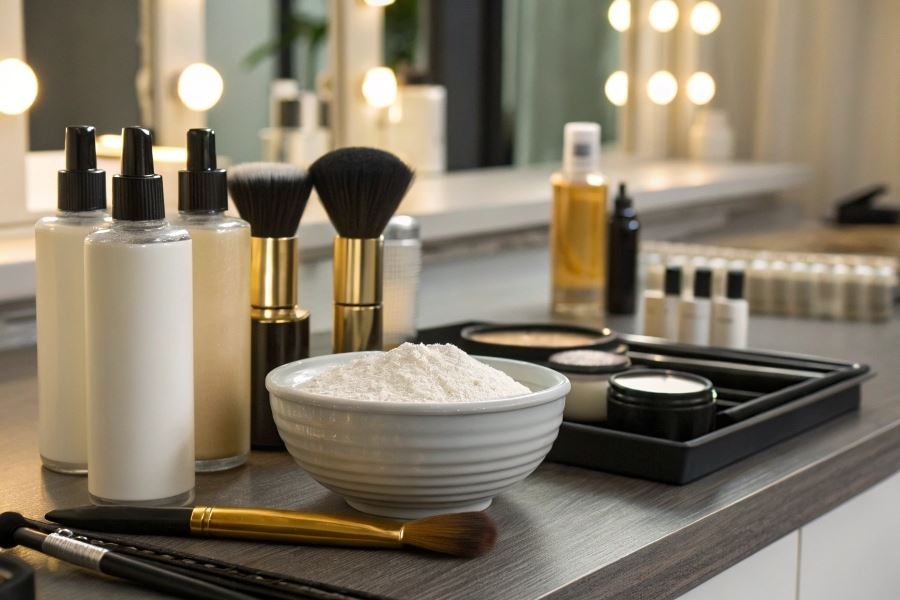
- Powder lighteners: Offering maximum lift (up to 8 levels), these versatile products work well for off-scalp techniques like balayage
- Cream lighteners: Providing controlled lift with added conditioning benefits, ideal for on-scalp application
- Oil-based lighteners: The newest innovation, combining gentle processing with nourishing ingredients
The application technique dramatically influences results. Proper sectioning, consistent saturation, and precise timing can mean the difference between stunning dimension and a costly color correction. Master colorists understand that lightener application is both a science and an art—requiring technical knowledge and creative vision working in perfect harmony.
The Science Behind Professional Hair Lightening
Professional lighteners represent the cornerstone of transformative hair color services in modern salons. These specialized formulations allow colorists to lift natural pigment with precision and control, creating the perfect canvas for subsequent color application. The chemistry behind professional lighteners has evolved dramatically, with manufacturers developing increasingly sophisticated products that balance lifting power with hair integrity protection.
When examining professional lighteners: types and features of application, three distinct categories emerge, each with unique properties that make them suitable for specific scenarios. The right selection depends on factors including desired lift level, hair condition, and application technique. Let’s explore each category in detail to understand their distinctive characteristics and optimal use cases.
Powder Lighteners: Maximum Lift Potential
Powder lighteners remain the industry standard for significant color lifting, capable of achieving up to 8-9 levels of lightening when properly formulated. These products typically contain persulfates and alkalizing agents that work together to penetrate the hair shaft and disperse melanin.
Key characteristics of powder lighteners:
- Fastest action time among all lightener types
- Highest lifting capability (7-9 levels)
- Versatility in mixing ratios for customized strength
- Ability to work with various developer volumes (10-40)
Most powder lighteners feature anti-yellow technology with violet or blue pigments that neutralize unwanted warm tones during processing. Products like Wella Blondor and Schwarzkopf BlondMe have pioneered dust-free formulations that improve salon air quality while maintaining powerful lifting action.
“Powder lighteners excel in techniques requiring significant lift, including full head bleaching, balayage, and foil highlights where maximum lightening is the goal.”
Cream Lighteners: Control and Comfort
Cream lighteners offer a more controlled application experience with added conditioning benefits. Their thicker consistency prevents dripping and allows for more precise placement, making them ideal for on-scalp applications and sensitive skin.
Advantages of cream formulations:
| Feature | Benefit |
|---|---|
| Thixotropic consistency | Stays where placed without running |
| Built-in conditioners | Reduced scalp irritation and hair damage |
| Visible processing | Easy to monitor lightening progress |
| Moderate lift (5-7 levels) | Gentler action for compromised hair |
Cream lighteners typically contain higher percentages of conditioning agents like oils and silicones that create a protective buffer between the scalp and active ingredients. This makes them particularly valuable for clients with sensitive scalps or when performing root touch-ups where product contacts the skin directly.
Oil-Based Lighteners: The Gentle Innovators
The newest category in professional lightening, oil-based formulations represent a significant advancement in protective technology. These products incorporate high percentages of natural oils that shield the hair’s internal structure while still allowing effective pigment dispersion.
Specialized applications for oil lighteners:
- Pre-lightened or previously processed hair
- Fragile or damaged hair conditions
- Gentle balayage or free-hand techniques
- Clients concerned about hair integrity
Oil-based systems like Olaplex have revolutionized the lightening process by maintaining disulfide bonds during chemical processing. This technology allows colorists to push lightening further than previously possible without compromising structural integrity.
The protective properties of oil lighteners make them particularly valuable for creating dimensional blonde effects on compromised hair, though they typically achieve 1-2 fewer levels of lift compared to their powder counterparts.
Each lightener category serves specific technical needs in the colorist’s arsenal, with selection depending on the desired outcome, hair condition, and application method. The most versatile salons maintain all three options to address every client scenario with precision and care.
Mastering Professional Lighteners
Pre-lightening Assessment and Preparation
Professional hair lightening begins long before the product touches a client’s hair. The assessment phase is critical—it’s where expertise truly shines. Start with a thorough consultation examining:
- Natural hair color level (using the 1-10 scale)
- Previous chemical treatments
- Hair porosity and elasticity
- Scalp condition
Strand testing is non-negotiable. This 48-hour preview reveals how hair will respond and helps determine processing time. Many colorists skip this step, but it’s the difference between predictable results and damage control.
Hair porosity testing using a simple water test provides crucial information about how quickly lightener will process. Low porosity hair typically requires stronger developers, while high porosity hair needs gentler formulations.
The most successful lightening services begin with a comprehensive hair analysis and honest client expectations.
Preparation extends to protecting the client and workspace. Apply a barrier cream along the hairline and ears to prevent skin irritation. Use non-metallic tools exclusively—metal can react with lightening agents and cause unpredictable color results or breakage.
Application Techniques for Different Hair Types
Application techniques must be tailored to hair type, condition, and desired results:
Virgin Hair: Apply lightener beginning 1/2 inch from the scalp, working toward ends. The scalp’s natural heat accelerates processing, so apply to roots last to ensure even results.
Previously Colored Hair: Requires special attention to avoid overlapping on already lightened sections. The “shadow root” technique creates a deliberate gradient that minimizes damage while providing a modern, dimensional result.
Coarse or Resistant Hair: Often benefits from higher volume developers (30-40 volume) and heat acceleration, though this increases damage risk. Consider Olaplex or similar bond builders mixed directly into lightener.
Fine or Damaged Hair: Requires gentler formulations with lower volume developers (10-20 volume) and longer processing times rather than stronger chemicals.
For textured hair types, lightener application techniques vary significantly:
| Hair Type | Recommended Technique | Processing Considerations |
|---|---|---|
| Straight | Traditional foiling | Standard timing |
| Wavy | Balayage/freehand | Check frequently |
| Curly | Slice method | Process 15% longer |
| Coily | Chunking technique | Lower developer volume |
Post-lightening Care and Maintenance
The service isn’t complete until proper aftercare is established. Immediately after lightening:
- Use a professional-grade acidic shampoo to normalize pH levels
- Apply a protein-moisture balancing treatment
- Tone to neutralize unwanted brassy tones if needed
Send clients home with a maintenance regimen including:
- Purple or blue shampoo used weekly to combat brass
- Deep conditioning treatments twice monthly
- Heat protectant for all styling
- UV protection products to prevent sun-related color shifts
Color-safe products are essential. Recommend sulfate-free shampoos like Pureology that won’t strip toner or compromise hair integrity.
Maintenance appointments should be scheduled every 4-6 weeks for root touch-ups and toning refreshes. Educate clients that lightened hair requires ongoing investment in both professional services and quality home care products to maintain its health and vibrancy.
Discover professional hair lighteners from powder to oil-based formulas. Learn proper application techniques for different hair types, pre-treatment assessment, and post-lightening care to achieve salon-quality results safely and effectively.
Discover professional hair lighteners from powder to oil-based formulas. Learn proper application techniques for different hair types, pre-treatment assessment, and post-lightening care to achieve salon-quality results safely and effectively.