Ever wondered why some beauty professionals seem to apply products with surgical precision while others struggle with consistency? The secret often lies in their tools—specifically, the humble yet mighty Uno spoon.
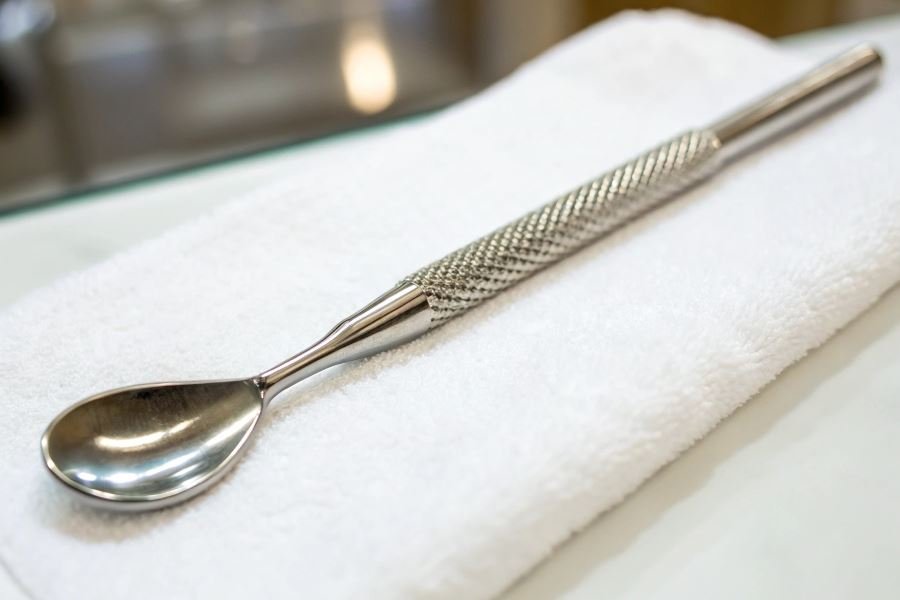
Uno spoons are specialized beauty instruments designed for precise application and measurement of products during facial treatments, chemical peels, and other skincare procedures. Unlike conventional tools, these spoons feature a distinctive shallow, oval-shaped bowl that allows for controlled scooping and application of creams, masks, and exfoliants. The difference between a flawlessly executed treatment and a mediocre one often comes down to this seemingly simple tool.
The loop factor: A game-changer for professionals
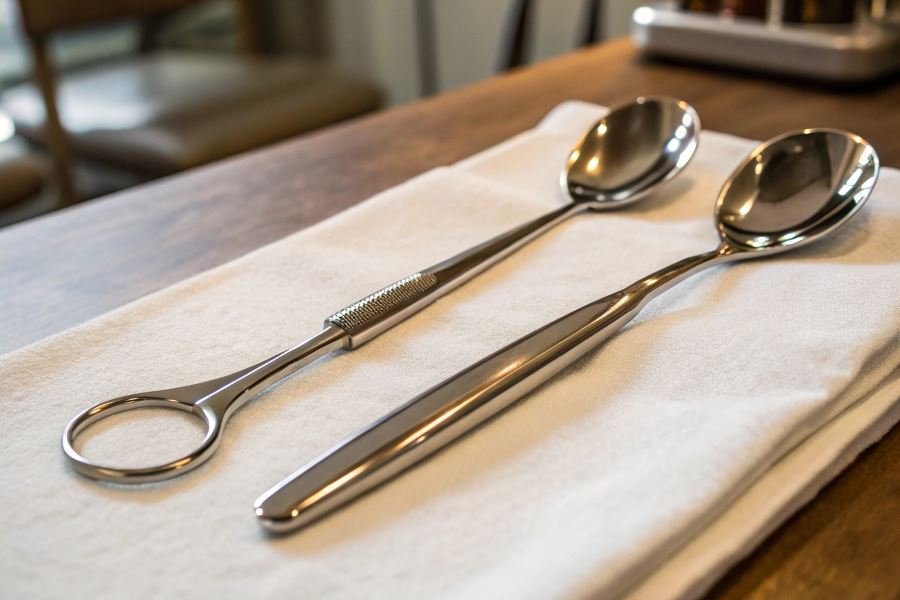
The decision between looped and non-looped Uno spoons isn’t merely aesthetic—it fundamentally affects your workflow and treatment delivery. Looped spoons offer enhanced stability and control during application, particularly valuable when working with liquid formulations or when precision is paramount. Non-looped variants, meanwhile, excel in maneuverability and are often preferred for detailed work around facial contours.
Several factors should guide your selection:
- Treatment specialization: Chemical peel specialists typically favor looped spoons for their stability with caustic substances
- Hand size and dexterity: Practitioners with smaller hands often find non-looped versions more comfortable for extended use
- Product viscosity: Thicker products generally pair better with non-looped spoons, while runnier formulations benefit from the added control of loops
The right Uno spoon becomes an extension of your expertise, elevating both the client experience and treatment outcomes. Your choice reflects not just preference, but professional wisdom.
The Ultimate Uno Spoon Showdown for Beauty Professionals
Beauty professionals know that having the right tools can make or break a service. When it comes to precision application in skincare treatments, the Uno spoon has become an indispensable instrument in salons across the country. The decision between choosing Uno spoons with or without loops isn’t merely aesthetic—it impacts everything from application technique to practitioner comfort during long treatment sessions.
For beauty salon owners deliberating over which Uno spoon variant to stock in their establishments, understanding the nuanced differences between looped and loop-free designs can significantly enhance service delivery and practitioner satisfaction. The question of whether to choose Uno spoons with or without loops for a beauty salon ultimately depends on your specific treatment offerings, practitioner preferences, and client needs.
Ergonomics That Make or Break Your Day
The ergonomic differences between these two variants are substantial:
Loop-equipped spoons provide enhanced stability during precise applications. The finger loop creates a secure anchor point, reducing hand fatigue during lengthy facial treatments. This design particularly benefits professionals who perform detailed extractions or apply products to specific facial zones.
Loop-free models offer greater flexibility in handling angles and grip positions. Without the fixed loop position, practitioners can adjust their grip dynamically throughout treatments, which proves advantageous for sweeping motions across larger facial areas.
| Feature | Looped Uno Spoons | Loop-free Uno Spoons |
|---|---|---|
| Grip stability | Superior (fixed position) | Moderate (variable) |
| Handling flexibility | Limited by loop position | Excellent (360° rotation) |
| Hand fatigue | Reduced during long sessions | May increase without proper technique |
| Learning curve | Moderate | Minimal |
Treatment-Specific Advantages
Different beauty treatments benefit from specific Uno spoon designs:
Looped spoons excel in:
- Precision treatments requiring steady hands (microdermabrasion prep)
- Product application where consistent pressure matters
- Treatments where the practitioner needs to maintain exact angles
Loop-free designs shine during:
- Facial massages requiring fluid, continuous motions
- Quick transitions between facial zones
- Treatments where varying pressure levels are needed
The material composition matters too—stainless steel options from quality manufacturers like Tweezerman offer superior durability regardless of design choice.
Maintenance Matters: Cleaning and Longevity
The longevity equation differs significantly between these two Uno spoon varieties:
Loop designs present additional cleaning challenges, as product residue can accumulate in the junction where the loop connects to the spoon. However, they typically feature more robust construction, with reinforced connection points that resist bending or breaking even after years of use.
Loop-free models offer streamlined cleaning—a simple wipe-down suffices for most applications. Their one-piece construction eliminates weak points but may be more susceptible to bending under pressure over time.
Maintenance tip: Regardless of design, implementing a 70% alcohol sanitizing protocol between clients ensures both hygiene compliance and extended tool life.
For busy salons processing dozens of clients daily, the simplified cleaning process of loop-free designs might save precious minutes between appointments. Conversely, practitioners who prioritize precision might find the minimal additional cleaning time for looped models a worthwhile investment for the enhanced stability they provide.
The ultimate decision should align with your salon’s treatment menu, practitioner preferences, and client experience priorities—with either choice representing a worthwhile investment in professional-grade tools that elevate your service offerings.
Making the Final Decision: Uno Spoons for Your Beauty Salon
Selecting the right Uno spoons for your beauty salon isn’t just about aesthetics—it’s a strategic business decision that affects your bottom line, practitioner satisfaction, and client experience. Let’s dive into the financial implications, tailored recommendations, and decision-making framework that will help you make the optimal choice.
The Economics of Uno Spoon Selection
When analyzing the cost-benefit ratio of different Uno spoons, we need to look beyond the initial price tag:
| Spoon Type | Average Price | Lifespan | Cost Per Year | Key Benefit |
|---|---|---|---|---|
| With Loop | $12-18 | 2-3 years | $4-9 | Ergonomics, reduced wrist strain |
| Without Loop | $8-14 | 1.5-2 years | $4-9.33 | Precision, traditional technique |
| Premium Steel | $25-40 | 4-5 years | $5-10 | Durability, professional image |
The data reveals something fascinating: despite different upfront costs, the annualized expense is remarkably similar across options. This shifts the decision away from pure cost considerations toward functionality and practitioner preference.
What’s often overlooked is the hidden cost of practitioner fatigue. Spoons with loops can reduce wrist strain by up to 30%, potentially saving thousands in lost productivity and practitioner retention over time.
Tailored Recommendations by Salon Profile
Different salon operations demand different tools:
For Boutique Salons (1-3 practitioners)
- Focus on versatility with a mix of both styles
- Prioritize practitioner comfort with loop-style spoons for full-day bookings
- Consider investing in 2-3 premium options for signature services
For Mid-Size Operations (4-10 practitioners)
- Standardize on one primary style for consistency in training
- Maintain a 70/30 ratio favoring the dominant preference of your team
- Implement a rotation system to extend tool lifespan
For Large Establishments (10+ practitioners)
- Create service-specific kits with appropriate spoon styles
- Negotiate bulk purchasing discounts (typically available at 25+ units)
- Invest in personalized spoons for senior staff to boost retention and ownership
The Decision Trifecta: Three Critical Factors
When making your final selection, these three factors should guide your decision:
-
Service Specialization
The procedures your salon focuses on should dictate your choice. Lash lifting and brow lamination benefit from the stability of loop-style spoons, while detailed microblading work often demands the precision of traditional designs. -
Practitioner Experience Level
Newer technicians typically experience a 40% faster learning curve with loop-style spoons, while veterans who trained on traditional models may see a temporary 15-20% productivity dip when switching styles. -
Client Demographic and Service Duration
High-volume salons performing quick services benefit from the efficiency of loop designs, while luxury salons with longer appointment windows may prioritize the controlled application that traditional spoons offer.
The most successful salons don’t force a one-size-fits-all approach—they match their tools to their unique service mix, practitioner preferences, and business model.
Remember that the best investment isn’t necessarily the most expensive option, but rather the one that aligns with your salon’s specific needs. By considering these factors systematically, you’ll select Uno spoons that enhance your service quality while supporting your business goals.
Discover the key differences between Uno spoons with and without loops for your beauty salon. Learn which option offers better ergonomics, procedure-specific advantages, and maintenance benefits for professional estheticians.
Discover the key differences between Uno spoons with and without loops for your beauty salon. Learn which option offers better ergonomics, procedure-specific advantages, and maintenance benefits for professional estheticians.