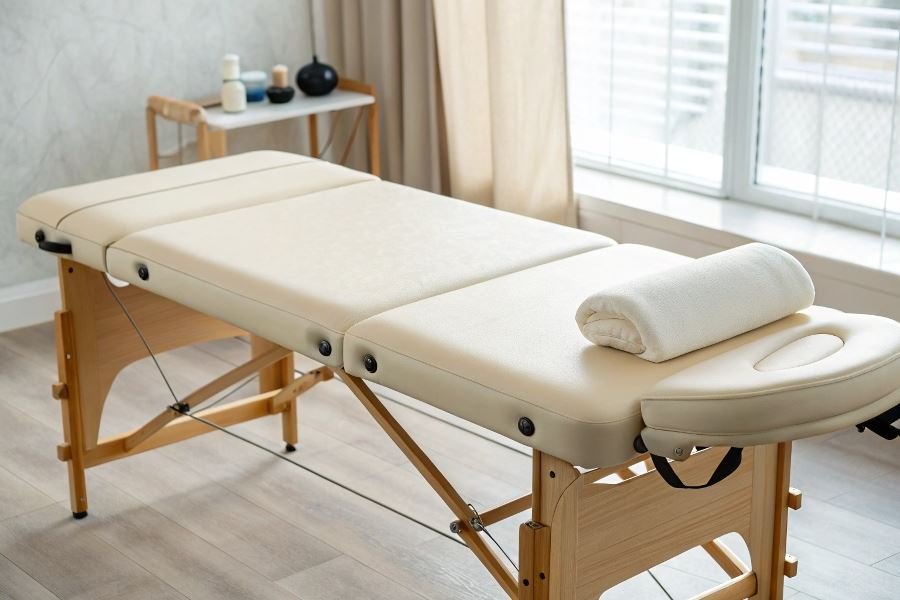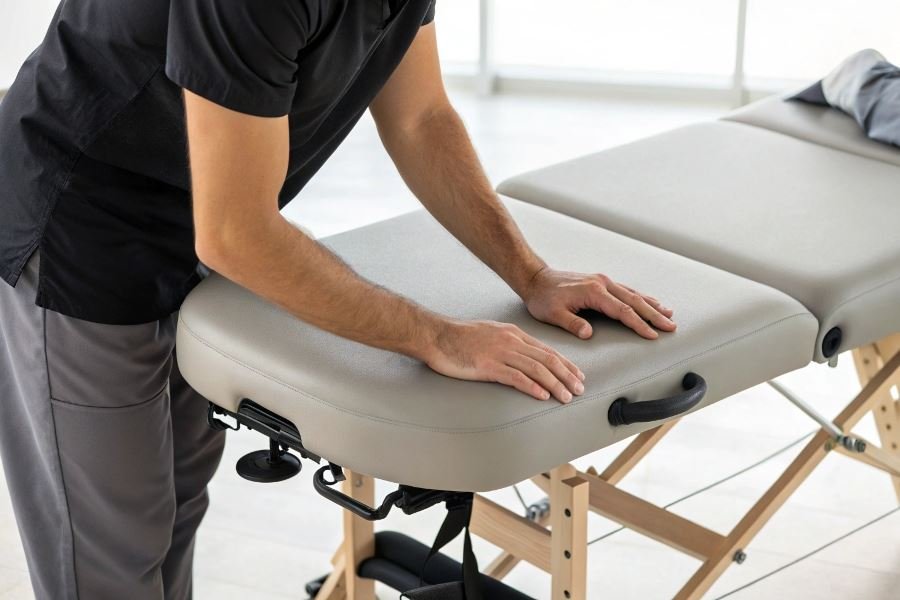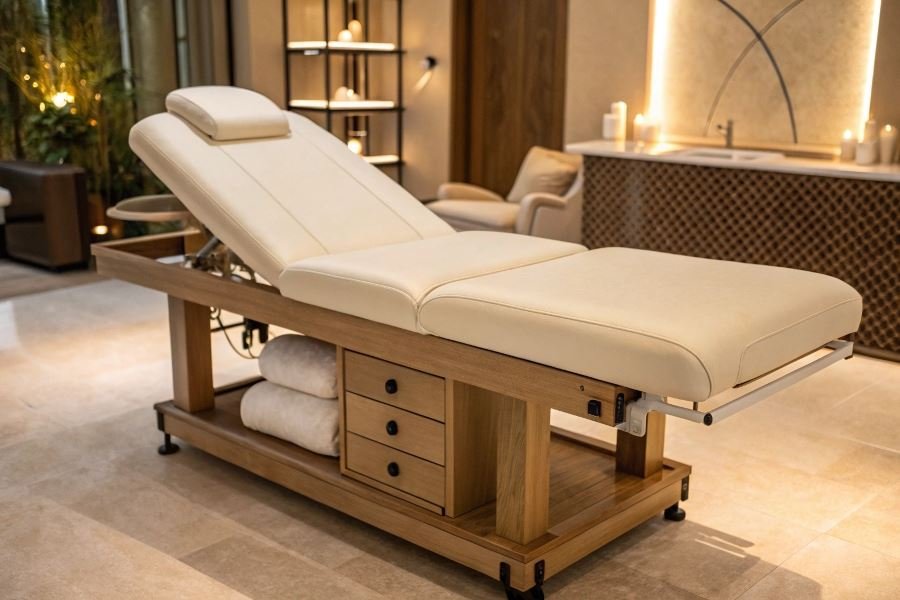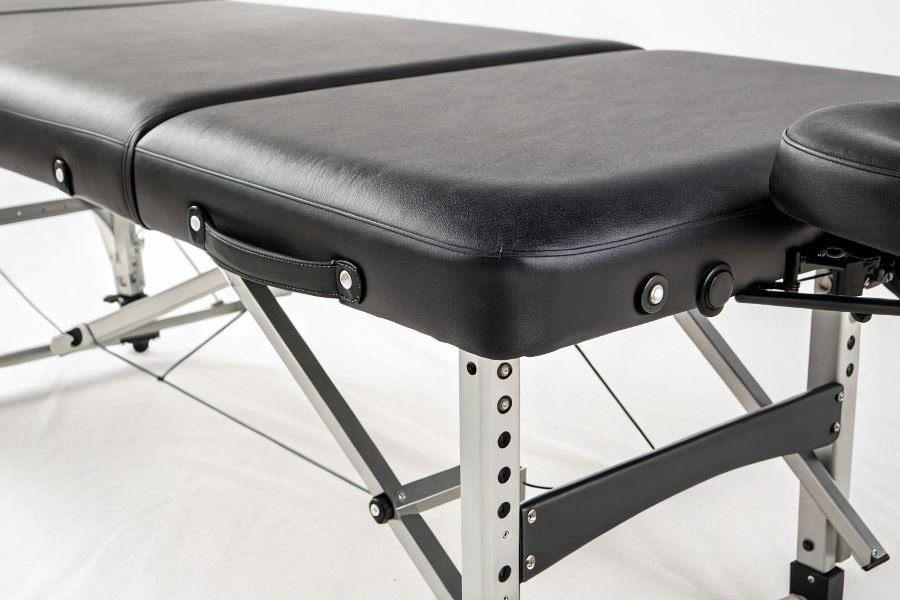
Ever watched a skilled massage therapist work their magic and wondered what makes their practice so effective? Beyond technique, the unsung hero is often the massage table itself—the literal foundation of every therapeutic session.
When selecting a massage table, you’re not just buying furniture; you’re investing in a critical tool that directly impacts both your physical wellbeing and your clients’ experience. The right table serves as an extension of your hands, while the wrong one can sabotage even the most skilled practitioner’s work.
The practitioner-client connection
Your table choice affects a delicate balance: too rigid, and clients experience discomfort; too soft, and you sacrifice the stability needed for deep tissue work. Professional therapists report that table quality directly correlates with session effectiveness, with proper support allowing for 30-40% more efficient energy transfer during techniques.
Key selection factors to consider
When evaluating massage tables, focus on these critical elements:
- Weight capacity – Must safely support diverse client sizes with a substantial safety margin
- Frame construction – Aluminum offers lightness for portability; hardwood provides unmatched stability
- Padding density – The sweet spot between comfort and therapeutic effectiveness
- Height adjustability – Prevents practitioner back strain and ensures proper leverage
“The table you choose today will either support or undermine thousands of therapeutic interactions over its lifetime.”
The massage table market offers everything from basic $200 portable options to professional-grade $3,000 electric models. However, the perfect table isn’t necessarily the most expensive—it’s the one that aligns with your specific practice needs while providing reliable comfort for both you and your clients.
Essential Physical Features of Massage Tables
When selecting a professional massage table, the physical characteristics determine not only client comfort but also therapist efficiency and business longevity. The structural elements of a massage table form the foundation of your practice, affecting everything from client experience to your physical wellbeing as a practitioner.
Understanding what to pay attention to when buying a massage table requires examining three critical physical components that separate premium tables from mediocre options. Let’s dive into the specifications that matter most when evaluating massage tables for professional use.
Weight Capacity and Stability Metrics
A massage table’s structural integrity is non-negotiable. Professional-grade tables should support at least 450-600 pounds of working weight—this includes both static weight (client) and dynamic weight (therapist pressure during techniques).
Static vs. Dynamic Load Testing: Premium manufacturers like Earthlite and Oakworks conduct both static and dynamic load testing, ensuring tables can withstand not just client weight but also the additional forces applied during deep tissue work.
Aircraft-grade aluminum frames outperform standard aluminum by offering superior strength-to-weight ratios, while hardwood frames provide exceptional stability with aesthetic appeal.
Stability indicators to evaluate:
| Feature | Standard Tables | Premium Tables |
|---|---|---|
| Cable System | Single cables | Double-reinforced cables |
| Leg Design | H-bracing | H-bracing with diagonal supports |
| Corner Blocks | Plastic | Reinforced hardwood/metal |
| Wobble Test | Slight movement | Zero movement under pressure |
Dimensional Considerations and Adjustability
Table width significantly impacts both client comfort and therapist ergonomics. The industry standard ranges from 28-32 inches, with 30 inches representing the optimal balance for most practitioners.
Height Adjustability Range: Professional tables should offer 24-34 inches of height adjustment to accommodate therapists of different heights and various modalities. Electric tables from manufacturers like Living Earth Crafts provide seamless height adjustments with precision controls.
Width considerations by modality:
- 28″ – Ideal for therapists with shorter reach
- 30″ – Versatile standard for most modalities
- 32″ – Preferred for larger clients or pregnancy massage
Tables with quick-adjust mechanisms allow for height modifications between sessions without disrupting workflow, while hydraulic systems offer silent, smooth transitions during treatments.
Padding Quality Assessment
The difference between adequate and exceptional padding is measured in both immediate comfort and long-term durability. Premium tables feature multi-layered systems with varying densities.
Density Measurements Matter: High-quality padding typically features 2.5-3.0 lb/ft³ density ratings, providing the ideal balance of support and pressure relief. Budget tables often use 1.5-2.0 lb/ft³ foam that compresses permanently after minimal use.
Padding thickness comparison:
| Thickness | Application | Durability |
|---|---|---|
| 1-2″ | Basic tables | 1-2 years |
| 2-3″ | Professional standard | 3-5 years |
| 3-4″+ | Luxury/specialty | 5-7+ years |
Memory foam hybrid systems from manufacturers like Custom Craftworks combine responsive support with pressure-point relief, extending both session comfort and table lifespan.
The padding material should feature oil-resistant, antimicrobial coverings—preferably with certified non-toxic materials that withstand repeated sanitization without cracking or deteriorating.
When evaluating padding quality, perform the “knuckle test” by pressing firmly into the surface with your knuckles. Quality padding will provide resistance without bottoming out, while maintaining its shape when pressure is released.
Making the Final Decision on Your Massage Table
Finding the perfect massage table requires balancing quality, features, and budget constraints. Premium tables from brands like Earthlite typically range from $300 to $1,200, offering professional-grade durability with aircraft-grade aluminum frames and CFC-free cushioning. Mid-range options between 200−500 often provide excellent value without compromising essential features.
Quality goes beyond price. A $400 table with thoughtful engineering might outperform a $600 model with unnecessary add-ons. Focus on these core performance metrics:
- Frame stability under dynamic pressure
- Cushion resilience after repeated compression
- Joint durability after thousands of fold/unfold cycles
- Weight capacity relative to your client base
Remember that true cost of ownership extends beyond purchase price. A table needing replacement after two years ultimately costs more than a premium model with a decade of service life.
Support systems are crucial. Before finalizing your purchase, investigate:
- Warranty Coverage
- Look for: 2-5 year coverage on frames, 1-3 years on cushioning
- Avoid: “Limited” warranties with excessive exclusions
- For lifetime warranties: Check which specific components are covered
- For commercial use: Ensure professional settings don’t void coverage
- Customer Support
- Test responsiveness before purchasing by calling with technical questions
- Companies like Living Earth Crafts and Oakworks have built reputations on exceptional post-purchase support
- Return Policies
- Should provide at least 30 days for evaluation
- Look for minimal restocking fees
- Some manufacturers offer trial periods specifically for therapists
Recommendations for Different Needs:
-
Mobile Practitioners: The Master Massage Santana delivers exceptional portability at just 24 pounds while maintaining a 750-pound working capacity.
-
Clinic-Based Professionals: Earthlite Harmony DX stands as the gold standard for stationary practice with its maple hardwood frame and dual-density cushioning system.
-
Specialized Modalities: For deep tissue work or larger clients, consider the Oakworks ASTRA with its reinforced bracing system and 3-inch multi-layer cushioning.
The perfect massage table isn’t universal—it’s the one that aligns with your specific practice style, client needs, and business model. By carefully evaluating quality metrics, support systems, and matching features to your requirements, you’ll make an investment that enhances your practice for years to come.
Discover the essential features to evaluate when purchasing a massage table, from weight capacity and stability to padding quality and adjustability options. Learn how to balance quality with budget for the perfect professional or home-use table.
Discover the essential features to evaluate when purchasing a massage table, from weight capacity and stability to padding quality and adjustability options. Learn how to balance quality with budget for the perfect professional or home-use table.