Ever watched a master tattoo artist at work and wondered what makes their lines so crisp and shading so smooth? While many focus on the machine or the needle, professionals know a secret: the pedal is where the magic begins.
Think of your tattoo pedal as the conductor of an orchestra—it controls the tempo, intensity, and flow of your entire tattooing performance. When artists struggle with inconsistent lines or uneven saturation, they often overlook the humble foot pedal that’s literally driving their art. The connection between foot and needle is more intimate than most realize.
Tattoo machine pedals have evolved dramatically since their introduction alongside the first electric tattoo machines in the late 1800s. Samuel O’Reilly’s 1891 electric tattoo machine patent marked the beginning, but the pedals were crude by today’s standards—often just modified sewing machine pedals. Today’s options range from basic on/off switches to sophisticated digital controllers that offer precision voltage regulation and programmable settings.
The difference between amateur and professional results often comes down to pedal control. A responsive, well-calibrated pedal allows artists to adjust pressure intuitively, creating everything from whisper-thin lines to bold, saturated areas without lifting their eyes from their work.
Your pedal choice impacts:
- Line quality and consistency
- Hand fatigue during long sessions
- Noise levels in your studio
- Overall workflow efficiency
Selecting the right pedal isn’t just about comfort—it’s about elevating your craft to its highest potential.
The Pedal Powerhouse: Mastering Your Tattoo Machine Control
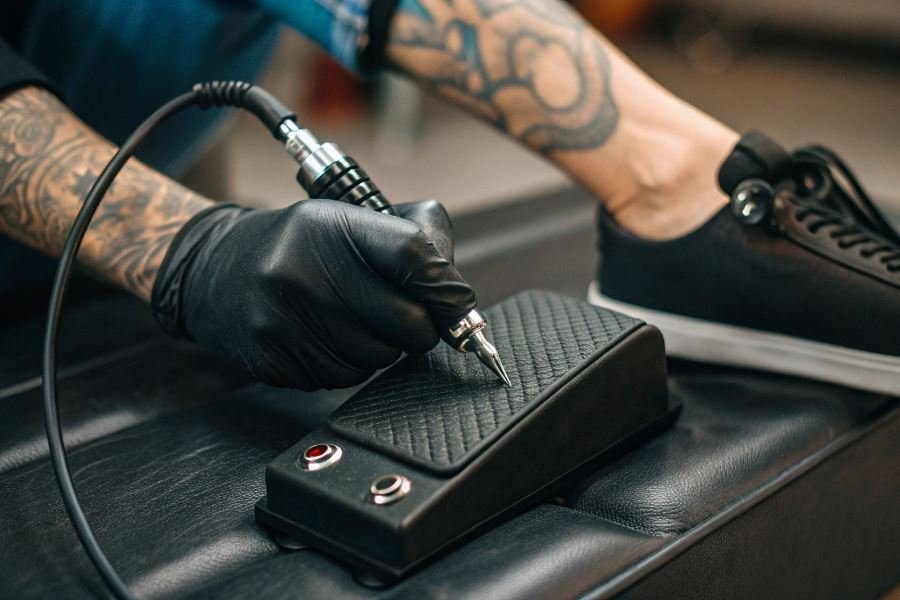
When it comes to creating exceptional tattoo art, your machine is only as good as the pedal controlling it. The foot pedal serves as the critical interface between artist and machine, translating your intentions into precise needle movements. Selecting the right pedal isn’t just about convenience—it’s about achieving the perfect balance of control, comfort, and reliability.
Professional tattoo artists understand that how to choose a pedal for a tattoo machine involves evaluating several main criteria that directly impact their work quality and comfort during long sessions. The difference between a mediocre pedal and an exceptional one can mean the difference between strained sessions and fluid artistic expression.
Responsiveness That Reads Your Mind
The responsiveness of your tattoo pedal is perhaps its most crucial attribute. A truly responsive pedal offers:
- Variable pressure sensitivity that allows for nuanced control of needle depth and speed
- Immediate activation without dead zones or lag
- Consistent performance throughout the entire pressure range
The best pedals on the market, like the FK Irons Flux Max, offer adjustable tension settings that let you customize the resistance to match your personal preference. This customization is particularly valuable for detailed linework where precision is paramount.
Built to Withstand Studio Life
Durability factors heavily into pedal selection, especially considering the investment quality pedals represent.
A pedal that fails mid-session isn’t just an inconvenience—it’s a potential disaster.
| Material | Durability Rating | Best For |
|---|---|---|
| Cast Iron | Excellent | High-volume studios |
| Aircraft Aluminum | Very Good | Traveling artists |
| Industrial Plastic | Good | Budget-conscious beginners |
| Stainless Steel | Excellent | Sanitization-focused environments |
The construction should feel substantial under your foot, with no wobbling or sliding during use. Pedals from manufacturers like Critical Tattoo feature non-slip bases and sealed electronics that prevent dust and ink from compromising internal components.
Machine Matchmaking Matters
Not all pedals work seamlessly with every machine type. Compatibility considerations include:
- Voltage requirements that align with your power supply
- Connection types (RCA, XLR, or proprietary)
- Support for both rotary and coil machines if you use multiple setups
The PowerLab P3 offers universal compatibility with virtually any machine on the market, making it an excellent choice for artists who work with multiple setups or frequently upgrade their equipment.
Modern wireless pedals like those from InkMachines eliminate cable management concerns altogether, though they require regular charging and may introduce minimal latency that some artists can detect.
When selecting your pedal, consider your specific tattooing style. Detail-oriented artists typically prefer pedals with higher sensitivity for precise control, while artists focusing on bold traditional work might prioritize durability and consistent performance over ultra-fine adjustability.
Remember that the perfect pedal creates a seamless extension of your artistic intent, becoming so intuitive that you forget it’s there—allowing you to focus entirely on creating exceptional tattoo art that speaks for itself.
Advanced Pedal Features That Transform Your Tattoo Game
Wireless vs Wired Freedom
The wireless revolution has finally reached tattoo studios, offering artists unprecedented freedom of movement. Wireless pedals use Bluetooth technology to eliminate the tangle of cables that traditionally clutter studio floors. With ranges typically extending 20-30 feet, these pedals allow artists to adjust their position without worrying about connection issues.
The PowerFoot Pro wireless pedal offers an impressive 40-hour battery life on a single charge—enough for several full-day sessions. Meanwhile, traditional wired options like the InkMaster Classic still dominate the market due to their rock-solid reliability and zero latency response.
Key consideration: Wireless pedals introduce approximately 8-12 milliseconds of latency—imperceptible to most artists but potentially noticeable during extremely detailed line work. Battery management also becomes part of your studio routine, though most modern units feature low-battery indicators and quick-charge capabilities.
The difference between wired and wireless isn’t just about convenience—it’s about how you move through your creative space and interact with your client.
Customization That Responds To Your Touch
Modern pedals have evolved far beyond simple on/off switches. Today’s premium models offer adjustable resistance settings that can transform the pedal’s feel from feather-light to firm, accommodating different foot pressures and working styles.
The PrecisionPedal X7 features seven distinct resistance levels, allowing artists to dial in their perfect pressure point. Some advanced models even offer programmable acceleration curves—controlling how quickly your machine ramps up to full speed when pressed.
Customization extends beyond just resistance. Many high-end pedals now feature:
| Feature | Benefit |
|---|---|
| Multiple activation points | Control when power engages during pedal travel |
| Programmable presets | Switch between settings for lining, shading, and color packing |
| Dual-zone functionality | Control two different machines or functions with one foot |
These customization options allow artists to develop muscle memory specific to their technique, resulting in more consistent line work and smoother shading transitions.
Ergonomic Design That Prevents Pain
After 6-8 hour sessions, foot fatigue becomes a real concern that can affect precision and overall work quality. The ergonomics of your pedal directly impact your physical comfort and, by extension, your artistic output.
The anatomy of comfort in modern pedals includes:
- Angled platforms (typically 15-20 degrees) that align with natural foot positioning
- Non-slip surfaces that eliminate the need to apply downward pressure
- Wider activation surfaces (some extending to 4-5 inches) reducing the precision needed for foot placement
The ErgoFlex Pro incorporates a cushioned heel rest and variable height adjustment, allowing artists to find their optimal position. Some artists even switch between standing and seated positions throughout lengthy sessions, requiring pedals that accommodate both stances.
Smart pedal placement is equally important. Positioning your pedal at approximately 30 degrees from center rather than directly in front reduces ankle strain during extended sessions.
Your pedal is the physical interface between your artistic vision and your machine. The more it disappears from your conscious thought, the more you can focus on your art.
The most advanced pedals now incorporate pressure-mapping technology that distributes activation force across the entire foot rather than concentrating it at a single point. This seemingly small innovation can dramatically reduce fatigue during full-day sessions, especially for artists who work on multiple clients back-to-back.
Discover the essential criteria for selecting the perfect tattoo machine pedal. Learn about responsiveness, durability, compatibility, and advanced features to enhance your tattooing precision and comfort. Expert guide for professionals.
Discover the essential criteria for selecting the perfect tattoo machine pedal. Learn about responsiveness, durability, compatibility, and advanced features to enhance your tattooing precision and comfort. Expert guide for professionals.