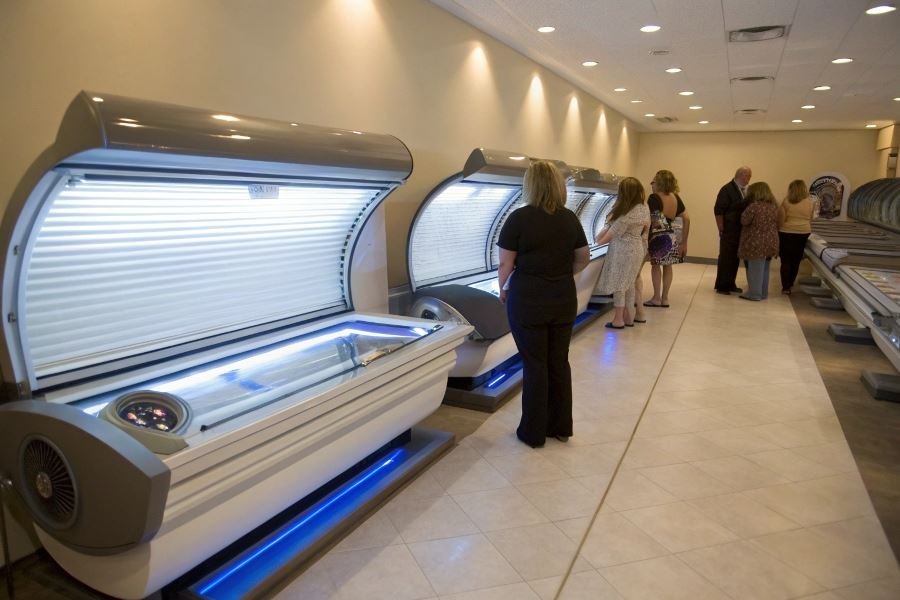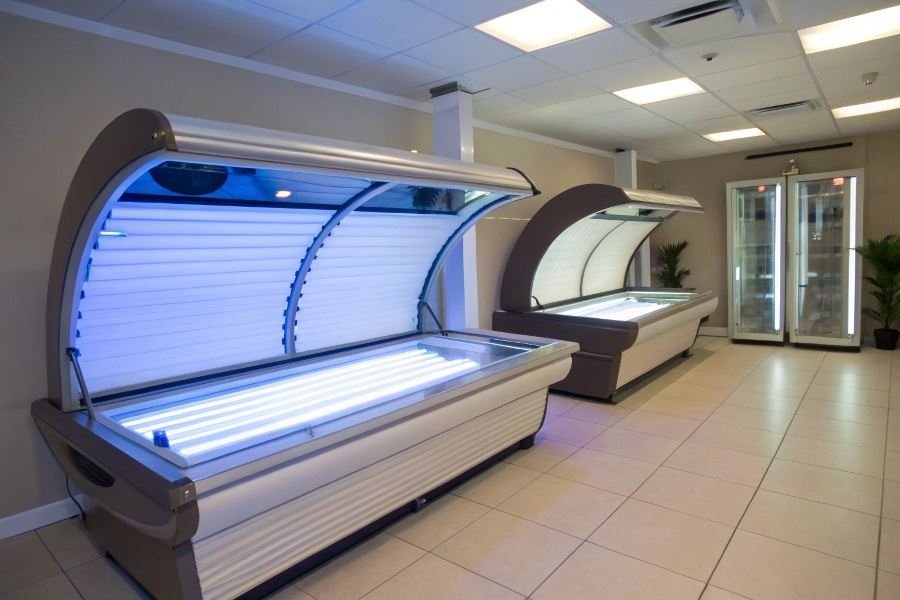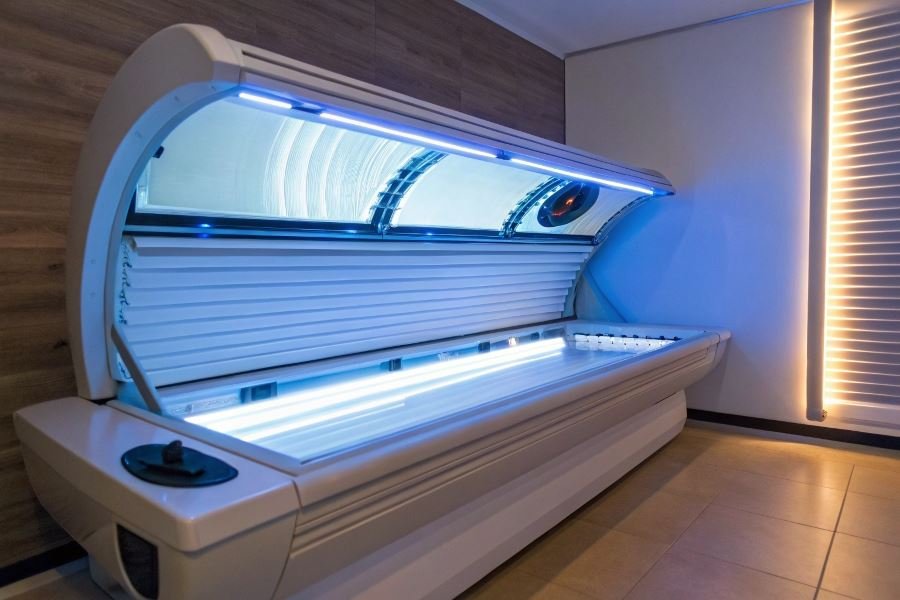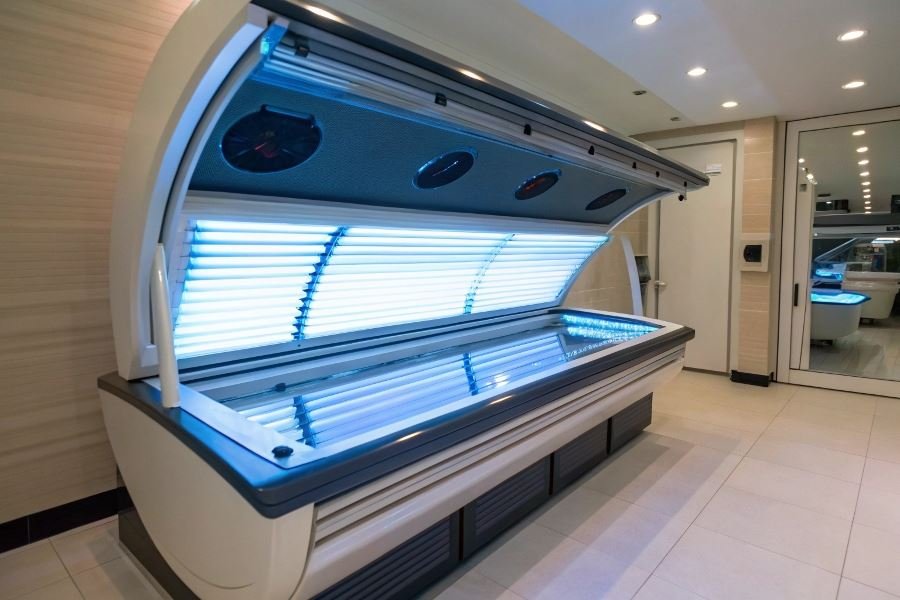
What if your choice of tanning equipment could double your client retention rate? The tanning bed you select isn’t just another piece of salon equipment—it’s the cornerstone of your tanning service’s reputation and profitability.
Choosing the right tanning bed for your beauty salon involves navigating a landscape where technology, safety, and client expectations intersect. The most successful salon owners understand that tanning equipment represents more than a simple purchase; it’s a strategic investment that directly impacts bottom-line results. Premium tanning beds can command higher session rates while reducing maintenance costs and downtime.
The tanning industry has evolved dramatically since the first commercial beds appeared in the 1970s. Today’s market offers sophisticated options with advanced features like high-pressure lamps, customizable tanning programs, and ergonomic designs. Industry standards now emphasize both performance and safety, with leading manufacturers focusing on balanced UV output and improved cooling systems.
“The tanning bed you choose today will define your client experience for years to come.”
Client satisfaction hinges on consistent, comfortable tanning experiences. When clients achieve their desired results safely and comfortably, they become loyal advocates for your salon. Conversely, outdated or poorly maintained equipment can damage your reputation faster than any negative review. The difference between a one-time visitor and a monthly subscriber often comes down to the quality of your tanning equipment.
Your tanning bed selection isn’t just about equipment—it’s about creating an experience that keeps clients coming back.
Technical Essentials for Salon Tanning Beds
When investing in tanning equipment for your beauty salon, the technical specifications aren’t just numbers on a brochure—they’re the backbone of your service quality and profitability. Understanding how to choose a tanning bed for a beauty salon requires diving deep into the technical aspects that separate premium equipment from mediocre alternatives.
UV Lamp Technology: The Heart of Your Tanning System
The lamps in your tanning bed determine everything from results to running costs. Modern tanning beds feature three primary lamp types:
UVA lamps produce the longer wavelengths responsible for immediate tanning with minimal burning risk. These typically make up 90-95% of lamps in a high-quality bed.
UVB lamps emit shorter wavelengths that stimulate melanin production but carry higher burning risks. Premium beds carefully balance UVA/UVB ratios.
High-pressure lamps deliver concentrated UV output and produce faster, deeper tans but come at a significantly higher price point.
The difference between standard and high-pressure lamps isn’t just performance—it’s longevity. Standard lamps typically need replacement after 500-800 hours, while high-pressure systems can last 1,500+ hours.
Lamp wattage typically ranges from 80W to 200W per bulb, with total bed power ranging from 5kW to 12kW depending on the model. Higher wattage generally means faster tanning but requires careful client monitoring.
Dimensional Considerations and Ergonomic Design
The physical dimensions of tanning beds directly impact both client comfort and salon space requirements:
| Bed Type | Typical Dimensions | Client Comfort Features |
|---|---|---|
| Standard | 7’ x 3.5’ x 4’ | Basic padding, standard cooling |
| Luxury | 7.5’ x 4’ x 4.5’ | Memory foam, advanced cooling, aromatherapy |
| Stand-up | 3.5’ x 3.5’ x 7’ | No contact points, 360° tanning |
Ergonomic features have evolved dramatically in recent years. Look for:
Contoured acrylic surfaces that distribute weight evenly and prevent pressure points during sessions.
Adjustable facial tanners that clients can position for optimal results without awkward positioning.
Integrated cooling systems with multiple fans and temperature sensors to prevent overheating during sessions.
The most advanced beds now include smart positioning technology that subtly adjusts during sessions to ensure even exposure across the body—a feature clients quickly come to expect.
Energy Efficiency and Operational Economics
The true cost of a tanning bed extends far beyond the purchase price. Energy consumption represents the largest ongoing expense:
Standard beds typically draw 5-8kW during operation, translating to approximately $1.25-2.00 per hour in electricity costs.
Energy-efficient models with smart power management can reduce consumption by 15-30%, saving $3,000-5,000 annually for a busy salon.
When analyzing operational costs, consider:
- Lamp replacement cycles – Budget $800-1,500 for a complete lamp replacement every 12-18 months for standard beds
- Cooling system efficiency – More efficient cooling reduces both energy costs and extends lamp life
- Smart power management – Systems that optimize power during different tanning phases can reduce consumption by up to 25%
The most efficient tanning beds now feature “eco-mode” settings that reduce power consumption during warm-up and cool-down phases while maintaining optimal tanning performance.
The initial investment in higher-efficiency equipment typically pays for itself within 18-24 months through reduced operational costs, making it a critical consideration for long-term profitability.
The Business Calculus of Tanning Beds
Investment math that actually makes sense
The financial equation of adding tanning services isn’t just about the sticker price. Premium commercial tanning beds range from $7,000 for entry-level models to $25,000+ for high-end units with all the bells and whistles. But smart salon owners look beyond the initial price tag.
Calculate your ROI by estimating potential revenue: If your bed charges $1 per minute and operates 5 hours daily at 70% capacity, that’s approximately $210 daily or $6,300 monthly. Against a $15,000 investment, you’re looking at complete payback in under 3 months – significantly faster than most salon equipment.
The most expensive tanning bed isn’t always the most profitable. The sweet spot lies where quality meets market demand.
Factor in operational costs too: premium beds from manufacturers like Ergoline or Ultrasun consume 8-12 kW per hour, translating to 2 − 3persessioninelectricityalone.Addbulbreplacements(1,500-3,000 annually) to your calculations.
Maintenance realities no one talks about
Maintenance isn’t just an expense—it’s business insurance. Commercial tanning beds require:
- Quarterly deep cleaning and inspection
- Acrylic shield replacement every 2-3 years ($500-800)
- Cooling system maintenance annually
- Bulb replacement every 800-1,000 hours
Warranty coverage varies dramatically between manufacturers. JK-North America offers comprehensive 3-year warranties covering parts and labor, while others limit coverage to 12 months with exclusions for bulbs and acrylics.
Service support availability should be non-negotiable. When a bed goes down during peak season, each day represents thousands in lost revenue. Manufacturers with 24-hour technical support and next-day parts shipping (like Sunlite) justify premium pricing through minimized downtime.
Market positioning through equipment selection
Your tanning bed selection telegraphs your salon’s market position:
| Bed Type | Client Perception | Pricing Strategy | Target Demographic |
|---|---|---|---|
| Entry-Level | Basic service | Volume-based, competitive | Price-conscious, occasional tanners |
| Mid-Range | Quality experience | Value-based premium | Regular tanners seeking reliability |
| High-End | Luxury experience | Premium, exclusive | Affluent clients, results-focused |
Research shows 72% of regular tanners will pay 30% more for advanced features like facial tanners, aromatherapy, and customizable settings. If your clientele skews upscale, investing in Luxura or high-end Ergoline models creates differentiation that justifies premium pricing.
Market positioning extends beyond the equipment itself. Salons offering high-performance beds typically bundle services with premium skincare products, creating additional revenue streams that boost overall profitability.
The most successful salon owners understand that tanning beds aren’t just equipment purchases—they’re strategic business decisions that shape client perception, operational efficiency, and ultimately, your bottom line. Choose wisely, and your tanning services won’t just attract clients—they’ll build loyalty that translates to sustainable growth.
Discover the 7 essential criteria for selecting profitable tanning beds for your salon. Learn about UV technology, energy efficiency, ROI calculations, and client preferences to make a smart investment that boosts your beauty business.
Discover the 7 essential criteria for selecting profitable tanning beds for your salon. Learn about UV technology, energy efficiency, ROI calculations, and client preferences to make a smart investment that boosts your beauty business.