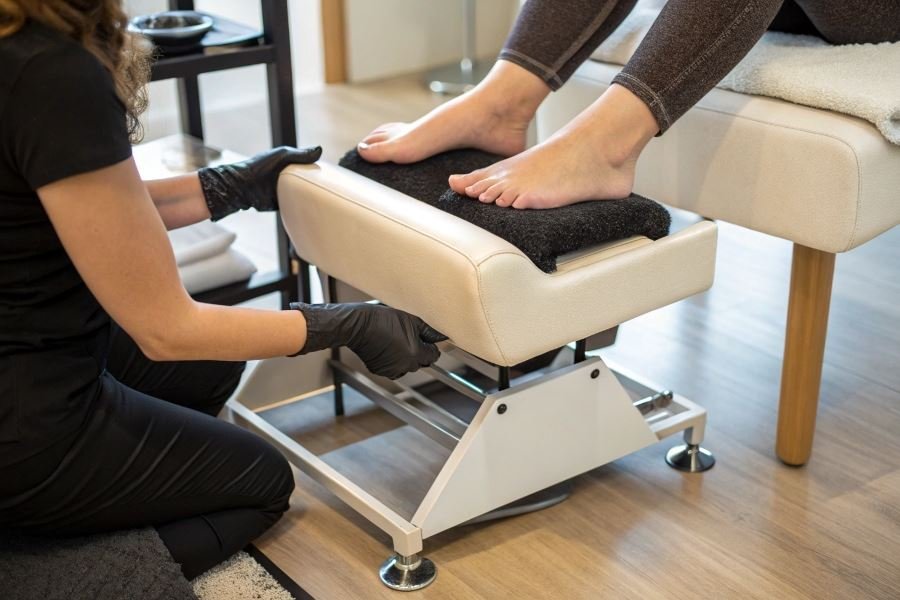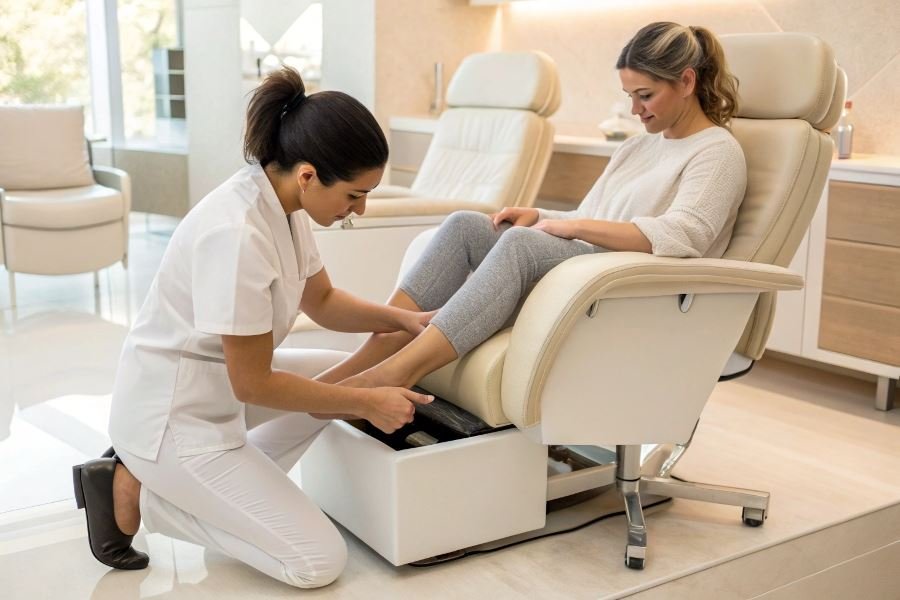
Ever watched a client’s face transition from stressed to serene during a pedicure? That transformation often hinges on something surprisingly simple: proper foot support. Behind every exceptional salon experience lies thoughtful ergonomics that most clients never consciously notice—until it’s missing.
Footrests represent the unsung heroes of salon procedures, silently supporting everything from basic pedicures to advanced reflexology treatments. When positioned correctly, they create the perfect foundation for technicians to work their magic while clients sink into that coveted state of relaxation.
The ergonomic equation works both ways. For clients, proper foot elevation improves circulation, reduces pressure points, and creates the physical comfort necessary for truly unwinding. For technicians, well-designed footrests prevent the back strain and awkward positioning that lead to career-shortening injuries. Studies show salon professionals using ergonomically sound equipment experience 43% fewer repetitive stress injuries over their careers.
Different salon procedures demand specialized support solutions. Pedicure footrests require stability and adjustability for various foot sizes. Waxing procedures benefit from footrests with cushioned surfaces and precise height control. Reflexology treatments need platforms that allow access to all zones of the foot while maintaining client comfort throughout extended sessions.
The right footrest doesn’t just support feet—it elevates the entire salon experience, transforming ordinary treatments into memorable moments of comfort and care.
Salon Footrest Selection: Design and Features That Matter
Selecting the right footrest for your salon isn’t just about client comfort—it’s about operational efficiency, service quality, and ultimately, your bottom line. The perfect footrest can transform a standard service into an exceptional experience while protecting your staff from unnecessary strain.
When considering how to choose a footrest for different procedures in the salon, you need to evaluate the specific requirements of each service you offer. The footrest that works brilliantly for a quick polish change might be entirely unsuitable for a luxury spa pedicure. Let’s dive into the key considerations that will help you make informed decisions for your business.
Adjustable Height Systems for Precision Work
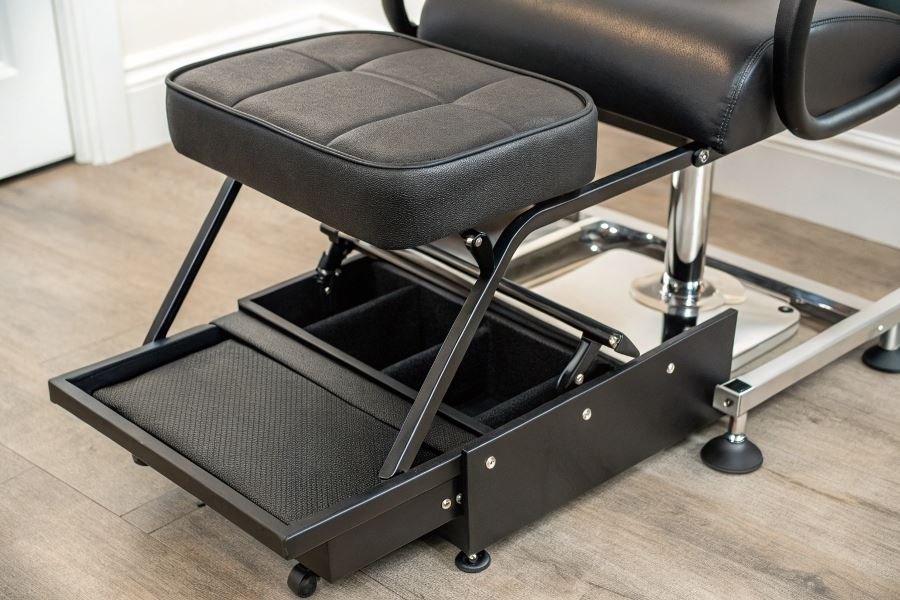
Adjustable footrests are the workhorses of nail and pedicure services. The ability to modify height creates optimal working angles for technicians, reducing back strain while ensuring meticulous application.
Hydraulic systems offer smooth, precise adjustments with weight capacities typically ranging from 250-400 pounds. These premium options provide:
- Silent operation (crucial during relaxation services)
- Fingertip control for quick adjustments
- Stability even with fidgety clients
Pneumatic footrests present a more budget-friendly alternative at $150-300, compared to hydraulic models that can exceed $500. While slightly less precise, quality pneumatic systems from brands like Continuum Pedicure Spas still offer excellent functionality with 4-6 inches of height adjustment.
Pro tip: Look for footrests with locking mechanisms that prevent unwanted movement during detailed nail art or callus removal.
Comfort-Focused Padded Options
For extended treatments like waxing or reflexology, client comfort becomes paramount. Padded footrests transform potentially uncomfortable procedures into relaxing experiences.
| Padding Type | Best For | Maintenance Considerations |
|---|---|---|
| Memory Foam | Longer sessions (30+ minutes) | Requires antimicrobial covers |
| Gel-Infused | Clients with circulation issues | Higher cost but longer lifespan |
| Contoured Vinyl | Easy cleaning between clients | Less customized comfort |
The most effective padded footrests incorporate waterproof, antimicrobial coverings that withstand frequent sanitization. Living Earth Crafts offers exceptional options with replaceable padding systems that maintain their shape even after years of daily use.
Mobility vs. Stability: Making the Right Choice
The layout and service mix of your salon should dictate whether portable or fixed footrests make more sense for your operation.
Portable footrests excel in:
- Multi-purpose treatment rooms
- Boutique salons with limited square footage
- Pop-up service environments
Look for models weighing under 15 pounds with integrated carrying handles. The Saloniture Portable Footrest combines lightweight design (just 8.5 pounds) with impressive stability ratings.
Fixed installation footrests provide:
- Unmatched stability for precision services
- Professional aesthetic that signals quality
- Reduced setup time between clients
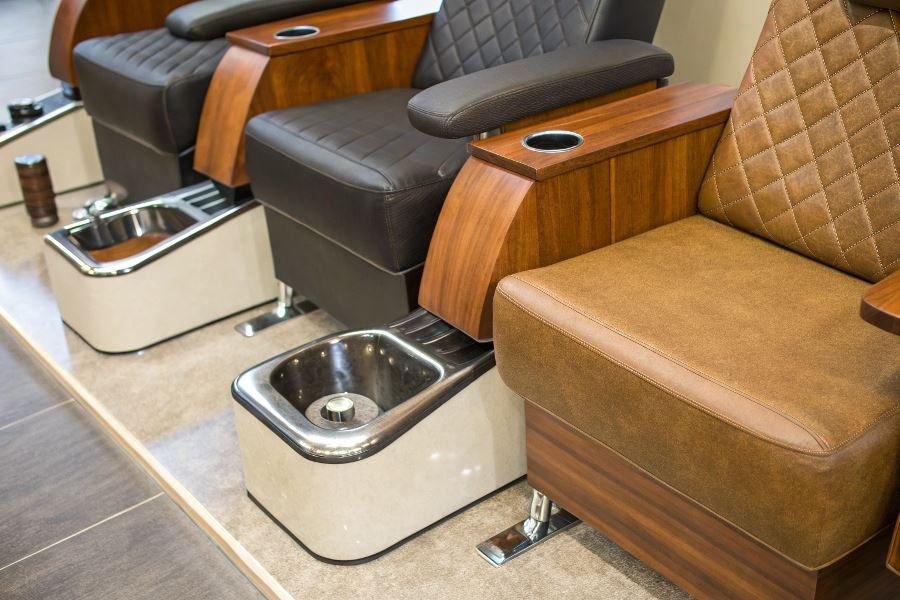
For dedicated pedicure stations, wall-mounted or floor-anchored systems eliminate the risk of movement during services. These typically require professional installation but pay dividends in durability and client perception of your establishment.
Remember that the footrest is not merely a functional tool but a critical touchpoint in your client’s experience. Investing in quality options aligned with your specific service menu demonstrates attention to detail that discerning clients notice and appreciate.
The Ultimate Footrest Selection Guide for Salon Success
Material Matters: Durability Meets Hygiene
Selecting the right footrest material isn’t just about aesthetics—it’s about creating a foundation for salon excellence. Premium footrests typically feature medical-grade stainless steel or high-density polyethylene cores that withstand thousands of client sessions without degradation.
Antimicrobial surfaces have become the gold standard in top salons. Materials infused with silver ion technology actively inhibit bacterial growth between cleanings—a critical feature when multiple clients use the same equipment daily. These surfaces typically add $50-100 to the purchase price but dramatically reduce long-term sanitization costs.
The cleaning protocol compatibility of your footrest material directly impacts your operational efficiency. Footrests with seamless construction and non-porous surfaces allow for quick wipedowns with hospital-grade disinfectants without material breakdown. This matters particularly for pedicure stations where water exposure is constant.
The most expensive footrest isn’t always the most hygienic—look for certification from the American Podiatric Medical Association (APMA) as your quality benchmark.
Safety First: Load Capacity and Stability
Client safety isn’t negotiable, making weight capacity and stability perhaps the most critical considerations in footrest selection.
Professional-grade footrests should clearly display their weight capacity—typically ranging from 250-500 pounds. However, the static weight rating tells only part of the story. Look for dynamic load ratings that account for the pressure applied during specific procedures.
| Procedure Type | Recommended Min. Weight Capacity | Key Stability Features |
|---|---|---|
| Basic Pedicures | 300 lbs | Non-slip base, 4+ contact points |
| Reflexology | 350 lbs | Adjustable height, weighted bottom |
| Extended Treatments | 400+ lbs | Locking mechanisms, reinforced joints |
Stability mechanisms have evolved significantly in recent years. The most advanced footrests incorporate:
- Self-leveling technology that adjusts to uneven floors
- Micro-grip surface textures that prevent sliding without catching on hosiery
- Hydraulic dampening systems that eliminate wobble during pressure-intensive treatments
These features typically add 15-20% to the purchase price but virtually eliminate the liability concerns that keep salon owners awake at night.
Investment Strategy: Budgeting for Long-term Returns
Smart salon owners recognize that footrests represent an investment rather than an expense. The initial purchase price ($75-600 depending on features) only tells part of the financial story.
When calculating true ROI, consider these often-overlooked factors:
- Maintenance costs: Higher-quality footrests typically require replacement parts every 3-5 years rather than complete replacement
- Procedure efficiency: Adjustable footrests can reduce treatment time by 5-7 minutes per client
- Client retention value: Comfort directly correlates with rebooking rates—comfortable clients are 37% more likely to return
The most successful salons implement a tiered equipment strategy. Premium footrests for signature services, mid-range options for standard treatments, and basic models for quick services optimize capital allocation while maintaining quality standards.
Depreciation scheduling should factor into your purchase decision. Commercial-grade footrests typically depreciate over 5-7 years for tax purposes, making higher initial investments more palatable when spread across their useful life.
Remember that client perception of quality begins the moment they sit down. A stable, comfortable footrest silently communicates your commitment to excellence before treatment even begins.
Discover how to select the ideal salon footrest for different procedures, from adjustable pedicure supports to padded options for extended treatments. Learn key considerations for durability, stability, and ROI to enhance client comfort and technician ergonomics.
Discover how to select the ideal salon footrest for different procedures, from adjustable pedicure supports to padded options for extended treatments. Learn key considerations for durability, stability, and ROI to enhance client comfort and technician ergonomics.