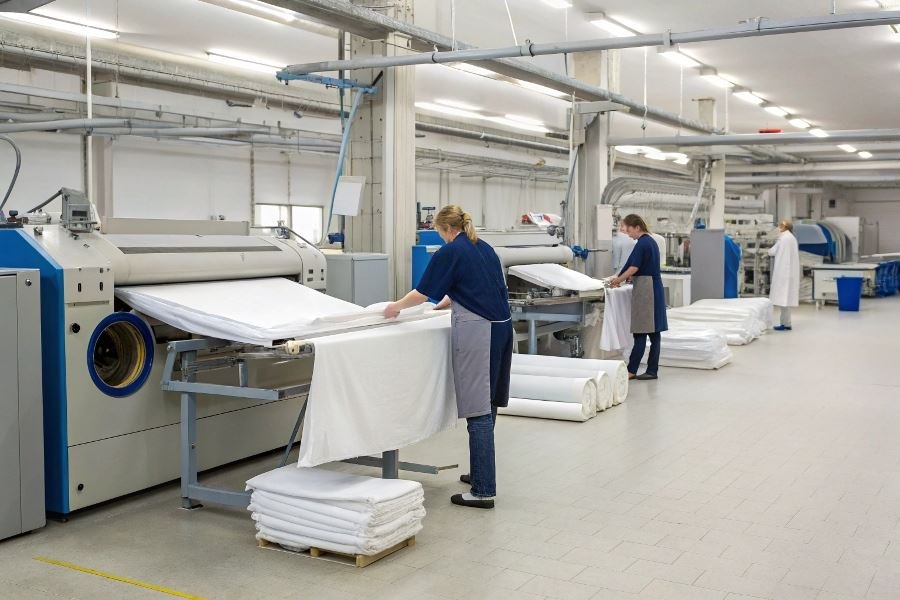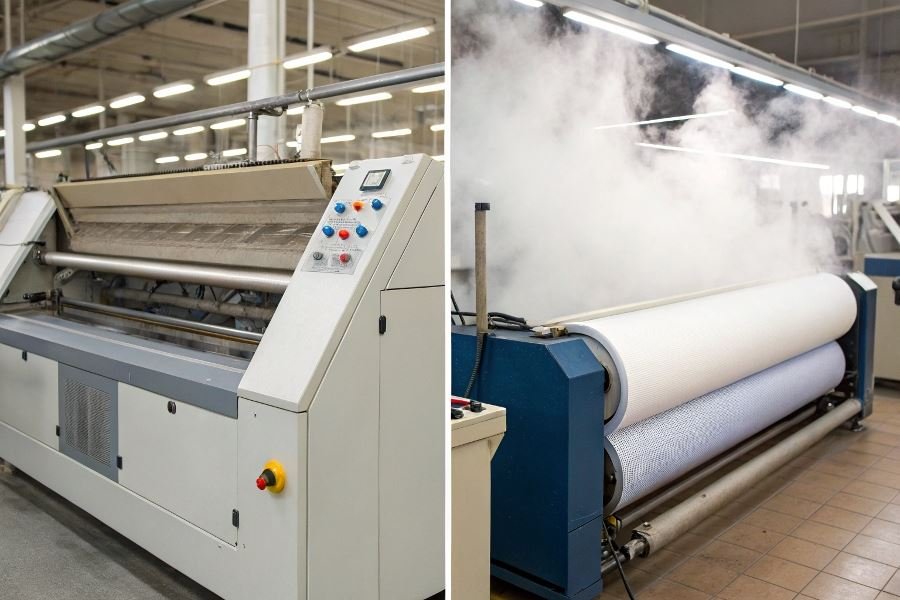
What if your laundry equipment could pay for itself while slashing your utility bills by 40%? That’s not fantasy—it’s the reality for businesses adopting energy-saving ironing rollers across America’s commercial laundry landscape.
Energy-saving ironing rollers represent the next evolution in commercial laundry technology, combining precision engineering with intelligent energy management systems. Unlike conventional ironing equipment that continuously draws maximum power, these advanced systems utilize thermal recapture technology, variable heating elements, and smart power management to dramatically reduce electricity consumption while maintaining—or even improving—performance.
The market for these efficiency powerhouses is experiencing remarkable growth, with adoption rates climbing 27% annually among hotels, hospitals, and industrial laundry operations. Industry analysts attribute this surge to a perfect storm of rising energy costs, sustainability mandates, and technological maturation that has finally made the economics irresistible.
But the revolution extends far beyond mere energy savings. Businesses implementing these systems report productivity increases averaging 22% due to faster heating cycles and reduced downtime. Quality improvements are equally impressive—the consistent temperature control produces superior finishing results with fewer rejects. Perhaps most surprising is the space efficiency factor: modern energy-saving rollers typically occupy 30% less floor space than legacy equipment, freeing valuable real estate for other revenue-generating activities.
For forward-thinking laundry operations, the question isn’t whether they can afford these systems—it’s whether they can afford not to upgrade.
The Financial Blueprint of Energy-Efficient Ironing
When calculating the payback period for energy-saving ironing rollers, businesses need to consider multiple factors beyond the sticker price. The comprehensive analysis of investment versus returns reveals why these machines have become essential for forward-thinking laundry operations, hotels, and manufacturing facilities.
Let’s dive into the numbers that matter. Energy-saving ironing rollers: payback calculation for business requires a methodical approach that accounts for initial costs, operational efficiencies, and projected savings over time. This isn’t just about cutting the electricity bill—it’s about transforming your entire operational model.
Breaking Down the Initial Investment
The upfront costs of energy-efficient ironing systems typically fall between $8,000 and $45,000, depending on size, capacity, and features. This investment includes:
| Investment Component | Typical Cost Range | Notes |
|---|---|---|
| Base Equipment | 7, 000−40,000 | Varies by width and throughput capacity |
| Installation | 800−3,000 | Includes electrical and ventilation work |
| Staff Training | 500−2,000 | Often discounted with larger purchases |
| Facility Modifications | 0−5,000 | May include reinforced flooring or ventilation |
Hidden costs to anticipate: Freight charges can add 500−1,500 depending on location, while permitting may require another 200−800 in some jurisdictions.
Operational Savings That Transform Your Bottom Line
The real magic happens when these machines start running. Modern energy-efficient rollers from manufacturers like Chicago Dryer Company and Jensen deliver substantial savings across multiple categories:
- Energy consumption: 30-45% reduction compared to conventional models, translating to 1, 200−4,800 annual savings for medium-sized operations
- Labor efficiency: 15-25% productivity improvement through faster processing speeds and reduced handling
- Maintenance costs: Advanced systems require 20-30% less maintenance, saving 800−2,000 annually
The cumulative effect of these savings accelerates your ROI timeline dramatically, especially when factoring in rising utility costs.
ROI Timeline: When Will You Break Even?
The payback period varies significantly based on your operation’s scale:
Small Operations (under 100 items daily)
Expect a 24-36 month payback period, with energy savings of approximately 1, 200−2,400 annually. The labor efficiency gains may be less dramatic but still meaningful at this scale.
Medium Businesses (100-500 items daily)
The sweet spot for rapid ROI: These operations typically see complete payback within 16-24 months, with combined savings approaching 8, 000−15,000 annually.
Large-Scale Operations (500+ items daily)
For high-volume facilities, the payback accelerates to just 12-18 months, with annual savings potentially exceeding $25,000. At this scale, the labor efficiency component often outweighs even the energy savings.
A medium-sized hotel processing 300 linens daily might invest $22,000 in a new Miele energy-efficient roller system. With monthly energy savings of $650, labor efficiency gains worth $450, and reduced maintenance costs of $200, they’ll recoup their investment in approximately 17 months—while also reducing their carbon footprint by 12-15 tons annually.
The financial case for energy-saving ironing equipment has never been stronger. When properly analyzed and implemented, these systems don’t just pay for themselves—they become profit centers that continue delivering returns long after the initial investment has been recovered.
Transforming Business Operations with Energy-Saving Ironing Rollers
Real-world success across diverse industries
The laundry revolution isn’t just theoretical—it’s happening right now across America. At Marriott Hotels, the installation of energy-efficient ironing rollers in their central laundry facilities has delivered remarkable results. Their San Francisco location reduced energy consumption by 42% while increasing throughput by 17% after replacing eight conventional rollers with five high-efficiency models from Jensen.
“The ROI wasn’t just about energy savings—it was about transforming our entire operation,” notes Operations Director at Marriott’s laundry division.
Healthcare facilities have witnessed equally impressive transformations. Memorial Hospital Network in Chicago implemented Chicago Dryer Company energy-saving ironing systems across their six locations, resulting in a 38% reduction in natural gas consumption and a 22% decrease in labor costs. Their payback period? Just 14 months.
Small businesses aren’t left behind in this efficiency revolution. Pristine Linens, a boutique hotel linen service in Portland, upgraded to a single Girbau energy-efficient roller, cutting their utility bills by $1,870 monthly while improving finish quality—critical for their high-end clientele.
Seamless integration with existing operations
Integration challenges often concern business owners considering the switch, but modern energy-efficient rollers are designed with flexibility in mind. Most manufacturers offer modular systems that can:
- Connect with existing feeding and folding equipment
- Operate within the same footprint as older machines
- Run on standard utility connections with minimal modifications
The key integration consideration is workflow optimization. Continental Girbau’s implementation team found that businesses achieve 15-20% additional efficiency when they reconfigure feeding stations alongside new roller installation.
Integration timing matters significantly. Facilities that schedule installations during planned maintenance periods report 40% less operational disruption compared to emergency replacements.
Financial transformation beyond energy savings
While immediate energy savings capture attention, the long-term financial benefits create the compelling business case:
| Benefit Category | Typical Impact | Notes |
|---|---|---|
| Energy Costs | 35-45% reduction | Most significant with natural gas models |
| Labor Efficiency | 15-25% improvement | Due to faster throughput and reduced jams |
| Maintenance Costs | 30% reduction | Modern rollers require less frequent service |
| Linen Replacement | 12% savings | Lower heat damage extends textile lifespan |
| Water Usage | 10-15% reduction | Improved moisture sensing reduces over-drying |
The sustainability advantages translate directly to financial benefits. Boston Medical Center leveraged their energy-efficient laundry upgrades to qualify for $175,000 in utility rebates and sustainability grants, effectively reducing their initial investment by 22%.
For businesses processing over 500 pounds daily, the total operational savings typically deliver complete ROI within 18-36 months, with smaller operations seeing payback in 24-48 months. After this period, the improved cash flow becomes a significant competitive advantage, allowing businesses to either increase margins or offer more competitive pricing.
The most successful implementations pair technology upgrades with process improvements—staff training on optimal loading techniques alone can improve efficiency by an additional 8-12%, according to data from Kannegiesser implementations across the hospitality sector.
Discover how energy-saving ironing rollers can transform your laundry business with our comprehensive ROI calculator. Learn investment costs, operational savings, and implementation strategies to maximize profitability and sustainability.
Discover how energy-saving ironing rollers can transform your laundry business with our comprehensive ROI calculator. Learn investment costs, operational savings, and implementation strategies to maximize profitability and sustainability.