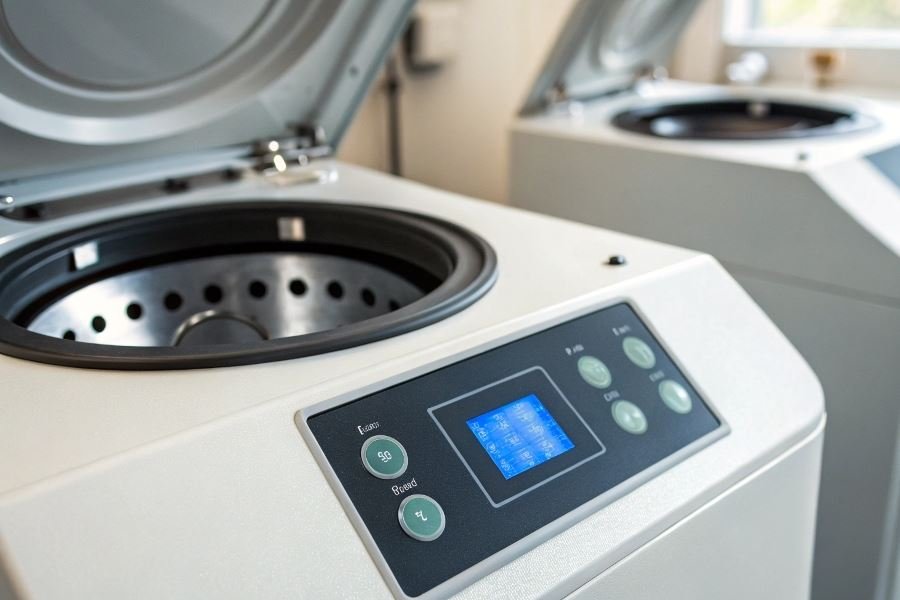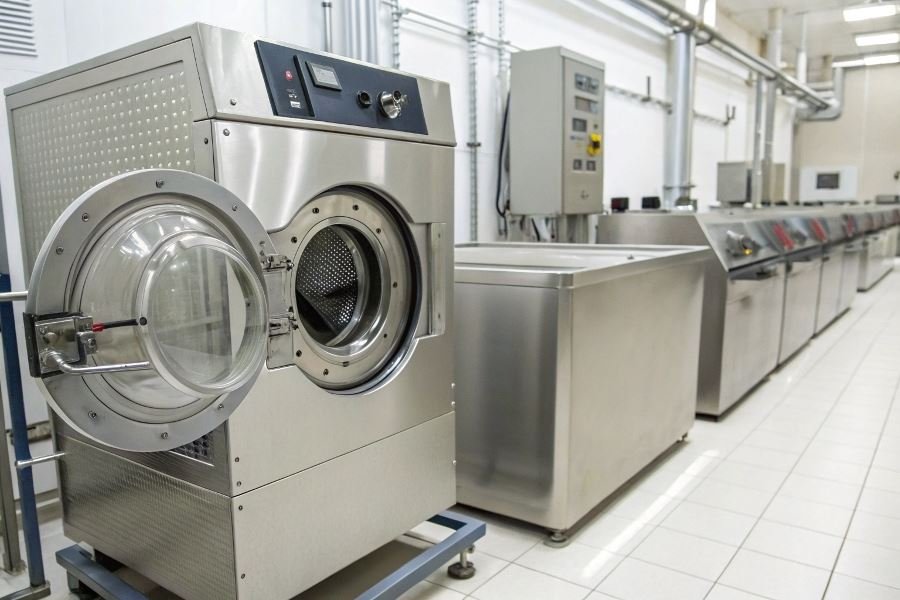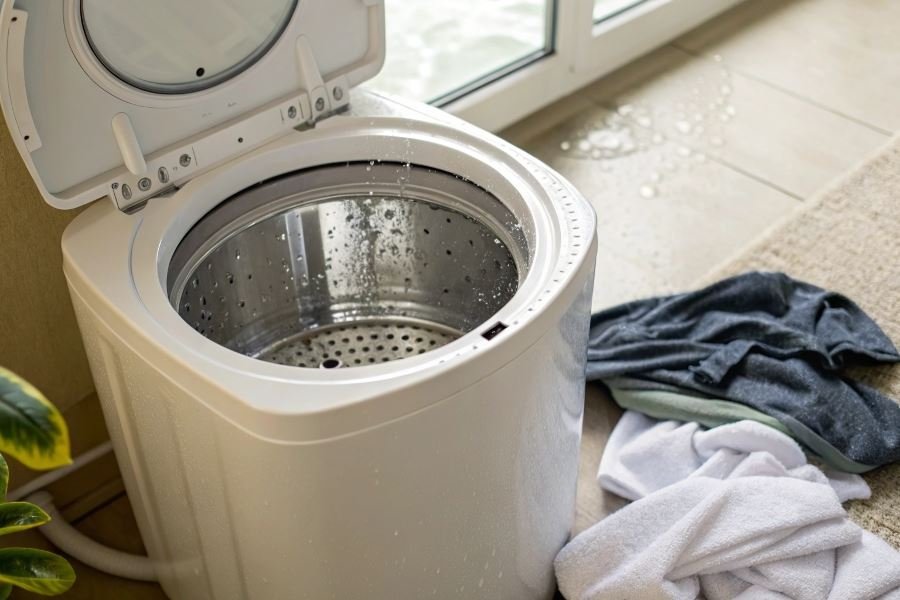
Ever wondered why some laundry comes out nearly dry while other loads remain frustratingly soaked? The secret lies not in your washing technique but in the power of a properly selected laundry centrifuge. This unsung hero of laundry day can dramatically cut drying times, reduce energy costs, and extend the life of your textiles.
Laundry centrifuges operate on a beautifully simple principle: rapid rotation creates centrifugal force that pulls water away from fabrics. But choosing the right one? That’s where science meets strategy. The difference between an adequate centrifuge and an exceptional one can mean hours saved weekly and hundreds of dollars annually.
Three critical factors determine centrifuge performance: spin speed (measured in RPM), load capacity, and mechanical design. A machine spinning at 1,800 RPM will extract significantly more moisture than one operating at 1,200 RPM. However, higher isn’t always better if your typical loads contain delicate fabrics that could be damaged by excessive force.
The efficiency equation
When properly matched to your needs, an optimal centrifuge transforms your laundry process:
- Time efficiency: Reduces drying time by up to 50%
- Energy savings: Cuts electricity consumption by extracting moisture mechanically rather than thermally
- Fabric preservation: Less time in hot dryers means extended garment life
The right centrifuge isn’t just an appliance—it’s an investment in efficiency. By understanding these fundamental selection criteria, you’re taking the first step toward laundry mastery that delivers consistently superior results while protecting both your textiles and your budget.
Technical Mastery: Choosing the Perfect Laundry Centrifuge
Capacity that matches your lifestyle
When evaluating centrifuges for spinning laundry, capacity should top your priority list. Most residential models range from 6 to 15 pounds, while commercial units can handle 20+ pounds in a single cycle. The sweet spot? A machine that accommodates your typical laundry load without overcrowding or underutilizing.
Selecting the right centrifuge involves careful consideration of multiple criteria for choosing a centrifuge for spinning laundry, with load capacity being particularly crucial. A unit that’s too small forces multiple cycles, wasting time and energy, while oversized machines consume unnecessary power and space.
For households of 1-2 people, a 6-8 pound capacity typically suffices. Families of 3-4 might require 10-12 pounds, while larger households benefit from 15+ pound models. The Panda Portable Spin Dryer offers 10 pounds of capacity in a compact footprint—ideal for apartments where space comes at a premium.
Spin speed: The RPM revolution
Spin speed directly determines moisture extraction efficiency. Higher RPMs generate stronger centrifugal force, pulling more water from fabrics. But different materials demand different approaches:
| Fabric Type | Recommended RPM | Moisture Retention |
|---|---|---|
| Delicates/Silk | 600-800 | 40-50% |
| Synthetics | 800-1000 | 30-40% |
| Cotton/Denim | 1200-1500 | 20-30% |
| Heavy Towels | 1500+ | 15-20% |
Premium models like the The Laundry Alternative Nina Soft Spin Dryer deliver impressive 1800 RPM performance while maintaining whisper-quiet operation. For delicate fabrics, look for machines with adjustable speed settings rather than single-speed options.
Remember that higher isn’t always better—excessive RPMs can damage delicate fabrics and accelerate wear on everyday items. The ideal centrifuge offers variable speeds or preset programs for different fabric types.
Energy efficiency: The hidden cost calculator
While centrifuges use significantly less energy than heat dryers, efficiency still varies dramatically between models. Top performers extract more moisture per kilowatt-hour, reducing both energy consumption and subsequent drying time.
Modern centrifuges typically consume between 200-500 watts during operation. For perspective, that’s roughly 5-10% of what a conventional dryer requires. The Costway Portable Spin Dryer draws just 260 watts while achieving 1300 RPM—an impressive efficiency ratio.
Power consumption analysis reveals surprising long-term savings. A high-efficiency centrifuge can reduce conventional dryer time by 30-50%, potentially saving hundreds of dollars annually. Look for models with:
- Power consumption under 300W for standard loads
- Auto-shutoff features that prevent unnecessary runtime
- Moisture sensors that optimize cycle duration
- Energy efficiency ratings (when available)
The most efficient units feature brushless DC motors that deliver higher torque with lower power draw. These motors typically last longer and operate more quietly than traditional alternatives, making them worth the premium for frequent users.
When comparing models, calculate the total cost of ownership rather than focusing solely on purchase price. A $50 price difference can be offset within months through reduced energy bills and extended fabric life from gentler processing.
Evaluating Centrifuges That Actually Last
The build quality battleground
When investing in a laundry centrifuge, construction quality isn’t just a feature—it’s the foundation. Modern centrifuges typically feature either stainless steel or high-grade polymer drums, with stainless steel offering superior longevity. The Speed Queen commercial-grade units, for instance, incorporate 304-grade stainless steel that resists corrosion even after thousands of spin cycles.
Motor durability becomes the differentiator in daily use scenarios. Look for models with copper-wound motors rather than aluminum alternatives—they typically last 3-5 years longer under identical usage patterns. Brushless DC motors have emerged as the gold standard, offering 40% longer operational lifespans than traditional brushed variants.
The control panel tells its own durability story. Touch-sensitive glass panels might look impressive but mechanical switches consistently outperform in longevity tests, particularly in humid laundry environments.
Taming the noise beast
Nothing ruins laundry day like a centrifuge that sounds like a helicopter taking off. Modern engineering has transformed what’s possible in this arena.
The decibel rating serves as your first noise indicator. Premium models like the Miele W1 series operate at approximately 65-70dB during high-speed extraction—comparable to normal conversation levels—while budget options frequently exceed 85dB, approaching the noise level of busy traffic.
| Centrifuge Type | Typical Noise Level | Comparable Sound |
|---|---|---|
| Premium Models | 65-70dB | Normal conversation |
| Mid-range Units | 75-80dB | Vacuum cleaner |
| Budget Options | 85-90dB | Heavy traffic |
Vibration control technologies have evolved dramatically. Look for:
- Multi-layer shock absorption systems that isolate the drum from the outer casing
- Weighted balance rings that counteract uneven loads
- Intelligent load detection that adjusts spin patterns to minimize vibration
The LG TurboWash series incorporates a direct drive motor that eliminates the belt system entirely, reducing vibration transfer by up to 30% compared to traditional belt-driven systems.
Making space work smarter
The footprint reality can make or break your centrifuge experience. Standard standalone units typically require approximately 24×24 inches of floor space, while compact models can shrink this requirement to 18×18 inches.
Vertical clearance often becomes the overlooked dimension. Most units need at least 12 inches of overhead space for proper lid operation and ventilation. Wall clearance requirements vary dramatically between models—some require just 1 inch while others demand 4-6 inches for proper air circulation and vibration management.
Installation considerations extend beyond mere dimensions:
- Power requirements typically range from standard 120V outlets for residential models to dedicated 220V circuits for commercial-grade equipment
- Floor reinforcement needs vary based on unit weight and vibration characteristics
- Drainage options include gravity systems and pump-assisted evacuation for installations away from floor drains
The Bosch 800 Series offers a particularly clever solution with its AquaStop leak protection system that automatically shuts down operation if moisture is detected outside the unit, preventing potential water damage during installation mishaps.
When evaluating space requirements, consider not just the machine’s dimensions but the operational zone needed for loading, maintenance access, and proper ventilation. The most efficient centrifuges balance compact design with practical accessibility.
Discover the essential criteria for selecting the perfect laundry centrifuge. From capacity and spin speed to energy efficiency and noise control, learn how to evaluate key features that ensure optimal performance and extend the life of your fabrics.
Discover the essential criteria for selecting the perfect laundry centrifuge. From capacity and spin speed to energy efficiency and noise control, learn how to evaluate key features that ensure optimal performance and extend the life of your fabrics.