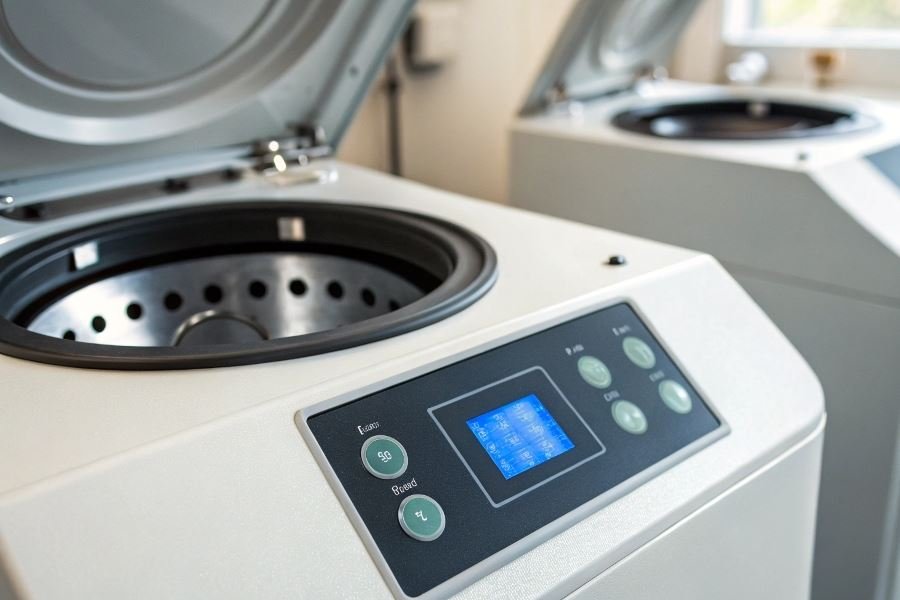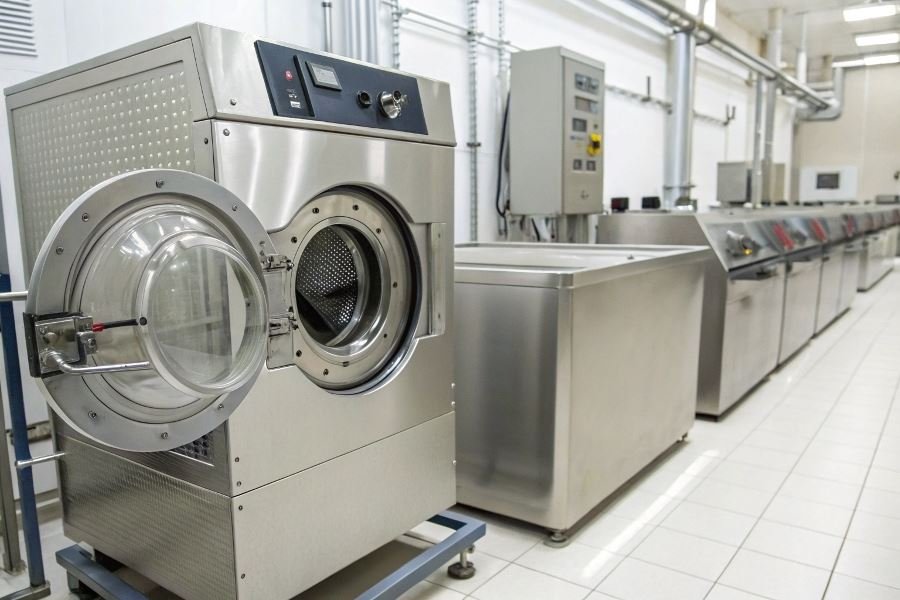
Ever watched a commercial washing machine spin at full force and wondered what invisible calculations determine its power? That seemingly simple rotation represents a complex engineering balance—one that can make or break your laundry operation’s efficiency, utility costs, and equipment lifespan.
Calculating the right centrifuge power isn’t just a technical exercise—it’s the foundation of operational excellence. When properly sized, your centrifuge extracts maximum moisture while consuming minimum energy. When undersized, it leaves fabrics sopping wet, extending drying times and inflating energy bills. Oversized? You’re paying premium prices for capacity you’ll never use while subjecting your equipment to unnecessary wear.
The power calculation sweet spot depends on several critical factors. Load capacity stands as the primary consideration—heavier loads demand proportionally greater power. Fabric composition plays an equally crucial role; dense materials like denim require significantly more extraction force than lightweight synthetics. Even water hardness affects power requirements, as mineral-laden water creates different extraction dynamics.
The calculation process itself follows a systematic approach:
- Determine your maximum load weight (in pounds)
- Identify the G-force required for your specific fabric types
- Calculate the drum diameter and rotation speed relationship
- Factor in mechanical efficiency losses
“The difference between a properly sized centrifuge and an undersized one can represent up to 30% in downstream energy costs.” — American Laundry Institute
Understanding these calculations transforms equipment selection from guesswork into precision engineering—ensuring your laundry operation maintains peak performance for years to come.
Power Calculation Mastery for Laundry Centrifuges
When it comes to commercial laundry operations, the centrifuge is your unsung hero. This workhorse extracts water from fabrics through centrifugal force, dramatically reducing drying times and energy costs. But how do you ensure you’ve got the right amount of power for your specific needs? Let’s dive into the science and mathematics that will transform your laundry operation.
Determining the appropriate power requirements for a commercial laundry centrifuge involves understanding several critical formulas and factors. The process of how to calculate the required power of a centrifuge for a laundry begins with mastering the fundamental physics behind these machines, then applying practical adjustments based on real-world conditions.
The Power Calculation Foundation: P = m × r × ω²
At the heart of centrifuge power calculation lies this elegant formula:
P = m × r × ω²
Where:
- P represents power (measured in watts)
- m is the mass of the load (in kilograms)
- r stands for the radius of rotation (in meters)
- ω² is angular velocity squared (in radians per second)
This formula captures the essence of what’s happening inside your centrifuge: mass spinning at a distance from the center at a specific speed. The relationship is non-linear—doubling the speed quadruples the power requirement!
For example, a centrifuge with a 24-inch drum diameter operating at 1,000 RPM requires significantly less power than the same machine at 1,200 RPM, even with identical loads.
Load Capacity and Distribution Factors
The theoretical formula gives us a starting point, but real-world applications demand more nuance:
| Factor | Impact on Power Calculation | Adjustment Range |
|---|---|---|
| Load Imbalance | Increases power requirements | 10-25% |
| Fabric Type | Affects water retention | 5-15% |
| Load Density | Changes mass distribution | 8-20% |
Most commercial laundries operate with loads at 70-80% of rated capacity for optimal performance. Underloading wastes energy, while overloading strains motors and reduces extraction efficiency.
“A properly loaded centrifuge is the difference between a 4-hour and a 6-hour production day,” notes industry veteran Mark Thompson.
Mechanical Efficiency and Safety Margins
The final piece of the power calculation puzzle involves accounting for:
-
Mechanical Efficiency: No machine transfers 100% of its power to the task. Modern centrifuges typically operate at 85-92% efficiency, meaning you’ll need to adjust your calculated power upward by 8-15%.
-
Starting Torque: Motors require 2-3 times their running power during startup. Your electrical system must accommodate this surge.
-
Safety Margins: Professional installations typically add a 20% buffer to calculated power requirements to account for:
- Aging equipment performance degradation
- Varying load conditions
- Unexpected mechanical resistance
For a practical example, consider a 50kg load in a centrifuge with a 0.5m radius spinning at 100 radians per second. The base calculation yields 250,000 watts, but after accounting for efficiency (90%) and safety margin (20%), your actual power requirement approaches 333,000 watts.
By mastering these calculations and adjustments, you’ll ensure your laundry operation has precisely the centrifuge power needed for optimal performance, energy efficiency, and equipment longevity.
Mastering Centrifuge Power Calculations for Laundry Operations
Measuring Variables with Precision
Calculating the right centrifuge power isn’t just about numbers—it’s about optimizing your entire laundry operation. Let’s dive into the practical application with the enthusiasm this topic deserves.
To properly measure and input variables, follow this field-tested approach:
-
Weigh your load precisely. Don’t estimate—use a calibrated scale to determine the exact weight in pounds. A 10% miscalculation here can lead to a 15-20% power mismatch.
-
Determine moisture content by weighing a sample before and after air drying. The difference represents your extraction challenge.
-
Measure fabric density by compressing a standard volume of material under controlled pressure. Denim and terry cloth require significantly different extraction forces.
-
Calculate G-force requirements based on fabric type. Delicates might need only 100G while heavy commercial linens could require 350-400G for optimal moisture removal.
The relationship between load weight and required power isn’t linear—it’s exponential at higher capacities.
Avoiding Calculation Pitfalls
The path to proper centrifuge sizing is littered with costly mistakes. Here are the most common errors laundry operators make:
Underestimating peak loads. Your calculations must account for your busiest periods, not average days. A centrifuge that’s perfect 80% of the time but fails during peak demand is ultimately undersized.
Ignoring fabric composition variations. Different materials retain moisture differently:
| Fabric Type | Water Retention | Required G-Force |
|---|---|---|
| Cotton | High (150%) | 300-350G |
| Polyester | Low (45%) | 100-150G |
| Microfiber | Medium (85%) | 200-250G |
| Denim | Very High (200%) | 350-400G |
Overlooking motor efficiency curves. Motors operate at different efficiency levels depending on load. Running at 50% capacity often consumes more energy per pound processed than operating at 80-90% capacity.
The most expensive centrifuge isn’t the one with the highest price tag—it’s the one that’s improperly sized for your operation.
Optimizing Power and Efficiency
Smart operators know that calculating power requirements is just the beginning. True optimization comes from these proven strategies:
Implement batch weight standardization. Train staff to load consistently at 80-85% of rated capacity—the sweet spot for most centrifuges where power consumption per pound reaches optimal efficiency.
Consider variable frequency drives (VFDs). Modern VFDs from manufacturers like ABB or Siemens can reduce energy consumption by 15-30% by adjusting motor speed based on load characteristics.
Monitor power factor correction. Poor power factor can increase your electrical costs by up to 20%. Installing capacitors to correct this can pay for itself within 6-18 months in most operations.
Schedule preventive maintenance. Bearings that create just 5% more friction due to wear can increase power consumption by 8-12%. Regular maintenance isn’t a cost—it’s an investment in efficiency.
The difference between a properly sized centrifuge and an oversized unit can represent 3, 000−5,000 in wasted energy costs annually for a medium-sized operation. By applying these calculation principles and optimization strategies, you’re not just selecting equipment—you’re engineering profitability into your laundry operation.
Discover essential formulas for calculating laundry centrifuge power requirements. Learn how to determine optimal power needs based on load capacity, mechanical efficiency, and energy consumption for commercial laundry operations.
Discover essential formulas for calculating laundry centrifuge power requirements. Learn how to determine optimal power needs based on load capacity, mechanical efficiency, and energy consumption for commercial laundry operations.