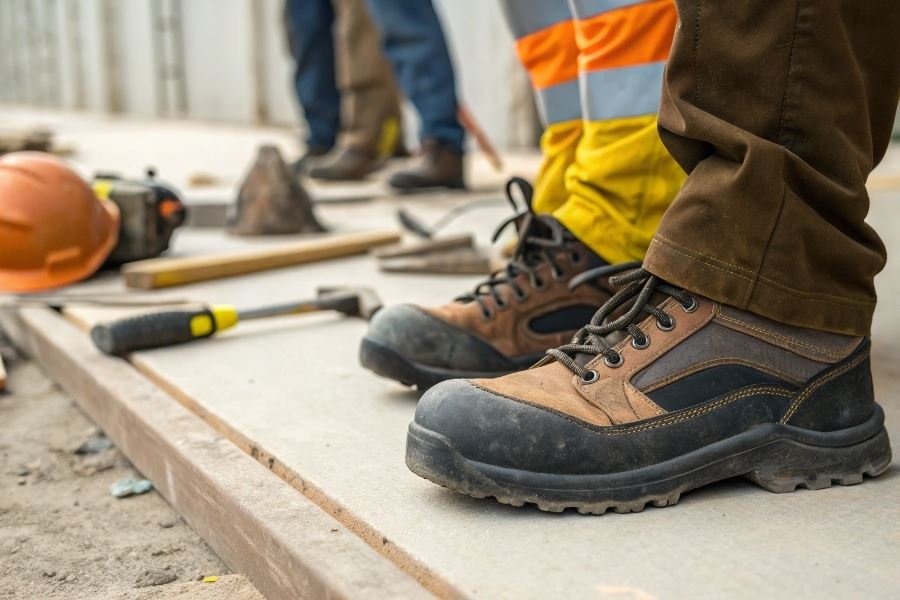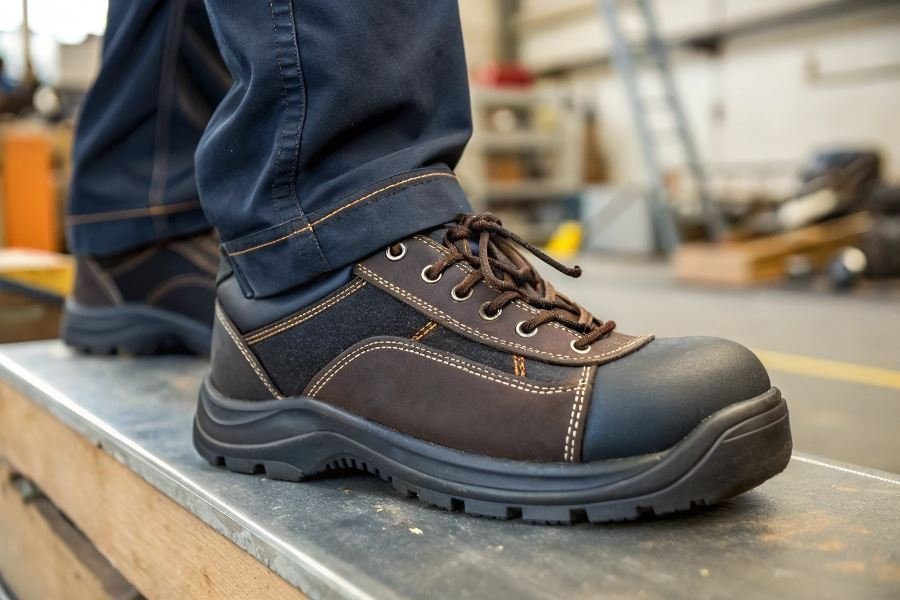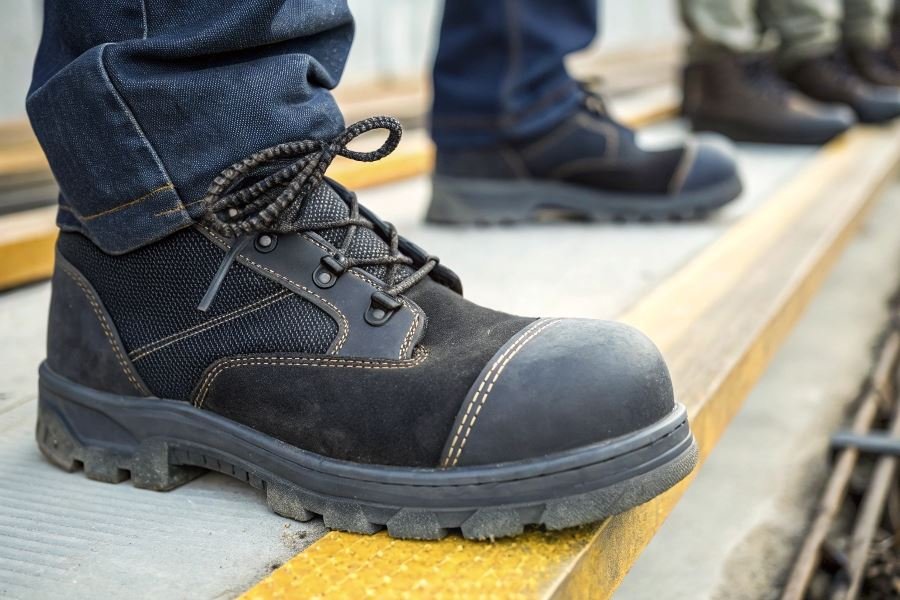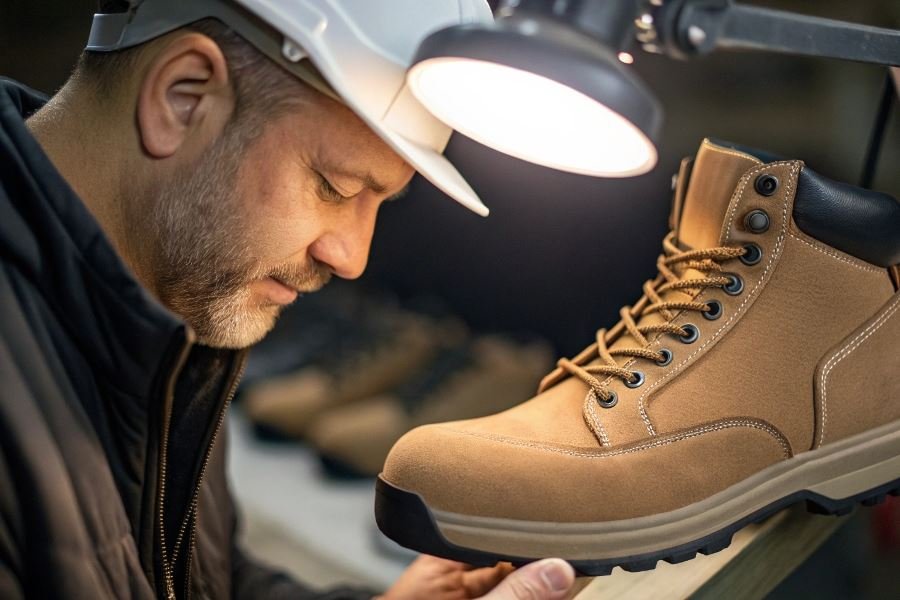
Your feet endure 8+ hours of daily strain at work—yet 70% of workplace injuries could be prevented with proper footwear. The right ankle boots aren’t just about comfort; they’re your first line of defense against workplace hazards that can change your life in seconds.
When selecting work boots, you’re navigating a critical safety decision that balances protection, comfort, and durability. The perfect pair serves as both shield and support system through grueling shifts. Think of work ankle boots as specialized equipment—each feature engineered to address specific workplace challenges.
Safety starts from the ground up. The foundation of workplace protection begins with understanding three critical elements:
Protection that matches your environment
Your workplace dictates your footwear needs. Construction sites demand steel toes that withstand up to 2,500 pounds of compression, while electrical work requires boots with non-conductive materials and ratings of at least 18,000 volts. Chemical plants? You’ll need acid-resistant materials that won’t degrade upon contact.
Comfort that sustains performance
A boot’s interior technology matters as much as its protective features. Advanced cushioning systems, proper arch support, and moisture-wicking liners prevent fatigue—the hidden hazard that compromises awareness and reaction time during critical moments.
Durability that withstands your daily battle
Quality work boots represent an investment in your safety and career longevity. Premium full-grain leather offers 3-4 times the lifespan of synthetic alternatives, while Goodyear welt construction allows for resoling rather than replacement—saving both money and break-in time.
Work Ankle Boots for Every Environment
When safety meets the ground, your choice of footwear becomes the foundation of workplace protection. The right work ankle boots don’t just shield your feet—they enhance productivity, prevent injuries, and adapt to specific workplace challenges. Let’s dive into the specialized features needed across different work settings.
Selecting appropriate work ankle boots for different working conditions requires understanding both the hazards present in your environment and the protective features designed to address them. From construction sites with falling debris to restaurant kitchens with slippery floors, each workplace demands specific safety considerations that quality manufacturers have engineered into their specialized footwear.
Construction and Outdoor Battlegrounds
Construction sites and outdoor work environments present a trifecta of challenges: impact threats, moisture exposure, and unstable terrain. Quality work boots for these settings feature:
- Composite or steel toe caps rated to withstand impacts of 75+ pounds
- Waterproof membranes like GORE-TEX that repel moisture while allowing feet to breathe
- Deep lug patterns delivering 360-degree traction on mud, gravel, and uneven surfaces
The difference between standard and premium construction boots often comes down to the outsole technology. Vibram outsoles, for instance, use specialized rubber compounds that maintain grip even in freezing conditions, while providing stability on scaffolding and ladders.
Industrial and Manufacturing Protection
Industrial environments introduce unique hazards requiring specialized protection:
| Feature | Protection Provided | When It’s Critical |
|---|---|---|
| Electrical Hazard (EH) Rating | Insulation against open circuits up to 600 volts | Electrical work, manufacturing with exposed wiring |
| Metatarsal Guards | Protection for the upper foot bones | Environments with falling objects, heavy machinery |
| Chemical Resistance | Barrier against corrosives, solvents | Chemical processing, cleaning operations |
Workers in these environments should look for boots meeting ASTM F2413 standards, which certify protection levels for various workplace hazards. Timberland PRO and Red Wing offer industrial collections specifically engineered with these certifications.
Service Industry and Light-Duty Demands
Not all work environments involve heavy machinery or construction materials, but they still demand specialized footwear:
- All-day comfort features including memory foam insoles and shock-absorbing midsoles
- Slip-resistant outsoles tested on wet and oily surfaces (look for coefficients of friction exceeding 0.40)
- Professional aesthetics that balance protection with appropriate workplace appearance
Restaurant workers, healthcare professionals, and retail employees benefit from lightweight designs that don’t sacrifice protection. Shoes for Crews specializes in service industry footwear with patented slip-resistant technology that exceeds industry standards while maintaining a professional look.
The most overlooked feature in light-duty work boots is proper arch support. Premium options incorporate orthotic-friendly designs that prevent fatigue during 8+ hour shifts on hard surfaces, dramatically reducing the foot, knee, and back pain that plagues service workers.
Remember: the most expensive boot isn’t necessarily the right one. The perfect work ankle boot matches your specific environmental challenges while providing all-day comfort for your unique foot structure.
The Essential Blueprint for Work Ankle Boot Selection
When your livelihood depends on your feet, choosing the right work ankle boots becomes a critical decision rather than a casual purchase. The perfect pair stands between you and potential workplace hazards, chronic discomfort, and premature replacement costs.
Safety standards that actually protect you
Safety certifications aren’t just bureaucratic checkboxes—they’re your first line of defense against workplace injuries. The American Society for Testing and Materials (ASTM) F2413 standard is the gold standard for protective footwear in the United States. This certification covers crucial protections including:
| Protection Type | What to Look For | Typical Industries |
|---|---|---|
| Impact Resistance | ASTM F2413-18 I/75 | Construction, Manufacturing |
| Compression Resistance | ASTM F2413-18 C/75 | Warehousing, Logistics |
| Electrical Hazard | ASTM F2413-18 EH | Electrical work, Utilities |
| Slip Resistance | ASTM F2913 | Food service, Healthcare |
| Puncture Resistance | ASTM F2413-18 PR | Construction, Recycling |
Don’t settle for vague claims of “safety features”—demand specific certifications that match your working environment. For electrical work, Electrical Hazard (EH) certification is non-negotiable, while those working with heavy materials should prioritize impact and compression ratings.
Material matters: durability by design
The material composition of your work boots directly impacts their lifespan and performance in specific environments:
Full-grain leather remains the gold standard for overall durability and water resistance after proper treatment. While requiring more break-in time, quality leather boots from manufacturers like Red Wing can last 5-7 years with proper care—making their higher initial investment ($200-350) substantially more economical over time.
Synthetic materials like Kevlar and ballistic nylon offer exceptional tear resistance and lighter weight, perfect for jobs requiring agility. Brands like Timberland PRO have pioneered hybrid designs combining synthetic durability with traditional leather comfort.
Maintenance requirements vary dramatically between materials—leather requires conditioning every 3-6 months, while synthetic boots typically need only regular cleaning.
The ergonomic equation for all-day comfort
The most protective boot becomes worthless if pain prevents you from wearing it. Proper fit transcends simple sizing:
- Measure late in the day when feet are naturally swollen
- Allow 3/8 to 1/2 inch of space between your longest toe and the boot’s end
- Width matters equally to length—D is standard men’s width, with E, EE, and EEE indicating progressively wider options
Modern work boots incorporate advanced ergonomic features worth investigating:
- Contoured footbeds that distribute weight evenly across your foot
- Shock-absorbing midsoles using materials like EVA or polyurethane
- Anatomical arch support tailored to different foot types
- Heel stabilizers that prevent fatigue-causing pronation
Thorogood and KEEN Utility have pioneered ergonomic innovations specifically for industrial environments, including asymmetrical safety toes that follow the natural foot shape rather than creating pressure points.
Remember that even the perfect boot requires a break-in period—typically 1-2 weeks of regular wear. Quality manufacturers design this process to mold the boot to your specific foot structure, creating a custom fit that generic “comfortable out of the box” options can’t match.
Discover how to select the perfect work ankle boots for any job environment. Learn about essential safety features, proper fit, and specific protection needed for construction, industrial, or service work conditions.
Discover how to select the perfect work ankle boots for any job environment. Learn about essential safety features, proper fit, and specific protection needed for construction, industrial, or service work conditions.