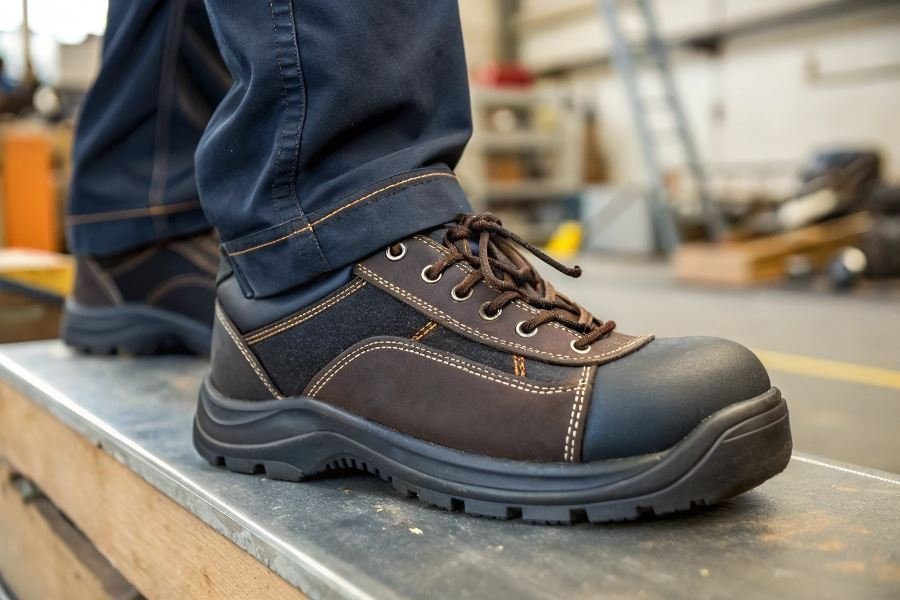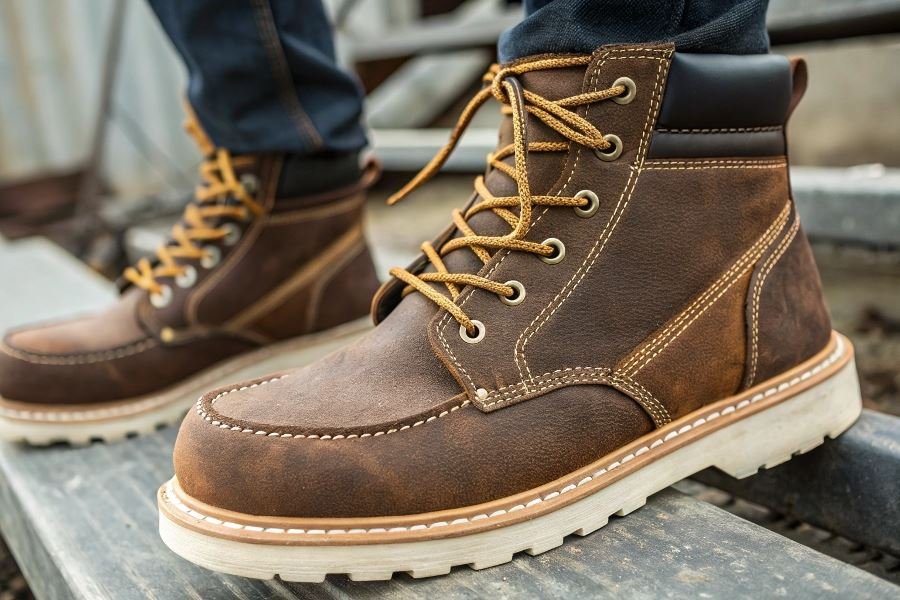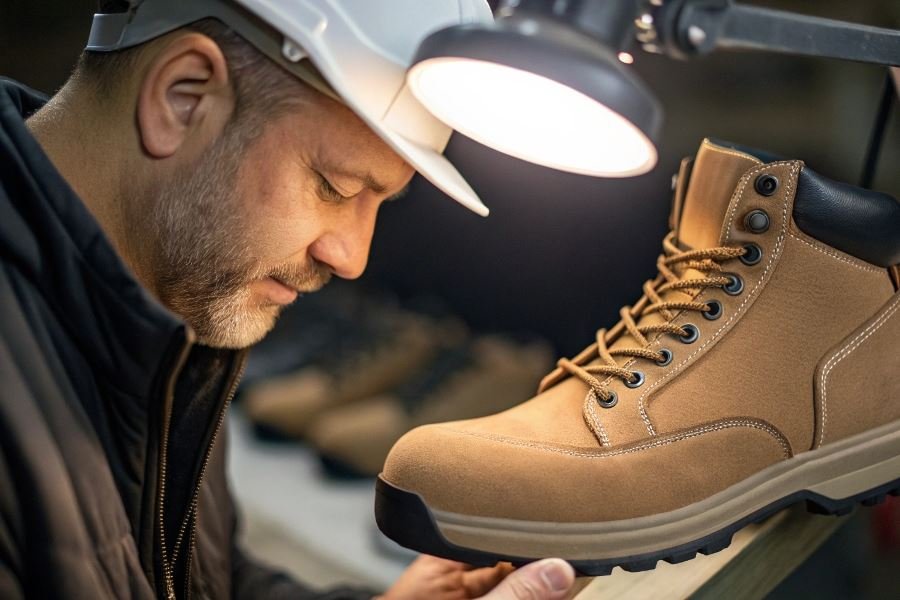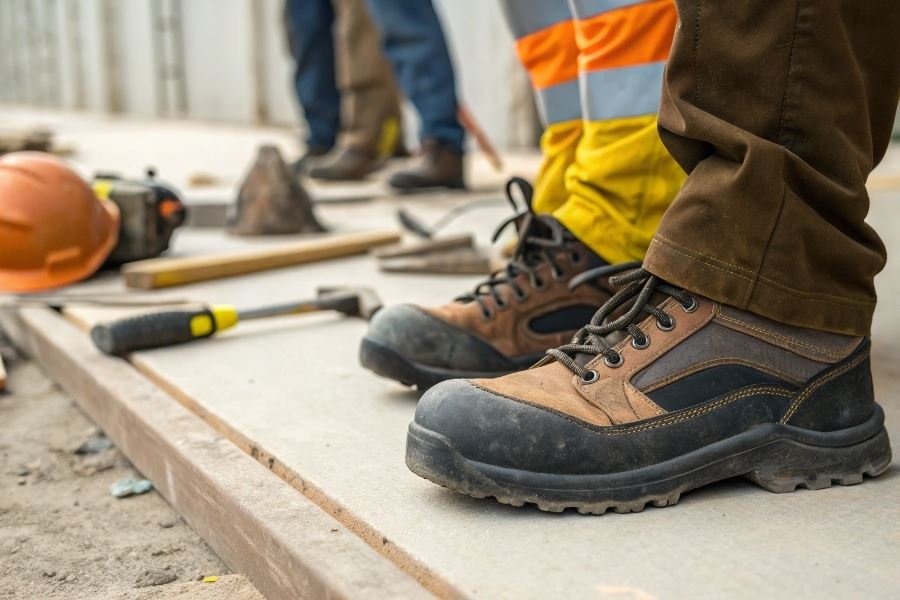
Ever wondered why some workers stride confidently across hazardous terrain while others hesitate? The secret often lies below the ankle. Work half-boots—that perfect middle ground between clunky safety boots and inadequate casual shoes—are transforming workplace safety without sacrificing comfort.
Work half-boots typically rise just above the ankle, offering substantial protection while maintaining mobility. Unlike their taller counterparts, they feature reinforced toes (often steel or composite), puncture-resistant soles, and slip-resistant treads—all while weighing significantly less. This balance makes them increasingly popular across construction, manufacturing, and service industries.
The protective footwear market has evolved dramatically since OSHA established the first comprehensive standards in 1970. What was once a one-size-fits-all approach has blossomed into a $7.5 billion industry offering specialized solutions for every conceivable workplace hazard. Modern options range from traditional steel-toe boots to specialized footwear with electrical hazard protection, metatarsal guards, and even smart features that monitor worker fatigue.
“The right boot doesn’t just prevent injuries—it prevents careers from being cut short.” – National Safety Council
Selecting appropriate protective footwear isn’t merely about compliance—it’s about longevity. Studies show that foot injuries account for approximately 10% of all reported workplace accidents, with the average injury resulting in 7 days of lost work. The right footwear doesn’t just protect against immediate hazards; it prevents chronic issues like plantar fasciitis and lower back pain that develop over years of improper support.
The protection spectrum
When comparing work half-boots to other protective options, consider three critical factors:
- Hazard specificity – Match the protection to your actual risks
- Comfort during full shifts – Even the safest boot fails if workers remove it
- Longevity and value – Quality footwear is an investment, not an expense
The Ultimate Protective Footwear Showdown
When safety meets the ground, your choice of protective footwear makes all the difference. The right pair doesn’t just shield your feet—it transforms your workday experience. Let’s dive into what separates work half-boots from their protective cousins and why these distinctions matter for professionals who demand both protection and performance.
A comprehensive comparison of work half-boots with other types of protective footwear reveals fascinating differences in design philosophy, protection capabilities, and practical applications. Each footwear category represents a specific balance between safety features and functional benefits that can significantly impact your workday comfort and productivity.
Half-boots vs. Steel-toe: Protection Meets Comfort
Work half-boots and steel-toe boots represent different approaches to foot protection. While both prioritize safety, they differ dramatically in execution:
Protection Level:
- Steel-toe boots feature a rigid metal cap that withstands up to 2,500 pounds of compression
- Half-boots typically use composite materials offering 75% of that protection while reducing weight by nearly 30%
Comfort Analysis:
- Half-boots provide ankle support without restricting movement
- Steel-toe designs often create pressure points after 8+ hours of wear
The weight difference becomes particularly noticeable during a full workday. Half-boots average 1.2 pounds lighter per pair, which translates to lifting approximately 1,000 fewer pounds with your feet during a typical 10-hour shift.
Safety Shoes vs. Half-boots: The Mobility Matrix
When comparing work half-boots with safety shoes, the differences in mobility and durability become immediately apparent:
| Feature | Work Half-boots | Safety Shoes |
|---|---|---|
| Ankle Support | Moderate to High | Minimal |
| Flexibility | Medium | High |
| Durability | 12-18 months heavy use | 6-12 months heavy use |
| Weight | 2.1-2.8 lbs per boot | 1.5-2.2 lbs per shoe |
Half-boots excel in environments requiring frequent transitions between standing, walking, and climbing. Their ankle support reduces fatigue during extended periods on uneven surfaces, while safety shoes offer superior flexibility for jobs requiring constant kneeling or crouching.
The durability advantage of half-boots stems from their integrated design that distributes wear across a larger surface area.
Environmental Adaptability: Half-boots vs. Wellingtons
The environmental versatility comparison between work half-boots and wellington boots highlights important considerations for professionals working in variable conditions:
Temperature Management:
- Half-boots provide moderate insulation while allowing heat dissipation
- Wellingtons trap heat, causing foot temperature to rise up to 7°F higher during extended wear
Terrain Navigation:
- Half-boots excel on mixed surfaces with their aggressive tread patterns
- Wellington boots dominate in wet, muddy environments but sacrifice precision on uneven terrain
Transition Capability:
- Half-boots transition seamlessly from outdoor to indoor environments
- Wellingtons often require changing footwear when moving between drastically different settings
For professionals who face unpredictable environmental conditions, half-boots offer the versatility to adapt without requiring a complete footwear change. This adaptability translates to fewer interruptions and greater productivity across diverse working environments.
The ideal protective footwear ultimately depends on your specific working conditions, safety requirements, and comfort needs. Understanding these critical differences ensures you’ll make an informed choice that protects not just your feet, but your overall performance and well-being.
Making the Right Choice: Protective Footwear for Your Workplace
Industry-specific footwear recommendations
Selecting appropriate protective footwear isn’t just about comfort—it’s about matching specific hazards with purpose-built protection. In construction, work half-boots with steel toes and puncture-resistant soles provide essential protection against falling objects and sharp debris. Manufacturing environments often benefit from electrical hazard-rated footwear with static dissipative properties. Meanwhile, chemical processing facilities require boots with chemical-resistant uppers and specialized sole compounds.
The healthcare sector presents unique challenges, where lightweight slip-resistant footwear with fluid-resistant properties takes precedence over impact protection. For outdoor utilities and forestry work, waterproof half-boots with ankle support and insulation become critical during extended exposure to elements.
The right footwear choice directly impacts not just safety but productivity and long-term health outcomes.
Cost-benefit analysis of work half-boots
Work half-boots typically represent the sweet spot in protective footwear economics. Initial investment ranges from 90 − 180forqualitymodels, positioningthembetweenbasicsafetyshoes(60-100) and full safety boots ($150-250). However, the true value proposition emerges when examining total ownership costs:
| Footwear Type | Initial Cost | Average Lifespan | Annual Replacement Cost | Comfort Rating | Protection Level |
|---|---|---|---|---|---|
| Basic Safety Shoes | $60-100 | 6-9 months | $80-200 | Moderate | Basic |
| Work Half-Boots | $90-180 | 12-18 months | $60-180 | High | Comprehensive |
| Full Safety Boots | $150-250 | 18-24 months | $75-167 | Moderate | Maximum |
The extended durability of quality half-boots often results in lower annual replacement costs despite higher initial investment. Additionally, half-boots strike an optimal balance between protection and mobility, reducing fatigue-related productivity losses estimated at $3,500 annually per worker in physically demanding industries.
Employers implementing proper half-boot programs report 20-30% reductions in foot-related injuries compared to basic safety shoes, translating to substantial savings in workers’ compensation and lost productivity costs.
Future trends in protective footwear
The protective footwear industry is experiencing rapid innovation driven by materials science and ergonomic research. Emerging technologies include:
- Adaptive cushioning systems that respond to movement patterns and surface conditions
- Composite protection materials offering 40% weight reduction without compromising safety standards
- Smart footwear with embedded sensors monitoring fatigue, posture, and environmental hazards
- Antimicrobial treatments providing extended protection against pathogens in healthcare settings
Sustainability is becoming a central focus, with manufacturers like Timberland and Red Wing developing recycled and bio-based materials that maintain or exceed traditional performance metrics.
The integration of athletic footwear technology into safety designs is creating a new category of performance safety footwear that eliminates the traditional comfort-protection tradeoff. These hybrid designs feature knit uppers with strategic reinforcement zones, responsive midsoles, and anatomically-mapped protection elements.
Industry experts anticipate these innovations will drive adoption rates and compliance, particularly among younger workers who expect their protective equipment to match the performance characteristics of their personal footwear. The result: safer workplaces with significantly improved comfort and reduced long-term musculoskeletal issues.
Discover the key differences between work half-boots and other protective footwear options. Our comprehensive guide helps you select the ideal safety footwear based on protection level, comfort, mobility, and industry requirements.
Discover the key differences between work half-boots and other protective footwear options. Our comprehensive guide helps you select the ideal safety footwear based on protection level, comfort, mobility, and industry requirements.