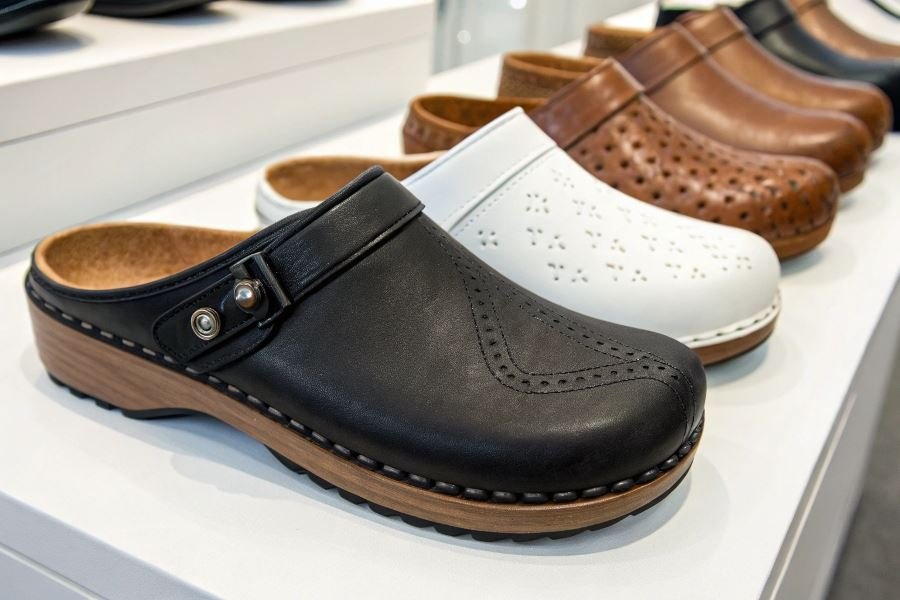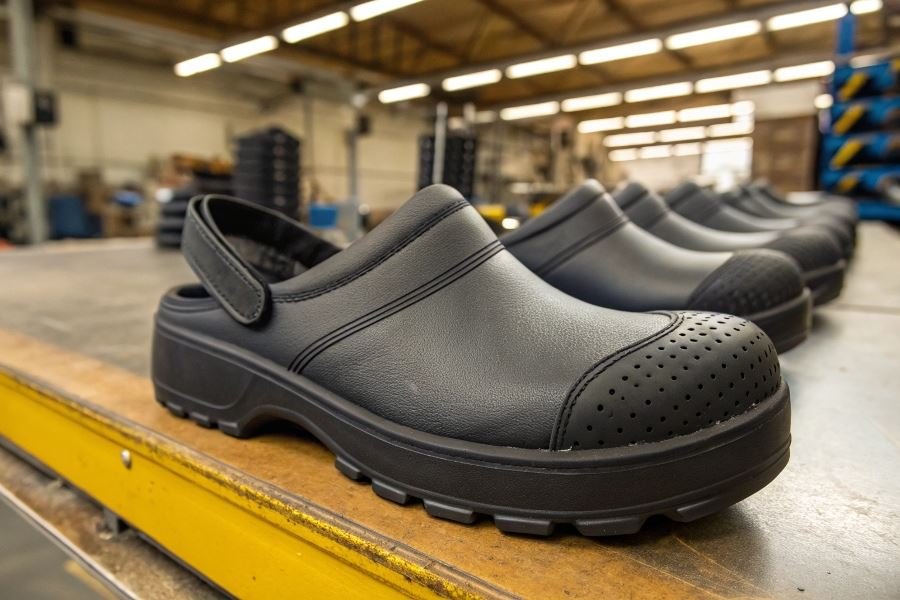
Did you know that foot injuries account for 10% of all reported workplace accidents, with an average recovery time of 6 weeks? Your choice of footwear isn’t just about comfort—it’s about staying safe and productive.
When professionals evaluate criteria for selecting work clogs with consideration for occupational safety, they’re making a decision that impacts their daily well-being and long-term health. The right work clog can mean the difference between ending your shift with a spring in your step or nursing painful injuries that compound over time.
The foundation of workplace safety starts at your feet
Your feet bear the literal weight of your professional responsibilities. In healthcare, manufacturing, food service, and laboratory environments, proper footwear serves as the first line of defense against:
- Slip and fall accidents (the leading cause of workplace injuries)
- Chemical exposure and contamination
- Fatigue-related mistakes and decreased productivity
- Long-term musculoskeletal disorders
Industry requirements: Not all clogs are created equal
Different workplaces demand different safety features. A chef needs slip resistance on greasy floors, while a nurse requires easy-to-clean surfaces that withstand disinfectants. Laboratory technicians need chemical resistance, while manufacturing workers require impact protection.
“The specificity of your work environment should dictate your footwear choices, not the other way around.” – Occupational Safety Journal
Decoding safety standards: Your protection guarantee
When examining work clogs, look for these critical certifications:
| Certification | What It Means | Why It Matters |
|---|---|---|
| ASTM F2413 | Meets impact, compression, and puncture standards | Protects against falling objects and sharp items |
| SATRA TM144 | Slip resistance testing | Prevents the most common workplace accident |
| OSHA Compliance | Meets basic workplace safety requirements | May be legally required in your industry |
The right work clogs don’t just protect you—they enhance your performance through proper support, reduced fatigue, and confidence in your footing with every step you take.
The Ultimate Work Clog Safety Guide
When safety meets comfort in the workplace, every detail matters. Professional-grade work clogs have evolved from simple foot coverings to sophisticated protective equipment engineered for specific workplace hazards. Selecting the right pair requires understanding the critical features that could prevent injuries and extend the lifespan of your footwear investment.
Establishing proper criteria for selecting work clogs with consideration for occupational safety isn’t just about compliance—it’s about creating a foundation for workplace efficiency and personal protection. The right clogs can mean the difference between ending a shift with energy to spare or nursing preventable foot pain and injuries.
Slip resistance that grips when it matters
Slip resistance might be the single most important safety feature in work clogs, particularly in environments where spills are common. Modern slip-resistant outsoles are designed with specific workplace conditions in mind:
- Healthcare settings: Require moderate traction patterns that handle both dry and wet surfaces while remaining easy to clean
- Food service: Need aggressive tread patterns that channel liquids away from contact points
- Industrial environments: Demand specialized compounds that resist oils and chemicals while maintaining grip
The coefficient of friction (COF) rating is your numerical friend here—look for clogs meeting ASTM F2913 standards with COF ratings above 0.40 for superior slip resistance.
“The difference between standard and premium slip resistance becomes apparent within seconds of walking across a freshly mopped floor.”
Impact protection beyond the basics
While traditional clogs weren’t known for impact protection, today’s safety-focused models offer substantial protection:
Toe protection options:
| Protection Level | Features | Best For |
|---|---|---|
| Basic | Reinforced toe box | Light duty environments |
| ASTM F2413 | Steel or composite toe caps | Industrial settings |
| Metatarsal guards | Extended protection over foot top | Heavy manufacturing |
The weight penalty for added protection has decreased dramatically with composite materials offering ASTM-certified protection at up to 30% less weight than traditional steel toes.
Material science meets workplace hazards
Modern work clogs showcase impressive material engineering that balances durability with specific resistance properties:
- Leather uppers: Naturally resistant to abrasion but require regular maintenance
- Treated synthetic materials: Offer chemical resistance without absorption
- TPU (Thermoplastic Polyurethane): Provides excellent durability while remaining lightweight
For healthcare professionals, materials with antimicrobial properties like those found in Dansko Professional clogs prevent bacterial growth during long shifts. Restaurant workers benefit from the chemical resistance of Birkenstock Professional models that withstand repeated exposure to acidic food spills.
The intersection of material science and workplace requirements means today’s work clogs can be precisely matched to specific occupational hazards—whether that’s chemical exposure, compression risks, or the simple fatigue that comes from standing on hard surfaces for extended periods.
When evaluating durability, look beyond simple thickness measurements to specific ASTM ratings for abrasion resistance and chemical testing certifications that match your workplace exposures.
Ergonomic Excellence: The Foundation of Safe Work Clogs
The difference between surviving and thriving during a 12-hour shift often comes down to what’s on your feet. Professional-grade work clogs aren’t just footwear—they’re specialized tools designed to protect your body’s foundation while supporting peak performance.
Arch Support That Works As Hard As You Do
The arch of your foot is nature’s shock absorber, and proper support here transforms your entire workday experience. High-quality work clogs feature anatomically contoured footbeds that distribute weight evenly across the foot’s surface.
The human foot absorbs up to 1.5 times your body weight with each step. Over an 8-hour shift, that’s equivalent to supporting hundreds of tons of cumulative pressure.
The most effective work clogs incorporate:
- Longitudinal arch support that prevents overpronation (excessive inward rolling)
- Metatarsal support that reduces pressure on the ball of the foot
- Heel cups that stabilize the rear foot and improve alignment
Dansko professional clogs, for example, feature a rocker bottom design that propels the foot forward naturally, reducing strain on the arch during long periods of standing. Meanwhile, Birkenstock professional models use cork footbeds that mold to your unique foot shape over time, creating custom support where you need it most.
Fatigue-Fighting Design Elements
The battle against workplace fatigue requires strategic engineering in every aspect of footwear design. Advanced work clogs incorporate multiple fatigue-reduction technologies:
Shock absorption zones strategically placed in the heel and forefoot dissipate impact forces before they travel up your skeletal system. Sanita clogs utilize layered construction with varying densities of polyurethane to achieve this effect.
Weight optimization balances durability with mobility. The ideal work clog weighs between 10-14 ounces per shoe—substantial enough to provide protection without creating drag that increases leg fatigue.
Energy return materials in the midsole actually help propel you forward with each step, reducing the muscular effort required for movement. Oofos recovery footwear pioneered this technology, which has now made its way into professional-grade work clogs.
| Fatigue Factor | Standard Footwear | Professional Work Clogs |
|---|---|---|
| Energy expenditure | +15-20% over barefoot | +5-8% over barefoot |
| Muscle activation | High in calves and quads | Reduced by up to 40% |
| Recovery time needed | 24+ hours | 8-12 hours |
| Pressure point formation | Common after 4+ hours | Minimal even after 12+ hours |
The Perfect Fit: Customization and Sizing
The most ergonomically advanced clog in the world becomes a liability if it doesn’t fit properly. Professional-grade options offer several customization pathways:
Adjustable instep straps accommodate varying foot volumes and can be modified throughout the day as feet naturally swell. Alegria professional clogs feature this adaptability without compromising stability.
Removable insoles allow for personalization or replacement with custom orthotics when needed. This feature extends the functional lifespan of quality clogs while ensuring consistent support.
Proper sizing methodology goes beyond simple length measurements. The best work clogs are sized using:
- Width measurements (often available in multiple options)
- Volume considerations for high or low insteps
- Heel-to-ball measurements that ensure flex points align with foot anatomy
When evaluating fit, remember that professional clogs should provide 1/4 to 1/2 inch of space in front of the longest toe, with no pinching across the widest part of the foot. The heel should lift slightly when walking—approximately 1/8 inch—but should never slip completely out of the shoe.
Investing in properly fitted, ergonomically designed work clogs isn’t just about comfort—it’s preventative healthcare for your entire musculoskeletal system.
Discover the 7 critical safety criteria for selecting professional work clogs that protect and support. Learn about slip resistance, impact protection, and ergonomic features that ensure workplace safety and all-day comfort for demanding environments.
Discover the 7 critical safety criteria for selecting professional work clogs that protect and support. Learn about slip resistance, impact protection, and ergonomic features that ensure workplace safety and all-day comfort for demanding environments.