Did you know that healthcare professionals walk an average of 4-5 miles during a typical 12-hour shift? That’s equivalent to running a 5K race—while performing precision tasks that affect lives. Your choice of footwear isn’t just about comfort; it’s about sustaining your career.
Orthopedic clogs have revolutionized workplace footwear by addressing the unique demands professionals face daily. Unlike conventional work shoes that merely cover your feet, properly designed orthopedic clogs actively support your body’s biomechanics. They’re engineered with anatomical footbeds that cradle your arches, rocker bottoms that promote natural gait, and shock-absorbing materials that protect your joints from concrete floors that can transmit up to 3.5 times your body weight in impact force with each step.
The workplace health connection
The relationship between footwear and workplace health extends far beyond temporary comfort. Studies show that inadequate foot support contributes to a cascade of musculoskeletal issues:
- Lower back pain (affecting 80% of Americans at some point)
- Plantar fasciitis (common among those who stand 8+ hours daily)
- Reduced circulation (leading to varicose veins and increased fatigue)
Who benefits most?
While anyone who stands for extended periods can benefit from orthopedic clogs, they’ve become virtually essential in several fields:
- Healthcare professionals: Surgeons, nurses, and technicians who cannot compromise on stability or comfort
- Culinary experts: Chefs and kitchen staff navigating slippery floors and marathon shifts
- Laboratory technicians: Precision workers requiring stable positioning for hours
- Salon professionals: Stylists and estheticians who pivot constantly while maintaining perfect balance
The right orthopedic clog doesn’t just prevent pain—it actively enhances performance by eliminating the distraction of discomfort, allowing you to focus entirely on your craft.
The Professional’s Guide to Orthopedic Clogs
Standing for hours on end takes a serious toll on your body. Healthcare workers clock an average of 4-5 miles during a 12-hour shift, while chefs and retail professionals might spend 8+ hours without a proper break. The right footwear isn’t just about comfort—it’s about career longevity.
When evaluating orthopedic clogs for professionals, what to pay attention to goes far beyond basic comfort. The difference between mediocre and exceptional footwear can mean the difference between ending your shift with a spring in your step or limping to your car. Let’s dive into the essential features that separate truly supportive professional clogs from ordinary footwear.
Ergonomic Design That Works With Your Body
The foundation of any quality orthopedic clog starts with its anatomical design. Look for:
- Contoured footbeds that cradle your feet’s natural arches
- Rocker bottom soles that promote proper walking mechanics
- Heel cups that stabilize the rear foot during movement
The best professional clogs feature a 1.5-2 inch heel-to-toe drop, creating optimal weight distribution across your foot. Dansko pioneered this design element that reduces pressure on the forefoot—critical for those who spend hours on hard surfaces.
The right arch support doesn’t just feel good—it actively prevents plantar fasciitis, a common condition affecting nearly 2 million Americans annually.
Material Matters: Durability Meets Comfort
Professional environments demand footwear that can withstand daily abuse while maintaining support.
| Material | Benefits | Typical Lifespan |
|---|---|---|
| Full-grain leather | Breathable, molds to foot, easy to clean | 2-3 years with proper care |
| EVA | Lightweight, shock-absorbing, washable | 1-2 years of daily use |
| Polyurethane | Superior durability, resistant to oils/chemicals | 3+ years in demanding environments |
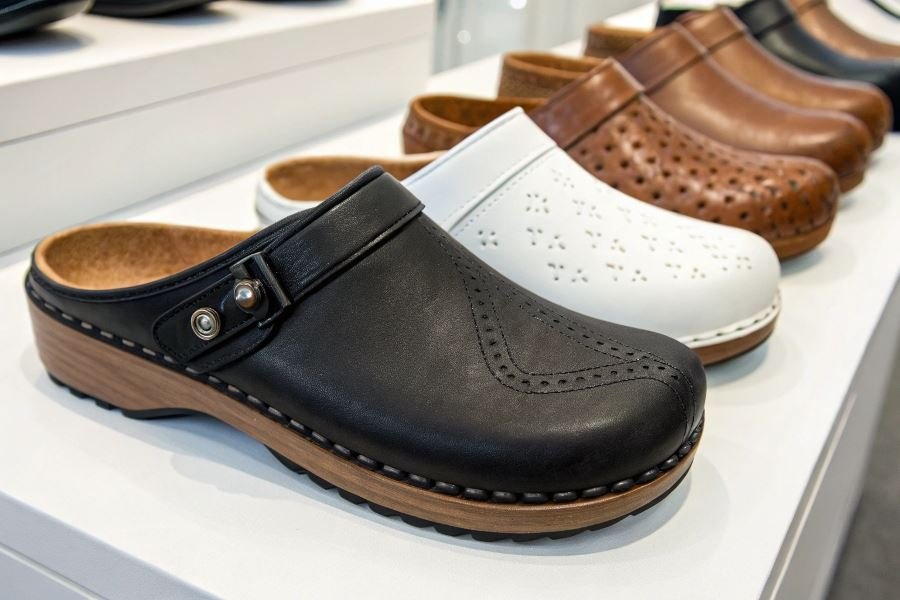
The highest quality clogs use multi-density materials—firmer compounds for structural support and softer materials where cushioning is needed. Birkenstock professional models exemplify this with their cork-latex footbeds that adapt to your unique foot shape over time.
Safety Features That Prevent Workplace Accidents
Slip resistance isn’t just a nice-to-have—it’s essential in professional environments where spills happen regularly.
The gold standard for slip resistance is the ASTM F2913 test, which measures traction across various surfaces. Look for clogs scoring above 0.5 on this scale, particularly for kitchen or healthcare settings.
Additional safety features worth considering:
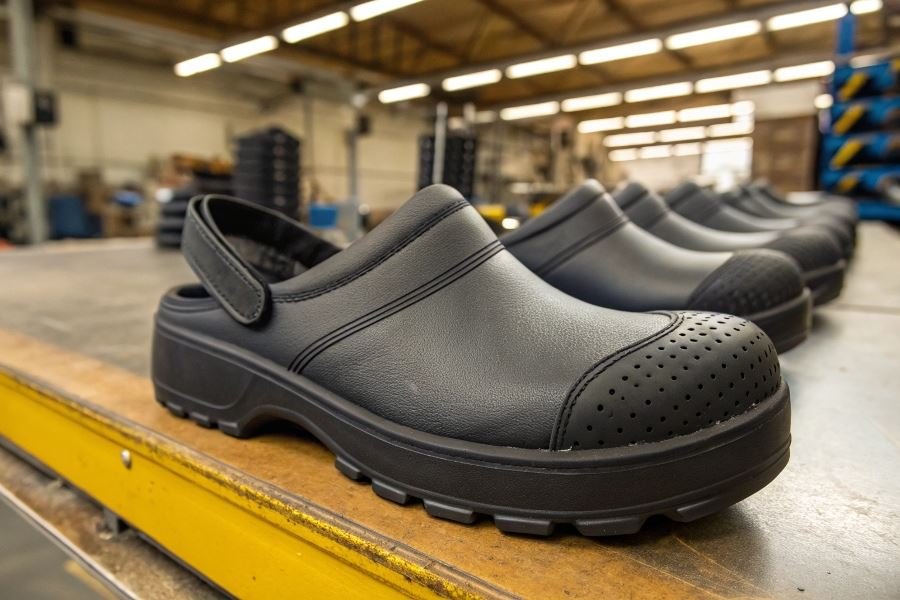
- Reinforced toe boxes that protect against dropped items
- Closed heels that prevent accidental removal during quick movements
- Anti-static properties for environments with sensitive equipment
Crocs Professional models offer patented Croslite™ material with slip-resistant treads specifically engineered for workplace environments.
The most effective orthopedic clogs combine these three essential elements—ergonomic support, quality materials, and safety features—into footwear that professionals can rely on shift after shift. Your feet carry you through your career; investing in proper support isn’t just about comfort—it’s about protecting your most valuable professional asset.
Selecting the Right Orthopedic Clogs for Your Professional Needs
Professional life demands footwear that can keep pace with your ambition. For those spending hours on their feet—healthcare workers, chefs, retail professionals, or manufacturing specialists—orthopedic clogs aren’t just footwear; they’re career-extending investments.
Assessing workplace requirements first
Your work environment dictates your footwear needs with absolute precision. Consider these workplace-specific requirements:
Healthcare settings demand clogs with closed heels and slip-resistant outsoles. Look for models certified by the American Podiatric Medical Association that offer fluid-resistant uppers to protect against spills.
Kitchen environments require heat-resistant materials and exceptional grip. Chef-focused clogs from brands like Dansko feature oil-resistant outsoles with deeper tread patterns that maintain traction even on greasy surfaces.
Retail and service industries benefit from lightweight designs with enhanced arch support. The average retail worker walks approximately 4 miles per shift—your clogs should accommodate this mobility while providing stability.
Manufacturing floors necessitate protective features. Seek clogs with reinforced toe boxes, some even offering ASTM-certified protection against impact and compression.
The right orthopedic clog matches your workplace hazards precisely—not just your comfort preferences.
A critical workplace assessment includes:
- Floor surface evaluation (tile, concrete, carpet)
- Typical shift duration
- Movement patterns (standing static vs. constant walking)
- Exposure to liquids, chemicals, or temperature extremes
Finding proper fit for all-day comfort
Orthopedic clogs fit differently than conventional footwear. The perfect fit combines these elements:
Width matters enormously. Professional-grade clogs from Birkenstock and Sanita offer regular and wide options. Your forefoot should have room to spread naturally without side compression.
Heel grip prevents fatigue. A properly fitted clog allows approximately ¼-inch of heel movement—enough for flexibility but not so much that your foot slides forward during walking.
Toe box height prevents pressure points. Quality orthopedic clogs provide 3/8-inch clearance above your longest toe when standing.
Sizing considerations vary by brand:
| Brand | Sizing Tendency | Break-in Period | Width Options |
|---|---|---|---|
| Dansko | Runs large | 1-2 weeks | Regular, Wide |
| Sanita | True to size | Minimal | Regular, Wide |
| Birkenstock | Runs small | 2-3 weeks | Regular, Narrow, Wide |
| Alegria | True to size | 3-5 days | Regular, Wide |
Try clogs late in the day when your feet are naturally more swollen—mimicking conditions after a long shift.
Maintenance extends clog lifespan
Professional-grade orthopedic clogs represent a significant investment—$120-200 for quality pairs. Proper maintenance maximizes this investment:
Rotation is fundamental. Maintain at least two pairs in rotation, allowing 24-48 hours between wearings. This prevents premature breakdown of cushioning materials and extends clog life by up to 40%.
Material-specific cleaning preserves integrity:
- Leather clogs benefit from specialized conditioners that prevent cracking
- EVA and rubber compositions require gentle soap and thorough drying away from heat sources
- Cork footbeds need periodic sealing to prevent moisture absorption
Replace insoles strategically. Even the finest orthopedic clogs experience insole compression before outsole wear. Replacing insoles every 6-8 months maintains support while extending the overall lifespan of your investment.
Address wear patterns early. When tread begins showing uneven wear, consult with a podiatrist—this indicates biomechanical issues that, if corrected, can prevent premature clog deterioration.
The right orthopedic clogs, properly fitted and maintained, transform from mere footwear into professional tools that support your career longevity and daily performance.
Discover the key features of professional orthopedic clogs that provide all-day comfort and support. Learn how to select the perfect pair for your workplace needs, focusing on ergonomic design, durability, and safety.
Discover the key features of professional orthopedic clogs that provide all-day comfort and support. Learn how to select the perfect pair for your workplace needs, focusing on ergonomic design, durability, and safety.