Did you know that 85% of workplace accidents in food processing facilities involve slips, trips, and falls? Behind every successful restaurant kitchen, meat processing plant, and dairy facility stands a workforce equipped with specialized footwear that does far more than just prevent slips.
Food industry footwear exists at a fascinating intersection of safety engineering, microbiology, and ergonomic design. These aren’t just “work shoes” – they’re highly specialized protective equipment designed to withstand the unique challenges of environments where food safety is paramount. From dairy processing floors constantly wet with cleaning solutions to commercial kitchens where hot oil spills are an everyday occurrence, proper footwear becomes the critical foundation of both worker safety and food integrity.
The FDA, OSHA, and industry-specific organizations have established rigorous standards that food service footwear must meet. These regulations aren’t arbitrary – they’re built on decades of workplace incident data and food contamination research. Compliant footwear must demonstrate slip resistance on multiple surface types, provide protection against falling objects, resist chemical degradation, and importantly, be designed to minimize bacterial harborage.
“Proper footwear in food processing isn’t just about preventing worker injuries – it’s an essential component of your facility’s food safety program.” – American Institute of Food Safety
The most effective food industry shoes balance three critical elements:
- Safety features – slip-resistance, puncture protection, and impact resistance
- Hygiene design – non-porous materials, minimal seams, and easy sanitization
- Comfort engineering – proper support for workers standing 8+ hours on hard surfaces
Essential Work Shoes for the Food Industry: Safety Meets Performance
In commercial kitchens, processing plants, and food service environments, the right footwear isn’t just about comfort—it’s a critical safety component that prevents accidents and ensures regulatory compliance. The demanding conditions of food preparation areas create unique challenges that standard footwear simply cannot address. Work shoes for the food industry: key characteristics include specialized features designed specifically for environments where liquids, food particles, and constant movement create hazardous conditions.
Conquering Slippery Surfaces
Food service environments present a perfect storm of slip hazards—cooking oils, food residue, and constant cleaning create perpetually wet floors. High-performance slip-resistant outsoles are non-negotiable in these settings.
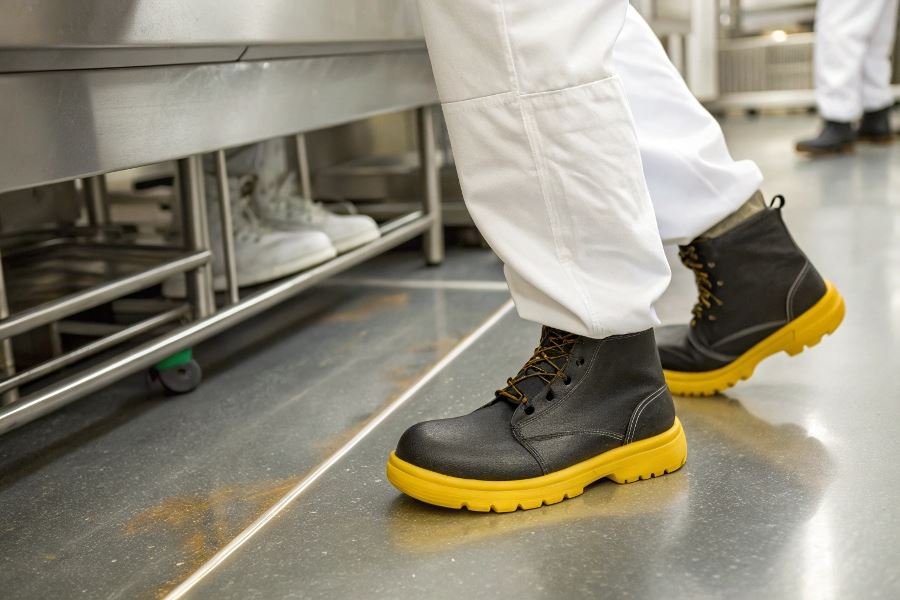
Advanced traction patterns make the difference between stability and workplace accidents. The best food industry footwear features:
- Deep, multi-directional tread patterns that channel liquids away from contact points
- Specialized rubber compounds with high coefficient of friction ratings (COF above 0.5)
- Micro-channel technology that creates suction against wet surfaces
Leading brands like Shoes for Crews have developed proprietary outsole technologies that maintain grip even on surfaces coated with vegetable oils—a common challenge in commercial kitchens.
Hygiene-Forward Design
Food safety regulations demand footwear that won’t harbor bacteria or contaminate food preparation areas. Water-resistant materials aren’t just about keeping feet dry—they’re essential for maintaining sanitary conditions.
The most effective food service shoes feature seamless construction to eliminate crevices where bacteria could multiply.
Materials that excel in food environments include:
| Material | Benefits | Best Applications |
|---|---|---|
| Treated leather | Durable, water-resistant | Management positions |
| TPU (thermoplastic polyurethane) | Highly cleanable, chemical-resistant | Processing areas |
| EVA (ethylene vinyl acetate) | Lightweight, washable | Kitchen line work |
| Rubber | Waterproof, easy to sanitize | Dishwashing stations |
Shoes from manufacturers like Dansko feature uppers that can be wiped clean with sanitizing solutions without degrading materials—crucial for maintaining both shoe longevity and workplace hygiene.
Protection From Multiple Threats
The food industry combines unique hazards: heavy equipment, sharp tools, hot liquids, and long hours standing on hard surfaces. Comprehensive protection requires multiple safety features working in concert.
Protective toe caps have evolved beyond traditional steel. Composite materials offer equivalent protection while being:
- Lighter weight (reducing fatigue)
- Non-conductive (safer around electrical equipment)
- Non-metallic (passing through metal detectors in food processing)
Puncture-resistant midsoles protect against sharp objects that might penetrate standard outsoles. Keen Utility offers models with flexible internal plates that don’t sacrifice comfort for protection.
Ankle support features prevent twists and strains during the constant pivoting and movement typical in kitchen environments. High-top designs or strategic reinforcement around the ankle collar provide stability without restricting necessary movement.
The intersection of these safety features with all-day comfort technology—including shock-absorbing midsoles and anatomical footbeds—creates footwear that protects workers while supporting productivity throughout demanding shifts in the challenging food service environment.
Making the Right Choice: Work Shoes for Food Industry Professionals
Comfort meets durability for all-day performance
When you’re on your feet for 8-12 hour shifts, comfort isn’t a luxury—it’s essential. The best food industry footwear combines ergonomic design with long-lasting materials. Look for shoes with memory foam or gel inserts that conform to your foot’s unique shape while providing crucial arch support.
Weight distribution matters more than you think. Shoes with proper weight distribution can reduce fatigue by up to 30% during long shifts. Many premium models from brands like Shoes for Crews incorporate dual-density midsoles that absorb impact while maintaining stability.
Durability factors to evaluate include:
- Stitching quality (double or triple stitching at stress points)
- Material thickness (particularly in toe and heel areas)
- Sole attachment method (direct injection provides superior durability over glued options)
The difference between good and exceptional footwear often comes down to how they perform in month six, not day one.
Budget considerations without compromising safety
| Price Range | What You Get | Recommended For |
|---|---|---|
| $40-70 | Basic slip resistance, minimal comfort features | Part-time workers, temporary positions |
| $70-120 | Enhanced slip resistance, improved comfort, better durability | Full-time staff in standard environments |
| $120-200+ | Premium materials, maximum comfort, specialized safety features | Managers, chefs, high-risk environments |
When balancing budget against features, prioritize non-negotiable safety elements first:
- Slip resistance certification (look for ASTM F2913 testing)
- Liquid-resistant uppers
- Proper toe protection appropriate for your role
Smart investment strategy: Rather than purchasing one expensive pair, many professionals rotate between two moderately-priced pairs. This approach extends overall lifespan while allowing each pair to fully dry between wears, reducing bacterial growth and odor.
Maintenance that maximizes your investment
The harsh environment of food service—with constant moisture, food particles, and cleaning chemicals—demands disciplined maintenance routines.
For daily care:
- Remove insoles and air dry shoes completely between shifts
- Wipe down exteriors with a damp cloth to remove food residue
- Use antibacterial sprays specifically formulated for footwear
For weekly maintenance:
- Deep clean with appropriate cleaners (avoid harsh chemicals that break down slip-resistant properties)
- Inspect for wear patterns that might indicate alignment issues
- Check laces, zippers, or fastening systems for integrity
The most expensive shoes poorly maintained will underperform compared to moderately-priced footwear with proper care.
Replacement indicators aren’t just about visible damage. When slip resistance diminishes, comfort decreases, or foot fatigue increases, it’s time to replace—regardless of appearance. Most quality food service shoes maintain optimal performance for 6-12 months of full-time wear before requiring replacement.
By thoughtfully evaluating comfort features, making strategic budget decisions, and implementing consistent maintenance, food industry professionals can ensure their footwear delivers the protection and performance needed in this demanding environment.
Discover the essential safety features of specialized food industry footwear, from slip-resistant outsoles to hygienic materials. Learn how proper work shoes protect against workplace hazards while meeting strict regulatory requirements for food processing environments.
Discover the essential safety features of specialized food industry footwear, from slip-resistant outsoles to hygienic materials. Learn how proper work shoes protect against workplace hazards while meeting strict regulatory requirements for food processing environments.