Ever stood in a warehouse at 5 AM when it’s 28°F outside, trying to focus on inventory while your teeth chatter uncontrollably? Or perhaps you’ve sweltered through summer maintenance tasks, your cotton uniform sticking uncomfortably to your back? The right work sweater isn’t just about looking professional—it’s about surviving your workday.
Selecting appropriate workwear goes beyond personal preference; it’s a critical safety decision. When temperatures plummet in outdoor construction sites or rise in poorly ventilated workshops, your body’s ability to maintain optimal functioning depends largely on proper clothing. According to the Bureau of Labor Statistics, temperature-related workplace incidents affect thousands of workers annually, with many preventable through appropriate attire.
The safety-comfort connection
The relationship between comfort and safety isn’t just theoretical—it’s measurable. Workers who maintain comfortable body temperatures demonstrate:
- 22% fewer attention lapses
- Significantly improved manual dexterity
- Reduced fatigue during extended shifts
“When workers aren’t fighting their environment, they can focus entirely on precision and safety,” notes the American Society of Safety Professionals.
Understanding workplace requirements
Different industries maintain specific standards for workwear. Construction sites governed by OSHA regulations may require high-visibility elements, while food processing environments demand materials that won’t contaminate products.
Before selecting work sweaters, consider:
| Industry | Common Requirements | Material Considerations |
|---|---|---|
| Construction | High-visibility, durability | Wool blends, reinforced elbows |
| Food Service | Contamination prevention | Synthetic fibers, easy-wash |
| Warehouse | Temperature regulation | Layerable, moisture-wicking |
| Outdoor Work | Weather protection | Water-resistant, insulating |
Selection factors that matter
The ideal work sweater balances several critical factors:
- Material composition – Different fibers offer varying levels of insulation, moisture management, and durability
- Movement requirements – Tasks requiring extensive reaching benefit from stretch fabrics
- Environmental hazards – Consider flame resistance, chemical protection, or electrical safety
- Layering potential – The ability to adjust to changing conditions throughout a shift
Your work sweater isn’t just clothing—it’s specialized equipment designed to protect your most valuable workplace asset: you.
Environmental Mastery in Workwear Selection
The workplace environment dictates everything about your workwear choices. When selecting appropriate attire for various professional settings, understanding how to choose a work sweater for different working conditions becomes a critical skill that impacts both comfort and productivity. Let’s dive into the environmental factors that should guide your selection process.
Indoor vs Outdoor Battlegrounds
Indoor and outdoor work environments demand fundamentally different approaches to sweater selection:
Indoor environments typically require lighter, more breathable options. Office settings with controlled temperatures benefit from:
- Medium-weight merino wool blends
- Cotton-synthetic hybrids with moisture-wicking properties
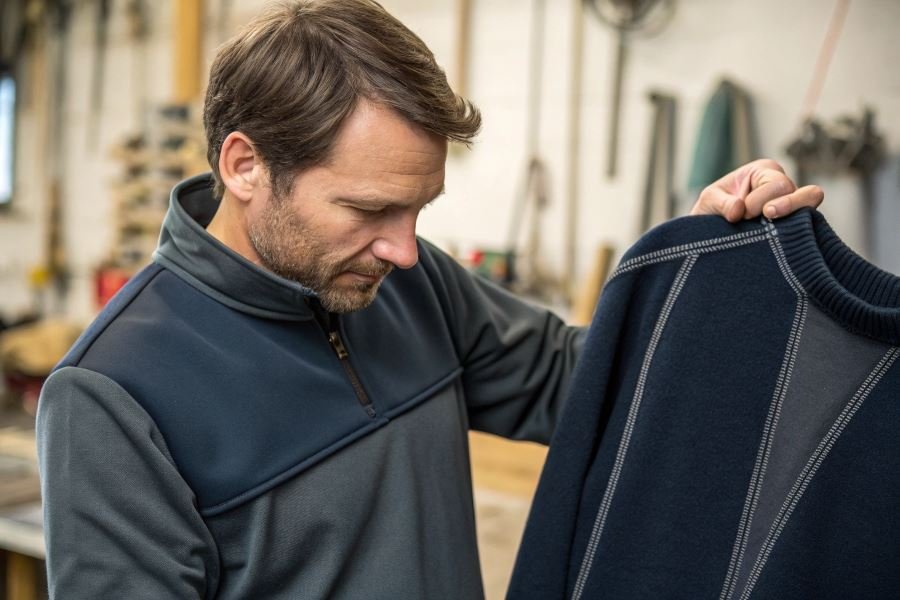
- Quarter-zip styles that allow for temperature regulation
Outdoor environments call for robust protection against the elements:
- Heavyweight wool or synthetic insulated sweaters
- Windproof outer layers or wind-resistant knit patterns
- High collars and extended cuffs for additional coverage
The transition between indoor and outdoor environments creates unique challenges—consider layering options that adapt to both worlds.
Cold Weather Warriors
Temperature management separates adequate workwear from exceptional protection. When working in cold environments, insulation properties become your primary concern.
| Insulation Type | Temperature Range | Best Applications |
|---|---|---|
| Merino Wool | -10°F to 55°F | Versatile, natural odor resistance |
| Synthetic Fleece | 0°F to 50°F | Quick-drying, maintains warmth when wet |
| Down-Synthetic Blend | -20°F to 30°F | Maximum warmth-to-weight ratio |
The insulation effectiveness of work sweaters isn’t just about material thickness. Look for:
Strategic construction features like:
- Ribbed cuffs that seal in warmth
- Double-layer collars that protect the neck
- Reinforced elbows that maintain insulation where compression occurs
The difference between comfort and misery in cold environments often comes down to thoughtful design details rather than bulk.
Moisture Management Mastery
High-humidity working conditions create unique challenges that can compromise both comfort and safety. Breathability becomes paramount when moisture management matters.
Key breathability indicators:
- Fabric composition – Natural fibers like merino wool offer superior moisture management compared to standard synthetics
- Knit structure – Open knits allow for greater air circulation but sacrifice some insulation
- Treatment technologies – Polartec Power Dry and similar moisture-wicking treatments enhance performance
For environments where sweat management is critical:
The ideal work sweater for high-humidity conditions features bi-component construction—moisture-wicking inner layers paired with quick-drying outer materials.
Ventilation zones strategically placed at high-heat areas (underarms, upper back) dramatically improve comfort in humid conditions without compromising overall warmth. Some advanced workwear from manufacturers like Carhartt incorporates mesh panels that remain invisible from the exterior while maximizing airflow.
Remember that moisture management isn’t just about comfort—it’s a safety consideration. Wet garments lose insulating properties rapidly, potentially leading to hypothermia in cold environments or heat stress in warm conditions with high activity levels.
Essential Features for Specialized Work Sweaters
When your workday involves extreme conditions, specialized tasks, or safety concerns, your work sweater transforms from simple clothing into critical protective equipment. The right work sweater can mean the difference between comfort and distraction, safety and risk, or even life and death in certain environments.
Material selection matters more than you think
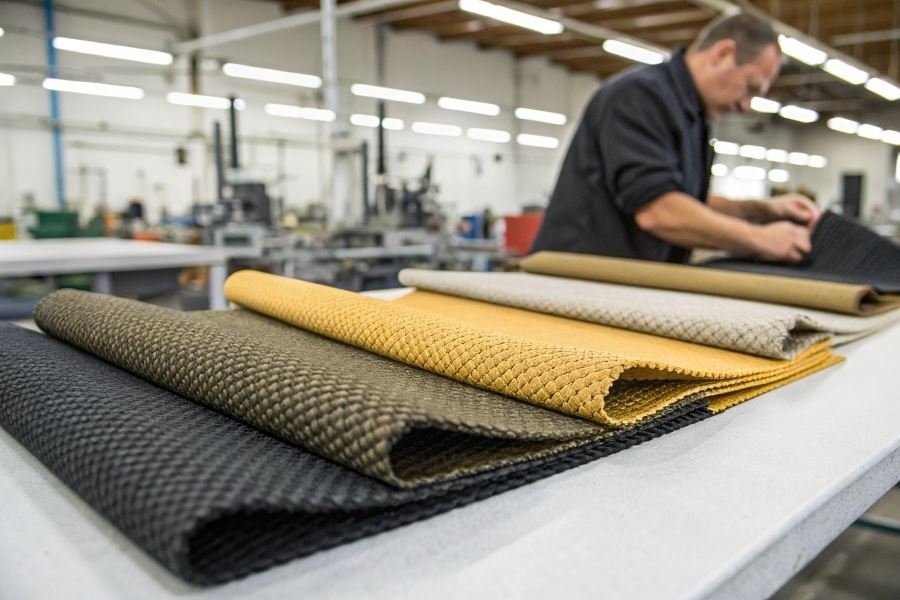
The foundation of any quality work sweater begins with its material composition. Different working environments demand specific fabric properties:
Flame-resistant materials have become industry standard in oil and gas, electrical work, and welding. FR-rated sweaters made from Modacrylic blends or treated cotton won’t melt onto skin during flash fires and self-extinguish when removed from flame sources. Bulwark offers FR sweaters that maintain protection even after 50+ washes.
Chemical resistance requirements vary dramatically by industry. Workers handling acids need wool blends that naturally repel many liquid chemicals, while those working with organic solvents benefit from specialized synthetic fabrics with chemical barrier properties.
For durability in physically demanding environments, consider:
- Wool/synthetic blends (80/20 ratio) for superior abrasion resistance
- Reinforced elbow patches with Kevlar threading
- Double-stitched seams at stress points
- Ripstop fabric integration at tear-prone areas
Design elements that enhance function
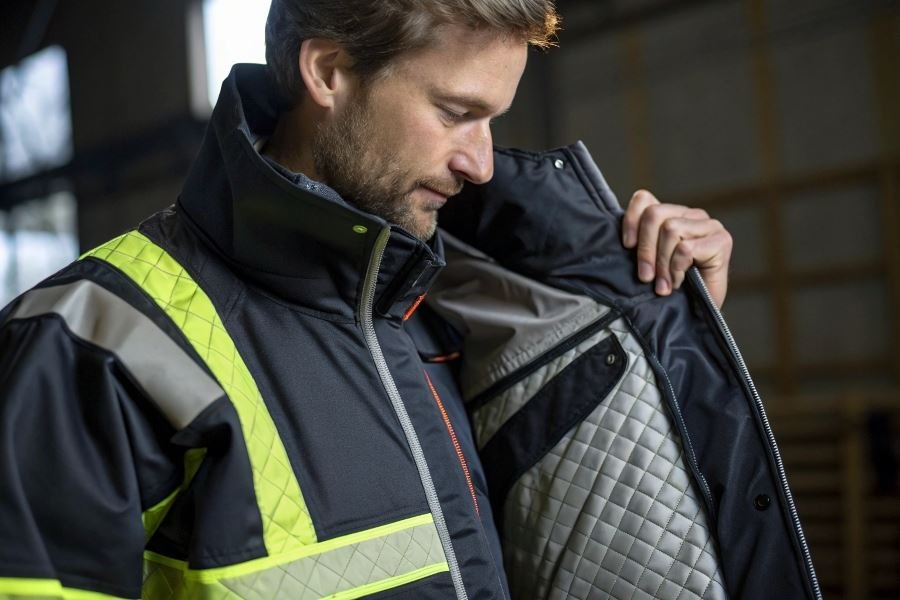
High-visibility features aren’t just for road crews anymore. Modern work sweaters incorporate:
Reflective threading woven directly into fabric patterns, maintaining professional appearance while adding safety during low-light conditions.
Strategic reinforcement transforms ordinary sweaters into specialized workwear:
| Reinforcement Area | Benefit | Best For |
|---|---|---|
| Elbow patches | Prevents premature wear | Mechanics, technicians |
| Shoulder panels | Distributes pressure from tool belts | Construction, carpentry |
| Chest protection | Guards against sparks and debris | Welding, grinding |
| Abrasion-resistant cuffs | Prevents fraying at contact points | Assembly work |
Range of motion considerations have revolutionized work sweater design. Articulated sleeves with gusseted underarms allow full extension without binding or riding up. Carhartt pioneered the “Swing Shoulder” design that allows overhead work without sweater displacement.
Maintenance requirements and longevity
The true cost of workwear isn’t the purchase price—it’s the cost per wear over its lifetime. Premium work sweaters might command $85-150, but deliver 3-5× the service life of budget alternatives.
Maintenance protocols vary dramatically by material:
- FR-rated sweaters require specialized laundering to maintain protection
- Chemical-resistant fabrics often need professional cleaning to preserve barrier properties
- High-performance wool blends typically allow machine washing but require reshaping when wet
The longevity equation includes multiple factors beyond material quality:
- Reinforced stress points extend useful life by 40-60%
- Proper sizing prevents premature stretching and deformation
- Following manufacturer care instructions preserves protective properties
- Rotating between multiple sweaters extends the life of each
When evaluating maintenance requirements, consider your workplace realities. A sweater requiring specialized cleaning may be impractical for daily wear in environments with heavy soiling, while a highly durable but difficult-to-clean option might be perfect for specialized, occasional use.
The ideal work sweater balances protection, comfort, and practicality—creating a garment that protects you while enabling your best work.
Discover how to select the perfect work sweater for your specific job environment. Learn about essential features, materials, and safety considerations to maximize comfort, protection, and performance in various working conditions.
Discover how to select the perfect work sweater for your specific job environment. Learn about essential features, materials, and safety considerations to maximize comfort, protection, and performance in various working conditions.