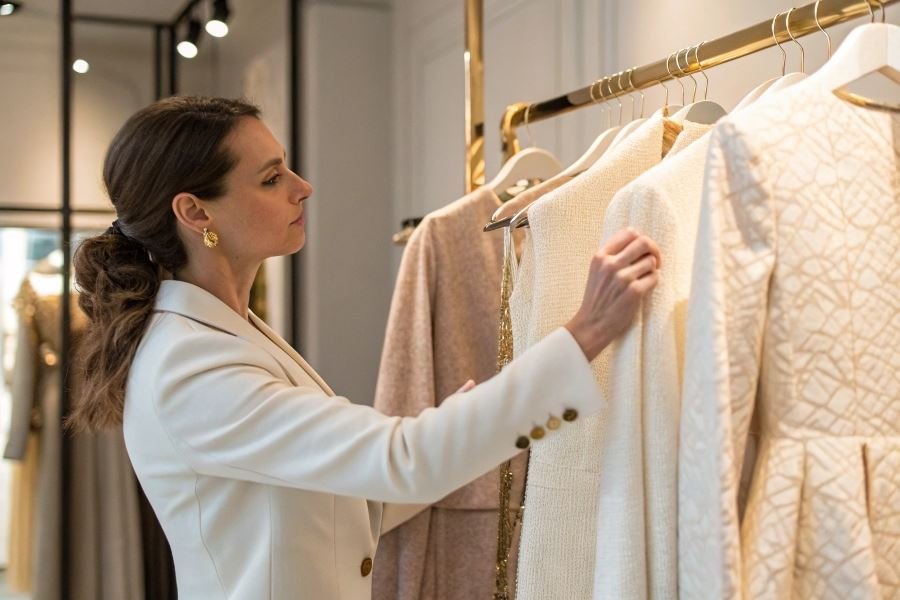
Ever noticed how some professionals seem effortlessly put-together while others look disheveled by noon? The secret isn’t just in the style—it’s in the substance. The right fabric can be the difference between commanding respect in the boardroom and fidgeting through your presentation.
When selecting materials for work attire, we’re actually making strategic decisions about our daily comfort, professional image, and even our productivity. Think about it: a fabric that wrinkles easily might send subtle signals about disorganization, while materials that maintain their structure project competence and attention to detail.
Your working environment dictates your fabric needs more than any fashion trend ever could. A lawyer in a climate-controlled courtroom has vastly different requirements than a teacher moving constantly throughout a school day or a restaurant manager navigating between hot kitchens and air-conditioned dining rooms.
The most successful professionals understand this balance between function and form. They gravitate toward three exceptional materials that have proven their worth across diverse workplace settings. These fabrics—which we’ll explore in depth—offer the perfect blend of professional appearance, comfort during long hours, and adaptability to specific workplace demands.
The right material choice isn’t just about looking good—it’s about performing at your best. When your clothing works with you instead of against you, you’re free to focus on what truly matters: your expertise and contributions.
Fabric Intelligence for Professional Wardrobes
When selecting work attire, the material beneath your fingertips matters far more than most realize. The right fabric can transform an ordinary workday into one where comfort and confidence align perfectly, while the wrong choice might leave you distracted, uncomfortable, or looking unprofessional by lunchtime.
Professional women across various industries understand that selecting the top 3 materials for work dresses considering working conditions isn’t just about aesthetics—it’s about performance, longevity, and adapting to your specific workplace environment. Whether you’re navigating climate-controlled offices, client-facing roles, or more active professional settings, your fabric choice becomes your first line of defense against workplace discomfort.
Let’s examine the fabrics that consistently outperform the competition in professional settings:
Cotton-Polyester Blends: The Resilient Hybrid
Cotton-polyester blends represent the perfect marriage between natural comfort and synthetic durability. These fabrics typically contain 60-65% cotton for breathability with 35-40% polyester for structure and wrinkle resistance.
Key advantages:
- Reduced shrinkage compared to 100% cotton
- Enhanced color retention through multiple washes
- Significantly improved wrinkle resistance
- Greater durability at stress points like elbows and seams
The ideal cotton-poly blend dress maintains its shape throughout a demanding workday while allowing your skin to breathe. Many premium workwear brands like Brooks Brothers and Banana Republic have perfected these blends to create garments that withstand years of regular wear while maintaining a crisp, professional appearance.
Wool and Wool Blends: Sophisticated Temperature Control
Modern wool blends have evolved dramatically from the scratchy fabrics of yesteryear. Today’s professional-grade wool incorporates fine merino fibers and strategic blending with silk or synthetic materials to create remarkably comfortable garments.
Wool’s natural properties make it uniquely suited for professional environments:
| Property | Benefit in Professional Settings |
|---|---|
| Temperature regulation | Maintains comfort across varying office temperatures |
| Natural elasticity | Resists bagging and sagging through long meetings |
| Moisture management | Absorbs up to 30% of its weight without feeling damp |
| Odor resistance | Remains fresh through extended wear |
Premium wool blend dresses from J.Crew or Theory typically incorporate 2-3% elastane or spandex, providing crucial stretch while maintaining wool’s natural structure and professional appearance. These investments typically outlast other work garments by 2-3 years when properly maintained.
Performance Fabrics: Technical Excellence
The revolution in performance textiles has transformed professional attire. These technical fabrics incorporate innovations originally developed for athletic wear into sophisticated workplace-appropriate designs.
Standout features of modern performance fabrics:
- Moisture-wicking technology that pulls perspiration away from the body
- Four-way stretch that moves naturally with your body
- Wrinkle resistance that maintains crispness from morning commute to evening events
- Quick-drying properties for unexpected weather changes
Brands like Ministry of Supply and MM.LaFleur have pioneered professional dresses using performance fabrics that look indistinguishable from traditional materials while offering significantly enhanced functionality. These garments typically incorporate synthetic blends with specialized weaves that create breathable, structured garments capable of withstanding the demands of modern professional life.
The right fabric choice ultimately depends on your specific working conditions, but these three categories consistently deliver the perfect balance of professional appearance and practical performance.
Making the Perfect Match: Work Dress Materials for Every Environment
Aligning fabrics with workplace demands
The relationship between your work dress material and environment is more critical than many realize. In temperature-controlled offices, wool blends offer structure and professionalism while maintaining comfort. For those in retail or hospitality settings where movement is constant, cotton-elastane blends provide the necessary stretch without sacrificing appearance.
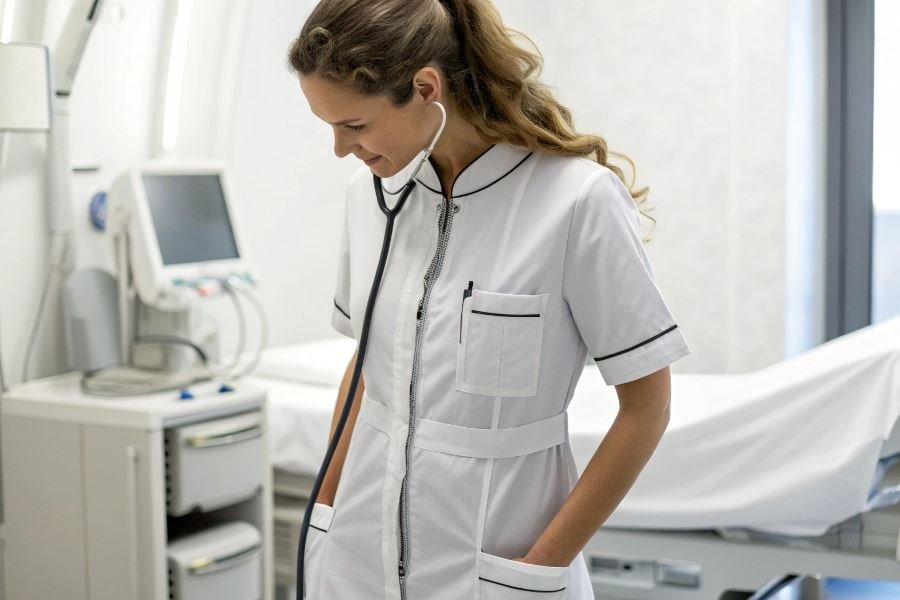
Healthcare professionals face unique challenges requiring antimicrobial properties and fluid resistance. Here, specialized polyester blends with moisture-wicking technology have become industry standards, offering protection while maintaining a professional appearance.
Material wisdom: The most expensive fabric isn’t always the best choice—it’s about matching specific properties to specific workplace demands.
For outdoor work environments, UV-resistant fabrics with UPF 50+ ratings protect skin while breathable weaves prevent overheating. Construction and manufacturing settings often benefit from ripstop nylon blends that resist tears and abrasions while maintaining a professional silhouette.
Extending the lifespan of quality work attire
The finest materials deserve proper maintenance to maximize their performance and longevity. Different fabrics demand different care approaches:
| Material | Washing Recommendation | Drying Method | Special Considerations |
|---|---|---|---|
| Wool Blends | Cold water, gentle cycle | Lay flat to dry | Dry clean seasonally |
| Cotton | Warm water, regular cycle | Tumble dry low | Pre-treat stains immediately |
| Polyester | Cold water, gentle cycle | Hang to dry | Avoid fabric softeners |
| Silk | Hand wash or dry clean only | Never wring, lay flat | Keep away from direct sunlight |
Investing in quality hangers—particularly contoured wooden ones for structured pieces—prevents shoulder distortion. Rotating your work dresses prevents excessive wear on any single garment, extending the useful life of your entire collection.
Steam cleaning rather than frequent washing can refresh wool and silk between cleanings, reducing fiber stress and maintaining structural integrity. For synthetic blends, anti-static sprays prevent the clingy effect that often develops after multiple washes.
The economics of quality materials
When calculating the true cost of work attire, the initial price tag tells only part of the story. Premium materials typically offer:
- Extended wear cycles – High-quality wool blends can maintain their appearance through 30+ wear cycles before showing signs of fatigue, compared to 10-15 for budget alternatives
- Reduced replacement frequency – Quality materials often last 3-5 years of regular wear versus 6-12 months for lower-quality options
- Professional perception value – Studies consistently show that well-constructed garments from quality materials positively impact professional perception and credibility
The cost-per-wear calculation reveals the true value proposition: A $200 quality wool dress worn 100 times costs $2 per wear, while a $50 polyester dress that lasts 20 wears costs $2.50 per wear—and that’s before considering the time and hassle of more frequent replacements.
Beyond economics, premium materials typically offer superior comfort throughout long workdays, potentially improving productivity and reducing fatigue. The investment in quality work attire ultimately represents an investment in professional performance and personal comfort—a dual return that budget options rarely provide.
Discover the top 3 professional dress materials that balance comfort and durability in various workplace environments. Learn how cotton-polyester blends, wool options, and performance fabrics can enhance your workwear wardrobe while meeting specific job requirements.
Discover the top 3 professional dress materials that balance comfort and durability in various workplace environments. Learn how cotton-polyester blends, wool options, and performance fabrics can enhance your workwear wardrobe while meeting specific job requirements.