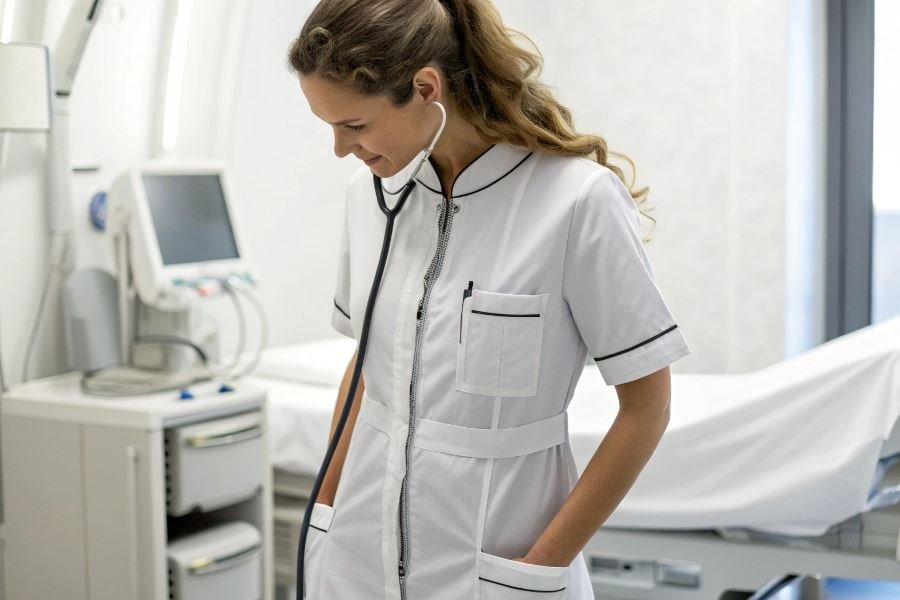
Every day, 18 million healthcare professionals in America make life-or-death decisions—while also navigating the practical realities of comfort, functionality, and professional appearance.
The right medical work dress does far more than simply cover the body—it serves as a functional tool, a protective barrier, and a visual signal of professionalism. For healthcare practitioners who spend 12+ hour shifts on their feet, the importance of appropriate attire cannot be overstated. The perfect medical dress balances infection control with comfort, mobility with professionalism, and durability with style.
The science behind the scrubs
Medical uniforms have undergone a remarkable transformation since their origins. The white coats that dominated healthcare settings throughout the 20th century have evolved into a diverse array of specialized garments. Modern medical dresses now incorporate antimicrobial fabrics, strategic pocket placement, and ergonomic designs that accommodate the physical demands of healthcare work.
When selecting appropriate medical attire, practitioners must consider:
- Infection control capabilities: Fabrics that resist bacterial growth and can withstand rigorous sanitization
- Range of motion: Designs that allow for bending, reaching, and quick movement during emergencies
- Comfort during long shifts: Breathable materials that prevent overheating in high-stress environments
“The uniform a medical professional wears directly impacts patient perception of competence and care quality.” — American Medical Association study
Today’s medical dress options reflect both practical advancements and shifting workplace cultures, with many facilities moving toward color-coded systems that help patients identify staff roles at a glance. This evolution represents healthcare’s ongoing balance between tradition and innovation.
The Science Behind Medical Workwear Excellence
When healthcare professionals step into their roles, their attire becomes more than just clothing—it transforms into essential equipment. The evolution of medical workwear has accelerated dramatically, with manufacturers now engineering garments that actively contribute to infection control protocols while supporting the demanding physical requirements of healthcare settings.
Exploring what models of work dresses are suitable for medical workers reveals a fascinating intersection of textile science, ergonomic design, and professional standards. The ideal medical uniform must simultaneously serve as a protective barrier, a functional tool, and a representation of healthcare professionalism—a tall order for any garment.
Fabric Technology That Fights Back
The foundation of any quality medical dress begins with its material composition. Modern healthcare fabrics have evolved far beyond simple cotton blends.
Antimicrobial properties now represent the gold standard in medical workwear. These fabrics incorporate silver ions, copper, or specialized chemical treatments that actively inhibit bacterial growth—reducing the risk of cross-contamination between patients. Studies show these technologies can reduce surface bacteria by up to 99.9% compared to untreated fabrics.
Fluid resistance has become non-negotiable in clinical environments. Advanced polyester-cotton blends with fluorocarbon finishes create a protective barrier against splashes, spills, and potential biohazards without sacrificing comfort.
Breathability remains crucial for professionals working 12+ hour shifts. The latest medical dress fabrics feature:
| Fabric Technology | Benefits | Best For |
|---|---|---|
| Microfiber blends | Moisture-wicking, quick-drying | High-activity roles |
| Treated cotton-poly | Balance of comfort and protection | General clinical work |
| Four-way stretch | Maximum mobility, shape retention | Specialized procedures |
Design Elements That Work As Hard As You Do
The functionality of medical workwear extends far beyond its material composition. Thoughtful design elements transform a simple dress into a tool that enhances rather than hinders clinical performance.
Strategic pocket placement has evolved from an afterthought to a science. Modern medical dresses feature reinforced pockets positioned for easy access to essential tools—typically including:
- Chest pockets for items requiring frequent access
- Side pockets with secure closures for personal items
- Hidden interior pockets for additional storage
Mobility considerations now influence every aspect of pattern design. Side slits, action pleats, and raglan sleeves allow for unrestricted movement during patient care activities. The best designs incorporate stretch panels at key stress points—shoulders, elbows, and across the back.
Ease of cleaning represents perhaps the most practical design consideration. Soil-release finishes allow stains to wash away more easily, while wrinkle-resistant treatments reduce the need for ironing. Many premium medical dresses now feature industrial laundry compatibility, withstanding repeated washing at high temperatures without degradation.
Professional Presentation in Clinical Settings
The visual impact of healthcare attire extends beyond personal preference—it directly influences patient perception of care quality and institutional standards.
Color psychology plays a significant role in modern medical dress design. While traditional white symbolizes cleanliness and sterility, color-coding has become increasingly important for departmental identification. Soft blues and greens promote calm, while brighter hues can energize pediatric environments.
Silhouette standards have evolved to balance professionalism with practicality. The most effective designs feature:
- Structured necklines that maintain shape throughout shifts
- Tailored but not restrictive fits that accommodate movement
- Length considerations that ensure coverage during all clinical activities
The intersection of functionality and appearance creates medical workwear that serves multiple purposes simultaneously—protecting providers while instilling confidence in patients and reflecting institutional standards of excellence.
The Ultimate Guide to Medical Work Dresses
Healthcare professionals deserve uniforms that combine functionality with comfort while maintaining a professional appearance. Medical work dresses have evolved significantly, offering innovative features that address the unique demands of healthcare environments. Let’s explore the top three models that are revolutionizing how medical professionals dress for success.
Classic scrub dresses with modern improvements
The traditional scrub dress has undergone remarkable transformations. Today’s versions retain the familiar silhouette while incorporating game-changing enhancements:
Four-way stretch fabrics now dominate the market, allowing unrestricted movement during long shifts. These technical materials blend polyester, rayon, and spandex to create breathable, moisture-wicking garments that maintain their shape even after countless washes.
The addition of strategic pockets has been perhaps the most celebrated improvement. Modern scrub dresses feature:
- Reinforced utility pockets for tools and devices
- Hidden interior pockets for personal items
- Antimicrobial fabric treatments that reduce bacterial growth by up to 99.9%
Brands like FIGS and Cherokee have pioneered scrub dresses with temperature-regulating properties, perfect for environments that fluctuate between overheated patient rooms and chilly operating theaters.
Lab coat-style dresses for clinical settings
For professionals seeking a more structured appearance, lab coat dresses offer the perfect blend of authority and functionality:
Tailored silhouettes create a polished look while maintaining necessary range of motion. These dresses typically feature:
“The structured collar and defined waistline of lab coat dresses create an instant impression of competence and professionalism.”
Modern lab coat dresses incorporate performance fabrics that resist staining and wrinkling—crucial for maintaining appearance throughout demanding shifts. Many feature hidden snap closures rather than traditional buttons, allowing for quick removal in emergency situations.
The length typically hits at or just below the knee, providing modesty while preventing the tripping hazards associated with longer garments. Brands like Medelita have pioneered lab coat dresses with hydrophobic technology that repels liquids, protecting wearers from spills and splashes.
Contemporary wrap dresses designed for healthcare
The wrap dress design has found its place in healthcare settings, offering an elegant yet practical solution:
Adjustable fit makes these dresses ideal for fluctuating body shapes and personal comfort preferences. The wrap style provides:
- Customizable coverage
- Easy on/off capability
- Natural waist definition without restrictive seaming
The crossover front creates a V-neckline that frames the face professionally while allowing freedom of movement. Many healthcare-specific wrap dresses from Jaanuu feature antimicrobial finishes and moisture-management technology.
The wrap design excels in adaptability across departments. The same dress works equally well in pediatrics (where a friendly appearance matters) and administrative settings (where professional presentation is paramount).
| Feature | Scrub Dress | Lab Coat Dress | Wrap Dress |
|---|---|---|---|
| Mobility | Excellent | Good | Excellent |
| Professional Appearance | Moderate | Excellent | Very Good |
| Pocket Capacity | High | Very High | Moderate |
| Temperature Regulation | Excellent | Good | Very Good |
| Ease of Cleaning | Excellent | Good | Very Good |
When selecting the ideal medical work dress, consider your specific role, department requirements, and personal comfort preferences. The right uniform doesn’t just look professional—it enhances performance throughout those demanding healthcare shifts.
Discover the top 5 medical work dress models combining comfort, functionality, and professionalism for healthcare workers. Learn about antimicrobial fabrics, practical designs, and stylish options that meet clinical standards.
Discover the top 5 medical work dress models combining comfort, functionality, and professionalism for healthcare workers. Learn about antimicrobial fabrics, practical designs, and stylish options that meet clinical standards.