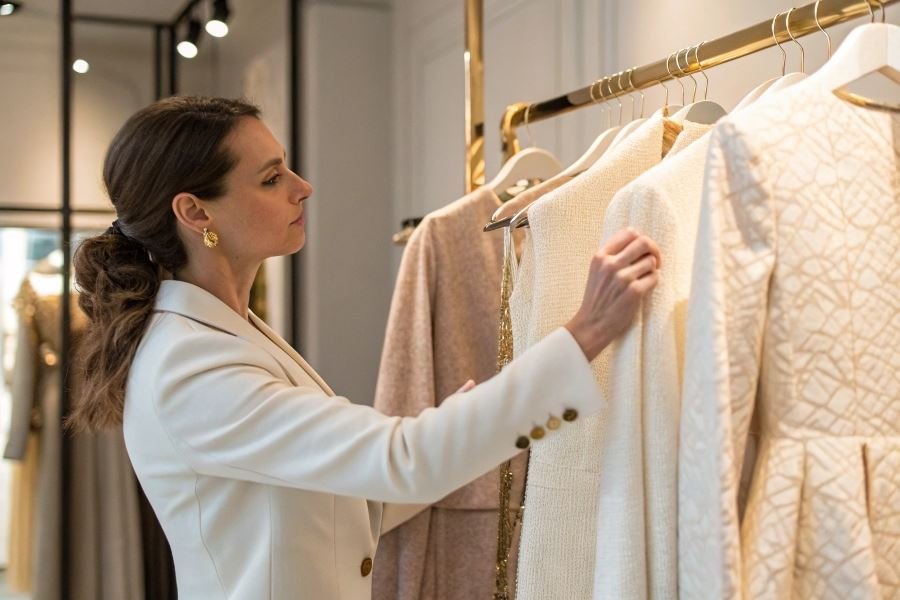
Ever noticed how some work dresses fall apart after three washes while others look pristine after years of wear? The difference isn’t just luck—it’s the price-quality ratio at work.
When building a professional wardrobe, the relationship between what you pay and what you get becomes a critical business decision. A $300 dress that lasts four years and maintains its appearance costs effectively $75 per year—potentially outperforming a $100 dress that needs replacement annually. This isn’t just about clothing; it’s about strategic resource allocation for your professional image.
The value proposition of workwear extends beyond simple durability. A well-constructed dress delivers confidence, comfort during long meetings, and the subtle authority that comes from looking polished. These intangible benefits often justify higher initial investments.
Several factors influence this delicate balance:
- Material quality: Natural fibers like wool and silk typically command higher prices but offer better temperature regulation and longevity
- Construction techniques: French seams and proper lining significantly extend garment lifespan
- Design versatility: A dress that transitions from client meetings to industry events provides greater utility per dollar
- Brand positioning: Some premium is for craftsmanship, some merely for the label
Understanding this relationship helps you make informed decisions rather than being swayed by price tags alone. The smartest professionals recognize that quality workwear isn’t an expense—it’s an investment in your professional presence with measurable returns.
The Smart Buyer’s Guide to Work Dress Value
Material Matters: The Foundation of Quality
The fabric of a work dress isn’t just about how it feels—it’s the cornerstone of its longevity and performance. Natural fibers like wool, cotton, and silk typically command higher prices but offer superior breathability and aging characteristics. A premium wool blend dress from Brooks Brothers at $298 might seem expensive until you consider its 3-5 year lifespan compared to a $79 polyester alternative that pills after six months.
When evaluating the ratio of price to quality when choosing a work dress, material composition becomes the most reliable predictor of long-term satisfaction. Premium natural fibers maintain their appearance through multiple cleanings, while budget synthetics often reveal their true nature after just a few wash cycles. The difference becomes particularly apparent in high-friction areas like elbows and seat areas, where inferior materials quickly show wear.
Material Quality Indicators:
- Thread count and fiber length in cotton (higher is better)
- Percentage of natural fibers (generally preferable for breathability)
- Weight of fabric (seasonally appropriate and indicative of durability)
- Colorfastness (resistance to fading after washing)
Construction That Counts: The Hidden Value
Turn a quality work dress inside out and you’ll discover where your money went. French seams, blind hems, and proper lining aren’t just fancy terms—they’re engineering features that extend garment life by years.
The difference between a $150 and $350 dress often lies in details invisible from three feet away.
Construction Quality Checklist:
| Feature | Budget Dress | Quality Investment |
|---|---|---|
| Seams | Overlocked | French or flat-felled |
| Hem | Machine stitched | Blind-stitched |
| Lining | Absent or polyester | Silk or high-quality acetate |
| Pattern matching | Inconsistent | Precise at seams |
| Buttons | Plastic | Horn, shell, or corozo nut |
A Theory dress priced at $395 typically features eight panels instead of four, creating a more tailored silhouette that flatters various body types—engineering that translates to confidence and comfort during long workdays.
Brand Premium vs. Actual Value
The logo on your dress can account for 20-40% of its price tag. While Prada might charge $1,950 for a work-appropriate sheath dress, comparable construction quality can often be found from lesser-known designers at $450-650.
Value-focused brands like MM.LaFleur and Of Mercer have built business models specifically targeting the gap between fast fashion and luxury pricing, delivering exceptional quality-to-price ratios by minimizing marketing costs and retail markups.
The Mathematics of Wardrobe Economics
Smart professionals calculate cost-per-wear rather than focusing on the price tag. A versatile $275 dress worn weekly for two years costs approximately $2.65 per wear—significantly less than a $89 “bargain” worn only five times before it loses shape.
Versatility factors that maximize value:
- Neutral colors that coordinate with existing wardrobe pieces
- Classic silhouettes that resist trend cycles
- Machine-washable fabrics that minimize maintenance costs
- Adaptability across seasons with simple accessory changes
The most economical work dresses feature thoughtful details like adjustable waistlines, strategically placed darts, and modest necklines that transition seamlessly from client meetings to evening events. These engineering considerations might add $50-75 to the initial price but can double the functional lifespan of the garment.
When you understand these key factors, you’ll never look at a price tag the same way again—you’ll see it as just one data point in a complex value equation.
Mastering the Price-Quality Equation for Work Attire
Strategic seasonal shopping for maximum value
The professional wardrobe landscape transforms dramatically with each season. Retailers typically clear inventory in January and July, offering discounts of 40-70% on high-quality workwear. The post-holiday January sales present exceptional opportunities for wool blend dresses and structured jackets, while July clearances favor lightweight fabrics and transitional pieces.
Digital price tracking tools have revolutionized strategic shopping. Apps like ShopStyle and Karma monitor price fluctuations across multiple retailers, alerting you when that coveted Theory dress drops below your target price point. This data-driven approach eliminates the guesswork from timing purchases.
The most significant quality-to-price ratio improvements occur during end-of-season transitions, not during heavily marketed holiday sales events.
Pre-season purchasing—buying winter dresses in August or summer styles in February—can yield savings of 25-35% on premium brands while still ensuring current styling. This approach requires foresight but delivers substantial value for those building a professional wardrobe methodically.
Decoding quality signals beyond the price tag
Quality assessment requires a trained eye rather than blind trust in pricing. The construction details that signal durability include:
- Seam finishing: French seams or bound edges indicate meticulous construction
- Pattern matching: Aligned patterns at seams reflect precision manufacturing
- Lining quality: Natural fiber linings (silk, cotton, high-quality viscose) outperform polyester
- Button attachment: Secured with anchor buttons or reinforced threading
Material composition trumps brand prestige when evaluating long-term performance. A dress containing 95% wool with 5% elastane from a mid-tier brand will typically outperform a polyester blend from a luxury label in terms of breathability, wrinkle resistance, and longevity.
The relationship between fabric weight and quality follows a bell curve—too light suggests poor durability, while excessive weight can indicate compensating for inferior materials. Optimal fabric weights for professional dresses typically range between 230-350 gsm (grams per square meter) depending on the season and material.
Building a professional wardrobe as a strategic investment
Professional wardrobe building benefits from portfolio investment thinking. Consider this allocation strategy:
| Investment Category | Budget Allocation | Expected Lifespan | Quality Priorities |
|---|---|---|---|
| Core Staples | 50-60% | 5+ years | Construction, fabric composition, versatility |
| Seasonal Refreshers | 25-30% | 2-3 years | Trend relevance, comfort, color stability |
| Trend Pieces | 10-15% | 1-2 seasons | Visual impact, styling flexibility |
The cost-per-wear calculation transforms seemingly expensive purchases into rational investments. A 350well − constructedsheathdresswornweeklyforthreeyears(2.24 per wear) delivers superior value compared to a 120fast − fashionalternativerequiringreplacementafter15wears(8 per wear).
Capsule wardrobe principles enhance investment efficiency. Five high-quality dresses in complementary colors and silhouettes can create 25+ distinct looks when paired strategically with accessories and layering pieces. This multiplication effect dramatically improves the price-to-quality equation.
The most sustainable approach combines quality assessment skills with strategic timing and investment thinking. This creates a professional wardrobe that appreciates in functional value even as the initial investment depreciates—the ultimate optimization of the price-to-quality ratio.
Discover how to balance cost and quality when selecting the perfect work dress. Learn to identify premium materials, evaluate construction details, and maximize your investment with strategic shopping tips for a professional wardrobe that delivers true value.
Discover how to balance cost and quality when selecting the perfect work dress. Learn to identify premium materials, evaluate construction details, and maximize your investment with strategic shopping tips for a professional wardrobe that delivers true value.