
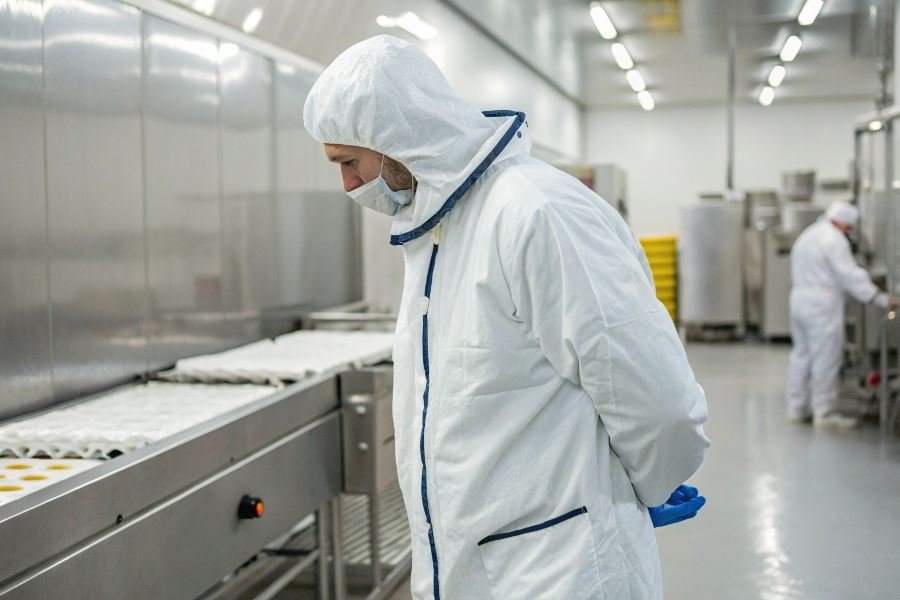
Ever wondered why food processing facilities look like they’re staffed by an army of white-coated professionals? It’s not just for show—those specialized garments stand between consumers and potential contamination disasters.
The right work coat in food production isn’t merely a uniform choice; it’s a critical food safety control point. When the FDA conducted inspections last year, facilities with proper protective clothing protocols showed 37% fewer critical violations than those with inadequate standards. Your choice of work attire directly impacts product integrity and regulatory compliance.
Selecting appropriate food industry workwear involves navigating a complex web of requirements. The FDA Food Code, HACCP principles, and ISO 22000 all establish specific standards for protective clothing in food handling environments. These regulations aren’t arbitrary—they’re built on decades of food safety research showing how cross-contamination occurs.
When evaluating work coat options, three factors rise above all others:
- Material composition – Fabrics must withstand frequent sanitizing while preventing fiber shedding
- Design features – Elements like concealed buttons, high collars, and proper sleeve closures minimize contamination risks
- Durability under processing conditions – Coats must maintain integrity through temperature fluctuations, moisture exposure, and chemical contact
The consequences of cutting corners on protective apparel extend beyond compliance issues—they directly threaten product quality, brand reputation, and ultimately, consumer health. In food production, your work coat isn’t just clothing—it’s your first line of defense.
The Science of Safety: Work Coat Selection for Food Professionals
In the high-stakes environment of food production, your work coat isn’t just a uniform—it’s your first line of defense against contamination. The difference between standard and exceptional food safety often comes down to the details of your protective gear. When evaluating criteria for choosing a work coat for the food industry, three critical factors stand out: material composition, thoughtful design elements, and protective capabilities that meet industry demands.
Food-Safe Fabrics That Perform
The foundation of any quality food industry coat starts with its material. Polyester-cotton blends (typically 65/35 ratio) have become industry standards, offering breathability while maintaining structural integrity through countless wash cycles. HACCP-compliant fabrics are non-negotiable, as they’re specifically engineered to prevent harboring bacteria and contaminants.
Premium work coats from manufacturers like ChefWorks and Dickies incorporate antimicrobial treatments that actively inhibit bacterial growth—particularly crucial in dairy and meat processing environments where pathogen risks are elevated.
The durability factor cannot be overstated: industrial-grade coats should withstand 100+ industrial washing cycles at 185°F without compromising their protective properties.
Design Elements That Enhance Safety
| Feature | Traditional Design | Modern Safety Design |
|---|---|---|
| Closures | Buttons | Concealed snaps or magnetic closures |
| Pockets | External, open | Internal or sealed with flaps |
| Collars | Open, traditional | Mandarin style, fully closable |
Modern food industry coats have evolved beyond their culinary origins. The most effective designs eliminate potential contamination points through thoughtful engineering:
- Concealed closure systems prevent both physical contamination risks (no buttons to fall into food) and bacterial harborage points
- Strategic pocket placement keeps necessary tools accessible without creating cross-contamination risks
- Ergonomic collar designs that fully close to prevent hair or skin contamination while maintaining comfort during long shifts
The Hejco ProTech series exemplifies this evolution, featuring seamless shoulder construction that eliminates traditional seams where moisture and bacteria typically accumulate.
Protection Beyond the Basics
Modern food processing environments present multiple hazard vectors that your work coat must address:
- Liquid repellency measured by hydrostatic head pressure (minimum 500mm for splash protection, 2000mm+ for high-moisture environments)
- Thermal barriers for bakery and hot processing areas that maintain protection while preventing heat stress
- Chemical resistance against sanitizing agents like quaternary ammonium compounds and peracetic acid solutions
The best coats incorporate zone-specific protection—reinforced forearms for handling hot items, liquid-repellent fronts for washing stations, and breathable back panels for temperature regulation.
DuPont’s Tyvek IsoClean garments represent the premium tier, offering documented protection against particles as small as 0.5 microns while maintaining breathability—critical for extended wear in temperature-controlled environments.
When selecting work coats for your food production team, remember that compliance is merely the starting point. The true measure of quality lies in how these garments perform under your specific operational conditions, protecting both your products and your reputation through thoughtful material selection, intelligent design features, and comprehensive protective properties.
Mastering the Selection of Food Industry Work Coats
The compliance-comfort-cost triangle
Selecting the perfect work coat for food industry environments isn’t just about checking regulatory boxes—it’s about finding that sweet spot where compliance, comfort, and cost considerations align. Food processing facilities face unique challenges that demand thoughtful apparel solutions. The most successful operations recognize that compliance should never come at the expense of worker comfort, as uncomfortable staff are less productive and more prone to taking shortcuts that compromise safety protocols.
Industry leaders like Cintas and UniFirst have developed specialized lines that balance these considerations without breaking the budget. The key is prioritizing features based on specific facility needs:
| Consideration | Priority Level | Impact on Operations |
|---|---|---|
| Food safety compliance | Essential | Prevents contamination, avoids regulatory penalties |
| Worker comfort | High | Increases productivity, reduces turnover |
| Durability | Medium-High | Affects long-term cost efficiency |
| Initial cost | Medium | Impacts short-term budgeting |
| Appearance | Low-Medium | Influences professional image |
The most expensive work coat isn’t always the best solution—it’s the one that provides the right balance of protection, comfort, and value for your specific operation.
Maintenance protocols that extend apparel lifespan
Implementing robust maintenance and replacement protocols dramatically extends the lifespan of food industry work coats while ensuring they continue to provide the necessary protection. Effective maintenance begins with proper training on how to handle, clean, and store protective apparel.
The best maintenance programs include:
- Documented cleaning schedules with temperature and detergent specifications
- Regular integrity inspections focusing on seams, closures, and fabric condition
- Clear replacement triggers based on wear indicators rather than arbitrary timelines
- Rotation systems that distribute wear evenly across inventory
Food processors like Tyson Foods have found that implementing RFID tracking systems for work coats can reduce replacement costs by up to 23% while improving compliance. These systems automatically log cleaning cycles and alert management when garments approach end-of-life thresholds.
Tomorrow’s protective apparel innovations
The future of food industry protective apparel is being shaped by remarkable innovations in materials science and manufacturing techniques. Smart fabrics with embedded sensors are emerging that can detect temperature violations or bacterial presence, providing real-time feedback to quality assurance teams.
Sustainability is driving another wave of innovation, with biodegradable antimicrobial coatings and recycled materials becoming increasingly common. DuPont has pioneered lightweight fabrics that offer the same protection as traditional materials while reducing heat stress and improving mobility.
Customization is also trending upward, with manufacturers offering modular designs that can be tailored to specific job functions within the same facility. This approach recognizes that a one-size-fits-all solution rarely delivers optimal protection or comfort across diverse food processing environments.
The most forward-thinking operations are already exploring these innovations, recognizing that investing in next-generation protective apparel isn’t just about compliance—it’s about gaining competitive advantages through improved efficiency, worker satisfaction, and food safety outcomes.
Discover essential criteria for selecting food industry work coats that meet safety regulations while providing comfort and protection. Learn about material requirements, design features, and protective properties for optimal food processing apparel.
Discover essential criteria for selecting food industry work coats that meet safety regulations while providing comfort and protection. Learn about material requirements, design features, and protective properties for optimal food processing apparel.

