Did you know that the humble overall has saved countless lives across centuries of industrial development? From blacksmiths’ leather aprons to today’s high-tech flame-resistant coveralls, the story of workwear is actually the untold history of human innovation and safety.
Workwear evolution mirrors our industrial journey. The first specialized protective clothing appeared in medieval guilds, with leather aprons protecting blacksmiths from sparks and burns. The Industrial Revolution of the 1800s brought standardized canvas overalls for factory workers, while the early 20th century saw profession-specific designs emerge as workplace safety became regulated.
“The right protective clothing isn’t just about compliance—it’s about sending workers home safely every day.”
Today’s specialized overalls represent the intersection of advanced materials science and ergonomic design. Modern protective clothing must balance multiple priorities: protection against specific hazards, comfort during extended wear, and functionality for specialized tasks. For welders, this means flame-resistant fabrics with reinforced seams; for healthcare workers, fluid-resistant materials that prevent pathogen transmission.
Selecting appropriate workwear requires understanding three critical factors:
- Hazard assessment – Identifying specific risks (chemical exposure, extreme temperatures, sharp objects)
- Compliance requirements – Meeting industry standards and regulations
- Practical considerations – Durability, mobility, comfort, and accessibility of features
The difference between adequate and exceptional workwear often comes down to thoughtful design details—reinforced knees for construction workers who frequently kneel, ventilated panels for those in hot environments, or strategically placed pockets for tools. These seemingly small features dramatically impact both safety outcomes and worker productivity.
Essential Features of Overalls Across Industries
When it comes to professional workwear, one size definitely doesn’t fit all. The specialized requirements of different industries have driven the evolution of overalls that are as diverse as the professions they serve. Overalls for different professions: features and differences represent critical engineering decisions that can impact worker safety, efficiency, and comfort throughout long shifts.
Let’s dive into how these purpose-built garments address the unique challenges faced by professionals across various sectors.
Construction Overalls: Built to Endure
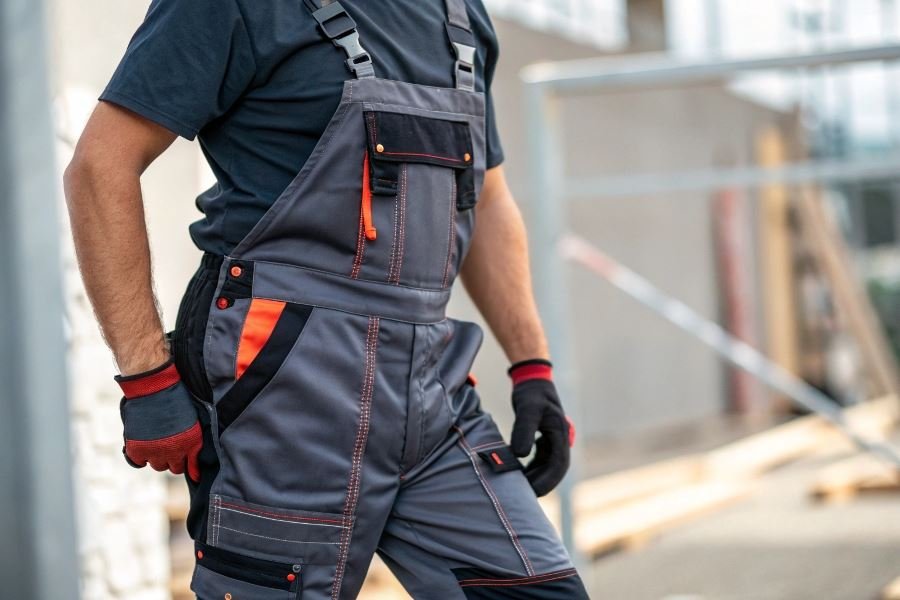
Construction professionals face some of the most demanding physical environments imaginable. Their workwear must withstand:
- Extreme abrasion resistance from constant contact with rough materials
- Multiple reinforced stress points at knees, elbows, and seat
- Integrated tool storage systems with specialized pockets and loops
Modern construction overalls from brands like Carhartt and Dickies feature ripstop fabrics that prevent tears from spreading, often incorporating materials like CORDURA® that offer up to 10x the durability of standard cotton. Many include built-in knee pad pockets, reflective strips for visibility, and hammer loops positioned for optimal accessibility.
The most advanced models now incorporate fall protection harness compatibility—a feature that can literally save lives on high-rise construction sites.
Medical Overalls: Precision Protection
In stark contrast to construction environments, medical settings demand overalls that prioritize:
- Bacterial barrier properties to prevent cross-contamination
- Fluid-repellent treatments that protect against splashes
- Antimicrobial finishes that inhibit pathogen growth
Medical overalls have undergone revolutionary advancements, with brands like 3M developing fabrics that can withstand up to 75 washes while maintaining their protective properties. The best medical overalls balance impermeability with breathability—a crucial consideration during long surgical procedures where comfort directly impacts performance.
| Feature | Construction Overalls | Medical Overalls |
|---|---|---|
| Primary Material | Ripstop cotton/polyester blends | Microfilament fabrics |
| Key Protection | Impact and abrasion | Fluid and bacterial barriers |
| Comfort Priority | Freedom of movement | Temperature regulation |
| Typical Lifespan | 12-18 months heavy use | 75-100 wash cycles |
Culinary Overalls: Where Heat Meets Hygiene
The kitchen environment presents its own unique set of challenges, requiring overalls that offer:
- Heat resistance for protection near open flames and hot surfaces
- Moisture-wicking properties to manage the intense humidity of busy kitchens
- Easy-clean fabrics that can withstand frequent sanitization
Premium culinary workwear from Chef Works incorporates technologies like Cool Vent™ systems that channel heat away from the body. The best chef’s overalls feature strategically placed pockets that avoid cross-contamination risks while providing quick access to essential tools.
Modern food service overalls must meet stringent hygiene standards while addressing the physical demands of kitchen work. Many now incorporate stretch panels at key movement points and antimicrobial treatments that reduce odor-causing bacteria—a significant consideration in hot kitchen environments.
The evolution of specialized workwear continues to accelerate as manufacturers leverage advanced materials science to address industry-specific challenges. Whether protecting against concrete dust, bloodborne pathogens, or kitchen heat, today’s overalls represent the intersection of function, safety, and professional identity.
Making the Right Choice in Professional Overalls
When it comes to professional workwear, the difference between adequate and exceptional can impact not just comfort but safety, productivity, and your bottom line. Selecting the right overalls requires understanding the nuanced interplay between materials, design, maintenance requirements, and overall value proposition.
Materials That Meet Professional Demands
The foundation of quality workwear begins with appropriate material selection. Different professions demand different fabric properties:
- Flame-resistant (FR) fabrics like Nomex and Kevlar provide critical protection for welders and electricians, withstanding temperatures up to 700°F before degrading
- Cotton-polyester blends offer the breathability of natural fibers with the durability of synthetics—ideal for construction and general maintenance
- Ripstop nylon delivers exceptional tear resistance for forestry and outdoor professions where snagging is common
Material selection isn’t just about protection—it’s about performance enhancement. Modern workwear incorporates technical fabrics that actively support professional activities through:
The right material doesn’t just protect the worker; it becomes an extension of their professional capabilities.
For instance, mechanics’ overalls now feature oil-repellent finishes that prevent absorption of automotive fluids, while healthcare scrubs incorporate antimicrobial treatments that reduce pathogen transfer between patients.
Maintenance Requirements and Longevity
Professional overalls represent an investment that should deliver returns through extended service life. Maintenance requirements vary dramatically:
| Profession | Typical Washing Frequency | Expected Lifespan | Special Care Requirements |
|---|---|---|---|
| Food Service | Daily | 6-12 months | Sanitizing wash cycles |
| Construction | Weekly | 1-3 years | Reinforcement repair |
| Healthcare | After each shift | 1-2 years | Antimicrobial treatments |
| Welding | Bi-weekly | 2-4 years | FR integrity testing |
The most durable overalls incorporate reinforced stitching at stress points—typically triple-needle stitching with bar tacks at pocket corners and seam intersections. Look for brands that use continuous rather than chain stitching for critical seams, as these resist unraveling even when threads break.
Investment Value Beyond the Price Tag
Quality indicators in professional overalls extend beyond materials and construction to include:
Ergonomic design features that reduce fatigue and enhance mobility:
- Articulated knees and elbows that move with the body
- Gusseted crotches that prevent binding during climbing or squatting
- Strategic placement of tool pockets to maintain balance
Adaptability across conditions provides superior value, particularly for professionals who work in variable environments. Features like:
- Convertible sleeves and legs
- Ventilation panels that can be opened or closed
- Layering compatibility with other protective equipment
When evaluating investment value, consider the total cost of ownership rather than just purchase price. Premium overalls from manufacturers like Carhartt or Dickies might command higher upfront costs but deliver superior economics through:
- Reduced replacement frequency
- Fewer work interruptions due to workwear failure
- Enhanced professional performance through better design
- Improved safety outcomes and reduced incident-related costs
The most successful professionals recognize that workwear is a performance tool, not merely a uniform. By selecting overalls with appropriate materials, manageable maintenance requirements, and high-value design features, you’re not just covering your clothes—you’re investing in your professional capability and safety.
Discover the essential differences between professional overalls across industries. Compare construction, medical, and culinary workwear features, materials, and safety standards to make informed purchasing decisions for your specific workplace needs.
Discover the essential differences between professional overalls across industries. Compare construction, medical, and culinary workwear features, materials, and safety standards to make informed purchasing decisions for your specific workplace needs.