When a welding spark lands on your sleeve, the difference between a minor incident and a trip to the emergency room often comes down to what you’re wearing.
Protective workwear has undergone a remarkable transformation since the early days of industrial safety. What began as basic cotton coveralls in the early 20th century has evolved into sophisticated garments engineered with advanced materials and technologies. Today’s work sweatshirts don’t just keep workers warm—they actively shield them from workplace hazards while maintaining comfort throughout long shifts.
The stakes couldn’t be higher when it comes to protective clothing. According to the Bureau of Labor Statistics, over 20,000 workplace injuries each year could be prevented or minimized with proper protective apparel. Modern work sweatshirts now incorporate features that would have seemed like science fiction just decades ago: flame resistance that self-extinguishes, chemical repellents that prevent dangerous substances from reaching the skin, and high-visibility elements that ensure workers remain seen in low-light conditions.
The protective revolution
What truly sets today’s protective sweatshirts apart is their multi-functional design. The best options offer:
- Flame resistance certified to industry standards
- Moisture-wicking properties that maintain comfort during physical exertion
- Anti-static treatments that prevent dangerous spark ignition
- Reinforced stitching at critical stress points
Choosing the right protective sweatshirt isn’t just about compliance—it’s about investing in a critical piece of safety equipment that workers will actually want to wear. The most effective protective garment, after all, is the one that never gets left hanging in the locker.
Essential Protective Properties of Work Sweatshirts
When safety meets comfort on the job site, work sweatshirts with protective properties become essential gear for professionals who face hazardous conditions daily. These aren’t your standard casual hoodies—they’re engineered defensive systems disguised as comfortable workwear. Understanding what to pay attention to when selecting protective work sweatshirts can literally be the difference between a minor incident and a life-altering injury.
Flame Resistance That Saves Lives
Fire-resistant sweatshirts represent one of the most critical safety innovations for workers in high-heat environments. Modern FR sweatshirts utilize advanced fabrics like Nomex and Modacrylic blends that self-extinguish when removed from flame sources.
Key specifications to verify:
- Arc rating (measured in cal/cm²)
- NFPA 2112 compliance for flash fire protection
- Heat attenuation factor (HAF) percentage
- Afterflame duration (under 2 seconds is ideal)
The best flame-resistant sweatshirts maintain their protective properties even after 50+ industrial washes, ensuring long-term protection without compromising on comfort or mobility.
Chemical and Liquid Splash Protection
Workers in chemical processing, manufacturing, and laboratory environments need sweatshirts that repel potentially dangerous substances. Advanced protective sweatshirts now feature:
- Fluoropolymer coatings that repel acids, bases, and solvents
- Breathable membranes that block liquids while allowing moisture vapor to escape
- Chemical permeation resistance ratings (look for EN 13034 certification)
“The penetration index and repellency ratings are critical factors when evaluating chemical splash protection in work sweatshirts with protective properties. What professionals should pay attention to is how these ratings hold up after repeated exposure and washing cycles.”
Visibility That Keeps You Seen
| Visibility Class | Reflective Material Required | Background Material Required |
|---|---|---|
| Class 1 | 217 in² (0.14 m²) | 155 in² (0.10 m²) |
| Class 2 | 310 in² (0.20 m²) | 775 in² (0.50 m²) |
| Class 3 | 465 in² (0.30 m²) | 1240 in² (0.80 m²) |
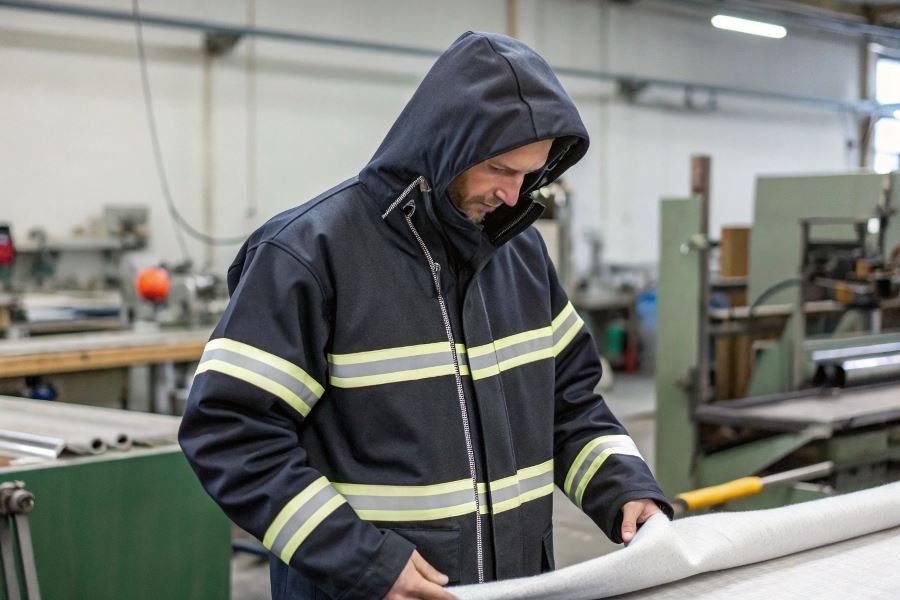
High-visibility sweatshirts incorporate retroreflective materials that bounce light back to its source, making workers visible from up to 1,000 feet away in low-light conditions. The most effective designs feature:
- 360° visibility with strategic reflective placement
- Fluorescent background materials in yellow-green, orange-red, or red
- ANSI/ISEA 107 compliance (Class 2 minimum for roadway work)
- Contrast trimming for daytime visibility enhancement
Built to Last Under Pressure
Durability in protective workwear isn’t just about longevity—it’s about maintaining protective integrity under stress. Premium work sweatshirts feature:
Reinforced construction points:
- Bar-tacked stress points at pockets and closures
- Double-needle stitching with flame-resistant thread
- Abrasion resistance ratings (look for >20,000 Martindale cycles)
- Tear strength measurements (ASTM D5587 test method)
Materials like Kevlar-reinforced elbows and shoulders can increase tear resistance by up to 300% in critical areas without adding significant weight.
Weather Protection That Works
The best protective sweatshirts offer multi-season versatility through:
- Moisture-wicking inner layers that move sweat away from the body
- Wind-resistant membranes with breathability ratings >10,000g/m²/24hrs
- Insulation with CLO values between 1.0-1.5 for moderate cold
- Water repellency ratings of DWR 80/20 or better
Modern thermal regulation technologies like phase-change materials can store and release heat as needed, maintaining optimal body temperature across a 30°F temperature range.
When selecting protective workwear, remember that certification standards represent minimum requirements—the best manufacturers exceed these specifications while maintaining comfort and functionality that workers will actually want to wear.
Selecting the Right Protective Work Sweatshirt
When safety meets comfort on the job site, the humble work sweatshirt transforms into a critical piece of protective equipment. Let’s dive into what separates exceptional protective workwear from the merely adequate.
Certification standards that actually matter
The difference between proper protection and false security often comes down to certification. Industry-specific standards aren’t just bureaucratic checkboxes—they’re your assurance that the garment will perform when it matters most.
ANSI/ISEA 107 certification governs high-visibility requirements, while NFPA 2112 certification is essential for flame-resistant garments in environments with flash fire hazards. For electrical work, look for ASTM F1506 compliance and an arc rating (ATPV) measured in calories/cm².
Don’t compromise: A sweatshirt lacking proper certification for your specific industry isn’t just non-compliant—it’s potentially dangerous.
Material composition that performs
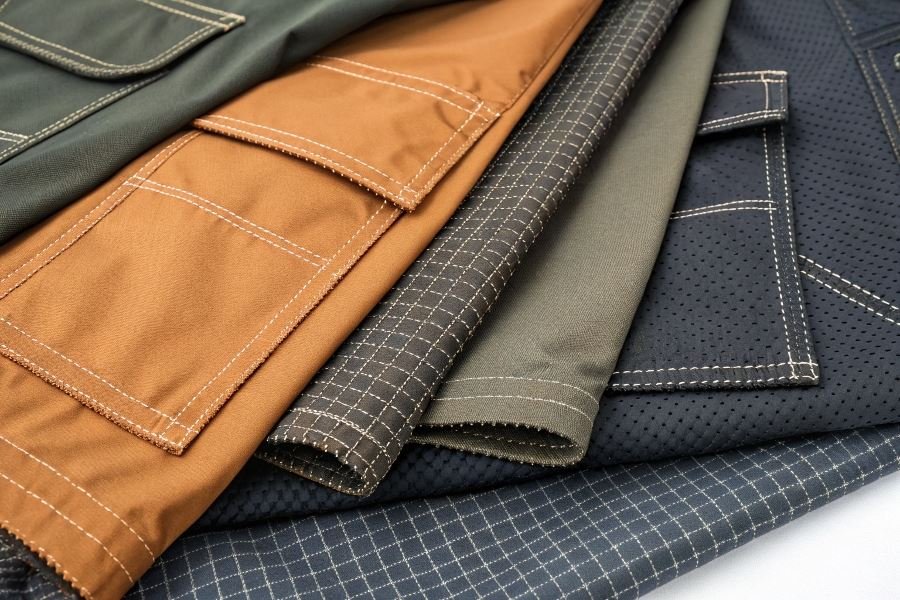
The molecular structure of your workwear matters more than you might think. FR-treated cotton provides good flame resistance but may wash out over time, while inherent FR fibers like Nomex® maintain their protective properties for the life of the garment.
For chemical splash protection, look for fabrics with fluorochemical finishes or inherent chemical-resistant properties. Anti-static properties require conductive fibers woven throughout the material.
The weight of the fabric (measured in ounces per square yard) directly impacts both protection level and comfort—heavier isn’t always better.
Ergonomic design that works with you
Protection means nothing if workers won’t wear it. Look for these comfort features:
| Feature | Benefit | Impact on Protection |
|---|---|---|
| Raglan sleeves | Enhanced range of motion | Prevents garment riding up during overhead work |
| Articulated elbows | Reduces fabric bunching | Maintains coverage during movement |
| Stretch panels | Improves flexibility | Ensures protective layer stays in place |
| Moisture-wicking | Temperature regulation | Increases likelihood of consistent wear |
The best protective sweatshirts incorporate these elements without compromising their primary protective function.
Maintenance requirements and real-world longevity
Protective properties aren’t permanent—they require proper care. FR treatments may diminish after 25-50 washes, while inherent FR fibers maintain protection throughout the garment’s life.
Maintenance red flags to watch for:
- Manufacturer specifies special cleaning agents
- Cannot be machine dried
- Requires professional laundering
- Loses certification after a specific number of washes
The true cost of workwear isn’t just the purchase price but the maintenance investment and replacement frequency.
Cost-benefit analysis beyond the price tag
When evaluating protective sweatshirts, calculate the Total Cost of Ownership (TCO):
Initial cost + (maintenance cost × expected frequency) + (replacement cost ÷ expected lifespan) = TCO
A $75 sweatshirt that lasts 18 months often outperforms a $45 option requiring replacement every 6 months.
The most expensive protective gear is the kind workers refuse to wear—comfort and fit directly impact compliance and therefore safety outcomes.
The best protective sweatshirts balance certification requirements, material performance, ergonomic design, and maintenance needs while delivering reasonable TCO. When these elements align, you’re not just buying workwear—you’re investing in both productivity and protection.
Discover essential safety features in protective work sweatshirts that combine comfort with flame resistance, chemical protection, and high visibility. Learn what certification standards and materials to look for when investing in quality workwear that lasts.
Discover essential safety features in protective work sweatshirts that combine comfort with flame resistance, chemical protection, and high visibility. Learn what certification standards and materials to look for when investing in quality workwear that lasts.