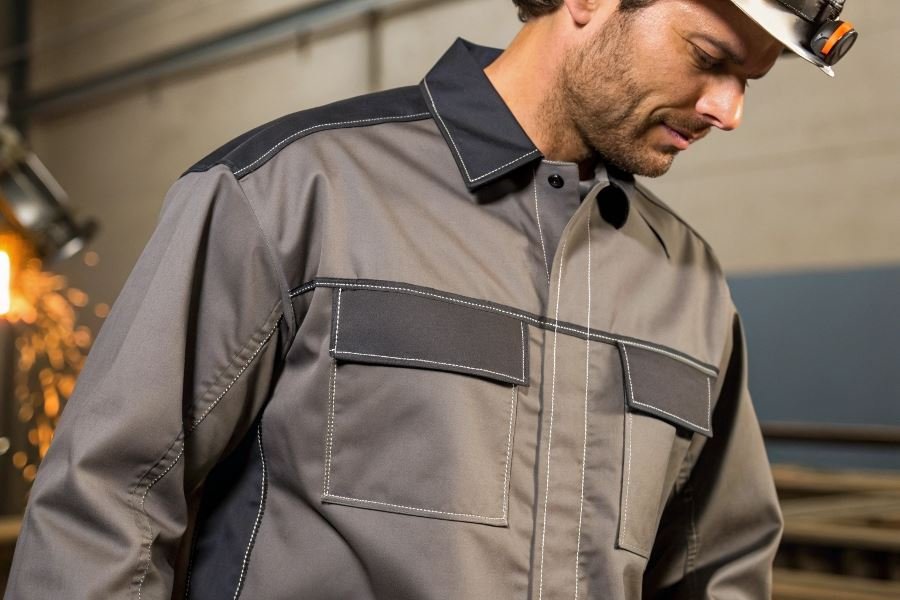
When the mercury rises, your choice of work attire isn’t just about looking professional—it’s a critical safety decision. At construction sites, manufacturing plants, and outdoor workspaces across America, heat-related illnesses affect thousands of workers annually, with the Bureau of Labor Statistics reporting that heat stress causes an average of 38 worker deaths each year.
The right t-shirt can literally be a lifesaver.
Heat doesn’t just threaten worker health—it dramatically impacts productivity. Research from NASA shows that when temperatures climb above 85°F, worker error rates increase by 40%. The math is simple: cooler workers are safer, more focused, and more efficient.
When selecting work t-shirts for hot conditions, three factors reign supreme: fabric composition, fit, and functionality. Moisture-wicking materials like performance polyester blends or specialized cotton can keep your core temperature regulated by pulling sweat away from your skin. The shirt’s cut should allow for airflow without compromising safety requirements. And features like UV protection, antimicrobial treatments, and strategic ventilation zones can transform a simple garment into high-performance equipment.
“The difference between a standard cotton t-shirt and a properly designed work shirt in 95-degree heat is like the difference between driving with flat tires or properly inflated ones—one option simply works better.” — Occupational Safety Magazine
Workers wearing appropriate heat-management clothing report 62% higher comfort levels and complete tasks an average of 18% faster than those in standard attire. The investment in quality work t-shirts pays dividends in productivity, morale, and reduced sick days.
Essential Features That Make Work T-Shirts Perform in the Heat
When temperatures climb and work demands don’t stop, the right t-shirt becomes more than just clothing—it becomes essential equipment. The technical features built into today’s performance workwear can mean the difference between productive comfort and heat-induced misery.
Selecting which work t-shirt to choose for working in hot conditions requires understanding the science behind fabric technology and how it interacts with your body’s natural cooling systems. The best options leverage advanced materials that work with your physiology rather than against it, keeping you comfortable when the mercury rises.
Moisture-Wicking Fabrics That Keep You Dry
The foundation of any heat-resistant work shirt is its ability to manage moisture effectively. Unlike cotton that absorbs and holds sweat against your skin, moisture-wicking fabrics actively transport perspiration away from your body to the outer surface of the garment.
How it works: These fabrics utilize capillary action—the same principle that allows plants to draw water upward—to pull moisture through microscopic channels in the material.
Top-performing moisture-wicking materials include:
| Material | Wicking Performance | Drying Speed | Durability |
|---|---|---|---|
| Polyester | Excellent | Very Fast | High |
| Nylon | Very Good | Fast | Very High |
| Merino Wool | Excellent | Moderate | Moderate |
| Bamboo Blends | Good | Moderate | Good |
Brands like Under Armour and Carhartt have developed proprietary wicking technologies that can keep you dry even during the most demanding tasks.
Breathable Materials That Promote Airflow
Breathability works hand-in-hand with moisture-wicking to create a microclimate between your skin and the shirt that regulates temperature.
The most breathable fabrics feature either:
- Mechanical ventilation through mesh panels strategically placed at heat zones
- Microperforations that allow air exchange without compromising durability
- Open-weave construction that maximizes air movement
Materials like Columbia’s Omni-Freeze technology actually use your sweat to activate cooling properties within the fabric—creating a remarkable cooling effect precisely when you need it most.
UV Protection Capabilities for Outdoor Work
Sun exposure presents a significant but often overlooked workplace hazard. Modern performance t-shirts now incorporate UPF (Ultraviolet Protection Factor) ratings that indicate how effectively they block harmful UV radiation.
What to look for: Shirts with UPF 30+ block approximately 97% of UV rays, while UPF 50+ blocks 98%+. This protection is typically achieved through:
- Tight weave construction
- Special UV-blocking treatments
- Reflective properties built into the yarn
Unlike sunscreen, this protection doesn’t wash off or require reapplication, making it ideal for long outdoor workdays.
Antimicrobial Properties to Reduce Odor
Nothing undermines workplace confidence like persistent odor. Advanced work t-shirts now incorporate antimicrobial technologies that inhibit the growth of odor-causing bacteria.
These treatments work by:
- Disrupting bacterial cell membranes
- Creating an environment hostile to microbial growth
- Neutralizing odor molecules before they develop
Silver-ion technology, as used in Duluth Trading Company’s performance shirts, has proven particularly effective at maintaining freshness through multiple wear cycles.
Durability and Maintenance Requirements
The most advanced cooling technology means nothing if your shirt falls apart after a few washes. Look for reinforced stitching at stress points and blended fabrics that balance performance with longevity.
Maintenance considerations should include:
- Wash requirements (some performance fabrics degrade with fabric softeners)
- Drying instructions (high heat can damage moisture-wicking properties)
- Stain resistance (especially important for visible workwear)
- Wrinkle resistance (for maintaining professional appearance)
The best work shirts for hot conditions deliver on all these features while requiring minimal special care—saving you time and extending the life of your workwear investment.
The Ultimate Work T-Shirt Guide for Beating the Heat
When temperatures climb, your workwear choices become critical to both comfort and productivity. The right work t-shirt can mean the difference between powering through your day and suffering through a sweat-soaked shift. After extensive testing and research, these three t-shirt types consistently outperform the competition in hot conditions.
Performance Polyester Blends That Actually Work
Performance polyester blend t-shirts have revolutionized workwear in hot environments. Unlike traditional polyester that traps heat, modern performance blends incorporate advanced moisture-wicking technology that pulls sweat away from your skin and disperses it across the fabric’s surface for rapid evaporation.
The best performance blends typically contain:
- 85-90% polyester for durability and moisture management
- 10-15% elastane or spandex for movement
- Anti-microbial treatments to prevent odor buildup
Brands like Under Armour have pioneered fabrics that maintain cooling properties even after dozens of industrial washes. Their HeatGear technology, introduced in 1996, remains an industry benchmark for heat management in demanding conditions.
Key advantage: These shirts dry up to 4x faster than cotton alternatives, making them ideal for physically demanding work where continuous sweating is unavoidable.
Lightweight Merino Wool That Defies Logic
Wool for hot weather? Absolutely. Lightweight merino wool work shirts represent the premium tier of hot-weather workwear, offering benefits that synthetic fabrics simply can’t match.
Modern merino work shirts feature:
- Ultra-fine fibers (typically under 18.5 microns)
- Weights between 130-170g/m² (compared to 200-220g/m² for standard t-shirts)
- Natural temperature regulation that works in both hot and cool conditions
What makes merino exceptional is its ability to absorb moisture vapor before it becomes liquid sweat, creating a cooling effect directly against your skin. Even more impressive, merino retains its insulating properties when wet, unlike cotton which becomes heavy and chilling.
Smartwool offers merino t-shirts specifically designed for high-output activities in hot conditions, with strategic mesh ventilation zones that maximize airflow where you need it most.
While merino commands a higher price point (typically $60-90 per shirt), the extended wear time between washes and exceptional durability make it cost-effective for professionals who demand the best.
Cotton-Synthetic Hybrids That Deliver the Best of Both
For those seeking balance between natural comfort and technical performance, cotton-synthetic hybrid work t-shirts deliver impressive results at accessible price points.
The ideal hybrid composition includes:
| Component | Percentage | Function |
|---|---|---|
| Cotton | 60-70% | Comfort, breathability, natural feel |
| Polyester | 30-35% | Durability, shape retention, quick-drying |
| Elastane | 2-5% | Stretch, movement, fit preservation |
These blends solve cotton’s notorious sweat-retention problem while maintaining its familiar comfort against the skin. The synthetic component provides structure and prevents the soggy, heavy feeling pure cotton develops when saturated with sweat.
Carhartt has perfected this approach with their Force line, engineering shirts that feel like cotton but perform like technical gear. Their proprietary FastDry® technology accelerates evaporation while maintaining the durability their brand is known for.
Practical benefit: These hybrids typically require less specialized care than performance synthetics, standing up to regular washing without special detergents or procedures.
The right work t-shirt for hot conditions isn’t just about comfort—it’s about maintaining productivity, safety, and professionalism when temperatures soar. Your specific choice should align with your work environment’s demands, but any of these three options will dramatically outperform standard cotton workwear.
Discover the best work t-shirts for hot conditions that combine moisture-wicking fabrics, breathability, and UV protection. Learn how to select durable, comfortable shirts that enhance productivity and safety in high-temperature work environments.
Discover the best work t-shirts for hot conditions that combine moisture-wicking fabrics, breathability, and UV protection. Learn how to select durable, comfortable shirts that enhance productivity and safety in high-temperature work environments.