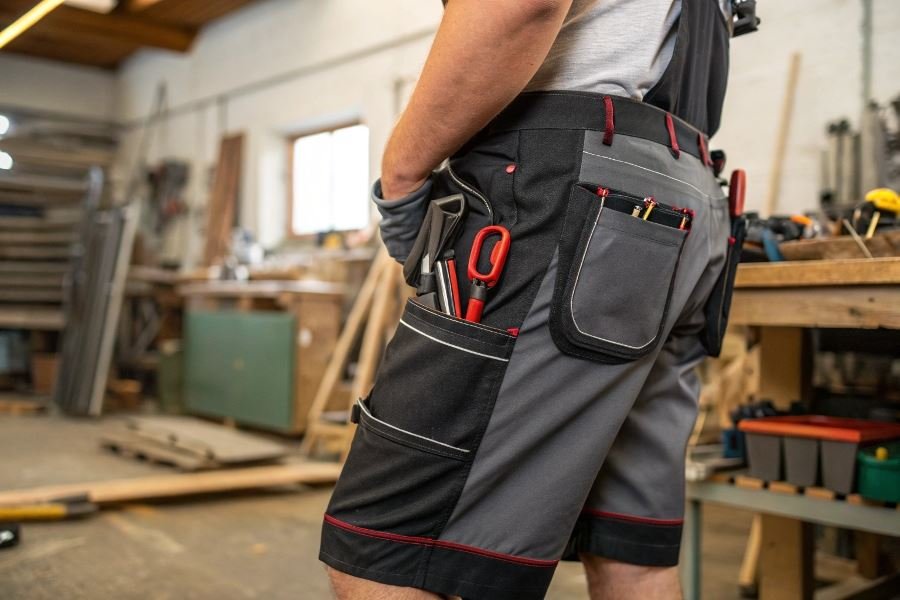
Ever watched a construction professional navigate a job site with the precision of an Olympic athlete? Behind that seamless performance lies a critical yet overlooked hero: proper workwear. For builders who brave scorching heat and demanding physical challenges, the right pair of work shorts isn’t just clothing—it’s essential equipment.
The difference between a productive day and a miserable one often hangs by a thread—literally. When construction professionals spend 8-10 hours daily in constant motion—climbing, bending, lifting, and kneeling—their workwear becomes a second skin that either empowers or hinders every movement.
Quality work shorts deliver a triple threat of benefits that directly impact a builder’s daily experience:
The workwear trifecta: Comfort, safety, productivity
Comfort translates to endurance. Shorts with moisture-wicking fabrics and strategic ventilation can reduce body temperature by up to 3-5 degrees in hot conditions, preventing the fatigue that leads to mistakes.
Safety isn’t negotiable. Reinforced seams and tear-resistant materials prevent exposing skin to workplace hazards, while high-visibility elements reduce accident risk by up to 37% according to construction safety studies.
Productivity follows naturally. When builders aren’t distracted by chafing, restricted movement, or constantly adjusting ill-fitting shorts, they maintain focus on precision tasks. The right shorts with tool-specific pockets can save up to 15 minutes daily in reduced trips to the toolbox.
Finding that perfect pair requires understanding specific features that separate exceptional work shorts from merely adequate ones—from fabric technology to functional design elements that anticipate a builder’s every need.
Essential Features That Define Quality Builder Shorts
When selecting workwear that can withstand the demands of construction sites, the details make all the difference between merely adequate and truly exceptional gear. Professional builders understand that work shorts for builders: what to pay attention to when buying involves assessing multiple critical factors that impact performance, comfort, and longevity on the job.
Battle-Tested Materials That Last
The foundation of any quality work short begins with its fabric composition. Ripstop fabrics have revolutionized the durability standard, with their reinforced weave patterns that prevent tears from spreading. Many premium options from brands like Carhartt and Dickies incorporate materials that are 2-3 times more resistant to abrasion than standard cotton.
The difference becomes apparent within weeks, not years:
| Material | Abrasion Resistance | Weight | Best For |
|---|---|---|---|
| Canvas Duck | Exceptional | Heavy (12-14 oz) | Rough conditions |
| Ripstop Nylon Blend | Very High | Medium (8-10 oz) | All-around use |
| Cordura | Superior | Medium-Heavy | High-wear areas |
| Stretch Twill | Good | Light (6-8 oz) | Maximum mobility |
Triple-stitched seams at stress points create a structural integrity that withstands repeated bending, crouching, and climbing. Look for reinforced bar tacking at pocket corners and crotch gussets—these seemingly minor details can extend garment life by 40% or more under heavy use conditions.
Tool Storage That Works As Hard As You Do
Functional pocket architecture transforms ordinary shorts into a mobile workstation. The difference between amateur and professional-grade designs becomes immediately apparent when you’re 20 feet up on scaffolding.
The most thoughtfully designed work shorts feature:
- Dedicated hammer loops positioned for natural draw
- Segmented utility pockets with reinforced bottoms
- Hidden security pockets for valuables
- Specialized slots for measuring tapes, pencils, and utility knives
- External holster pockets that can be tucked away when not needed
Milwaukee and Blaklader have pioneered modular pocket systems that allow customization based on specific trade requirements—electricians, carpenters, and masons each have distinct tool-carrying needs.
Climate Control Technology For All-Day Comfort
The most overlooked aspect of work shorts is their ability to manage moisture and temperature.
Modern performance fabrics have transformed what builders should expect from their workwear. Moisture-wicking technology actively pulls sweat away from the skin, allowing it to evaporate quickly rather than becoming saturated. This seemingly simple function dramatically improves comfort during long summer days.
Strategic mesh ventilation zones, particularly behind the knees and in the gusset area, create microclimate regulation that can reduce perceived temperature by up to 7°F. Brands like Duluth Trading Co. have developed proprietary fabric blends that combine durability with breathability—no longer must builders choose between toughness and comfort.
The best construction shorts incorporate UPF sun protection (typically 30-50+) directly into the fabric, providing an invisible shield against harmful UV rays during extended outdoor work. This protection doesn’t wash out over time, unlike topical sunscreen applications that require constant reapplication.
When evaluating breathability, examine not just the primary fabric but also the pocket bags and waistband liners—these hidden components significantly impact all-day comfort and can create uncomfortable hot spots if poorly designed.
The Builder’s Guide to Work Shorts That Actually Work
When you’re on a construction site all day, your work shorts aren’t just clothing—they’re essential equipment. The right pair can make the difference between a productive day and an uncomfortable struggle. Let’s dive into what truly matters when selecting work shorts that can handle the demands of construction work.
Movement is everything
Construction work demands a full range of motion—crouching, climbing, stretching, and lifting. Your shorts need to accommodate these movements without restriction.
Gussetted designs have revolutionized work shorts by adding diamond-shaped fabric panels in the crotch area, eliminating the four-way seam intersection that causes binding and discomfort. Brands like Carhartt and Duluth Trading Co. have perfected this feature.
The difference between standard and gussetted shorts becomes apparent within the first hour of kneeling to install baseboards or climbing scaffolding.
Look for these movement-friendly features:
- Stretch fabric with at least 2% spandex or elastane
- Relaxed fit through the thigh
- Higher back rise to prevent exposure when bending
- Articulated knees that follow your body’s natural movement
The best work shorts feel like they’re working with you, not against you. If you’re constantly adjusting them, they’re not the right shorts.
Safety features that protect more than modesty
Construction sites present numerous hazards, and your work shorts should offer protection beyond just covering your legs.
Visibility elements become crucial in low-light conditions or busy sites. Reflective piping or high-visibility accents on pockets can make a significant difference in safety. 3M Scotchlite reflective materials are the gold standard here.
Reinforced protection in high-wear areas prevents both shorts failure and potential injuries:
| Protection Feature | Benefit | Common Location |
|---|---|---|
| Ripstop fabric | Prevents tears from spreading | Overall construction |
| Double-layer knees | Protects against abrasions | Knee panels |
| Reinforced pockets | Prevents tool punctures | Tool pockets |
| Kevlar threading | Extreme durability | Seams and stress points |
Many manufacturers like Dickies now incorporate these safety features without sacrificing comfort or adding excessive weight.
Value assessment beyond the price tag
The true cost of work shorts isn’t what you pay at checkout—it’s what you pay per day of wear.
Quality indicators to look for:
- Triple-stitched seams that won’t fail under stress
- YKK or similar quality zippers that won’t jam or break
- Reinforced belt loops that can handle tool belts
- Color-fast fabrics that won’t fade after a few washes
A $65 pair of shorts that lasts two seasons offers better value than a $30 pair that deteriorates after two months. Wrangler work shorts often hit this sweet spot of quality and reasonable pricing.
Smart builders track cost-per-wear rather than focusing solely on the initial investment.
Consider the hidden costs of poor-quality shorts: discomfort affecting productivity, time lost to adjustments, and the hassle of frequent replacements. Premium work shorts from brands like Blaklader or 5.11 Tactical might seem expensive initially but often prove economical over time.
The ideal work shorts balance immediate affordability with long-term durability, offering features that enhance both safety and performance without unnecessary frills that drive up costs without adding value.
Discover the essential features of builder's work shorts that enhance safety and comfort on the job. Learn what to prioritize when selecting durable workwear with functional pockets, breathable fabrics, and proper fit for maximum productivity.
Discover the essential features of builder's work shorts that enhance safety and comfort on the job. Learn what to prioritize when selecting durable workwear with functional pockets, breathable fabrics, and proper fit for maximum productivity.