Ever stood in front of your workwear drawer wondering if those shorts will get you sent home—or worse, injured? You’re not alone. The right work shorts aren’t just about looking professional; they’re a critical safety component that can mean the difference between a productive day and a workplace incident.
When selecting work shorts for your profession, you’re navigating a complex intersection of comfort, safety regulations, and job-specific requirements. Construction workers face different challenges than landscapers, while mechanics need features that would be unnecessary for warehouse staff. The perfect pair for one profession might be downright dangerous for another.
“The right workwear isn’t an expense—it’s an investment in your productivity, safety, and career longevity.”
Three critical factors should guide your selection process: material durability appropriate for your work environment, functional features like reinforced knees or hammer loops that support your daily tasks, and compliance with industry standards that keep you protected and employed.
OSHA regulations established in 1970 set minimum safety standards, but many industries have developed more specific guidelines. For example, electrical workers need flame-resistant materials, while those working with chemicals require shorts that resist penetration and degradation.
Beyond compliance, consider your work environment’s practical demands. Will you be kneeling frequently? Look for reinforced knees. Carrying tools? Prioritize multiple pockets and loops. Working in heat? Moisture-wicking fabrics become non-negotiable.
Industry-Specific Work Shorts That Deliver
When your workday demands performance from every piece of gear, the humble work short becomes a critical tool in your professional arsenal. Different industries place unique demands on workwear, and understanding these requirements is essential for selecting shorts that enhance productivity rather than hinder it. The process of how to choose work shorts based on the type of profession involves analyzing specific job requirements, environmental conditions, and safety considerations that vary dramatically across industries.
Construction and Trades: Built to Endure
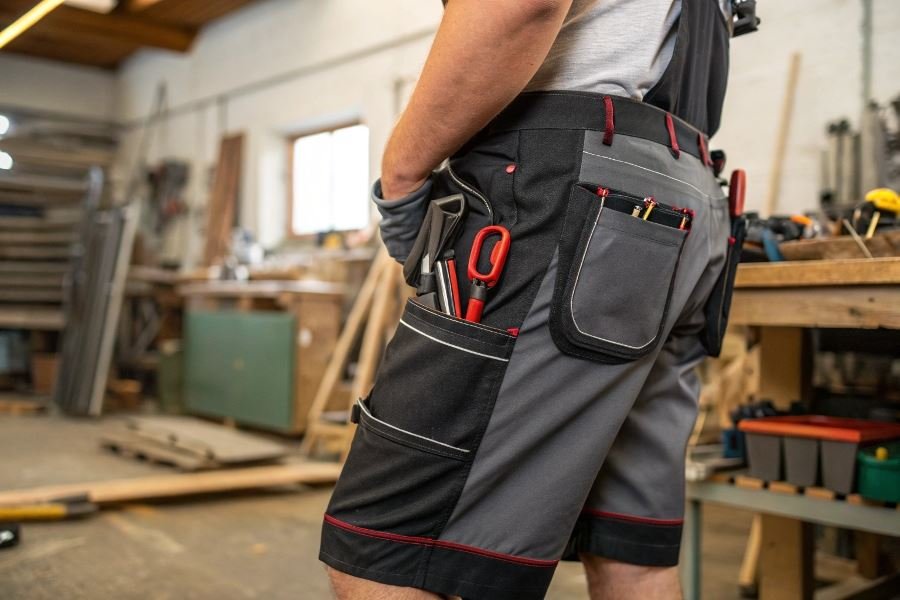
Construction professionals need shorts that work as hard as they do. The ideal construction shorts feature:
Reinforced stress points at the crotch, pockets, and belt loops where standard shorts typically fail first. Look for double or triple stitching and bar tack reinforcement.
Heavy-duty materials like ripstop cotton canvas (10-12 oz weight) or blends with Cordura® or KEVLAR® provide superior tear and abrasion resistance while maintaining breathability.
Tool storage capabilities separate professional-grade shorts from casual options:
| Feature | Benefit | Look For |
|---|---|---|
| Hammer loops | Keeps tools accessible | Reinforced stitching |
| Utility pockets | Organizes small parts | Multiple compartments |
| Holster pockets | Secures larger tools | Removable design |
| Ruler pocket | Keeps measuring tools handy | Extended length |
Safety features like reflective strips become essential for low-light conditions, while knee pad pockets provide protection during kneeling tasks. Carhartt and Dickies offer construction shorts with these professional-grade features.
Warehouse and Logistics: Movement Matters
Warehouse professionals prioritize different features in their workwear:
Flexibility and range of motion become paramount when you’re constantly bending, lifting, and moving. Look for shorts with:
- Gusseted crotch design
- Mechanical stretch fabrics (2-3% spandex blend)
- Athletic-inspired cuts with articulated knees
High-visibility elements are non-negotiable in busy warehouse environments. ANSI-compliant reflective striping or hi-vis panels can prevent accidents in facilities with moving equipment.
Temperature management features make a significant difference in comfort during long shifts:
- Moisture-wicking fabrics pull sweat away from the body
- Ventilation panels in high-heat areas
- Lightweight but durable materials (6-8 oz weight)
5.11 Tactical offers excellent logistics-focused shorts with strategic pocket placement that won’t interfere with movement.
Outdoor Professions: Elements Protection
Landscapers, agricultural workers, and other outdoor professionals face unique challenges from Mother Nature:
Weather resistance becomes essential with features like:
- DWR (Durable Water Repellent) coating that sheds light moisture
- Quick-drying fabrics (nylon/polyester blends)
- Wind-resistant weaves that maintain breathability
UV protection prevents long-term skin damage with:
- UPF 50+ rated fabrics that block 98% of harmful rays
- Longer inseam options (9-11″) for additional coverage
- Lightweight but opaque materials
Moisture management systems keep you comfortable through temperature changes:
- Wicking inner layers
- Breathable outer fabrics
- Strategic ventilation zones
Columbia and Wrangler offer outdoor work shorts with these protective features at reasonable price points.
The right work shorts aren’t just about comfort—they’re specialized equipment that can enhance safety, efficiency, and longevity in your specific professional environment. By matching features to your industry’s demands, you invest in both productivity and protection.
Essential Features for Professional Work Shorts
When your livelihood depends on comfort and functionality, selecting the right work shorts becomes a strategic decision rather than a casual purchase. The perfect pair acts as a reliable partner throughout demanding shifts, adapting to your specific professional requirements while maintaining comfort and durability.
Material Matters More Than You Think
The foundation of exceptional work shorts begins with material selection. Different professions demand different fabric properties:
Construction and carpentry professionals benefit from heavyweight cotton canvas or ripstop fabrics with tear resistance. These materials withstand abrasion against rough surfaces and resist punctures from nails or wood splinters.
Landscapers and outdoor workers should prioritize moisture-wicking synthetic blends that offer UV protection. Materials like nylon/spandex combinations provide excellent breathability while drying quickly after exposure to sweat or rain.
Mechanics and industrial workers need stain-resistant fabrics with chemical protection properties. Oil-resistant treatments on cotton/polyester blends prevent permanent staining while maintaining comfort during long shifts.
The difference between amateur and professional-grade work shorts often comes down to fabric weight, measured in ounces per square yard. Professional-grade options typically range from 7-12oz, with heavier weights offering greater durability.
Material selection represents the critical balance between durability and comfort. While pure cotton offers breathability, it absorbs moisture and dries slowly. Synthetic blends provide moisture management but may lack the rugged feel of natural fibers. The most effective work shorts often feature strategic combinations—reinforced panels in high-wear areas while maintaining lighter, more breathable fabrics elsewhere.
Functional Design Elements That Transform Performance
The difference between ordinary shorts and professional-grade work shorts lies in their thoughtful design elements:
Pocket architecture should align with your daily tool requirements. Consider:
| Profession | Recommended Pocket Configuration |
|---|---|
| Electricians | Multiple utility pockets with tool-specific compartments |
| Carpenters | Hammer loops, reinforced tool pockets, measuring tape clip |
| Painters | Brush holders, rag loops, slim pockets that won’t catch on ladders |
| General Contractors | Combination of deep and shallow pockets, phone compartment |
Strategic reinforcements extend the lifespan of work shorts dramatically. Look for double-layered fabric or Cordura® patches at knees, seat, and pocket edges—areas that experience the most friction during daily tasks.
Mobility features prevent shorts from restricting movement during demanding tasks. Gusseted crotches provide freedom during climbing or squatting, while mechanical stretch panels at waistbands accommodate bending movements without binding.
Maintenance Requirements and Longevity Considerations
The true value of work shorts emerges over time through their maintenance requirements and overall longevity:
Washing resilience varies significantly between brands. Premium work shorts from manufacturers like Carhartt or Dickies maintain structural integrity through hundreds of wash cycles, while budget options may deteriorate rapidly.
Fastener quality often indicates overall durability. YKK zippers and metal buttons or snaps withstand repeated use far better than plastic alternatives. Triple-stitched seams provide reinforcement at critical stress points, preventing tears during demanding movements.
Color retention matters for professionals who interact with clients. Dark colors hide stains but show dust prominently, while lighter colors show stains but conceal dust. Consider your typical working environment when selecting color.
The most durable work shorts incorporate rip-stop technology—a reinforcement technique that prevents small tears from expanding across the entire garment. This feature alone can extend the useful life of work shorts by months or even years in demanding environments.
Discover how to select the perfect work shorts for your specific trade. Our comprehensive guide covers essential features, materials, and professional requirements for construction, warehouse, and outdoor jobs, ensuring safety, comfort, and durability.
Discover how to select the perfect work shorts for your specific trade. Our comprehensive guide covers essential features, materials, and professional requirements for construction, warehouse, and outdoor jobs, ensuring safety, comfort, and durability.