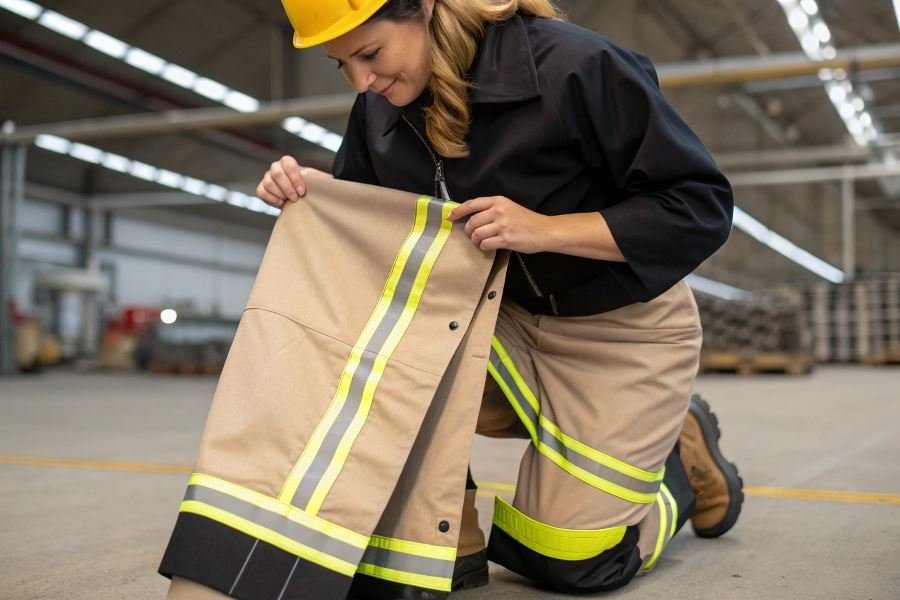
Ever wondered why certain clothing items are prohibited on factory floors? A single loose thread caught in machinery can lead to catastrophic consequences. In industrial environments, your clothing choices aren’t just about professional appearance—they’re potentially life-saving decisions.
Selecting appropriate skirts for industrial work environments requires understanding the delicate balance between functionality, compliance, and comfort. Safety standards established by OSHA since its founding in 1970 have transformed workplace attire from a fashion choice to a critical safety component. These regulations don’t exist to limit personal expression but to protect workers from preventable injuries.
The safety-first approach isn’t optional—it’s mandatory. Industrial environments present unique hazards: moving machinery parts, chemical exposures, extreme temperatures, and electrical dangers. Your workwear serves as the first line of defense against these threats. A properly designed industrial skirt features flame-resistant fabrics, appropriate length (typically below the knee), and secure closures that won’t catch in equipment.
“Proper industrial attire isn’t about restricting choice—it’s about enabling workers to perform confidently in high-risk environments.”
Most industrial facilities maintain specific dress codes that align with both federal regulations and insurance requirements. These policies typically address:
- Fabric composition (natural fibers vs. synthetics)
- Appropriate length and fit specifications
- Prohibited features (dangling elements, excessive pleating)
- Required complementary protective equipment
Understanding these requirements isn’t just about compliance—it’s about creating a workplace where safety and professionalism coexist seamlessly.
Safety First: Essential Features for Industrial Workwear Skirts
When machinery hums and production lines roar, your workwear isn’t just clothing—it’s your first line of defense. Selecting appropriate skirts for industrial environments requires understanding critical safety features that protect you from workplace hazards while maintaining comfort and functionality throughout demanding shifts.
The process of how to choose a skirt for work in an industrial environment demands attention to specific safety standards that many overlook. Unlike office attire, industrial workwear must withstand extreme conditions while preventing potentially life-threatening situations. Let’s examine the essential safety features that should influence your selection.
Fire-Resistant Fabrics That Perform
Industrial environments often expose workers to heat, sparks, and potential flame hazards. Your skirt’s fabric composition is your primary defense against these threats.
Aramid fibers like Nomex® and Kevlar® offer exceptional flame resistance without compromising on comfort. These materials self-extinguish when removed from flame sources and maintain structural integrity even after exposure to extreme heat.
FR-rated cotton blends provide a more economical alternative while still meeting safety standards, though they typically offer less durability over time.
| Fabric Type | Flame Resistance | Durability | Comfort | Price Point |
|---|---|---|---|---|
| Aramid Fibers | Excellent | High | Moderate | Premium |
| FR Cotton Blends | Good | Moderate | High | Mid-range |
| Modacrylic Blends | Very Good | Moderate | High | Mid-range |
| Wool Blends | Naturally FR | Moderate | Variable | Mid-range |
Anti-static properties are equally crucial in environments where electrical equipment or flammable materials are present. Look for fabrics with conductive fibers woven throughout or treatments that dissipate static buildup.
Length and Fit: The Critical Balance
The perfect industrial skirt strikes a delicate balance between coverage and safety. Too long, and you risk entanglement with moving parts; too short, and you sacrifice protection.
Mid-calf length typically provides optimal safety in most industrial settings, offering sufficient coverage while maintaining a safe distance from machinery. The hem should sit at least 6 inches above floor level to prevent tripping or dragging.
Fit considerations include:
- A-line designs that provide freedom of movement without excess fabric
- Elastic waistbands with adjustable features that ensure secure positioning
- Reinforced seams that prevent tearing under stress or sudden movements
Avoid decorative elements like dangling drawstrings, loose overlays, or excessive pleating that could catch in equipment.
Seamless Integration with PPE Systems
Industrial skirts don’t exist in isolation—they’re part of a comprehensive personal protective equipment strategy.
When selecting workwear, consider how your skirt will interact with:
- Safety harnesses – Ensure waistbands accommodate harness straps without riding up
- Knee pads – Length should allow for proper positioning of supplemental protection
- High-visibility elements – Reflective strips should remain visible regardless of movement
The most effective industrial skirts feature built-in attachment points for additional PPE components, creating a unified protection system rather than disconnected pieces.
Temperature regulation deserves special attention—look for designs with ventilation zones that prevent overheating while maintaining protective properties. Modern industrial skirts often incorporate moisture-wicking technology that keeps workers comfortable during physically demanding tasks.
Remember that proper maintenance extends the life and effectiveness of safety features. Follow manufacturer guidelines for cleaning and regularly inspect for signs of wear that might compromise protection.
Industrial Workwear Skirts: Selection and Maintenance Mastery
Top industrial skirt styles for demanding environments
When safety meets functionality in industrial settings, three skirt styles consistently outperform the competition. The A-line utility skirt dominates in manufacturing environments, offering unrestricted movement while maintaining a professional appearance. Made with flame-resistant fabrics and reinforced seams, these skirts typically include multiple tool pockets and feature a 4-6 inch kick pleat for mobility.
For chemical processing facilities, the wrap-around protective skirt provides superior coverage and quick-release features. These skirts incorporate chemical-resistant materials like Nomex or Kevlar blends, with sealed seams that prevent liquid penetration.
Laboratory and clean room environments benefit most from the straight-cut technical skirt with static-dissipative properties. These feature smooth surfaces that minimize particle shedding, adjustable waistbands, and often integrate with full protective systems.
The difference between adequate and exceptional industrial workwear isn’t just comfort—it’s the difference between going home safely or not.
Maintaining safety through proper care
Industrial workwear skirts require specialized maintenance to preserve their protective qualities. Flame-resistant treatments can degrade with improper washing—always follow manufacturer guidelines and never use bleach or fabric softeners which compromise protective coatings.
For maximum longevity:
| Maintenance Task | Frequency | Special Considerations |
|---|---|---|
| Inspection | Before each use | Check for tears, chemical spots, or worn areas |
| Washing | After 3-5 wears or immediately after contamination | Use industrial detergent, cold water cycle |
| Repairs | As needed | Only use manufacturer-approved repair kits |
| Deep cleaning | Quarterly | Professional industrial cleaning service |
Heat-resistant skirts should never be dried on high heat, as this can compromise the integrity of specialized fibers. Instead, air drying or tumble drying on low settings preserves protective qualities while extending garment life.
Recognizing replacement signals
Even the highest quality industrial skirts have a finite protective lifespan. Replace your workwear immediately when you notice:
- Visible thinning of fabric, particularly at stress points
- Fading of flame-retardant or chemical-resistant materials
- Compromised closures (zippers, snaps, or hook-and-loop fasteners)
- Permanent staining from chemical exposure
- More than three repairs to the same area
Documentation matters. Track purchase dates and exposure incidents for each garment. Most industrial skirts should be replaced after 12-18 months of regular use, regardless of appearance, as protective treatments gradually lose effectiveness.
Some manufacturers like Carhartt and Dickies offer recycling programs for worn industrial garments, converting them into insulation materials rather than contributing to landfill waste.
Remember that proper selection, maintenance, and timely replacement of industrial workwear skirts isn’t just about compliance—it’s about creating a comprehensive safety system that protects your most valuable asset: your workforce.
Discover essential guidelines for selecting safe, compliant skirts for factory work environments. Learn about flame-resistant fabrics, proper length requirements, and how to integrate skirts with other PPE for maximum industrial workplace safety.
Discover essential guidelines for selecting safe, compliant skirts for factory work environments. Learn about flame-resistant fabrics, proper length requirements, and how to integrate skirts with other PPE for maximum industrial workplace safety.