Ever wondered why some construction projects finish on schedule while others drag on for months? The secret often lies not in the visible elements, but in the efficiency of behind-the-scenes operations—particularly rebar processing.
Rebar (reinforcement bar) forms the skeleton of concrete structures, providing the tensile strength that prevents cracking and failure. The machines that straighten and cut this critical material aren’t just equipment purchases—they’re strategic investments that directly impact project timelines, labor costs, and structural integrity.
“The right rebar processing equipment can reduce material waste by up to 12% and labor costs by as much as 40% on large-scale projects.”
The rebar machine ecosystem
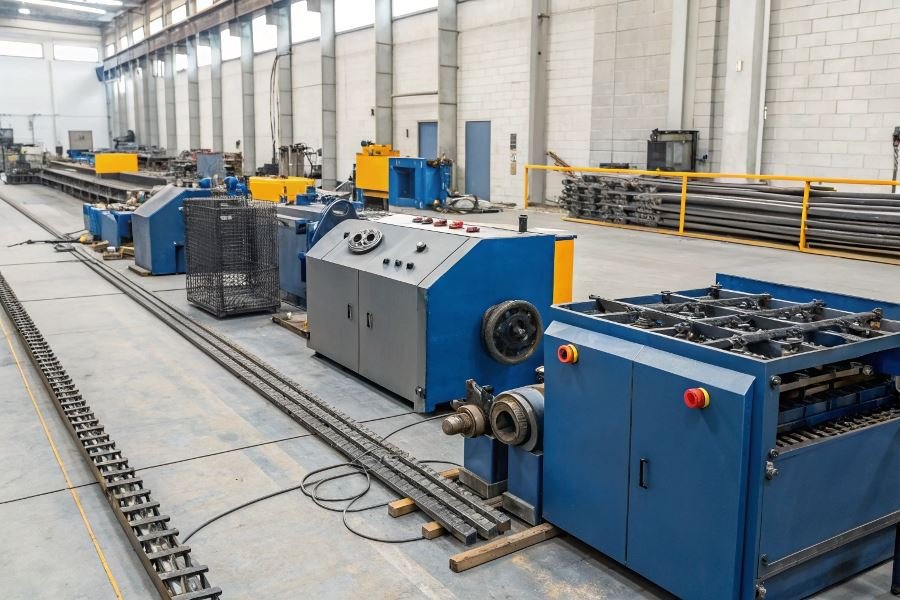
Today’s market offers several distinct categories of rebar processing equipment:
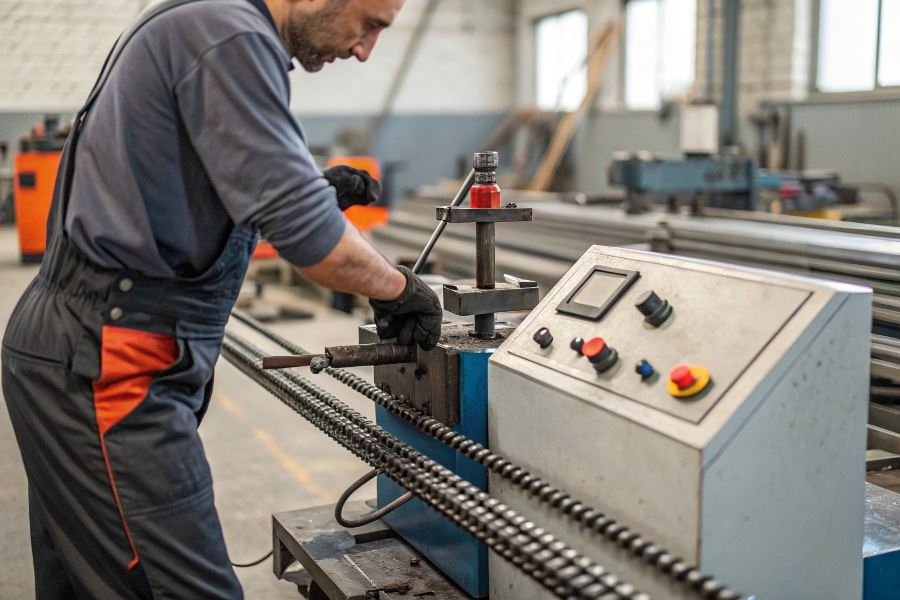
- Manual machines: Operated by hand, suitable for small projects
- Semi-automatic systems: Combine manual feeding with automated cutting/straightening
- Fully automated lines: Computer-controlled for high-volume production
- Combination machines: Perform multiple functions (straightening, cutting, and sometimes bending)
Each type represents a different balance between initial investment, operating costs, and production capacity.
The ripple effect of your equipment choice
Selecting the appropriate rebar processing machine cascades through every aspect of construction. An undersized machine creates bottlenecks; an oversized one bleeds capital. The right machine, however, creates a virtuous cycle:
- Faster processing → reduced labor hours → lower project costs
- Precise cutting → minimized waste → material savings
- Consistent quality → structural integrity → reduced liability
The difference between optimal and suboptimal equipment selection can ultimately determine whether a project generates profit or loss.
The Decision Matrix: Choosing Your Ideal Rebar Processing Machine
When investing in equipment that forms the backbone of construction projects, the details make all the difference. The right rebar processing machine doesn’t just cut metal—it cuts costs, saves time, and delivers precision that defines structural integrity for decades to come.
Selecting machines for straightening and cutting rebar requires careful consideration of several critical factors that will determine not only your immediate productivity but your long-term operational success. The market offers everything from basic manual units to sophisticated computer-controlled systems, each with distinct advantages depending on your specific requirements.
Processing Capacity: The Foundation of Performance
The processing capacity of your rebar machine represents its fundamental value proposition. This specification typically breaks down into three key metrics:
- Diameter range: Most standard machines handle 4-16mm rebar, while industrial-grade equipment can process up to 40mm
- Processing speed: Measured in meters per minute or pieces per hour
- Daily output capacity: The realistic volume you can expect under normal operating conditions
For small workshops, a machine processing 5-10 tons daily might suffice, while commercial operations often require capacities exceeding 50 tons. Remember that theoretical capacity rarely matches real-world performance—expect 70-85% of stated specifications in actual production environments.
| Machine Class | Diameter Range | Processing Speed | Typical Power Requirements |
|---|---|---|---|
| Entry-Level | 4-12mm | 30-60 m/min | 5-7 kW |
| Mid-Range | 6-20mm | 60-100 m/min | 7-15 kW |
| Industrial | 6-40mm | 80-150 m/min | 15-45 kW |
Automation: The Productivity Multiplier
Modern rebar processing equipment ranges from fully manual to completely automated systems. The level of automation directly impacts:
- Labor requirements: Automated systems can reduce operator headcount by 50-80%
- Consistency: Computer-controlled cutting ensures length precision within ±1mm
- Production flexibility: Advanced systems can switch between different rebar sizes and cut patterns with minimal downtime
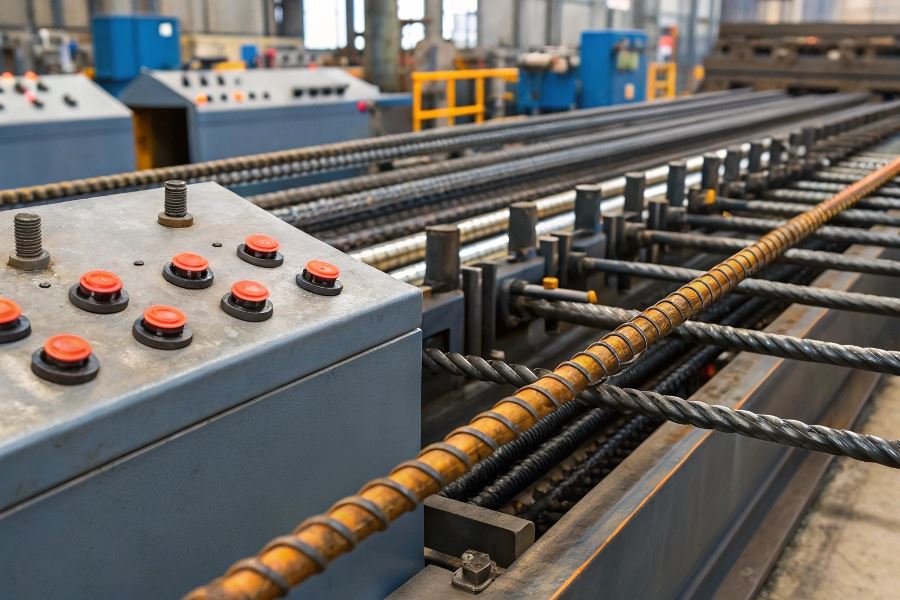
The control interface deserves particular attention. Touch screens with intuitive graphical interfaces have largely replaced older button-based panels, offering faster setup and fewer operator errors. Look for machines with memory functions that can store common cutting patterns—this feature alone can save hours of setup time on repetitive jobs.
Build Quality: The Long-Term Investment
Durability factors separate professional-grade equipment from disappointing alternatives. Examine:
- Frame construction: Welded steel frames with reinforced stress points outlast lighter alternatives
- Cutting mechanism: Hardened steel blades with proper heat treatment can process thousands of tons before replacement
- Hydraulic systems: Look for name-brand components from manufacturers like Parker or Bosch Rexroth
Maintenance accessibility might seem secondary during purchase but becomes critical during operation. Machines designed with maintenance in mind feature easily accessible lubrication points, quick-change cutting blades, and modular components that minimize downtime during repairs.
The best manufacturers provide comprehensive documentation, spare parts availability guarantees, and responsive technical support. This ecosystem of support often justifies premium pricing, as a machine that costs 20% more but delivers 95% uptime versus 80% quickly pays for itself in reduced downtime costs.
When evaluating options, remember that the initial purchase price typically represents only 15-30% of the total lifetime cost of ownership. Preventive maintenance schedules, power consumption, and parts replacement cycles often have greater financial impact over the equipment’s service life.
Maximizing Your Rebar Processing Investment
When investing in rebar processing equipment, the purchase price is merely the tip of the financial iceberg. Smart contractors and fabrication shop owners understand that long-term profitability depends on a comprehensive approach to equipment acquisition. Let’s dive into the critical factors that separate successful investments from costly mistakes.
Beyond the price tag
The total cost of ownership (TCO) of rebar processing machines extends far beyond the initial invoice. A thorough TCO analysis includes:
- Operational costs: Electricity consumption can vary dramatically between models, with high-efficiency motors potentially saving thousands annually
- Maintenance requirements: Some machines need service every 200 hours while others operate reliably for 500+ hours between maintenance cycles
- Consumable parts: Blade replacement costs for cutting machines can range from 200−1,500 depending on quality and design
- Labor efficiency: Advanced automation may cost more upfront but can reduce labor costs by 30-60%
The cheapest machine on the showroom floor often becomes the most expensive option over a 5-year operational period.
Aligning capabilities with project demands
Matching machine specifications to your actual workload prevents both underbuying (creating bottlenecks) and overbuying (wasting capital). Consider:
| Project Type | Recommended Capacity | Key Features |
|---|---|---|
| Residential | 8-12 tons/day | Single-operator design, smaller footprint |
| Commercial | 15-25 tons/day | Memory for repetitive patterns, semi-automatic |
| Industrial | 30+ tons/day | Fully automated, integration with design software |
The most successful fabricators select equipment that handles their current requirements efficiently while providing 20-30% additional capacity for growth. This approach balances immediate productivity with future-proofing without excessive capital expenditure.
Support infrastructure matters
Even the most robust machine eventually requires service, making manufacturer support a critical consideration:
Warranty coverage varies dramatically across manufacturers. Leading brands like Schnell and Pedax typically offer 2-3 year warranties on mechanical components, while budget alternatives may provide just 6-12 months of coverage.
Parts availability can mean the difference between a minor hiccup and a catastrophic production stoppage. Before purchasing, verify:
- Domestic parts warehousing locations
- Typical delivery timeframes for common wear items
- Availability of emergency service technicians
Training and technical support quality directly impacts your team’s ability to maximize machine productivity. The best manufacturers offer:
- Comprehensive initial operator training
- Detailed troubleshooting documentation
- Remote diagnostic capabilities
- Regular software updates for computerized systems
Industry insight: Fabricators report that responsive technical support can reduce downtime by up to 70% compared to manufacturers with limited service infrastructure.
By approaching your rebar processing equipment purchase with this comprehensive perspective, you’ll secure not just a machine, but a reliable production partner that delivers consistent returns on your investment for years to come.
Discover how to select the optimal rebar processing equipment for your construction projects. Learn key technical specifications, automation features, and cost considerations to maximize efficiency and ROI in your rebar straightening and cutting operations.
Discover how to select the optimal rebar processing equipment for your construction projects. Learn key technical specifications, automation features, and cost considerations to maximize efficiency and ROI in your rebar straightening and cutting operations.