What’s the difference between a $50,000 cylindrical grinder and a $500,000 one? Far more than just a few extra zeros. The precision gap can mean the difference between components that merely meet specifications and those that achieve near-perfect dimensional accuracy measured in microns.
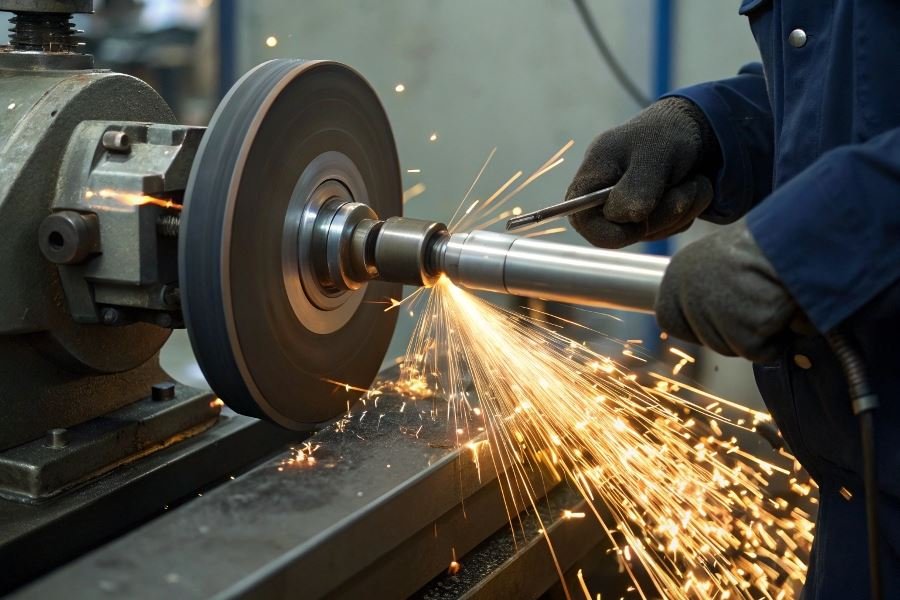
Cylindrical grinding represents the pinnacle of precision manufacturing processes. This specialized machining technique removes material from a workpiece’s outer diameter with an abrasive wheel, creating surfaces with exceptional dimensional accuracy and superior finish quality. In industries where tolerances are measured in micrometers—aerospace, automotive, medical devices—cylindrical grinding isn’t just important; it’s absolutely essential.
The foundation of manufacturing excellence
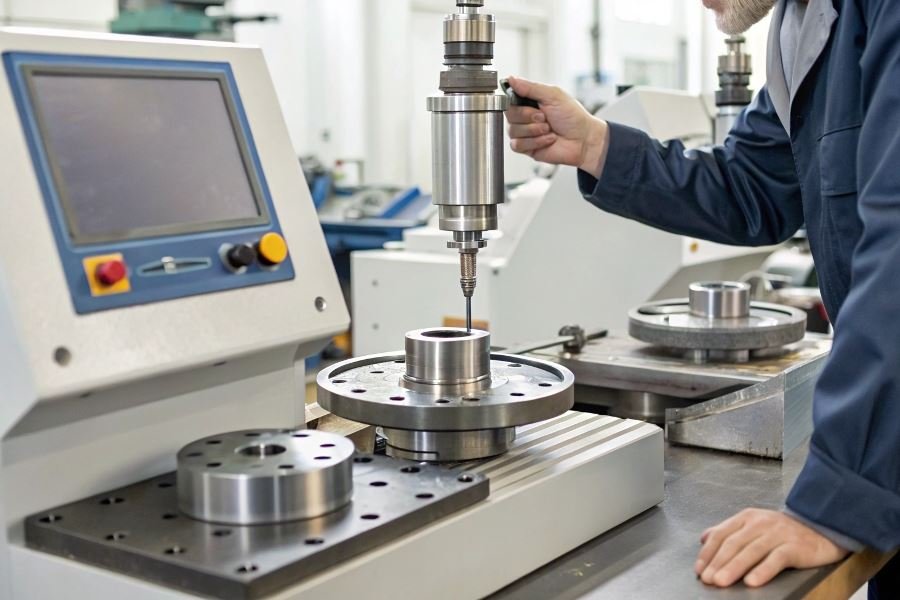
Cylindrical grinding machines serve as the unsung heroes of modern manufacturing. They transform rough-cut metal components into precisely dimensioned parts with mirror-like surface finishes. The difference between a good and exceptional cylindrical grinder often determines whether critical components like engine crankshafts, hydraulic pistons, or medical implants meet increasingly stringent quality standards.
When evaluating these precision powerhouses, several factors demand careful consideration:
- Grinding capacity and swing: Maximum workpiece dimensions the machine can accommodate
- Power and rigidity: Determines cutting capability and vibration resistance
- Control system sophistication: From basic manual controls to advanced CNC systems
- Automation capabilities: Features like automatic wheel dressing and in-process measurement
- Precision specifications: Achievable tolerances and surface finish quality
Market leaders shaping the industry
The cylindrical grinding landscape features established giants alongside innovative challengers. Studer (Switzerland) maintains its reputation for Swiss precision with machines capable of sub-micron accuracy. JUNKER Group (Germany) specializes in high-speed grinding technology, while Toyoda (Japan) excels in automation integration. American manufacturers like Hardinge offer solutions that balance performance with accessibility, particularly for small to mid-sized operations.
Each manufacturer brings distinct advantages to the table—whether in precision, productivity, or specialized applications—making the selection process both critical and complex for today’s manufacturers.
The Ultimate Cylindrical Grinding Showdown
When precision meets power in the metalworking world, cylindrical grinding machines stand as the undisputed champions of surface finish excellence. These engineering marvels transform rough workpieces into components with tolerances measured in microns, not millimeters. Let’s dive into what separates the contenders from the pretenders in today’s high-stakes manufacturing environment.
Precision Capabilities That Define Excellence
The comparison of cylindrical grinding machines from different manufacturers reveals fascinating technical divergences that directly impact your shop floor performance. Leading the precision race is Studer with their S33 model, achieving repeatability of ±0.0001mm—roughly 1/10th the diameter of a human hair. Okamoto follows closely with their GPW-series at ±0.0002mm, while Kellenberger rounds out the top three with ±0.0003mm on their VARIA models.
Power requirements vary significantly, with Studer machines typically demanding 15-25kW for main spindle drives, Okamoto requiring 12-20kW, and Kellenberger operating efficiently at 10-18kW. Size capacity presents another crucial differentiator:
| Manufacturer | Max Workpiece Length | Max Workpiece Diameter | Machine Footprint |
|---|---|---|---|
| Studer | 1,600mm | 350mm | 5.2m² |
| Okamoto | 1,000mm | 320mm | 4.8m² |
| Kellenberger | 1,200mm | 300mm | 5.0m² |
Value Proposition: Getting What You Pay For
The price-to-performance equation demands careful analysis beyond sticker shock. Studer commands premium pricing starting at $180,000 for base models, but delivers unmatched longevity—many machines remain operational after 25+ years. Okamoto offers the middle ground at approximately $145,000, while Kellenberger provides entry at around $125,000.
The true cost calculation must include:
- Maintenance requirements (Studer averages 30% lower lifetime maintenance costs)
- Energy efficiency (Kellenberger consumes approximately 15% less electricity)
- Resale value (Studer machines typically retain 40% of value after 10 years)
- Downtime costs (Okamoto boasts 98.7% uptime in industrial settings)
When factoring these elements, the initial price premium often transforms into long-term savings.
Smart Grinding: Automation and Industry 4.0
The intelligence gap between manufacturers becomes most apparent in their automation capabilities. FANUC robotics integration comes standard with Studer’s advanced models, offering seamless part loading/unloading with cycle time reductions of up to 40%. Okamoto partners with ABB for their automation solutions, while Kellenberger typically utilizes KUKA systems.
Industry 4.0 compatibility varies dramatically:
- Studer’s digital ecosystem includes predictive maintenance algorithms that forecast component failures up to 200 operating hours in advance
- Okamoto’s GPW-EX series features real-time process monitoring with automatic compensation for thermal drift
- Kellenberger’s VARIA platform offers digital twin capabilities for offline programming and simulation
The connectivity standards also differ, with Studer embracing open architecture OPC-UA protocols, Okamoto utilizing proprietary systems with limited third-party integration, and Kellenberger offering MTConnect compatibility for standardized data exchange.
When evaluating these sophisticated machines, remember that the ideal choice depends on your specific application requirements, production volume, and long-term manufacturing strategy. The perfect grinding solution balances technical specifications, value, and forward-looking automation capabilities to deliver precision that powers profitability.
Choosing Your Ideal Cylindrical Grinding Machine
When investing in precision machinery, the details separate good results from exceptional ones. After examining the market’s top cylindrical grinding machines, it’s time to distill what truly matters for your specific manufacturing needs.
Key differentiators across manufacturers
The cylindrical grinding landscape reveals distinct patterns of specialization among leading manufacturers:
| Manufacturer | Precision Rating | Automation Level | Price Range ($) | Specialty Area |
|---|---|---|---|---|
| Studer | ±0.0001mm | Advanced | 85,000-250,000 | Universal precision grinding |
| Okamoto | ±0.0002mm | Moderate to High | 65,000-180,000 | Production efficiency |
| JUNKER | ±0.0001mm | Very High | 120,000-300,000 | High-speed CBN grinding |
| Toyoda | ±0.00015mm | High | 90,000-220,000 | Automotive applications |
| Kellenberger | ±0.0001mm | Advanced | 95,000-240,000 | Tool room versatility |
What separates these manufacturers isn’t merely technical specifications. Studer machines consistently deliver exceptional thermal stability, while JUNKER excels with proprietary high-speed grinding technology that reduces cycle times by up to 30%. Toyoda integrates exceptional dampening systems that minimize vibration, and Okamoto offers remarkable value-to-performance ratios for production environments.
Matching machines to manufacturing needs
Production volume considerations should drive your decision-making process. High-volume operations benefit from JUNKER’s speed-optimized platforms or Toyoda’s automation-ready systems. For job shops handling diverse workpieces, Kellenberger’s versatility and quick changeover capabilities provide significant advantages.
Material specialization matters more than many realize. When working primarily with hardened steels, Studer’s thermal stability becomes invaluable. For exotic alloys, JUNKER’s CBN grinding technology delivers exceptional surface finishes while extending wheel life.
For shops with space constraints, compact machines from Okamoto offer impressive capabilities within smaller footprints. Meanwhile, facilities prioritizing future-proofing should consider Studer or Toyoda for their modular designs that accommodate upgrades.
Tomorrow’s grinding technology today
The cylindrical grinding landscape is evolving rapidly with several transformative trends:
AI-powered adaptive control systems are revolutionizing precision grinding. These systems continuously monitor grinding forces, acoustic emissions, and thermal conditions to automatically adjust parameters in real-time, reducing scrap rates by up to 40%.
Sustainability features have moved from optional to essential. Modern machines from Studer and Toyoda incorporate energy recovery systems, minimal-lubrication technologies, and intelligent standby modes that reduce energy consumption by 25-30% compared to machines from just five years ago.
The most significant advancement isn’t a single feature but the integration of grinding operations into connected manufacturing ecosystems.
Digital twins and predictive maintenance capabilities are becoming standard on premium machines. JUNKER’s latest models can predict wheel wear patterns and schedule dressing operations automatically, maximizing productive uptime.
The ideal cylindrical grinding machine balances current requirements with adaptability for future needs. By carefully evaluating your specific application requirements against each manufacturer’s strengths, you’ll secure not just a machine, but a competitive advantage in precision manufacturing.
Discover the definitive comparison of top cylindrical grinding machines from leading manufacturers. Evaluate precision capabilities, automation features, and price-to-performance ratios to make the optimal investment for your manufacturing operations.
Discover the definitive comparison of top cylindrical grinding machines from leading manufacturers. Evaluate precision capabilities, automation features, and price-to-performance ratios to make the optimal investment for your manufacturing operations.