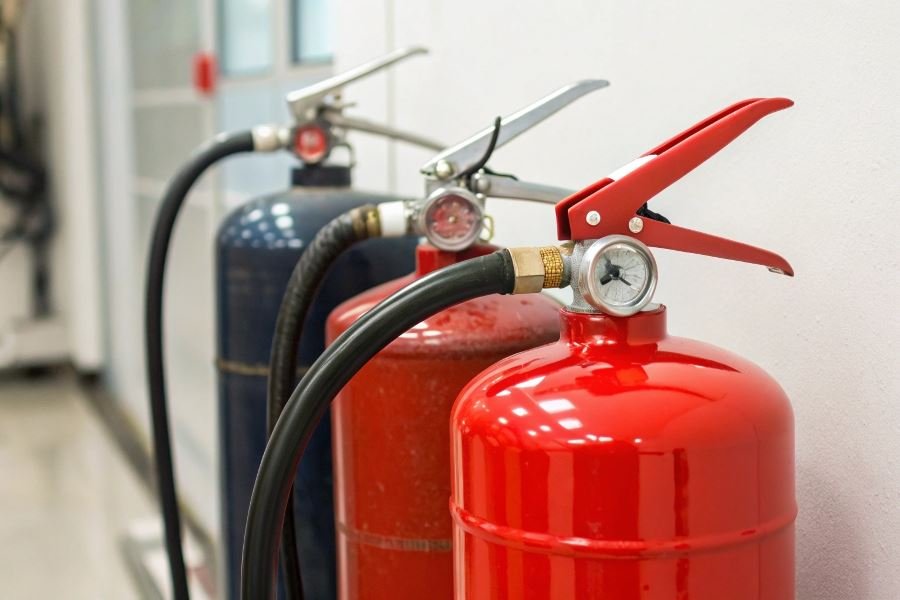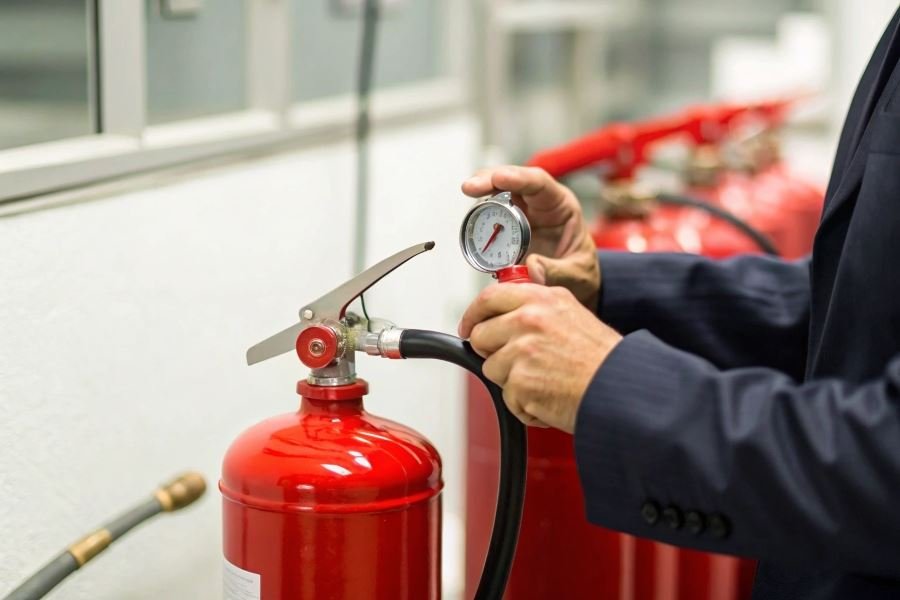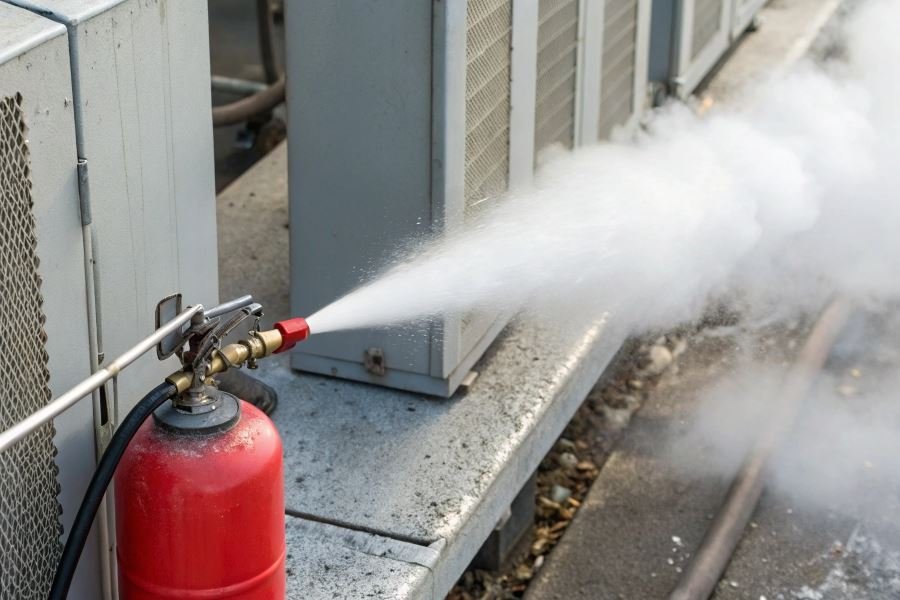
Ever watched a chef dramatically extinguish a flambé gone wrong with a blast of white fog? That’s carbon dioxide in action—the unsung hero of fire safety that works without leaving a trace.
Carbon dioxide fire extinguishers represent one of the most elegant solutions in fire suppression technology. Unlike their water or foam counterparts, these specialized units deploy an invisible gas that smothers flames without damaging sensitive equipment or leaving residue behind. The science is beautifully simple: CO2 displaces oxygen—fire’s essential fuel—creating an environment where combustion simply cannot continue.
The chemistry behind the magic is straightforward but powerful. When discharged, liquid CO2 stored under pressure rapidly expands into a gas, cooling the surrounding area to temperatures as low as -78°C while simultaneously diluting oxygen concentration below the 16% threshold needed for most fires to burn. This double-action approach makes carbon dioxide remarkably effective for specific fire scenarios.
When CO2 extinguishers shine brightest
CO2 extinguishers excel with Class B fires (flammable liquids) and Class C fires (electrical equipment). Their non-conductive properties make them ideal for data centers, laboratories, and precision manufacturing facilities where water would cause catastrophic damage to equipment worth millions.
Real-world applications
- Server rooms and IT infrastructure: Where even minor residue could destroy sensitive components
- Commercial kitchens: For grease fires where water would cause dangerous splatter
- Museums and archives: Where preserving irreplaceable artifacts is paramount
- Electrical substations: Where conductivity concerns make traditional extinguishers dangerous
The beauty of CO2 systems lies in their clean operation—they leave no chemical residue, require no cleanup, and cause no secondary damage to valuable assets. For businesses where downtime means substantial revenue loss, this advantage alone justifies their higher initial investment.
The Triple Threat of CO2 Fire Extinguishers
Carbon dioxide fire extinguishers stand as silent sentinels in server rooms, electrical panels, and precision manufacturing facilities across America. Their distinctive horn nozzles and lack of pressure gauges might seem peculiar to the untrained eye, but these design choices serve critical functions in emergency response scenarios.
When evaluating fire suppression options, understanding the advantages and disadvantages of carbon dioxide fire extinguishers becomes essential for facility managers and safety directors. These specialized units offer three distinct advantages that make them irreplaceable in specific applications: electrical safety, residue-free operation, and exceptional longevity.
Electrical Fire Safety Without Compromise
CO2 extinguishers excel where others fail—around energized electrical equipment. Their non-conductive properties make them the premier choice for data centers, electrical closets, and manufacturing equipment.
Why this matters: Water-based extinguishers conduct electricity, potentially turning a fire emergency into an electrocution hazard. CO2 creates no conductive path, allowing operators to safely discharge the agent directly at electrical fires without powering down critical systems.
The National Fire Protection Association specifically recommends Class C extinguishers like CO2 units for electrical fires precisely because of this non-conductive property. This capability proves invaluable in environments where downtime costs thousands per minute.
The Clean Agent Advantage
Perhaps the most compelling feature of CO2 extinguishers is their clean agent status—they leave absolutely no residue after discharge.
Imagine extinguishing a fire near sensitive electronics or precision manufacturing equipment without worrying about cleanup. While dry chemical extinguishers leave corrosive powders that can damage circuit boards and mechanical components, CO2 simply dissipates back into the atmosphere.
This residue-free operation provides three immediate benefits:
- Zero cleanup costs after discharge
- No damage to sensitive equipment from suppressant residue
- Immediate return to operations after ventilation
For businesses where equipment value exceeds building value—think semiconductor manufacturing or data processing—this clean agent property isn’t just convenient; it’s financially essential.
Exceptional Longevity and Maintenance Profile
CO2 extinguishers demonstrate remarkable longevity compared to other fire suppression options. With proper inspection protocols, these units typically offer:
| Maintenance Aspect | CO2 Extinguishers | Dry Chemical Extinguishers |
|---|---|---|
| Service Life | 10-15 years | 6-12 years |
| Hydrostatic Testing | Every 5 years | Every 12 years |
| Agent Replacement | Never (unless discharged) | Every 6 years |
The carbon dioxide agent itself never degrades, eliminating the need for periodic recharging that other extinguisher types require. This stability translates to lower total cost of ownership despite higher initial purchase prices.
Maintenance simplicity: Annual inspections focus primarily on the integrity of the cylinder and discharge mechanism rather than agent quality. This streamlined maintenance profile makes CO2 units particularly attractive for facilities with extensive fire protection requirements.
While these advantages make carbon dioxide extinguishers compelling for specific applications, they must be deployed with full awareness of their limitations—particularly regarding operator safety in confined spaces and their ineffectiveness against certain fire types. The ideal fire protection strategy often incorporates multiple extinguisher types to address various risk scenarios.
The Hidden Dangers of CO2 Fire Extinguishers
Carbon dioxide fire extinguishers have earned their place in fire safety arsenals worldwide, but their impressive firefighting capabilities come with significant tradeoffs. While these extinguishers excel in specific scenarios, understanding their limitations isn’t just about maximizing effectiveness—it’s about preventing potentially life-threatening situations.
Asphyxiation: The silent threat
CO2 extinguishers work by displacing oxygen—the same oxygen humans need to breathe. In confined spaces, this creates a serious asphyxiation hazard that can occur with frightening speed.
When discharged, a typical 5-pound CO2 extinguisher can reduce oxygen levels below 15% in a 10×10 room—well into the danger zone for human respiration. At concentrations above 9%, CO2 can cause:
- Rapid breathing and heart rate
- Impaired cognitive function
- Unconsciousness within minutes
- Death if exposure continues
Real-world impact: Between 2010 and 2018, OSHA documented 17 fatalities linked to carbon dioxide exposure in confined spaces, many involving fire suppression systems. These weren’t just statistics—they were preventable tragedies.
The paradox of CO2 extinguishers is stark: the same mechanism that makes them effective against fires makes them dangerous to humans in enclosed areas.
Limited effectiveness across fire classes
Not all fires are created equal, and CO2 extinguishers demonstrate clear limitations against certain fire types:
| Fire Class | Effectiveness | Limitation |
|---|---|---|
| Class A (ordinary combustibles) | Poor | Cannot penetrate deep-seated fires |
| Class B (flammable liquids) | Excellent | Wind can disperse agent |
| Class C (electrical) | Good | No residue advantage |
| Class D (metals) | Ineffective | Cannot cool metal fires |
| Class K (cooking oils) | Ineffective | Insufficient cooling capacity |
The extinguisher’s inability to cool materials significantly means fires can reignite once the CO2 dissipates. This “flashback” phenomenon creates a false sense of security that has contributed to numerous fire escalations.
Temperature sensitivity and handling challenges
The physical properties of carbon dioxide create practical challenges that impact both storage and operation:
Extreme cold discharge: CO2 exits the nozzle at approximately -78°F (-61°C), cold enough to cause:
- Severe frostbite with direct skin contact
- Thermal shock to sensitive equipment
- Cracking of heated glass or ceramics
Weight and maneuverability issues: A standard 15-pound CO2 extinguisher weighs nearly 35 pounds when fully charged—making it difficult for many users to handle effectively, especially during high-stress fire situations.
Pressure vessel concerns: As a liquefied gas under pressure, CO2 extinguishers require:
- Regular hydrostatic testing (every 5-10 years)
- Protection from heat sources that could cause dangerous pressure buildup
- Special handling during transportation and disposal
The discharge force can also be surprisingly powerful, potentially causing the operator to lose balance or control in tight spaces—precisely where these extinguishers are most commonly deployed.
These limitations don’t negate the value of CO2 extinguishers in appropriate settings, but they underscore the critical importance of proper training, strategic placement, and understanding when alternative fire suppression methods might offer safer, more effective protection.
Discover the complete guide to CO2 fire extinguishers - how they work, where they excel, and their potential risks. Learn when to use carbon dioxide for fire suppression and important safety considerations for electrical fires.
Discover the complete guide to CO2 fire extinguishers - how they work, where they excel, and their potential risks. Learn when to use carbon dioxide for fire suppression and important safety considerations for electrical fires.